Koraput Tribal Circuit — Bonda, Gadaba & The Living Culture of the Highlands
Nestled in the mist-shrouded valleys of the southern Eastern Ghats, Koraput is the cultural heartland of Odisha's indigenous heritage, home to sixty-two distinct tribal communities—including the primeval Bonda, the Gadaba, and the Paroja—celebrated through weekly village haats, rhythmic Dhemsa dances, and the soaring 1,672-meter peak of Deomali.

The Highland Sanctuary: Southern Odisha's Indigenous Heartland
Perched upon an elevated plateau of the Eastern Ghats at an average altitude of nearly three thousand feet above sea level, Koraput is an extraordinary ecological and cultural sanctuary. Odisha is home to sixty-two distinct Scheduled Tribe communities—the highest diversity of indigenous groups in any single Indian state—and the southern highland crescent spanning Koraput, Malkangiri, and Rayagada represents their undisputed cultural heartland.
Unlike commercialized tourist destinations, Koraput is not an outdoor exhibition; it is a vibrant, living ecosystem where ancient Austroasiatic and Dravidian communities have preserved their ancestral animist cosmologies, sustainable slash-and-burn (podu chasa) and terraced agriculture, sacred forest groves (Jaher), and organic architectural traditions for thousands of years in harmonious co-existence with the mountainous landscape.

The Bonda: The People of the Sacred Thread
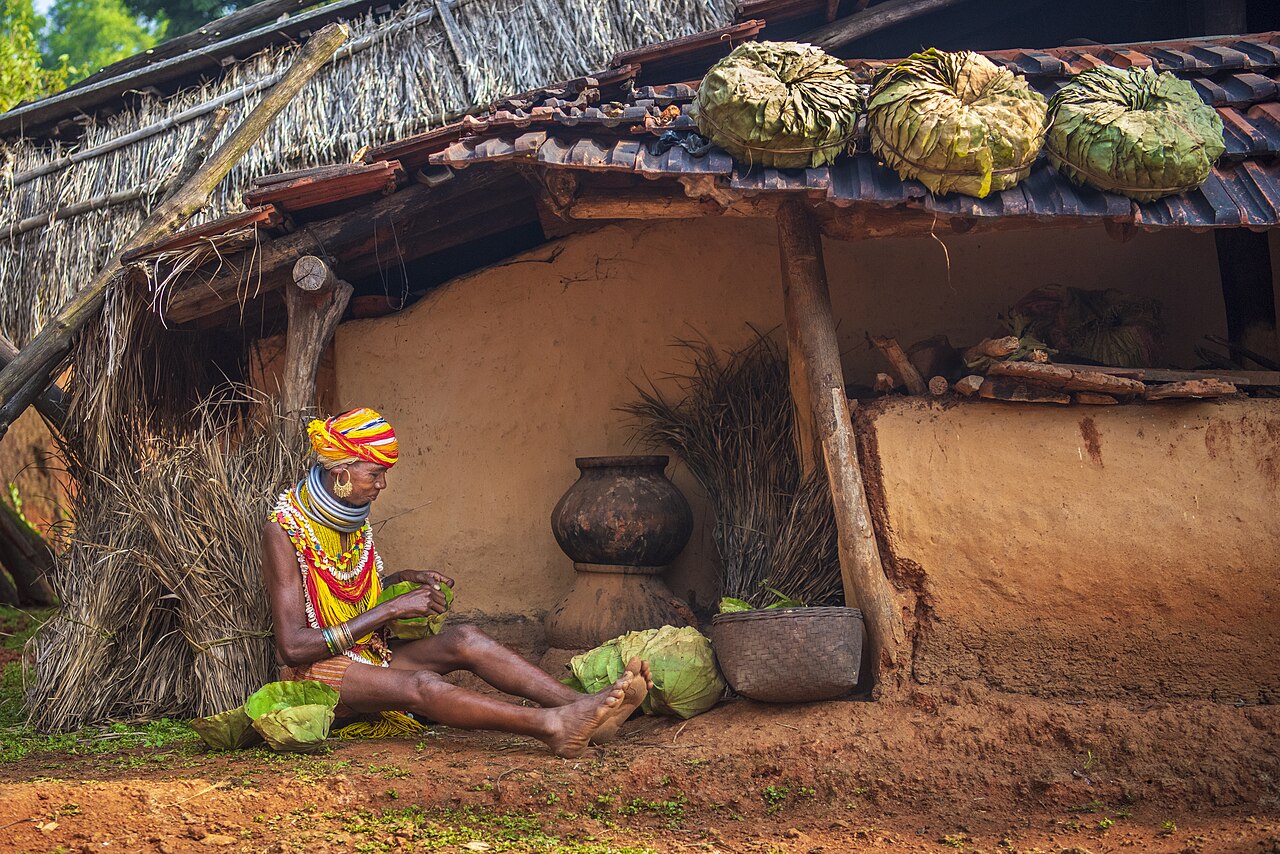
Among the most culturally distinct indigenous communities in the world are the Bonda (who refer to themselves as the Remo, meaning 'human beings'). Inhabiting isolated hamlets atop the remote Bonda Hills in the adjoining reaches of Malkangiri and Koraput, the Bonda belong linguistically to the Austroasiatic Munda language family and have maintained an almost completely self-sufficient way of life for millennia.
The visual identity of Bonda women is instantly recognizable and steeped in mythological antiquity. They shave their heads clean, wearing only a headband of woven grass or silver filigree, and drape their upper bodies entirely in cascading rows of vibrant multicolored glass seed beads (Kade) and heavy brass and aluminum neck collars (Khagla). Around their waist, they wear a tiny hand-loomed cloth called a Ringa, woven from the bark fiber of the wild Kerang forest shrub on miniature backstrap looms. According to folklore, this minimalist dress code was established by a divine curse from Goddess Sita during the epic Ramayana exile, after local women supposedly giggled as she bathed in a mountain stream.
Bonda society is matriarchal and egalitarian: women frequently marry men who are five to ten years younger than themselves, with the elder wife nurturing her youthful husband through adolescence so that he will protect and provide for her in later maturity.
The Gadaba, Paroja & The Mesmerizing Dhemsa Dance
Equally central to Koraput's cultural tapestry are the Gadaba and Paroja communities. The Gadaba—traditionally divided into the Bada Gadaba, Sana Gadaba, and Olaro clans—are renowned for their peerless weaving of Kerang bark fabric dyed with natural vegetable pigments, and for their massive circular silver neck rings (Hansuli) weighing up to a kilogram.
The spiritual heartbeat of Gadaba and Paroja life is the Dhemsa dance. Performed during communal festivals, weddings, and harvest celebrations under the village banyan tree (Guda), the women link arms in an unbreakable chain, stepping, swaying, and stomping their bare feet in mesmerizing synchronized circles to the hypnotic polyrhythms of the Dhol, Nishan, Tamak, and the plaintive melodies of the double-reed Mahuri flute. The dance transcends entertainment: it is an ecstatic ritual reaffirming communal solidarity, village peace, and gratitude to Mother Earth (Dharani Mata).
The Weekly Tribal Haats: Onukudelli & Kunduli
The focal point of economic and social life in Koraput is the weekly village market, or Haat. Far more than commercial exchanges, haats are vital communication hubs where clan elders negotiate marriages, exchange news across distant valleys, settle legal disputes, and celebrate over clay bowls of freshly fermented Salap (palm sap wine) and Mahua liquor.
Onukudelli Thursday Haat
Held every Thursday morning near the Machkund river gorge, Onukudelli is the primary market where Bonda men and women descend from their high hill settlements to trade wild honey, forest tubers, ginger, and millets for salt, dried fish, iron axe blades, and glass beads.
Kunduli Friday Haat
Situated near Sunabeda, Kunduli is the largest tribal market in Odisha, drawing thousands of Paroja and Mali vegetable growers who bring vibrant mountains of local red ginger, turmeric, organic vegetables, and indigenous pulses.
Ethical Travel Protocols: Respecting Indigenous Dignity
Mandatory Code of Conduct for Travelers
Visiting tribal areas in southern Odisha carries profound ethical responsibilities. Travelers must observe the following official protocols:
- No Invasive Photography: Never shove cameras or smartphone lenses into the faces of tribal individuals. Always seek verbal permission or a polite nod before photographing, and respect an outright refusal without argument. Photography of Bonda women without Forest Department permission is legally restricted.
- No Commercial Exploitation or Gifting: Do not distribute cheap plastic trinkets, candy, or currency to tribal children, which fosters dependency and begging behaviors. Support the community by purchasing genuine handicrafts directly from artisans at fair prices.
- Dress & Behavior: Dress modestly (covering shoulders and knees). Avoid loud, disruptive behavior, alcohol consumption, or entering sacred village shrines without explicit invitation from the village priest (Disari).
Deomali Peak: The Roof of Odisha
Towering majestically above the cloud line near Doodhari village in the Pottangi block, Deomali is the highest geographic mountain peak in Odisha, rising to an elevation of 1,672 meters (5,486 feet). Part of the central Eastern Ghats range, Deomali features breathtaking rolling green meadows reminiscent of the Scottish Highlands, steep precipices, and panoramic 360-degree vistas across deep valleys dotted with tribal hamlets and terraced fields.
The peak has been developed by the Odisha Forest and Tourism Departments with eco-friendly cottages, designated sunset viewing platforms, and trekking trails. It is also emerging as an adventure hotspot for hang gliding, paragliding, and high-altitude bird watching, hosting raptors like the black eagle and crested serpent eagle.
Practical Logistics & Travel Blueprint
| Aspect | Practical Details |
|---|---|
| Transit Access | Nearest airport: Visakhapatnam (VTZ) in Andhra Pradesh (200 km, 5 hr drive). Direct scenic hill railway via the Kirandul-Kottavalasa line to Koraput Railway Station (KRPU). |
| Base Towns | Koraput town (hotels, Sabara Srikhetra temple, Tribal Museum) or Jeypore (commercial hub with larger hotels, 22 km west). |
| Koraput Tribal Museum | Located near Sabara Srikhetra; open daily 10 AM – 5 PM. Features life-size replicas of tribal dwellings, agricultural implements, musical instruments, and traditional jewelry. |
| Optimal Season | October to March brings crisp highland weather (10°C–25°C). Monsoon (July–September) brings dramatic lush greenery and overflowing waterfalls. |
Nearby Attractions & Explorations
- Duduma Waterfall & Machkund Gorge: 70 km southwest; thunderous 157-meter horsetail waterfall on the Odisha-Andhra border.
- Gupteswar Limestone Cave Temple: 55 km west; sacred subterranean Shiva lingam cave surrounded by Ramagiri forests.
- Dongria Kondh of Niyamgiri: 110 km northeast in Rayagada; sacred mountain animism and Kapdagunda shawls.
- Saura Tribal Art & Murals: 130 km east; ancient Idital wall paintings and Tree of Life cosmology.
- Koraput District Directory: Comprehensive directory of waterfalls, dams, coffee plantations, and homestays.
- Malkangiri District Guide: Border district featuring Balimela reservoir and Bonda hill ranges.
- Rayagada District Guide: Highland district featuring Majhighariani temple and scenic railway gorges.
- Odisha Cuisine Gastronomic Guide: Explore indigenous highland grains, Mandia millet porridge, and tribal food traditions.
Frequently Asked Questions About Koraput Tribal Circuit & Highland Culture
What is the Bonda tribe of Koraput known for?
The Bonda (Remo) are one of India's most ancient Particularly Vulnerable Tribal Groups (PVTGs), belonging to the Austroasiatic Munda linguistic lineage. They are celebrated for their fiercely independent culture, unique matriarchal marriage customs, and traditional dress comprising shaved heads, elaborate bead necklaces (Kade), brass collar rings, and hand-woven Kerang bark skirts (Ringa).
What are the rules regarding photography at the Onukudelli tribal market?
Commercial or intrusive photography of the Bonda people is strictly regulated by the Odisha administration. Travelers must never take photographs without clear personal consent, and photographing Bonda women without proper authorization is prohibited. Travelers should prioritize respectful cultural observation over photography.
What is the significance of Sabara Srikhetra in Koraput town?
Sabara Srikhetra is a unique Jagannath temple established in Koraput that explicitly celebrates the tribal (Sabara) origins of Lord Jagannath. Unlike orthodox temples, it has no caste or religious restrictions on entry: all human beings are permitted inside the sanctum, and tribal rituals and servitors play a central role in daily worship.
How high is Deomali Peak and can travelers drive to the top?
Deomali is the highest mountain peak in Odisha, standing at an elevation of 1,672 meters (5,486 feet). A well-maintained paved winding road allows vehicles to drive almost all the way to the summit plateau, with the final hundred meters accessed via a paved walking path to the hilltop observation towers.
How do travelers reach Koraput from major cities?
The most convenient gateway is Visakhapatnam International Airport (VTZ) in Andhra Pradesh, located 200 kilometers away (approx. 5 hours by taxi or scenic Vistadome passenger train through the Ananthagiri Ghats). Alternatively, express trains connect Koraput Railway Station with Bhubaneswar (Hirakhand Express, overnight 12 hours).