Badaghagara & Sanaghagara Falls — Keonjhar's Twin Forest Cascades
Nestled among the undulating sal-covered hills of the northern Keonjhar plateau on the perennial Machakandana River, Badaghagara and Sanaghagara are Odisha's most beloved twin forest cascades—combining a 60-meter wilderness plunge with a charming 30-meter stepped waterfall set amidst botanical eco-parks.
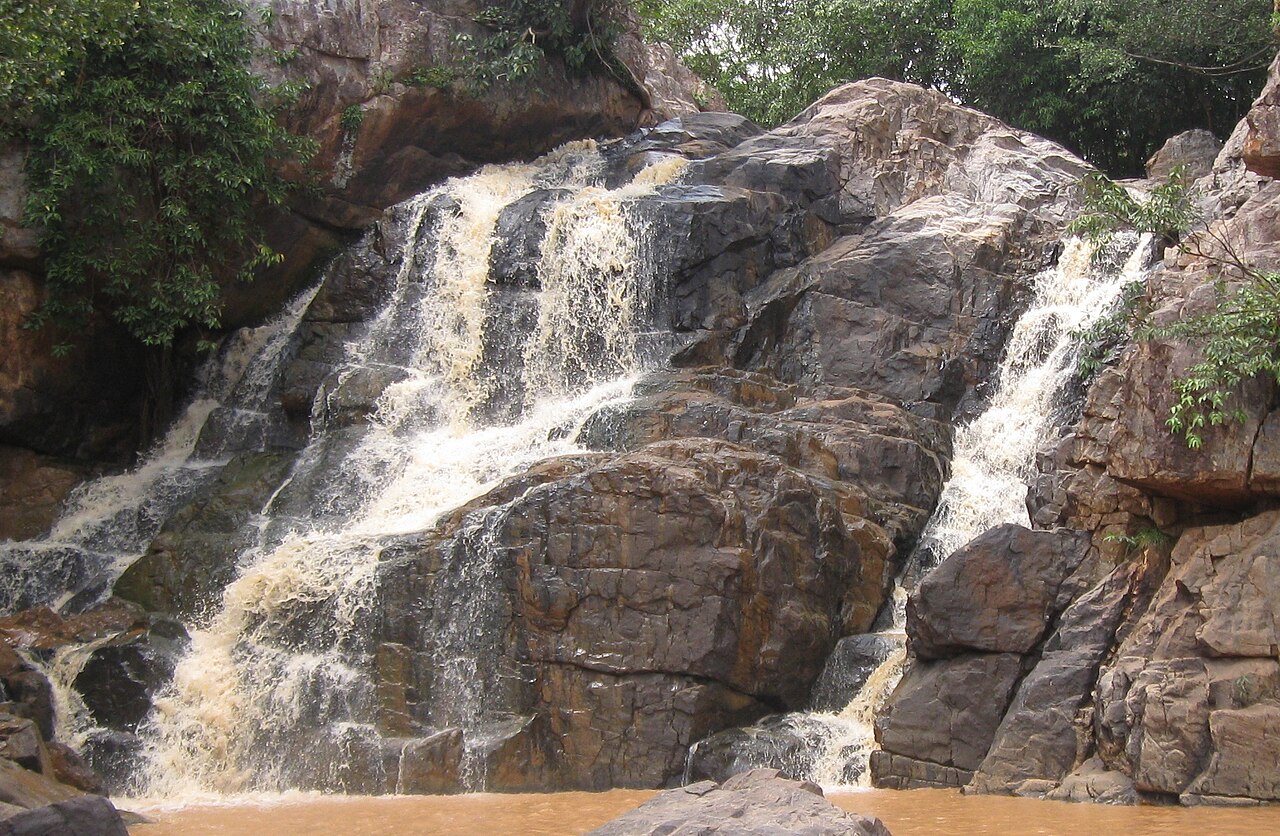
The Twin Cascades of the Machakandana River

Cradled in the verdant, mineral-rich highlands of northern Keonjhar district (Kendujhar), just a few kilometers outside the district headquarters, lie two of Odisha's most enchanting and accessible natural spectacles: Sanaghagara Falls and Badaghagara Falls. In the Odia language, *Sana* means 'small' or 'younger', *Bada* means 'big' or 'elder', and *Ghagara* translates poetically as a 'waterfall' or 'roaring torrent'. Together, they form a complementary pair of sister waterfalls born from the identical mountain artery: the crystal-clear, perennial Machakandana River.
The Machakandana originates high in the forested quartzite and banded iron ridges that encircle Keonjhar town at an elevation exceeding 600 meters above sea level. As the river descends through the plateau, it encounters two distinct structural fault lines spaced just three kilometers apart, creating two remarkably contrasting hydrological landforms: Sanaghagara, a gentle, stepped 30-meter cascade winding through boulder-strewn terraces, and Badaghagara, a dramatic, single-drop 60-meter wilderness plunge slicing through a narrow volcanic ravine.
Sanaghagara: The Picturesque Stepped Eco-Park
Located just 5 kilometers west of Keonjhar town along National Highway 49, Sanaghagara Falls is a masterclass in nature-integrated eco-tourism. Here, the river cascades down a series of stepped, polished black dolerite rock ledges totaling approximately 30 meters (100 feet) in drop. The water flows into a wide, shallow, sparkling mountain pool surrounded by ancient sal (*Shorea robusta*), kusum, and jamun trees, whose roots intertwine with the mossy stone embankments.
The district administration and Odisha Tourism have thoughtfully landscaped the surrounding 488 hectares into an expansive botanical eco-park. Paved cobblestone walkways meander along the riverbanks, shaded by flowering trees and ornamental shrub beds. Features include:
- Pedal Boating Lake: A serene artificial lake upstream from the falls, where families can rent two-seater and four-seater pedal boats against the backdrop of rolling green hills.
- Children's Amusement Corner: Well-equipped play areas featuring swings, slides, and grassy lawns where children can play safely.
- Forest Rest Pavilions: Rustic wooden gazebos and thatched stone benches situated at regular intervals along the walking trails, offering peaceful spots for reading, contemplation, or family picnics.
- Nature Interpretation Center: Displaying informative exhibits on Keonjhar's rich mineral heritage, indigenous Juang and Bhuyan tribal traditions, and local avian biodiversity.
Badaghagara: The Raw Wilderness Plunge
Situated approximately 3 kilometers upstream from Sanaghagara and 10 kilometers from Keonjhar town, Badaghagara Falls presents a completely different, untamed persona. Here, the Machakandana River gathers immense kinetic volume before hurtling over a vertical dolerite precipice in a single, thunderous 60-meter (200-foot) plunge into an enclosed rocky gorge.
Unlike the landscaped parklands of its younger sister, Badaghagara has been intentionally maintained in its raw, forested state. The approach winds through dense, unpaved sal forest trails filled with the scent of wild mahua and flowering creepers. The waterfall crashes into a deep, foaming rock pool flanked by towering vertical basalt cliffs draped in wild ferns and creeping vines. A small dam constructed upstream across the river supplies drinking water to Keonjhar town, while the roaring spray from the falls creates a perpetually cool, invigorating breeze that keeps the gorge delightfully pleasant even during warm summer afternoons.
Prehistoric Rock Art at Sitabinji & Ancient Paleolithic Heritage
The geological basin carved by the Machakandana River holds archaeological significance spanning back into deep prehistory. Archaeological explorations along the river terraces around Badaghagara have uncovered fossilized wooden artifacts, microliths, and stone hand-axes dating to the Lower and Middle Paleolithic eras, proving that ancient hominids inhabited these fertile highland valleys over one hundred thousand years ago.
Just 30 kilometers south of the waterfalls lies the world-famous rock art site of Sitabinji, where two colossal natural boulders leaning against each other form a rock shelter known as Ravanachhaya ('Shadow of Ravana'). On the underside of the rock ceiling rests a magnificent 5th-century Gupta-style tempera fresco depicting a royal procession: King Disabhanja riding a caparisoned war elephant, accompanied by horse-mounted warriors and foot soldiers bearing swords. The proximity of Sitabinji and the Ghagara waterfalls makes Keonjhar a rare destination where raw natural beauty and 1,500-year-old classical art converge.
Tribal Lore & Keonjhar's Sacred Geography
A visit to the twin waterfalls is traditionally combined with a spiritual pilgrimage across Keonjhar's sacred circuit. Foremost among these is the legendary Maa Tarini Temple at Ghatgaon (45 km south), where hundreds of thousands of devotees offer millions of fresh coconuts to the wish-fulfilling mother goddess. Another sacred site is Gonasika (35 km west), the legendary mountain source where the holy Vaitarani River emerges from a rock formation resembling the nostril of a cow (*Go-nasika*), framed by ancient Shaivite shrines built by the Somavamsi kings.

Geological Genesis of the Iron-Ore Escarpments
The cataracts of Badaghagara and Sanaghagara owe their dramatic vertical drop to the complex geological history of the North Odisha Craton. Formed during the Archean and Proterozoic eras more than 2.8 billion years ago, the Keonjhar plateau is composed of dense banded iron formations (BIF), weathered quartzite crags, and intrusive dolerite dykes. Over geological epochs, the perennial Machakandana stream systematically eroded softer sedimentary layers while encountering resistant quartz-rich sill benches, carving the sheer step-terraces that today create Sanaghagara's cascading staircase and Badaghagara's vertical 60-meter plunge.
The indigenous Juang tribe, one of Odisha's most ancient Munda-speaking indigenous groups who hold hereditary custodial rights in the surrounding Gonasika ranges, maintain deep spiritual connections with these waters. In Juang folklore, the perennial streams issuing from the mountain crevices are revered as living manifestations of subterranean water deities (*Dharani Mata* and *Gangi Mata*), whose pure waters ensure bumper harvests of forest millets and honey. Tribal elders forbid logging or cutting trees along the water's upper catchment, creating an ancestral ecological protection zone that has preserved these pristine waterfall channels for centuries.
Avian Biodiversity & Keonjhar Tussar Sericulture
The forested valleys buffering the Machakandana waterfalls form a fertile ecological corridor for native avian species. Early morning nature walks along the eco-park trails reward birdwatchers with frequent sightings of Pied Kingfishers hovering over the water, White-throated Kingfishers diving for small fish, Plum-headed Parakeets flitting through the sal canopy, and Indian Grey Hornbills feasting on wild figs. The surrounding hills are also traditionally utilized by local forest dwellers for cultivating wild Tussar silk cocoons (*Antheraea mylitta*) on Asan and Arjuna trees, linking the pristine forest ecology with Keonjhar's rich tribal sericulture heritage. Furthermore, the downstream riverbanks are lined with fragrant wild mint (*Mentha arvensis*) and wild turmeric, collected by indigenous herbal healers (*Vaidyas*) for traditional remedies.
Visitor Logistics & Travel Plan
| Aspect | Practical Details |
|---|---|
| Location & Access | Sanaghagara: 5 km from Keonjhar town along NH-49; Badaghagara: 10 km from town. Easily reached by auto-rickshaw, taxi, or private car from Keonjhar in 15 to 20 minutes. |
| Nearest Railway Station | Kendujhargarh Railway Station (KDJR), 6 km from town, connected by express trains to Bhubaneswar, Puri, and Kolkata. |
| Nearest Airport | Biju Patnaik International Airport, Bhubaneswar (220 km south via NH-20, approx. 4.5 hrs drive); Ranchi Airport (220 km north). |
| Entry Timings & Fees | Sanaghagara Eco-Park is open daily from 8:00 AM to 6:00 PM. Nominal entry fee: ₹20 per adult, ₹10 per child; pedal boating charges are separate. Badaghagara is free entry from sunrise to sunset. |
| Accommodations | OTDC operates Panthanivas Keonjhar in the town center, alongside several comfortable budget and mid-range hotels, luxury resorts, and government inspection bungalows. |
| Best Season | October to March, when the post-monsoon water volume is robust, the forest is lush green, and the cool highland weather is perfect for outdoor picnics. |
Nearby Attractions & Explorations
- Keonjhar District Travel Guide: Mineral-rich plateaus, Sanaghagara falls, and Maa Tarini temple.
- Khandadhar Falls Sundargarh: 244-meter sword-blade waterfall and Paudi Bhuyan sacred landscape.
- Mayurbhanj District & Royal Baripada: Royal Chhau dance traditions, Haripur Garh palace ruins, and tribal crafts.
- Simlipal Tiger Reserve & Biosphere: UNESCO biosphere home to wild melanistic tigers and colossal waterfalls.
- Barehipani Falls Simlipal: India's second-highest waterfall (399m) in the core of Simlipal.
- Biraja Temple Jajpur: Sacred Nabhi Gaya Shakti Peetha on the Vaitarani river downstream.
- Odisha State Portal: Complete master directory of destinations, districts, and travel guides across Odisha.
Frequently Asked Questions About Badaghagara & Sanaghagara Falls
What is the difference between Sanaghagara and Badaghagara Falls?
Sanaghagara is a 30-meter stepped waterfall set inside a beautifully landscaped botanical eco-park with pedal boating and nature trails. Badaghagara is a larger 60-meter single-drop waterfall situated 3 km upstream in a wilder, raw forest gorge.
Which river feeds Sanaghagara and Badaghagara Falls?
Both waterfalls are formed by the perennial Machakandana River, which originates in the forested hills of the Keonjhar plateau.
Is Sanaghagara Falls suitable for family and children?
Yes, Sanaghagara is one of the most family-friendly destinations in Odisha, featuring manicured gardens, paved walkways, safety railings, children's play areas, and pedal boating on an artificial lake.
What other major tourist attractions can be visited in Keonjhar?
Nearby attractions include the sacred Maa Tarini Temple at Ghatgaon (famous for coconut offerings), the Gonasika mountain origin of the Vaitarani River, Murga Mahadev temple, and the Khandadhar Falls of Keonjhar.