Biraja Temple Jajpur — Nabhi Gaya Shakti Peetha & Ancient Kalinga Capital
Standing at the sacred heart of ancient Jajpur on the holy banks of the Vaitarani River, Biraja Temple is one of India's most extraordinary Shakta sanctuaries—famed for its rare two-armed Gupta-era idol of Maa Biraja, its sacred Nabhi Gaya ancestral well, and India's only nine-day chariot festival dedicated exclusively to a goddess.
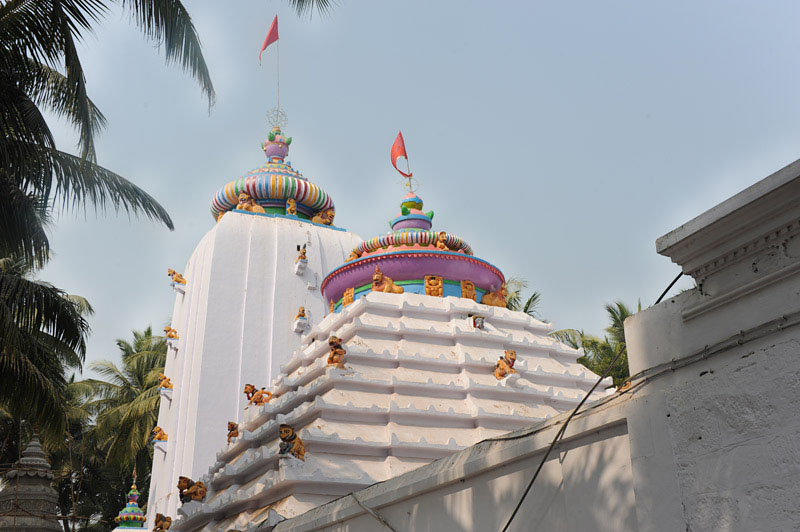
Viraja Kshetra: The Ancient Sacred Capital of Kalinga

Situated on the fertile banks of the holy Vaitarani River in Jajpur district, the city of Jajpur (known anciently as Viraja Kshetra, Gadh Kshetra, or Jajapur) is one of the oldest living cultural capitals of eastern India. Established as a royal imperial seat by King Jajati Keshari (Yayati I) of the Somavamsi dynasty and previously serving as the epicenter of the 8th-to-10th-century Bhauma-Kara kingdom, this sacred geography has been consecrated since the epic Vedic age, celebrated in the *Mahabharata*, *Vamana Purana*, and *Brahma Purana* as a place where the gods themselves performed great fire sacrifices (*Yajnas*).
At the center of this sacred mandala stands the Biraja Temple, dedicated to Maa Biraja (Viraja), the supreme mother goddess of Odisha. In the sacred Puranic geography of Shakti Peethas, Jajpur is celebrated as the Nabhi Gaya—the sanctified spot where the navel (*Nabhi*) of Goddess Sati fell following her self-immolation at the sacrifice of Daksha. Consequently, the temple complex houses the miraculous subterranean well known as *Brahmakunda* or *Nabhi Gaya*, where devout Hindus from across India perform sacred *Pinda Daan* (ancestral funeral offerings) to ensure the eternal liberation (*Moksha*) of their departed forefathers—an ancestral merit considered identical in spiritual efficacy to performing Shraddha at Gaya in Bihar.
Rare Gupta-Era Two-Armed Durga Iconography
The sanctum sanctorum of Biraja Temple enshrines a sculptural masterpiece of immense antiquarian significance. Unlike the classical medieval representations of Goddess Durga, who is universally depicted with eight, ten, or eighteen arms holding diverse celestial weapons, the idol of Maa Biraja is two-armed (Dvi-bhuja)—a rare archaic iconographic form dating back to the Gupta or late post-Gupta era (c. 5th–6th century CE), pre-dating the canonized medieval Shakta iconography.
In this ancient relief, carved from glistening black chlorite, the goddess stands triumphantly upon a lion mount with her right foot firmly planted upon the neck of the buffalo demon Mahishasura. With her right hand, she thrusts a formidable trident (*Trishula*) straight through the chest of the demon, while her left hand pulls his tail, subduing his beastly form before he can metamorphose into human guise. Art historians identify this pristine two-armed Mahishasuramardini as one of the oldest continuously worshipped Durga icons surviving anywhere on the Indian subcontinent, testifying to Odisha's foundational role in the genesis of Shakta goddess worship.
Simhadhwaja: India's Only Goddess Ratha Jatra
Among all Hindu temples in India, Biraja Temple holds a unique and extraordinary distinction: it is the only temple in the country where Goddess Durga rides in an annual nine-day Chariot Festival (Ratha Jatra). Known locally as the Simhadhwaja Ratha Jatra (Chariot with the Lion Banner), this grand spectacle takes place during the bright fortnight of the month of Ashwin, coinciding with the nine nights of Navaratri leading up to Vijayadashami.
For nine consecutive days, the moving bronze representative deity (*Chalanti Pratima*) of Maa Biraja is ceremoniously brought out from the inner sanctum and installed upon a towering wooden chariot decorated in vibrant red and white appliques. The chariot is pulled through the streets around the temple compound by thousands of impassioned devotees. Each day of the festival, the goddess halts at designated ritual pavilions (*Mandapas*) to receive floral offerings, sanctified food, and prayers from local families, recreating the grand royal pageantry that once animated the medieval capital of Kalinga.
Baruni Snana & The Legendary Chhena Gaja
Beyond the autumn Ratha Jatra, Jajpur hosts the ancient Baruni Yatra along the Vaitarani River. Observed during the dark fortnight of Chaitra month when specific astrological alignments occur (Satabhisha Nakshatra and Varuna Yoga), over half a million pilgrims gather at Dasaswamedha Ghat to perform *Baruni Snana*. Bathing in the holy river at this auspicious hour is believed to wash away the sins of a hundred lifetimes and cleanse the spiritual karmas of both the bather and their ancestors.
Culinary heritage is deeply woven into the Jajpur pilgrimage experience. The town is universally acclaimed as the birthplace of Chhena Gaja, one of Odisha's finest traditional desserts. Made from fresh cottage cheese (*Chhena*) mixed with semolina and cardamom, kneaded into rectangular blocks, deep-fried to a rich golden brown in pure ghee, and soaked in boiling sugar syrup, Jajpur's Chhena Gaja features a delicately crisp caramelized crust giving way to a soft, juicy interior that has delighted pilgrims for generations.
The Sacred Vaitarani Ghats & Dasaswamedha Heritage
A pilgrimage to Biraja Temple is incomplete without visiting the historic bathing ghats along the Vaitarani River, located just two kilometers north of the temple complex. Foremost among these is the sacred Dasaswamedha Ghat, where according to tradition, King Jajati Keshari performed ten magnificent horse sacrifices (*Ashwamedha Yajnas*) overseen by ten thousand learned Vedic Brahmins invited from Kanyakubja (Kannauj).
Lining the stone ghats are monumental shrines dedicated to Lord Varaha (the boar incarnation of Vishnu), Lord Shiva (Siddheswara), and the colossal monolithic rock statues of the Sapta Matrikas (Seven Mother Goddesses) and Chamunda, carved during the Bhauma-Kara era. Pilgrims take holy dips in the cool currents of the Vaitarani before proceeding to the Biraja sanctum, absorbing a spiritual atmosphere layered with two thousand years of living devotion.

The Imperial Metropolis of Guheswarapataka & Sacred Mandalas
Archaeological explorations across Jajpur have uncovered the ancient foundations of Guheswarapataka, the fortified imperial metropolis from which Bhauma-Kara sovereigns ruled Kalinga for over two centuries. Copperplate grants recovered at Neulpur, Terundia, and Hindol describe a vibrant royal city adorned with palaces, Buddhist viharas, and Shiva temples along the meandering channels of the Vaitarani. The entire territory was consecrated as a sacred triangular mandala, protected at its cardinal perimeters by eight divine Bhairavas, sixty-four Yoginis, and four colossal monolithic statues of Lord Ganesha, Vishnu, Surya, and Varaha.
Within the Biraja temple compound itself, pilgrims can worship the ancient Isaneswar Mahadev temple, admire the wish-fulfilling Kalpabata and Bakula trees where devotees tie sacred red cords (*Maanasika Dori*), and view preserved sculptural fragments of lion brackets and lotus rosettes that demonstrate the uninterrupted continuity of classical stone craftsmanship from the 5th century down to the present day.
Visitor Logistics & Travel Blueprint
| Aspect | Practical Details |
|---|---|
| Location & Access | Jajpur town, 30 km east of Jajpur Keonjhar Road railway station; 100 km north of Bhubaneswar via NH-16 (approx. 2 hrs drive). Regular buses and shared taxis connect the railway station to Jajpur town. |
| Nearest Railway Station | Jajpur Keonjhar Road (JJKR), a major stop on the Howrah–Chennai mainline, connected by frequent express and superfast trains. |
| Temple Timings | Open daily: 6:00 AM – 1:00 PM and 3:00 PM – 9:00 PM. Special afternoon bhog is served at 12:30 PM. |
| Ancestral Pinda Daan | Priests at the Nabhi Gaya well within the temple complex assist devotees in performing Shraddha and Pinda Daan rituals throughout the morning hours. |
| Nearby Buddhist Heritage | Can be combined with a visit to the famous Diamond Triangle Buddhist monasteries of Ratnagiri, Udayagiri, and Lalitgiri, located just 35 km southeast. |
Nearby Attractions & Explorations
- Diamond Triangle Buddhist Circuit: Ancient Mahayana-Vajrayana monasteries of Ratnagiri, Udayagiri, and Lalitgiri.
- Jajpur District Travel Directory: Ancient capital of Kalinga, Vaitarani ghats, and industrial steel city.
- Cuttack Millennium City Heritage: Historic Barabati fort, silver filigree craft, and Mahanadi riverbanks.
- Bhadrak District Travel Guide: Akhandalamani Shiva temple on Vaitarani and Dhamra fishing port.
- Bhubaneswar Temple City Guide: Lingaraj, Mukteshwar, and ancient Kalinga architectural treasures.
- Chausath Yogini Temple Hirapur: Rare 9th-century Tantric circular temple of the Bhauma-Kara era.
- Odisha State Portal: Complete master directory of destinations, districts, and travel guides across Odisha.
Frequently Asked Questions About Biraja Temple Jajpur
Why is Biraja Temple in Jajpur known as Nabhi Gaya?
According to the Puranas, the navel (Nabhi) of Goddess Sati fell at Jajpur. The temple houses the sacred Nabhi Gaya well, where performing ancestral Shraddha and Pinda Daan rituals is believed to grant immediate liberation (Moksha) to ancestors.
What is unique about the Durga idol at Biraja Temple?
Unlike classical multi-armed Durga statues, Maa Biraja is two-armed (Dvi-bhuja), spearing the buffalo demon with her right hand while pulling his tail with her left. This rare iconographic form dates to the 5th-6th century Gupta era.
What is the Simhadhwaja Ratha Jatra at Biraja Temple?
Biraja Temple is the only shrine in India where Goddess Durga has her own 9-day chariot festival (Ratha Jatra), celebrated during Ashwin Navaratri, where her chariot is pulled by thousands of devotees.
How far is Biraja Temple from the Diamond Triangle Buddhist sites?
Biraja Temple in Jajpur is located just 35 to 40 km from the renowned Buddhist monasteries of Ratnagiri, Udayagiri, and Lalitgiri, making it easy to visit both heritage circuits together.