1. Overview & Archaeological Significance
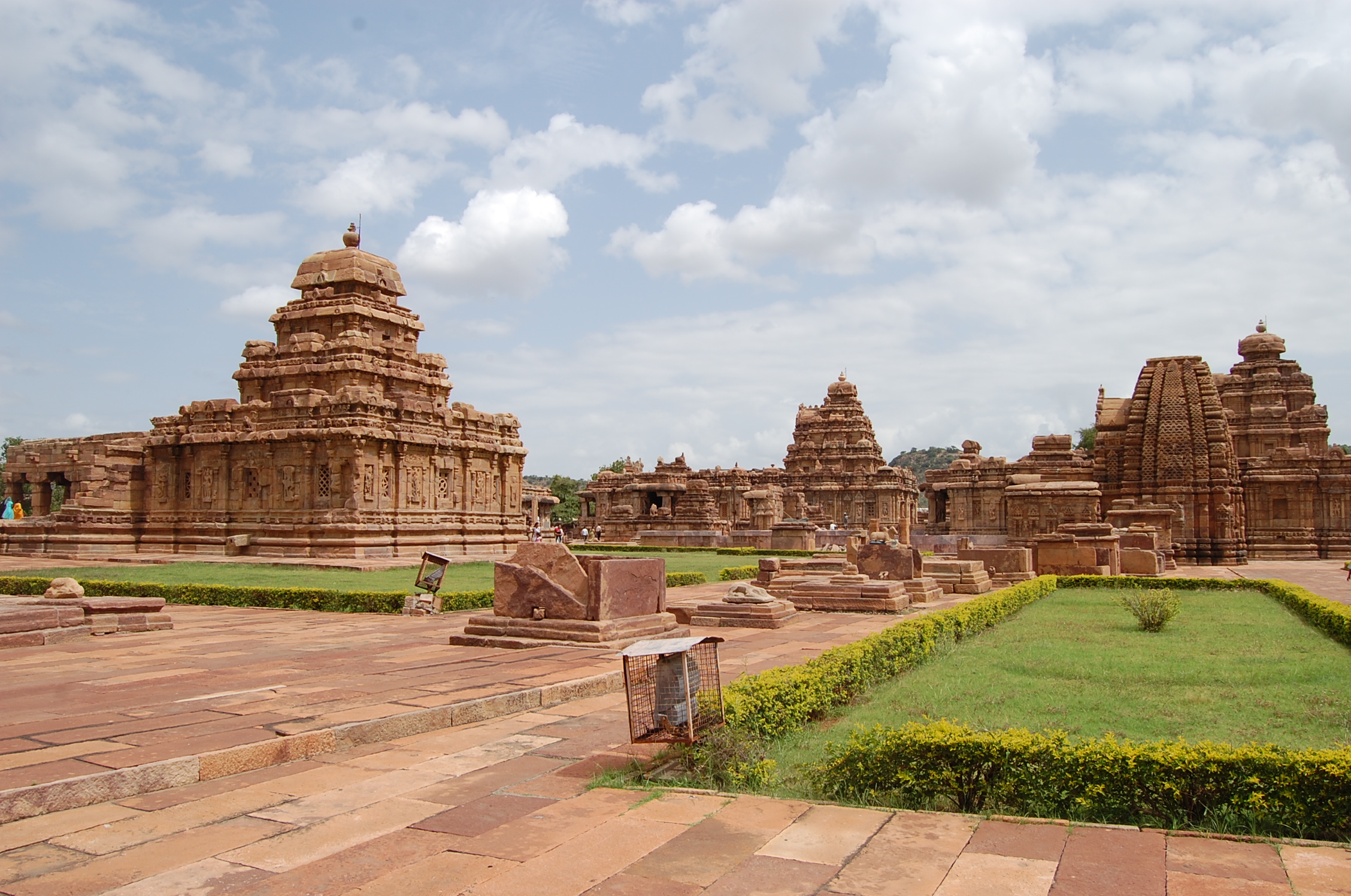
The Group of Monuments at Pattadakal, situated along a bend of the sacred Malaprabha River in Bagalkot district of northern Karnataka, is celebrated as the historic coronation city (*Pattada-kisuvolal*—'The City of the Crown Ruby') of the Early Chalukya dynasty. During the 7th and 8th centuries CE, while Badami served as the military capital and Aihole functioned as the experimental workshop, Pattadakal was reserved as the sacred ceremonial site where Chalukya emperors were crowned. Inscribed as a UNESCO World Heritage Site in 1987, the complex is renowned worldwide as the unique laboratory where Northern Indian (*Rekha-Nagara*) and Southern Indian (*Dravida*) temple styles converged, synthesized, and reached absolute perfection.
Located in the Bagalkot district of Karnataka, Pattadakal Group of Monuments Complex is centrally protected by the Archaeological Survey of India (ASI) as an irreplaceable landmark of South Asian civilization. Recognized for its vesara / fusion of dravidian (southern) & nagara (northern) styles, sandstone masonry, the site provides profound insights into the technological prowess, cosmological beliefs, and cultural aesthetics of its ancient builders.
2. Dynastic Origins, Royal Patrons & Chronology
The architectural pinnacle of Pattadakal is the monumental *Virupaksha Temple* (originally Lokeshwara Temple), built around 740–745 CE by Queen Lokamahadevi to commemorate the victorious military campaign of her husband, King Vikramaditya II, against the Pallava rulers of Kanchi. Impressed by the grand Kailasanatha Temple at Kanchipuram, the queen brought master architect Gunda Anivaritachari from the south to erect this supreme Dravidian monument. A few years later, her sister, Queen Trailokyamahadevi, built the adjacent *Mallikarjuna Temple* (Trailokeshwara).
Centrally protected by the Archaeological Survey of India (ASI), Pattadakal encompasses ten major temples—nine Hindu sanctuaries and one 9th-century Rashtrakuta Jain temple—standing within a single manicured riverfront enclosure, serving as the worldwide textbook for the evolution of Indian temple architecture.
3. Structural Engineering & Architectural Design
What makes Pattadakal globally unique is that temples of the northern Nagara style (with curvilinear rekha shikharas) and southern Dravidian style (with tiered pyramidal vimanas) stand side by side within a few yards of each other. The northern group includes the temples of *Kadasiddheswara*, *Jambulinga*, *Kasi Visweswara*, and the magnificent *Papanatha Temple*. The southern group includes *Virupaksha*, *Mallikarjuna*, *Sangameshwara*, and the *Jain Narayana Temple*.

The *Virupaksha Temple* is the largest and most sophisticated sanctuary in the complex. Measuring over 40 metres in length, it features a grand entrance gopuram, an open Nandi pavilion sheltering a colossal polished stone Nandi bull, an assembly hall supported by 16 massive carved pillars, and a towering four-storeyed Dravidian vimana crowned by a circular kalasha.
The interior pillars of Virupaksha and Mallikarjuna are world-famous for their encyclopedic narrative relief carvings. Sequential story panels illustrate the entire epics of the *Ramayana* (Rama's exile, abduction of Sita, building the bridge to Lanka), the *Mahabharata* (Bhishma on the bed of arrows, Arjuna's penance), and the *Panchatantra* fables, carved with remarkable emotional depth and animated realism.
4. Archaeological Excavations, Epigraphy & Conservation
Epigraphs discovered on the east porch of Virupaksha Temple record the official titles of master architects Gunda Anivaritachari and Baladeva, demonstrating royal appreciation for architectural genius.
ASI excavations along the Malaprabha riverfront uncovered 8th-century brick-paved ceremonial bathing ghats and stone embankments where royal coronation rituals occurred.
Conservation works restored the drainage slope across the temple complex, safeguarding the foundation sandstone from river flood saturation during high monsoon tides.
ASI entry ticket is ₹40 for Indian, SAARC, and BIMSTEC visitors via online booking (₹25 / ₹300 at counter), and ₹600 for foreign tourists. Free entry for children under 15.
5. Master Highlights & Archaeological Marvels
The Sangameshwara Temple, built by King Vijayaditya (reigned 696–733 CE), is the oldest surviving temple in the complex, showcasing pure, unadorned Early Dravidian lines.

The Papanatha Temple (c. 680 CE) represents an intriguing architectural hybrid: an intended Dravidian layout converted midway through construction into a northern Nagara shikhara.
The Jain Narayana Temple, situated 1 km west of the main cluster, was built in the 9th century by Rashtrakuta King Krishna II, featuring an impressive Dravidian vimana and massive stone elephant statues.
6. Visiting Hours, Entry Permits & Visitor Guidelines
Open daily from 6:00 AM to 6:00 PM. The ticket counters close at 5:30 PM.
Visiting during the morning hours (7:00 AM to 10:00 AM) allows travelers to explore the sprawling riverside grounds in cool temperatures and soft lighting.
Visitors must remove footwear before ascending the temple plinths. Shoe stands are provided near the ticket gate.
Touching or defacing ancient sandstone narrative reliefs is strictly prohibited by ASI regulations.
The complex is located on the bank of the Malaprabha River. Do not attempt to wade into the river waters during the monsoon season due to sudden currents.
7. Site Museum & Interpretation Centers
The ASI Sculpture Gallery situated near the entrance displays salvaged sculptures, epigraphs, and architectural cross-sections from regional Chalukya sites.
The historic town of Aihole (13 km away) preserves over 120 early experimental Chalukya temples and rock-cut caves.
8. Climate, Best Seasons & Ideal Visiting Hours
October to March is the best season to visit, characterized by cool, dry winter weather and temperatures between 18°C and 29°C.
The annual Pattadakal Dance Festival (*Chalukya Utsav*) is celebrated in January/February, featuring classical Indian music and dance performances amidst the floodlit monuments.
9. Transit Logistics, Rail, Air & Road Access
Pattadakal is located 22 km northeast of Badami, 13 km southwest of Aihole, and 140 km from Hubballi Airport (HBX).
Regular state transport buses, auto-rickshaws, and private rental cars connect Badami with Pattadakal and Aihole along well-paved state highways.
10. Regional Heritage Circuits & Sibling Monuments
Pattadakal is the crown jewel of the Early Chalukya UNESCO Heritage Trail:
Sacred Architecture & Darshan Protocol Guide
Maximize your spiritual journey: VIP vs Sugam Darshan line reality, locker rules, and historical truth.
- ✓Sugam Darshan & Token Blueprint: Accurate online booking rules, pre-dawn passes, and entry lane realities.
- ✓Zero Commercialization Guard: Avoid bogus intermediaries, fake priest fees, and paid blessing scams.
- ✓Locker, Footwear & Mobile Safety: Verified cloakroom locations, authorized phone lockers, and security rules.
- ✓Hidden Architectural Marvels: Inscriptions, subterranean sanctums, and forgotten stone carvings.
🛡️ Personally curated by PK Gupta & the Hidden Routes research desk. Delivered directly to your Email & WhatsApp within 4–8 hours.
11. Frequently Asked Questions
Why is Pattadakal called the Coronation City?
Historically named 'Pattada-kisuvolal', it was the sacred ceremonial site where Early Chalukya emperors were consecrated and crowned upon the throne in the 7th and 8th centuries.
What makes the architecture of Pattadakal unique in world heritage?
It is the only site in India where northern Nagara temples (curvilinear spires) and southern Dravidian temples (pyramidal spires) were built side by side in the same compound, synthesizing into the Vesara style.
Who built the famous Virupaksha Temple at Pattadakal?
It was commissioned around 745 CE by Queen Lokamahadevi to celebrate the military triumph of her husband, King Vikramaditya II, over the Pallava rulers of Kanchi.
When was Pattadakal inscribed as a UNESCO World Heritage Site?
Pattadakal was officially inscribed on the UNESCO World Heritage List in 1987 in recognition of its exceptional architectural and historical significance.
How far is Pattadakal from Badami?
Pattadakal is located 22 km (approx. 30 minutes by road) from Badami, along the scenic banks of the Malaprabha River.