1. Overview & Archaeological Significance
The Vimal Vasahi Temple (also known as the Adinatha Temple), situated amidst the cool mango groves of Mount Abu at an elevation of 4,000 feet (1,220 meters) in Sirohi district, Rajasthan, is universally revered by art critics, historians, and travelers as the supreme aesthetic zenith of marble carving in human history. Commissioned in 1031–1032 CE by Vimal Shah, the illustrious prime minister and commander of Chaulukya (Solanki) King Bhima I of Gujarat, the temple was erected as an act of profound spiritual expiation and repentance for the violence and bloodshed committed during his royal military campaigns.
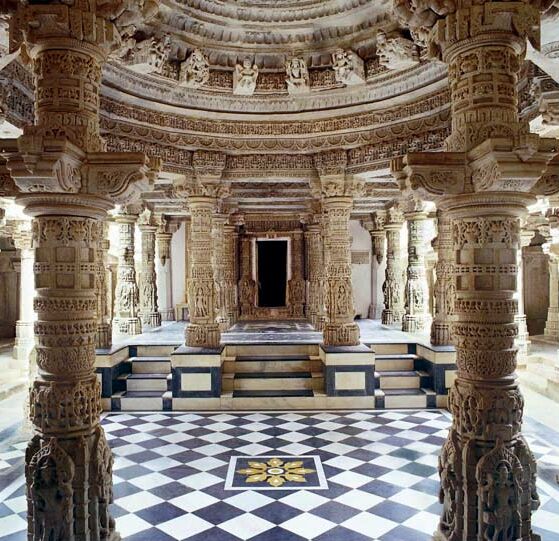
Located in the Sirohi district of Rajasthan, Dilwara Vimal Vasahi Temple Abu is centrally protected by the Archaeological Survey of India (ASI) as an irreplaceable landmark of South Asian civilization. Recognized for its apex classical māru-gurjara white marble temple architecture, translucent undercut lotus domes, 48-pillared rangamandapa & 52 cells, the site provides profound insights into the technological prowess, cosmological beliefs, and cultural aesthetics of its ancient builders.
2. Dynastic Origins, Royal Patrons & Chronology
According to ancient Jain chronicles, Vimal Shah was guided by his spiritual master, Acharya Vardhamanasuri, to dedicate his immense wealth to creating a monument of pure peace, purity, and non-violence (*Ahimsa*). Transporting thousands of tons of flawless white Makrana marble across hundreds of miles of roadless desert and hauling the colossal blocks up the steep, rocky 4,000-foot precipices of Mount Abu was an engineering feat of titanic proportions. Vimal Shah reportedly paid the master sculptors in gold and silver according to the weight of the marble dust they chipped away, inspiring carvings of impossible delicacy.
Dedicated to Lord Adinatha (Rishabhanatha), the first Tirthankara, Vimal Vasahi is the oldest and grandest of the five celebrated Dilwara temples. Its central marble dome—featuring a filigree lotus pendant carved to translucent, paper-thin delicacy—remains the gold standard against which all stone sculpture across the world is measured. Conserved by the Seth Anandji Kalyanji Trust, Vimal Vasahi is an unearthly temple of incandescent white light.
3. Structural Engineering & Architectural Design
While the exterior of Vimal Vasahi is deliberately plain and austere—designed to conceal the inner treasures from hostile invaders—the interior is a blinding, celestial symphony of pure white marble. The temple stands within a rectangular walled courtyard measuring 140 feet by 90 feet, entered through a pillared porch leading into an open hall.

The architectural climax of the temple is its *Rangamandapa* (dance hall), added in 1147–1180 CE. Supported by forty-eight exquisitely carved marble pillars decorated with celestial nymphs (*Apsaras*) playing flutes, cymbals, and harps, the hall is crowned by a staggering circular corbelled dome. From the center of the dome hangs a multi-tiered lotus pendant (*Padmadala*) carved with such miraculous precision that the marble petals appear almost translucent, resembling filigree lace or delicate ivory.
Arranged around the perimeter of the courtyard are fifty-two small cloistered shrines (*Devakulikas*), each housing a white marble Tirthankara idol. The portico ceilings of these cells are covered in hundreds of miniature narrative relief panels depicting the life of Lord Adinatha, the cosmic battles of Bharata and Bahubali, and sixteen bracket figures of *Vidyadevis* displaying breathtaking anatomical dynamism.
4. Archaeological Excavations, Epigraphy & Conservation
Conserved by the Seth Anandji Kalyanji Trust with specialized marble restoration experts.
Micro-cleaning using deionized steam poultices preserves the brilliant white luminosity of the 11th-century Makrana marble.
Installed climate-buffered stone walking paths and strict security controls to safeguard the irreplaceable marble carvings.
Entry to the Dilwara Temples is free. Temple trusts oversee admission, guidelines, and conservation.
5. Master Highlights & Archaeological Marvels
Pinnacle of World Marble Art: Widely recognized as the most delicate and intricately carved marble monument on earth.

Paper-Thin Lotus Pendant: A staggering central dome featuring an undercut marble lotus pendant of translucent delicacy.
52 Devakulika Cloisters: Courtyard enclosed by 52 marble shrines housing Tirthankaras and detailed narrative ceilings.
6. Visiting Hours, Entry Permits & Visitor Guidelines
Open for tourists from 12:00 PM to 5:00 PM daily (mornings reserved for worship). Exploring Vimal Vasahi requires 1 to 1.5 hours.
Midday visits allow bright natural light to reflect through the white marble halls, highlighting the microscopic undercutting.
Strict dress code: shoulders and knees must be covered; absolutely no leather items (shoes, belts, wallets) permitted.
Photography is strictly prohibited inside the entire Dilwara temple complex to preserve sanctity and security.
Deposit mobile phones and cameras in secure lockers at the entrance before proceeding through security checks.
7. Site Museum & Interpretation Centers
The Luna Vasahi Temple (Neminatha Temple, 1230 CE) is located immediately adjacent in the same complex.
Nakki Lake and the Mount Abu town center are located just 2.5 km to the southwest.
8. Climate, Best Seasons & Ideal Visiting Hours
October through March is the premier season to visit Mount Abu, featuring cool, crisp hill station weather between 12°C and 25°C.
Summer months (April–June) provide a refreshing escape from the scorching heat of the Rajasthan plains.
9. Transit Logistics, Rail, Air & Road Access
Located in Dilwara village, 2.5 km north of Mount Abu town in Sirohi district, southern Rajasthan.
Abu Road railway station on the Delhi-Ahmedabad main line is 28 km away; regular taxis and buses climb the scenic ghat road.
10. Regional Heritage Circuits & Sibling Monuments
Vimal Vasahi is the supreme jewel of the Mount Abu Sacred Heritage Trail:
Sacred Architecture & Darshan Protocol Guide
Maximize your spiritual journey: VIP vs Sugam Darshan line reality, locker rules, and historical truth.
- ✓Sugam Darshan & Token Blueprint: Accurate online booking rules, pre-dawn passes, and entry lane realities.
- ✓Zero Commercialization Guard: Avoid bogus intermediaries, fake priest fees, and paid blessing scams.
- ✓Locker, Footwear & Mobile Safety: Verified cloakroom locations, authorized phone lockers, and security rules.
- ✓Hidden Architectural Marvels: Inscriptions, subterranean sanctums, and forgotten stone carvings.
🛡️ Personally curated by PK Gupta & the Hidden Routes research desk. Delivered directly to your Email & WhatsApp within 4–8 hours.
11. Frequently Asked Questions
Why is the Vimal Vasahi Temple at Dilwara considered unmatched in art history?
It is celebrated as the absolute peak of stone carving in human history, featuring white marble carved with paper-thin undercutting that resembles lace or ivory.
Who commissioned Vimal Vasahi Temple and when?
It was commissioned in 1031 CE by Vimal Shah, prime minister of Chaulukya King Bhima I, as an act of spiritual penance for wartime bloodshed.
Which Tirthankara is enshrined in the sanctum?
The temple is dedicated to the first Tirthankara of Jainism, Lord Rishabhanatha (Adinatha), enshrined in pure white Makrana marble.
Is photography allowed inside the Dilwara temples?
No, photography and videography are strictly prohibited inside the Dilwara temples to maintain religious sanctity and security.
What are the visiting hours for tourists?
Tourists are admitted free of charge from 12:00 PM to 5:00 PM daily, with mornings reserved exclusively for Jain devotees.