1. Overview & Archaeological Significance
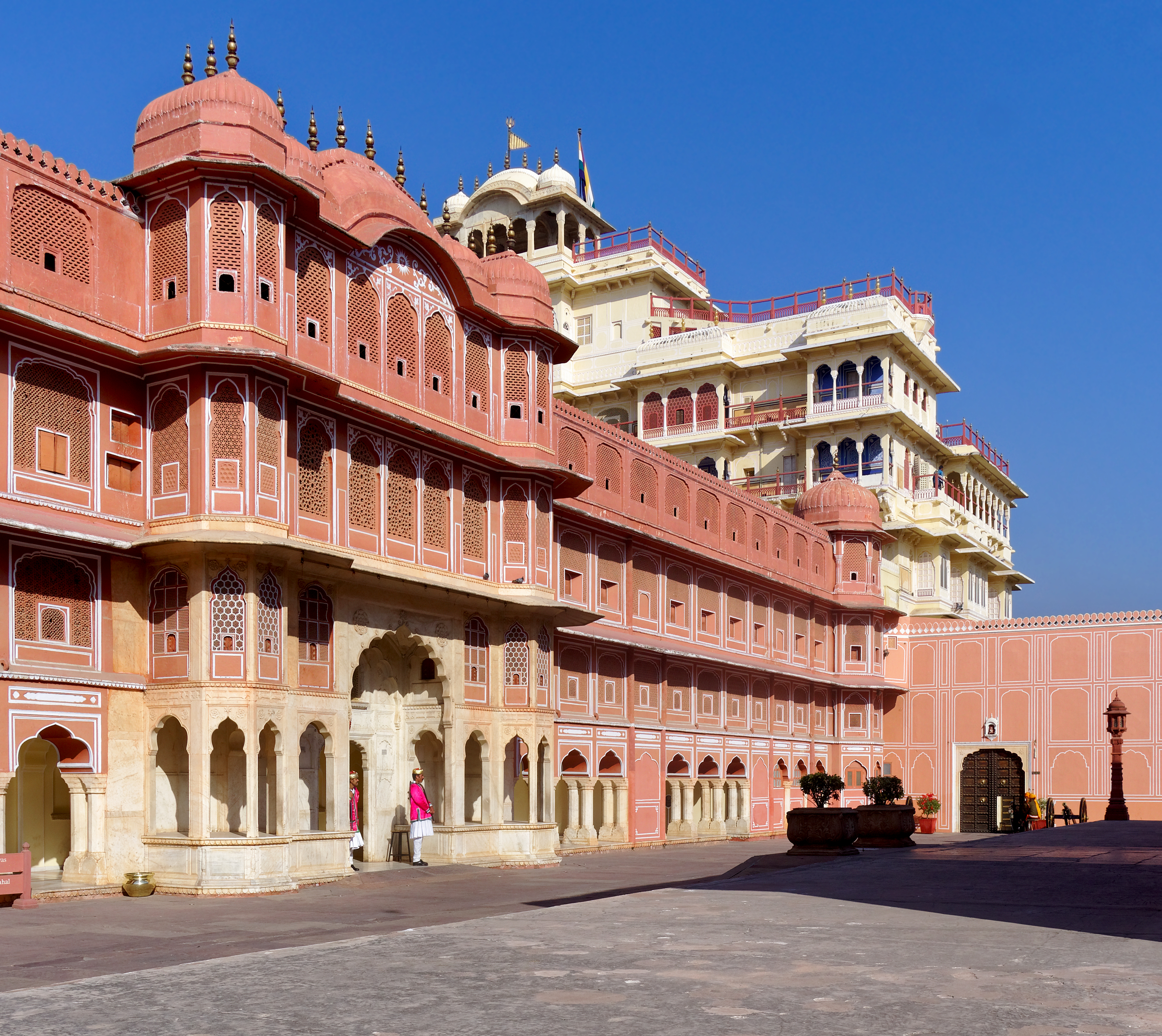
The City Palace of Jaipur, commanding the central grid of the UNESCO World Heritage Walled City of Jaipur, Rajasthan, is the magnificent, living royal residence and administrative citadel of the Kachhwaha Rajput dynasty. Founded in 1727 CE by the visionary astronomer-king Maharaja Sawai Jai Singh II when he relocated his imperial capital from Amber to the newly planned city of Jaipur, the palace complex was designed in accordance with ancient *Vastu Shastra* principles by master Bengali town planner Vidyadhar Bhattacharya, integrated with Mughal spatial geometry and European classical elegance.
Located in the Jaipur district of Rajasthan, City Palace Complex Jaipur is centrally protected by the Archaeological Survey of India (ASI) as an irreplaceable landmark of South Asian civilization. Recognized for its rajput-mughal-european fusion architecture, 7-storeyed chandra mahal, pritam niwas chowk peacock gates, the site provides profound insights into the technological prowess, cosmological beliefs, and cultural aesthetics of its ancient builders.
2. Dynastic Origins, Royal Patrons & Chronology
Spanning nearly one-seventh of the total area of the walled city, the palace continued to be embellished by successive Kachhwaha rulers over two centuries. In the late 19th century, Maharaja Sawai Madho Singh II added the monumental Mubarak Mahal reception pavilion; in 1902, when traveling to London for the coronation of King Edward VII, the orthodox Hindu monarch commissioned the royal silversmiths to forge two colossal sterling silver urns (*Gangajalis*) to carry 8,000 litres of sacred Ganges water with him across the ocean, earning an enduring Guinness World Record as the largest single sterling silver objects on earth.
Today, while the upper floors of the seven-storeyed *Chandra Mahal* remain the private residence of the titular Maharaja of Jaipur (Padmanabh Singh), the extensive courtyards and royal pavilions house the prestigious Maharaja Sawai Man Singh II Museum (MSMS II Museum Trust), displaying world-class collections of Rajput miniature paintings, royal armouries, and imperial textiles.
3. Structural Engineering & Architectural Design
The palace is structured across a series of grand interconnected courtyards, public audience pavilions, and private residential quarters. Approached through the grand *Virendra Pol* and *Udai Pol* gateways, the first courtyard shelters the *Mubarak Mahal* ('Auspicious Palace'), a multi-tiered reception pavilion built of white marble and sandstone featuring delicate hanging balconies, pierced screens, and classical European arches.

At the spatial center of the inner palace sits the *Pritam Niwas Chowk* (Courtyard of the Beloved), world-famous for its four jewel-like painted doorways representing the four Hindu seasons: the *Peacock Gate* (autumn, decorated with 3D mosaic glass feathers dedicated to Lord Vishnu); the *Lotus Gate* (summer, dedicated to Shiva and Parvati); the *Rose Gate* (winter, dedicated to Devi); and the *Green Gate* (spring, dedicated to Lord Ganesha).
The towering *Chandra Mahal* ('Moon Palace') soars through seven distinct architectural levels: Sukh Niwas (the blue-and-gold drawing room), Rang Mandir (the mirror hall), Shobha Niwas (the hall of beauty), Chhavi Niwas (the monsoon blue room), and the crowning Mukut Mandir, commanding 360-degree views over the Aravalli hills and Nahargarh Fort.
4. Archaeological Excavations, Epigraphy & Conservation
Restoration by the MSMS II Museum Trust in 2017 conserved the 18th-century vegetable-dye murals inside the Sabha Niwas (Diwan-i-Am) and restored historic crystal chandeliers.
The royal transport museum within the complex preserves the 1876 royal Victoria carriage gifted by the Prince of Wales during his historic visit to Jaipur.
Structural surveys verified the stability of the seven-storey Chandra Mahal masonry against regional seismic tremors.
Museum composite ticket (covers Mubarak Mahal, Armoury, and Courtyards): ₹300 for Indian citizens and ₹700 for foreign tourists. Exclusive guided tours of royal private chambers inside Chandra Mahal start from ₹2,500.
5. Master Highlights & Archaeological Marvels
The two Gangajali silver urns: Guinness World Record holders for the largest sterling silver objects on earth, each weighing 340 kg and standing 1.6 metres tall.

The Sileh Khana (Royal Armoury): exhibiting rare 16th-century Mughal and Rajput weapons, including the scissor-action katar daggers and personal swords of Man Singh I.
The royal flag (*Panchranga*): flies proudly atop Chandra Mahal; when the Maharaja is in residence, a smaller quarter-flag is flown beneath it.
6. Visiting Hours, Entry Permits & Visitor Guidelines
Open daily from 9:30 AM to 5:00 PM for daytime museum tours. A magical Night Viewing Tour runs from 7:00 PM to 10:00 PM with illuminated courtyards.
Visiting between 9:30 AM and 11:30 AM allows travelers to photograph the four seasonal gates in bright morning sunlight without crowd reflections.
Photography is permitted in the open courtyards; photography inside the royal museum galleries and armoury is strictly prohibited.
Visitors with standard museum tickets must respect private cordons marking the residential entrance to Chandra Mahal.
The palace courtyards are vast and pave with polished stone flagstones. Wear comfortable walking shoes and carry sun protection during midday.
7. Site Museum & Interpretation Centers
The Textile Gallery inside Mubarak Mahal exhibits rare 18th-century Pashmina carpets, gold-embroidered Zari gowns, and polo jerseys of Sawai Man Singh II.
The Jantar Mantar UNESCO Astronomical Observatory and Hawa Mahal are located within 3 minutes' walk outside the palace walls.
8. Climate, Best Seasons & Ideal Visiting Hours
October to March offers ideal weather, with pleasant daytime temperatures between 16°C and 28°C.
The annual Jaipur Literature Festival in January brings world-renowned authors and scholars to the heritage city.
9. Transit Logistics, Rail, Air & Road Access
Located in the heart of the Walled City, Jaipur. Badi Chaupar Metro Station (Pink Line) is 500 metres away.
Jaipur Junction Railway Station is 5 km away; Jaipur Airport (JAI) is 12 km away. Easily reached by taxi or e-rickshaw.
10. Regional Heritage Circuits & Sibling Monuments
City Palace is the imperial core of the Jaipur UNESCO World Heritage Royal Trail:
Sacred Architecture & Darshan Protocol Guide
Maximize your spiritual journey: VIP vs Sugam Darshan line reality, locker rules, and historical truth.
- ✓Sugam Darshan & Token Blueprint: Accurate online booking rules, pre-dawn passes, and entry lane realities.
- ✓Zero Commercialization Guard: Avoid bogus intermediaries, fake priest fees, and paid blessing scams.
- ✓Locker, Footwear & Mobile Safety: Verified cloakroom locations, authorized phone lockers, and security rules.
- ✓Hidden Architectural Marvels: Inscriptions, subterranean sanctums, and forgotten stone carvings.
🛡️ Personally curated by PK Gupta & the Hidden Routes research desk. Delivered directly to your Email & WhatsApp within 4–8 hours.
11. Frequently Asked Questions
Who lives in the City Palace of Jaipur today?
The titular Maharaja of Jaipur, Padmanabh Singh, and the royal family continue to reside in the private upper floors of the Chandra Mahal within the complex.
What are the two giant silver vessels inside the City Palace?
They are the world's largest sterling silver urns (Guinness Record), crafted in 1902 by Maharaja Sawai Madho Singh II to carry 8,000 litres of sacred Ganges water to England for King Edward VII's coronation.
What are the four famous gates of Pritam Niwas Chowk?
They represent the four seasons: the Peacock Gate (autumn), the Lotus Gate (summer), the Rose Gate (winter), and the Green Gate (spring), adorned with dazzling 3D glass mosaics.
What is the difference between standard and royal tickets at City Palace?
The standard ticket (₹300) covers public courtyards, museums, and armoury; the exclusive royal tour ticket (₹2,500+) includes access to the private chambers of Chandra Mahal.
When was the City Palace of Jaipur founded?
It was founded in 1727 CE by Maharaja Sawai Jai Singh II when he relocated his capital from Amber to the newly planned city of Jaipur.