Editor's pick
01 · Place
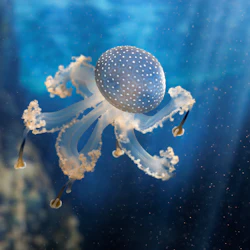
Oceanopolis
Oceanopolis, located in Brest, France, is a world-class marine park that serves as a hub for marine conservation, education, and research.
Curated from places in this city. Same price as official sites.
Prices shown are indicative — final pricing and availability are confirmed at checkout. Hidden Routes may receive a commission from bookings made via these links.
Not every monument, just the ones we'd walk you past ourselves.
Oceanopolis, located in Brest, France, is a world-class marine park that serves as a hub for marine conservation, education, and research.
Nestled within the vibrant city of Brest, France, the Centre for Breton and Celtic Research (CRBC) stands as a beacon of cultural preservation and scholarly…
The Garden National Botanical Conservatory of Brest is more than just a collection of plants; it is a living testament to the dedication of botanists and…
The Brest Museum of Fine Arts, known in French as the 'Musée des Beaux-Arts de Brest,' serves as a vital repository of artistic and cultural heritage in…
The Musée National de la Marine in Brest is a cornerstone of France's rich maritime heritage.
Discover the Téléphérique De Brest, a pioneering urban cable car system that transcends traditional transportation methods and offers a unique way to explore…
Pointe des Espagnols, located at the tip of the Crozon Peninsula in Brest, France, stands as a testament to the region's rich historical and military heritage.
40 places to discover
Bypass tourist traps with verified local logistics, exact parking coordinates, and field-tested routes.
🛡️ Personally curated by PK Gupta & the Hidden Routes research desk. Delivered directly to your Email & WhatsApp within 4–8 hours.
Brittany’s premier naval harbor. Explore the 1,700-year-old stone castle, the pioneering urban cable car over the Penfeld, and world-class ocean discovery sanctuaries.
Perched dramatically on a rocky promontory commanding the mouth of the Penfeld River and the vast 180-square-kilometer natural roadstead of the Rade de Brest, the Château de Brest is the oldest continuously active military fortress in the world, having served garrison duties without interruption from the late Roman Empire to the French Navy today:
Reinforced in the 17th century by Louis XIV's military engineer Vauban, the castle features towering granite curtain walls, moats, and gun platforms. Inside the fortress towers sits the Musée National de la Marine, exhibiting centuries of French naval power: monumental hand-carved wooden ship figureheads, scale shipyard models of 18th-century 100-gun ships of the line, navigational instruments, and artifacts from the tragic 1785 Pacific expedition of explorer Jean-François de La Pérouse, who departed from Brest never to return.
Heavily bombed during World War II due to its strategic German submarine pens, Brest rebuilt itself as a bold, contemporary maritime center of marine sciences and technology:
The Penfeld River divides the city into two distinct halves, spanned by the colossal Pont de Recouvrance—one of Europe's largest vertical-lift bridges (whose central 88-meter roadway lifts 52 meters in the air to allow naval frigates to pass into the military arsenals).
In 2016, Brest inaugurated the Téléphérique de Brest—France's first urban transit cable car. Gliding 72 meters high across the river between Boulevard Jean Moulin and the cultural center of Les Ateliers des Capucins (a titanic 19th-century naval machinery workshop transformed into galleries, cinemas, and skating plazas), passengers enjoy sweeping 360-degree aerial views over the naval shipyards and harbor for the price of a standard €1.70 public transit ticket.
Located at the Port du Moulin Blanc, Océanopolis is not merely an aquarium; it is a world-renowned oceanographic discovery center holding over 4 million liters of seawater, dedicated to scientific conservation and marine biodiversity:
Transit: High-speed TGV InOui trains link Paris (Gare Montparnasse) to Brest in 3 hours and 30 minutes. Bibus operates modern tramway (Line A) and electric bus networks across the city.
Seafood & Dining: Savor fresh Atlantic seafood platters (plateau de fruits de mer) heaped with langoustines, brown crabs (tourteau), and periwinkles at portside bistros on Quai de la Douane. For authentic Indian dining, visit Restaurant Le Maharaja on Rue Jean Jaurès.
Daily Budget (INR): ₹4,500–₹7,500 (€50–€85) for budget stays; ₹13,000–₹21,000 (€145–€235) for mid-range harbor-view hotels.
Departing west from Brest along the dramatic coastal road leads to the literal "End of the Earth" (Finistère) at Pointe Saint-Mathieu:
Here, high upon sheer 20-meter granite cliffs battered by the Iroise Sea, stand the romantic roofless Gothic stone ruins of a 6th-century Benedictine abbey. Rising directly through the center of the medieval ruins is the red-and-white Phare de Saint-Mathieu—a 37-meter lighthouse built in 1835 whose powerful beam sweeps 29 nautical miles across the treacherous Chenal du Four reef.
Continue five kilometers north to the charming granite fishing port of Le Conquet. Known for landing live brown crabs and spider crabs, its picturesque quays serve as the mainland embarkation point for passenger ferries to the rugged, car-free offshore islands of Ouessant and Molène.
Brest is the beating cultural heart of western Finistère's living Celtic music and maritime folklore. Throughout the year, and especially during the summer festival seasons, local community halls and harbor squares come alive with the traditional Fest-Noz ("Night Festival")—recognized by UNESCO as an Intangible Cultural Heritage of Humanity:
Generations link pinky fingers in communal circle dances, stepping to the hypnotic, rhythmic counterpoint of the bombarde (a double-reed Celtic shawm) and the biniou kozh (traditional Breton bagpipe). Visitors are warmly welcomed into the circle dances, where the joy of Breton community spirit is infectious.
The Parc Naturel Marin d'Iroise: Brest sits on the edge of France's first marine nature park, covering 3,500 square kilometers of pristine Atlantic waters. The marine park protects the largest kelp seaweed forest in Europe, home to thriving breeding colonies of grey seals (phoques gris), bottlenose dolphins, and hundreds of thousands of nesting puffins and cormorants. Board an eco-safari RIB boat from Brest to spot seals basking on rocky islets during summer migrations.