Destinations Brazil Rio De Janeiro

Rio De Janeiro.

22° S · 43° W Brazil

Rio De Janeiro, Brazil, surprises with its urban forest and Afro-Brazilian history in Pequena África. The guide covers 109 attractions. The best season to visit is May to September, with an average visit duration of 4-5 days.

The first time the Atlantic wind slams into you on Arpoador at dusk, carrying the smell of grilled sardines and sea salt while hundreds of cariocas burst into applause as the sun disappears behind Dois Irmãos, you understand why Rio de Janeiro refuses to be ordinary. This is a city where an Art Deco apartment building can share the same view with a waterfall inside a rainforest, where the Christ the Redeemer statue is less a monument than a compass rose for an entire metropolis. In Brazil’s most famous city, nature and culture do not politely coexist; they wrestle each other in plain sight.

🧭 Indian Traveler Quick Briefing — Rio De Janeiro:
  • 🛂 Destination: Rio De Janeiro, Brazil. Verify tourist visa / entry requirements before flying.
  • ✈️ Flight Access: International connections available from Delhi, Mumbai, and primary Indian hubs to regional gateways.
  • 💳 Contactless & Cash: Contactless Visa/Mastercard credit and debit cards work seamlessly across Rio transit (MetroRio, VLT) and Copacabana beach kiosks. Carry 100–200 BRL cash for smaller tips and emergency cash.
  • 🥗 Dining & Vegetarian: Rely on Rio's iconic Restaurantes por Quilo (pay-by-weight buffets) for fresh palmito, salads, roasted manioc, and rice. Verify beans: "Esse feijão é vegetariano? Tem carne?"
Rio De Janeiro, Brazil
Rio De Janeiro · Brazil
18
attractions
4-5 days
trip length
May to September
best season
EN · EN
narration
explore

03 Top tickets in Rio De Janeiro.

Book ahead

Curated from places in this city. Same price as official sites.

Prices shown are indicative — final pricing and availability are confirmed at checkout. Hidden Routes may receive a commission from bookings made via these links.

01 An introduction

synthesized from 240+ sources ·

Researched from Wikidata, Wikipedia & official sources · fact-checked · Verified travel intelligence for Indian travelers

RThe first time the Atlantic wind slams into you on Arpoador at dusk, carrying the smell of grilled sardines and sea salt while hundreds of cariocas burst into applause as the sun disappears behind Dois Irmãos, you understand why Rio de Janeiro refuses to be ordinary. This is a city where an Art Deco apartment building can share the same view with a waterfall inside a rainforest, where the Christ the Redeemer statue is less a monument than a compass rose for an entire metropolis. In Brazil’s most famous city, nature and culture do not politely coexist; they wrestle each other in plain sight.

Rio reveals itself in layers. There is the postcard Rio of Copacabana and Sugarloaf, sure. But the deeper city lives in the yellow trams rattling through Santa Teresa’s 19th-century mansions, in the sacred terreiros of Pequena África where samba was born on the stones of Pedra do Sal, and in the modernist palaces designed by Niemeyer, Costa, and Burle Marx that still shape how light falls across a room. The same Atlantic Forest that once covered the entire coast still pours down the slopes of Tijuca National Park and into the backyards of ordinary neighborhoods.

What moves you here is rarely the obvious landmark. It is the way locals treat the sidewalk in front of Bar Urca as their living room, the way the Real Gabinete Português de Leitura feels like a cathedral built for books, or how the city pauses every December 31 on Copacabana not just for fireworks but for an offering to Iemanjá. Rio constantly changes what you thought you understood about urban life.

Photography Hotspot

02 Why Rio De Janeiro.

What makes this place worth slowing down for.

Mountains & Ocean

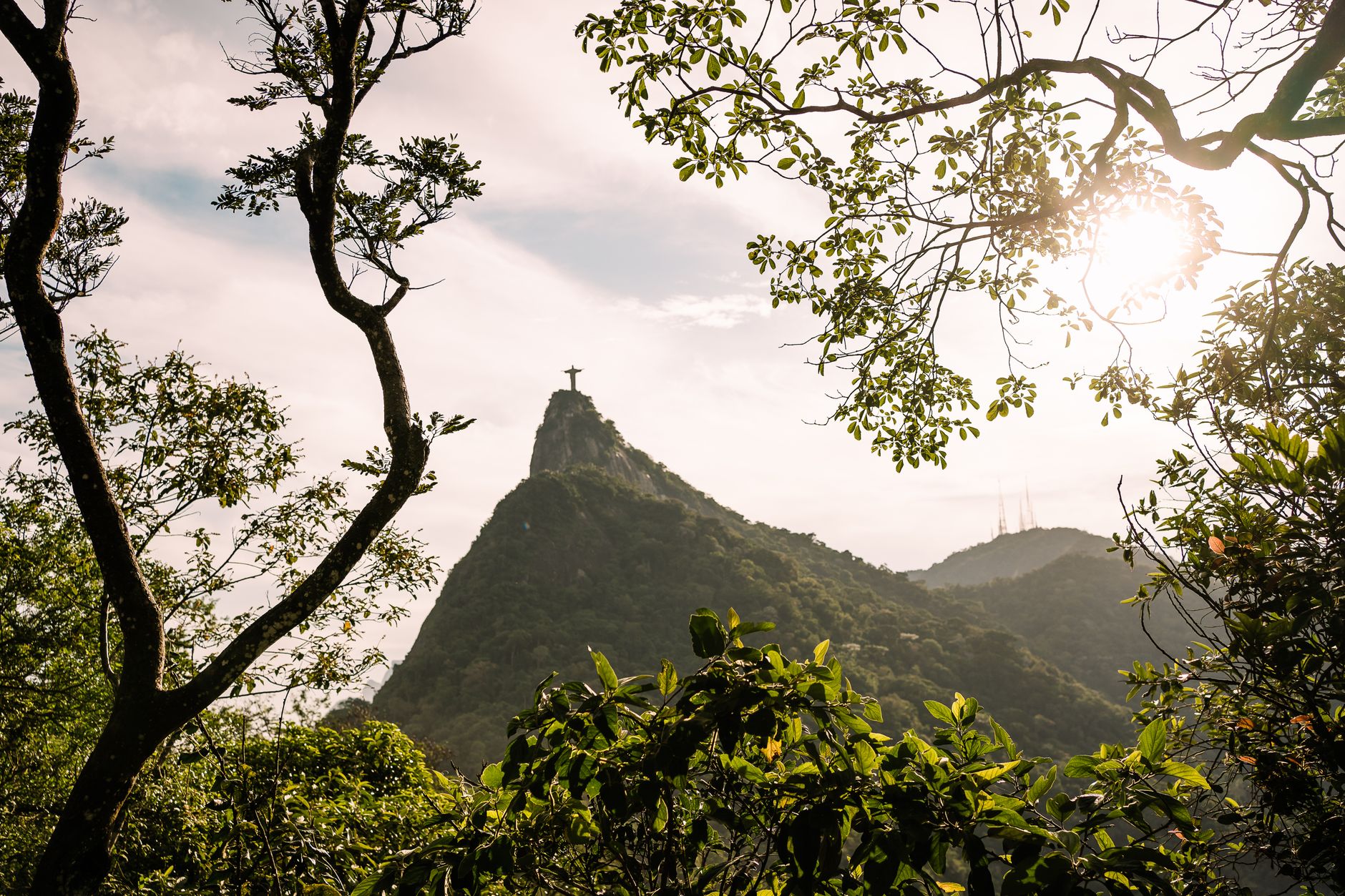
The city’s defining drama comes from granite peaks plunging straight into the Atlantic. Stand at Mirante Dona Marta at golden hour and you’ll see Corcovado, Pão de Açúcar, Guanabara Bay, and the Maracanã all in one sweeping frame — a view almost no other metropolis can match.

Modernist Rio

Oscar Niemeyer, Lúcio Costa, Roberto Burle Marx and Le Corbusier left their fingerprints across the city. The recently reopened Palácio Gustavo Capanema (May 2025) and the MAM’s Burle Marx gardens show how Brazilian modernism still feels alive rather than preserved.

Pequena África

The living heart of Afro-Brazilian Rio lies in Saúde and Gamboa. Walk from Cais do Valongo (UNESCO) to Pedra do Sal where samba was born, then sit in Largo São Francisco da Prainha at dusk when the drums start — this is where the city’s deeper story reveals itself.

Urban Forest

Tijuca National Park is one of the largest urban forests on Earth. Hike its trails to waterfalls and lookouts like Vista Chinesa and you understand why Cariocas say the jungle is the real soul of the city, not just green decoration.


03 Places to Visit.

Not every monument, just the ones we'd walk you past ourselves.

Escadaria Selarón
Editor's pick
01 · Place

Escadaria Selarón

A Chilean artist turned a worn public staircase into Rio’s loudest mosaic postcard, linking bohemian Lapa to the hillside calm of Santa Teresa today.

Tijuca National Park
02 Place

Tijuca National Park

Nestled in the vibrant city of Rio de Janeiro, Tijuca National Park is a sprawling urban rainforest that offers visitors a unique blend of natural beauty,…

03 Place

Isabel, Princess Imperial of Brazil

The Ciclovia Mané Garrincha in Rio de Janeiro, Brazil, is a shining example of urban innovation aimed at promoting sustainable transportation and celebrating…

04 Place

Catete Palace

Nestled in the vibrant Flamengo neighborhood of Rio de Janeiro, Catete Palace (Palácio do Catete) stands as a monumental emblem of Brazil’s rich imperial and…

05 Place

Tiradentes Palace

Nestled in the vibrant heart of Rio de Janeiro’s historic downtown, Tiradentes Palace (Palácio Tiradentes) stands as a monumental testament to Brazil’s rich…

06 Place

Praça Mauá

The Túnel Rio 450, also known as Túnel Prefeito Marcello Alencar, is a landmark infrastructure project in Rio de Janeiro, Brazil.

07 Place

National Library of Brazil

Nestled in the vibrant heart of Rio de Janeiro, the National Library of Brazil stands as one of Latin America’s most treasured cultural institutions and a…

04 Neighborhoods.

Where to wander, by quarter — each with its own rhythm.

01

Santa Teresa

A bohemian hillside village of crumbling mansions, artists’ studios, and sweeping views reached by the iconic yellow bondinho tram that reopened its Paula Mattos branch in 2025. Wander past the tiled wonder of Escadaria Selarón into Parque das Ruínas for one of the city’s most romantic lookouts, then settle into a long lunch on a vine-covered terrace.

02

Lapa

The beating heart of Rio’s nightlife where Arcos da Lapa frame nights of live samba. Once notorious, now essential: this is where cariocas still go for cheap caipirinhas, Circo Voador concerts, and the kind of street energy that makes other cities feel sedated.

03

Copacabana

The world’s most famous urban beach still delivers its particular theater: morning gym sessions on the calçadão, afternoon mate gelado with Biscoito Globo, and the nightly procession along Avenida Atlântica. Beyond the sand lies a dense neighborhood of classic bars and the late-night pernil sandwich shrine that is Cervantes.

04

Ipanema & Leblon

Elegant, expensive, and endlessly photogenic. Ipanema is where locals applaud the sunset at Arpoador; Leblon offers more polished bars along Rua Dias Ferreira. Both neighborhoods prove that carioca beach culture has layers beyond the tourist cliché.

05

Urca

The quiet, village-like neighborhood at the base of Sugarloaf where cariocas practice the sacred ritual of the Mureta: standing with cold beer, fried sardines from Bar Urca, and perfect Guanabara Bay views while the city slowly turns gold at dusk.

06

Botafogo

The current favorite among younger cariocas, especially around Rua Arnaldo Quintela. A perfect mix of independent bars, bookstores, restaurants, and that particular Rio talent for turning any sidewalk into an extended living room.

07

Port Zone / Praça Mauá

The revived waterfront where the futuristic Museu do Amanhã and the Museu de Arte do Rio (MAR) face each other across the square. This is modern Rio meeting its layered past, with Pequena África just steps away in Saúde and Gamboa.

08

Pequena África

The living heart of Afro-Brazilian Rio in the districts of Saúde, Gamboa, and Santo Cristo. Walk from the UNESCO-listed Cais do Valongo to Pedra do Sal where street samba still echoes the neighborhood’s role as the cradle of urban samba and site of profound historical memory.

Historical Timeline

From Mistaken River to Carnival Capital

Five centuries of empire, samba, and reinvention between forest and sea

Pre-Colonial Era
c. 2000 BCE

Ancient Shell Mound Builders

Long before any European set foot here, sambaqui societies piled enormous shell mounds along the shores of Guanabara Bay. These monumental middens, some rising several meters high, mark thousands of years of fishing, feasting, and ritual life by Indigenous peoples. Their silent presence still underlies the modern city’s foundations.

Colonial Foundations
1502

Portuguese Name the Bay

On January 1, Portuguese navigators sailed into the vast bay and mistook it for the mouth of a great river. They christened it Rio de Janeiro — River of January. The error would stick to the future city like salt on its skin. The Tupi peoples who actually lived here watched from the forest edge.

1555

France Antarctique Established

French admiral Nicolas Durand de Villegagnon seized an island in Guanabara Bay and built Fort Coligny. For a brief, tense decade the French dreamed of a Protestant colony in the tropics. Their alliance with the Tamoio people turned the bay into a battlefield of empires and Indigenous nations.

1565

Estácio de Sá Founds Rio

On March 1, Estácio de Sá planted a cross and a war camp at the foot of Sugarloaf. Cidade de São Sebastião do Rio de Janeiro was born as a military outpost against the French and their Tamoio allies. The air smelled of gunpowder and wet jungle from the first day.

1567

Battle of Uruçumirim

In January, Portuguese forces and their Temiminó allies crushed the last French-Tamoio resistance at the Battle of Canoas. Estácio de Sá died weeks later from wounds received in the fighting. The Portuguese victory secured the bay, but the land itself was already soaked in Indigenous and European blood.

Gold and Empire
1711

Duguay-Trouin Loots the City

French corsair René Duguay-Trouin sailed 18 warships into Guanabara Bay and occupied Rio for weeks. The city paid a staggering ransom — 610,000 cruzados, 100 boxes of sugar, and 200 oxen — to see them leave. The humiliation accelerated the building of the bay’s formidable fortress system.

1763

Capital Moves from Salvador

The Portuguese colonial capital shifted south from Salvador to Rio to better control the gold and diamond mines of Minas Gerais. Suddenly the sleepy port town became the nerve center of Portuguese America. Its streets filled with bureaucrats, soldiers, and the clink of Brazilian gold.

Royal Capital
1808

The Portuguese Court Arrives

Fleeing Napoleon, the entire Portuguese royal court — 15,000 people — disembarked in Rio. Dom João VI transformed a colonial outpost into the capital of a worldwide empire. The Botanical Garden was planted, libraries founded, and the city’s first printing press began to hum.

1811

Valongo Wharf Built

The largest slave port in the Americas took final form on the waterfront. An estimated 900,000 enslaved Africans passed through these stones. Today its archaeological remains stand as UNESCO World Heritage and a haunting counterpoint to Rio’s image of sun and samba.

Imperial Brazil
1822

Independence Declared

Pedro I shouted “Independence or Death!” on the banks of the Ipiranga, but it was in Rio that the Empire of Brazil was truly born. The city that had hosted the Portuguese court now became the seat of an independent American monarchy — an unusual twist of history.

1847

Chiquinha Gonzaga Born

In a modest Rio house, Francisca Gonzaga entered the world. She would become Brazil’s first great female composer, breaking every social rule. Her carnival march “Ó Abre Alas” still echoes through the streets she once scandalized. Rio taught her rhythm and rebellion in equal measure.

1888

Slavery Abolished

The Golden Law was signed in Rio’s Paço Imperial, ending nearly four centuries of legal slavery in Brazil. Princess Isabel put her name to the document while crowds cheered outside. Yet the city’s deep inequalities, written into its hills and favelas, would not disappear so easily.

Republican Era
1889

Republic Proclaimed

A bloodless military coup in Rio ended the Brazilian Empire. Marshal Deodoro da Fonseca declared the Republic from these same streets that had welcomed kings. The former imperial capital suddenly found itself the seat of a new, unstable republic.

1904

The Vaccine Revolt

When the city government tried to enforce compulsory smallpox vaccination amid radical urban demolition, the poor rose up. For a week in November, Rio burned with barricades and riots. The revolt revealed the deep resentment caused by Pereira Passos’ aggressive modernization.

1922

Foundation Stone of Christ the Redeemer

On Corcovado’s summit during the centenary of independence, the first stone was laid for what would become Rio’s most iconic symbol. The 30-meter Art Deco statue would take another nine years to complete, but the idea was already transforming the city’s silhouette and self-image.

1927

Tom Jobim Born in Tijuca

Antônio Carlos Jobim came into the world in a Rio suburb. The boy who grew up listening to the waves of Ipanema and the voices of the hills would later distill that sound into bossa nova. No one has ever captured the melancholy and sensuality of Rio’s seafront quite like him.

1931

Christ the Redeemer Dedicated

On October 12, the finished statue was unveiled before an astonished crowd. Its arms outstretched 28 meters wide, it watched over a city that was rapidly modernizing. From that day forward, no postcard of Rio would be complete without the figure on the mountain.

Modern Metropolis
1950

The Maracanazo

In the brand-new Maracanã stadium, 200,000 Brazilians watched in stunned silence as Uruguay scored in the final minute to win the World Cup. The “Maracanazo” became a national trauma. The stadium itself, built for glory, instead witnessed one of football’s greatest upsets.

1959

Bossa Nova is Born

In the apartments and beachfront bars of Copacabana and Ipanema, a new sound emerged — quiet, sophisticated, drenched in Rio’s particular light. Jobim, Vinicius de Moraes, and João Gilberto created bossa nova. The Girl from Ipanema would soon walk the world’s imagination.

1960

Capital Moves to Brasília

Brazil’s political heart moved inland to the new capital. Rio, suddenly no longer the national capital after 197 years, had to reinvent itself. It chose culture, beauty, and its own myth — becoming, if anything, even more intensely Carioca.

1984

Sambadrome Inaugurated

Oscar Niemeyer’s concrete cathedral of samba opened in time for Carnival. The Passarela do Samba transformed the chaotic street parades into a spectacular, ticketed spectacle. From the bleachers, the beating heart of Rio’s greatest cultural invention could now be properly worshipped.

Global City
2007

Samba Recognized as Heritage

IPHAN officially declared the samba schools and samba de morro of Rio as Brazilian cultural heritage. What began in the hills as the music of the marginalized was finally recognized as the country’s most powerful cultural export. The beat from the favelas had conquered the nation.

2012

UNESCO World Heritage

The dramatic landscape between mountains and sea — the Carioca cultural landscape — was inscribed on the UNESCO World Heritage List. For the first time, an entire urban cultural geography of beaches, peaks, and historic center received global recognition.

2016

Rio Hosts the Olympics

The first Olympic Games in South America opened under the shadow of Christ the Redeemer. The city staged the spectacle against a backdrop of political crisis and deep inequality. For two weeks the world’s eyes were fixed on Rio’s beauty — and its contradictions.

2018

National Museum Fire

A devastating fire destroyed much of Brazil’s oldest scientific institution in Rio’s Quinta da Boa Vista. Millions of irreplaceable artifacts and specimens went up in smoke. The tragedy became a painful symbol of the nation’s neglect of its own history and memory.

Present Day

06 Who lived here.

The people who shaped the city — and were shaped by it.

Architect 1907–2012

Oscar Niemeyer

Designed iconic buildings across Rio

Niemeyer shaped Rio’s modernist identity with the Museu de Arte Contemporânea in Niterói and the complex at MAM Rio. He loved the curve of the bay and the mountains, saying straight lines belonged to engineers while curves belonged to God. Walking past his buildings today, you still feel how he made concrete look weightless against the Atlantic Forest.

Landscape Architect 1909–1994

Roberto Burle Marx

Designed iconic gardens and parks in Rio

Burle Marx taught the city how to live with its jungle. His sweeping abstract patterns in the gardens of MAM and the Parque Lage still feel radical. He collected thousands of tropical plants and fought to protect the Atlantic Forest he saw being swallowed by the city he helped beautify.

Singer and Actress 1909–1955

Carmen Miranda

Rose to fame in Rio

Before Hollywood gave her fruit-hat fame, Carmen Miranda was singing in Rio’s casinos and theaters in the 1930s. The small museum in Botafogo now displays eight of her original costumes. Locals still argue whether she betrayed Brazilian culture or carried it triumphantly to the world.

Composer 1887–1959

Heitor Villa-Lobos

Born and raised in Rio

Villa-Lobos wandered Rio’s streets collecting the sounds of street vendors, samba, and Portuguese fado. He turned those noises into the Bachianas Brasileiras while living in Santa Teresa. Standing near the Theatro Municipal today, you can almost hear how he stitched the city’s chaos into symphonic music.

08 Where to Eat.

Where locals actually book dinner — not the tourist menus.

Fábrica do Pão de Queijo Fábrica do Pão de Queijo
Local favorite €€

Fábrica do Pão de Queijo

★ 4.9 View
Galeto 183 Galeto 183
Local favorite €€

Galeto 183

★ 4.8 View
Go Coffee Cidade Nova Go Coffee Cidade Nova
Cafe €€

Go Coffee Cidade Nova

★ 4.8 View
Bar Passarela do Samba Bar Passarela do Samba
Local favorite €

Bar Passarela do Samba

★ 4.9 View
sans papyrus sans papyrus
Local favorite €€

sans papyrus

★ 4.8 View
Bar Missing Link Bar Missing Link
Local favorite €€

Bar Missing Link

★ 4.7 View

09 Insider tips.

Small things that change how the city treats you.

Best Visiting Months

Visit May to September for drier weather, lower humidity, and easier sightseeing. January-February bring intense heat, higher rainfall, and more crowded beaches.

Safety First

Avoid all favelas entirely, even guided tours. Stick to Copacabana, Ipanema, Leblon, and daytime Centro; never walk on beaches after dark.

Metro Payment Hack

Use a contactless Visa or Mastercard directly at Metro gates—no local card needed. Single ride costs R$7.90; download the Jaé app for buses, BRT and VLT.

Sunset Strategy

Head to Arpoador for the daily sunset applause ritual locals love. For quieter views, Mirante Dona Marta offers Christ the Redeemer, Sugarloaf and the bay in one frame.

Cash vs Card

Carry some reais for small vendors and buses, but most tourist spots accept international cards. Official airport taxis use fixed rates posted at stands—always confirm before leaving.

Santa Teresa Tram

Ride the yellow bondinho that reopened its Paula Mattos branch in January 2025. It’s both transport and attraction, passing historic mansions and viewpoints.

10 Watch.

A few films to set the scene before you go.

Street Food in Rio de Janeiro 🇧🇷 - Its All Eats
Spanian

Street Food in Rio de Janeiro 🇧🇷 - Its All Eats

Rio de Janeiro Neighborhood Blueprints: From Oceanfront Postos to Bohemian Ridges

Rio is not a homogenous beach town; it is an archipelago of distinct cultural valleys and coastal micro-climates separated by towering granite massifs and the dense Atlantic rainforest of Tijuca. Understanding the city requires navigating its neighborhoods as sovereign worlds, each governed by its own social codes, street rhythms, and safety realities.

1. Copacabana: The Democratic Promenade & Iconic Mosaic Wave

Copacabana is Rio’s grand historic amphitheater. Stretching for 4 kilometers from the historic Portuguese fortress of Forte de Copacabana (Posto 6) to the rocky promontory of Leme (Posto 1), its sweeping curve of white sand is framed by the world-famous black-and-white wave-patterned Portuguese stone mosaic (calçada portuguesa) designed by modernist landscape architect Roberto Burle Marx. The beach is partitioned into numbered lifeguard stations called postos, which function as social coordinates: Posto 6 near the fort is calm, sheltered, and favored by stand-up paddleboarders and morning open-water swimmers; Posto 4 and 5 attract neighborhood regulars and casual beach soccer; Posto 2 and 3 feature beach tennis and volleyball nets.

Visitor Blueprint: Start your morning at Confeitaria Colombo inside Forte de Copacabana, savoring fresh tropical fruit juices, warm pão de queijo, and espresso on the seaside veranda overlooking the entire curve of the bay. On Sundays, the beachside avenue (Avenida Atlântica) closes to motorized traffic, transforming into a vibrant public corridor of rollerbladers, capoeira circles, and street performers. At sunset, head to the rocky outcrop of Pedra do Arpoador at the boundary between Copacabana and Ipanema, where hundreds gather daily to applaud the sun setting behind the twin peaks of Morro Dois Irmãos.

2. Ipanema & Leblon: Chic Sophistication, Bossa Nova & Designer Enclaves

Immortalized by Antônio Carlos Jobim and Vinicius de Moraes in "The Girl from Ipanema," this pair of adjacent upscale oceanfront neighborhoods represents the cultural zenith of Carioca sophistication. Divided by the Jardim de Alah canal that links the ocean to the inland lagoon (Lagoa Rodrigo de Freitas), Ipanema and Leblon offer immaculate tree-lined boulevards, upscale fashion boutiques on Rua Garcia d'Ávila and Rua Visconde de Pirajá, and some of the country’s most celebrated restaurants.

On the sand, Posto 9 remains the intellectual, artistic, and counter-culture epicenter of Ipanema, while Posto 8 is a celebrated hub for the LGBTQ+ community. Further west past the canal, Leblon (Postos 11 and 12) is quieter, family-friendly, and distinctly residential, sheltered under the towering cliffs of Vidigal. For dining, Leblon’s Rua Dias Ferreira is Rio’s culinary golden strip, packed with sophisticated bistros, wine bars, and artisanal ice cream parlors (sorveterias serving Amazonian cupuaçu and graviola).

3. Santa Teresa & Lapa: Bohemian Hilltops & Legendary Nightlife

Perched on the undulating ridge directly above downtown, Santa Teresa feels like a 19th-century village transplanted into a tropical canopy. With steep cobblestone streets, ornate decaying belle-époque mansions, and flourishing artist studios, it is reached by the historic bright yellow streetcar (O Bondinho de Santa Teresa), which trundles from central Rio over the towering 18th-century Roman-style aqueduct arches of Lapa (Arcos da Lapa). Visit the Parque das Ruínas, a public cultural center built into the dramatic brick and glass ruins of socialite Laurinda Santos Lobo’s mansion, providing unmatched 360-degree panoramas across Guanabara Bay, Downtown Rio, and the Sugarloaf.

Directly below the ridge lies Lapa, the beating cardiovascular system of Brazilian music. By day, visitors flock to the world-renowned Escadaria Selarón—215 vivid steps tiled with over 2,000 ceramic pieces from 120 nations by Chilean artist Jorge Selarón as a personal tribute to the Brazilian people. By night, particularly on Friday and Saturday, Lapa erupts into a sprawling street party. Historic venues like Rio Scenarium (a multi-story antique warehouse turned concert palace) and Carioca da Gema showcase virtuosic live Samba, Choro, and Forró bands.

4. Centro, Praça Mauá & Pequena África: The Historic & Cultural Roots

Rio was the capital of Brazil for nearly two centuries (1763–1960) and the only European royal seat in the Americas when the Portuguese court fled Napoleon in 1808. In Centro, you will encounter the historic Paço Imperial (Imperial Palace), the breath-taking gilded baroque interior of the Mosteiro de São Bento (Benedictine Monastery, founded in 1590), and the spectacular Real Gabinete Português de Leitura (Royal Portuguese Reading Room), routinely ranked among the most beautiful libraries on earth with its towering neo-Manueline dark wood bookshelves holding over 350,000 rare volumes.

Further north along the revitalized waterfront port is Praça Mauá, home to Santiago Calatrava’s futuristic, kinetic cantilevered masterpiece, the Museu do Amanhã (Museum of Tomorrow), and the sprawling 3,000-square-meter *Etnias* street art mural painted by Eduardo Kobra for the 2016 Olympics. Crucially, this district encompasses Pequena África (Little Africa) and the solemn archaeological remains of Cais do Valongo (Valongo Wharf), a UNESCO World Heritage site where an estimated 900,000 enslaved Africans were disembarked. A short walk away is Pedra do Sal, the spiritual birthplace of urban Samba, where passionate open-air acoustic rodas de samba take place every Monday and Friday evening around a sacred granite boulder.

5. Urca & Botafogo: Serene Coves, Culinary Innovation & Sugarloaf Base

Tucked at the foot of Sugarloaf Mountain (Pão de Açúcar), Urca is a tranquil, village-like residential enclave characterized by low-rise art deco homes, quiet tree-shaded avenues, and almost zero street crime. The neighborhood’s social gathering point is the low sea wall known as the Mureta da Urca, where Cariocas gather in the late afternoon to sit on the stone ledge with cold Brazilian beers and warm *empadas*, gazing across the bay at the silhouette of Christ the Redeemer. Adjacent Botafogo has evolved into Rio’s most innovative gastronomic and hipster enclave, home to experimental microbreweries, natural wine bars, and contemporary chef-driven bistros.

The Street Safety Protocol: Understanding "Não Dê Bobeira" in Rio

Few international cities suffer from as much sensationalized media coverage as Rio de Janeiro. While the city certainly faces complex socio-economic challenges, millions of international visitors travel through Rio safely each year by mastering local street awareness. The fundamental philosophy across Rio is codified in three Portuguese words: "Não dê bobeira" ("Don't act careless" or "Don't present an easy opportunity").

📱 Smartphone Hygiene

Do not walk along busy urban avenues (such as Avenida Nossa Senhora de Copacabana or outside Central do Brasil) holding your smartphone in front of you. Opportunistic snatch-and-grab cyclists (*bicicletários*) target distracted pedestrians. If you need to check Google Maps or call a ride, step inside a café, pharmacy, or storefront lobby.

🏖️ Beach Security

Take only what you need to the beach: a towel/canga, sunscreen, sunglasses, and a credit card or small cash. Leave passports, expensive DSLR cameras, and high-end jewelry in your hotel room safe. If traveling solo, ask a neighboring family or beach kiosk (*barraca*) operator to watch your belongings when dipping into the ocean (*"Pode dar uma olhadinha, por favor?"*).

🚗 Transit After Dark

MetroRio is exceptionally clean, air-conditioned, and safe during operational hours (5:00 AM to midnight; Sunday 7:00 AM to 11:00 PM). However, after 9:00 PM or when leaving nightlife venues in Lapa, Botafogo, or Santa Teresa, strictly use app-based rides (Uber or 99). Street cabs hailed at night may take convoluted routes or demand inflated cash fares.

🏘️ Favela Community Ethics

Favelas are home to nearly 25% of Rio's population. Visiting them requires ethical discretion. Strictly boycott commercial jeep "safari" tours that treat residential communities as human zoos. Instead, participate in walking tours organized by local community cooperatives in pacified communities like Santa Marta or hike the magnificent Morro Dois Irmãos trail starting from the top of the Vidigal community, hiring local mototaxis and eating at local resident-owned hilltop cafes.

Carnival in Rio: Sambadrome Parades vs. The Magic of Street Blocos

For five days preceding Ash Wednesday, Rio becomes the epicenter of the global cultural calendar. However, first-time international visitors are often surprised to discover that Rio Carnival consists of two completely distinct parallel experiences: the monumental stadium spectacle of the Sambadrome and the anarchic, democratic ecstasy of the street blocos.

The Sambadrome (Sambódromo Marquês de Sapucaí)

Designed by Oscar Niemeyer in 1984, the 700-meter concrete parade runway hosts the official competition between Rio’s elite samba schools (*Escolas de Samba* belonging to the *Grupo Especial* like Mangueira, Portela, Salgueiro, and Beija-Flor). Each school fields 3,000 to 4,000 costumed performers, massive mechanical floats, and a thunderous 300-piece drum section (*bateria*), performing a synchronized 75-minute thematic narrative. Tickets range from affordable grandstand bleachers (*arquibancadas*) to VIP hospitality suites (*camarotes*) featuring open bars and live performances.

The Street Blocos (Carnaval de Rua)

Free, democratic, and entirely unscripted, over 500 licensed street bands (*blocos*) parade through Rio’s neighborhoods from early January through post-Carnival weekend. Massive mega-blocos like Cordão do Bola Preta draw over a million costumed revelers through downtown avenues, while neighborhood favorites like Carmelitas in Santa Teresa, Banda de Ipanema, and Sargento Pimenta (a brass band playing Beatles hits reimagined into samba and maracatu rhythms) offer infectious community warmth. Wear glitter, festive costumes, and comfortable sneakers.

Curated Rio Itineraries & Regional Excursions

How to maximize your expedition across Rio de Janeiro, with regional road connections to historical ports and mountain retreats:

The 4-Day Essential Rio Itinerary

  • Day 1: Ocean Icons & Golden Hour — Morning walk along Copacabana and Forte de Copacabana breakfast. Afternoon lounging at Ipanema Posto 9. Applaud the sunset from the rocks of Pedra do Arpoador, followed by dinner in Leblon.
  • Day 2: The Two Wonders — Early 8:00 AM Corcovado cog railway to Christ the Redeemer to avoid clouds and crowds. Midday descent into the tranquil shaded alleys of the Rio Botanical Garden (*Jardim Botânico*). Late afternoon cable car ascent up Sugarloaf Mountain (*Pão de Açúcar*) for sunset over Botafogo Bay.
  • Day 3: Imperial History & Bohemian Beats — Morning exploring Centro: Royal Portuguese Reading Room, São Bento Monastery, and Santiago Calatrava's Museum of Tomorrow. Ride the yellow tram into Santa Teresa for lunch at *Aprazível*, explore the Selarón Steps, and spend the evening at an authentic live samba venue in Lapa.
  • Day 4: Atlantic Rainforest & Coastal Heights — Hike the Morro Dois Irmãos trail above Vidigal for Rio's most dramatic vantage point, or take a scenic drive through Tijuca National Park to Vista Chinesa and Taunay Waterfall. Unwind with evening drinks on the sea wall at Mureta da Urca.

Regional Add-On Excursions from Rio

  • Paraty & Costa Verde (4–5 hours southwest): Take a comfortable Costa Verde executive bus along the emerald coastline to the 18th-century UNESCO cobblestone port of Paraty. Sail wooden schooners across crystal-clear island bays, tour historic alembic cachaça distilleries, and explore the colonial Gold Trail.
  • Petrópolis (1.5 hours north): Ascend the dramatic Serra dos Órgãos mountain pass to the historic summer residence of Dom Pedro II. Tour the Imperial Museum of Brazil, the French Gothic Cathedral of Saint Peter of Alcantara, and the eclectic aviation pioneer Santos-Dumont Museum.
  • São Paulo (50-minute flight / 6-hour highway): Connect seamlessly via daily air shuttles (*Ponte Aérea*) departing every 30 minutes between Rio's Santos Dumont airport (SDU) and São Paulo Congonhas (CGH) to explore Brazil's financial and culinary capital, São Paulo.

12 Frequently asked

Is Rio de Janeiro worth visiting?

Yes, Rio remains worth visiting in 2026. The dramatic pairing of forest-covered mountains, beaches and modernist landmarks still feels singular, though the city rewards slower exploration of Santa Teresa, Pequena África and the Port Zone more than rushed checklist visits.

How many days do I need in Rio de Janeiro?

Plan at least 4-5 full days. Three days covers Christ the Redeemer, Sugarloaf and the main beaches. Five days lets you add Tijuca National Park, Santa Teresa tram rides, Museu do Amanhã, and a walk through Pequena África without feeling rushed.

Is Rio de Janeiro safe for tourists in 2026?

Exercise increased caution. Avoid favelas completely, do not walk on beaches at night, and be alert on public buses. The “Curta o Rio com Segurança” campaign provides current multilingual safety advice.

What is the best way to get from Galeão Airport to Copacabana?

The executive bus from GIG to Terminal Intermodal Gentileza costs R$15 and runs every 20 minutes from 6:00 to 00:00. From Gentileza take the VLT or a pre-paid taxi (official rate to Copacabana is R$107–130).

How much does it cost to visit Christ the Redeemer and Sugarloaf?

Both attractions require timed tickets bought online. Expect combined costs of roughly R$300–400 per person including transport. Early morning at Corcovado or late afternoon at Sugarloaf helps avoid the worst crowds.

When is the best time to visit Rio de Janeiro?

May to September offers the most comfortable weather for sightseeing with less rain. December to March brings peak beach energy and major events but higher heat, humidity and rainfall risk.

13Before you go

Practical Information

Flight

Getting There

Rio is served by two airports in 2026: Galeão–Tom Jobim (GIG) for most international flights and the conveniently located Santos Dumont (SDU) for domestic routes. From GIG, the best option is the executive bus to Terminal Intermodal Gentileza (R$15, every 20 min, 6:00–00:00) where you connect to VLT or Metro. Official pre-paid taxis from GIG to Copacabana cost R$107–130.

Directions transit

Getting Around

MetrôRio runs three lines (1, 2, 4) with single fares at R$7.90; contactless international cards work directly at the gates. The VLT tram system (lines 1–4) links the port zone and Santos Dumont for R$5.00. Since August 2025 the Jaé card is required for all municipal buses, BRT and VLT. Bike Itaú offers 6,700 bikes across 430 stations if you want to ride the South Zone waterfront.

Thermostat

Climate & Best Time

Rio is warm year-round. Summer (Dec–Mar) is hot, humid and rainy with January temperatures often exceeding 30 °C. Winter (Jun–Aug) is milder and drier, averaging 20–26 °C. May to September offers the best balance of pleasant weather and fewer crowds for sightseeing; December to March is peak beach season but expect sudden downpours.

Shield

Safety

Both U.S. and UK governments advise exercising increased caution in 2026. Avoid all favelas entirely, even with guides. Do not walk on beaches after dark and be alert on public buses. The state tourism campaign “Curta o Rio com Segurança” provides useful multilingual guidance on common scams and emergency numbers. Stick to Copacabana, Ipanema, Leblon and daytime Centro.

Explore Rio De Janeiro with Hidden Routes

9 h 20 min of Rio De Janeiro,
downloaded once.

All Places to Visit.

107 places to discover

Escadaria Selarón
Place

Escadaria Selarón

Tijuca National Park
Place

Tijuca National Park

Place

Isabel, Princess Imperial of Brazil

Place

Catete Palace

Place

Tiradentes Palace

Place

Praça Mauá

Place

National Library of Brazil

Place

Rio De Janeiro Cathedral

Place

Museum of Modern Art, Rio De Janeiro

Place

National Historical Museum

Place

Old Cathedral of Rio De Janeiro

Place

Candelária Church

Place

Laranjeiras Palace

Place

Rio De Janeiro Botanical Garden

Place

Paris Square

Place

Naval Museum

Place

Monument to the Dead of World War Ii

Place

Church of the Order Terceira Do Carmo

Place

Saint Anne

Place

Jesuits' Bridge

Place

Niterói Contemporary Art Museum

Place

Church of Our Lady of Lapa Dos Mercadores

Place

Church of Saint Francis of Paola

Place

Caxias Cemetery

Place

Écomuseum of the Matadouro Cultural Quarter

Place

Pedra Da Gávea

Place

Saúde

Place

Antônio Carlos Jobim

Place

Imperial Palace of Santa Cruz

Place

Christ the Redeemer

Place

Earth Sciences Museum

Place

Museum of Astronomy and Related Sciences

Place

Rio Art Museum

Place

Carmen Miranda Museum

Place

Rocinha Footbridge

Place

Museu Nacional

Place

Teatro Municipal

Place

Museu Nacional De Belas Artes

Place

Valongo Wharf

Place

Place

Royal Portuguese Cabinet of Reading

Ladeira Da Misericórdia
Place

Ladeira Da Misericórdia

Place

Cinelândia District

Place

Sítio Roberto Burle Marx

Place

Ilha Da Gigóia

Place

Maceió (Niterói)

Place

Vidigal

Place

Vila Isabel

Showing 1–48 of 107 places

✓ Handcrafted on Demand • Zero Automated Fluff ⚡ 4–8h Delivery via Email & WhatsApp 📍 Focus: Rio De Janeiro

Curated Field Dossier & Offline Google Maps Pin Pack

Bypass tourist traps with verified local logistics, exact parking coordinates, and field-tested routes.

  • ✓
    Exact GPS Pin Pack: Unmarked parking spots, best dawn photography vantage points, and hidden trailheads.
  • ✓
    Crowd-Avoidance Timing Matrix: Exact hour-by-hour windows to explore with zero tourist chaos.
  • ✓
    Vetted Local Dhabas: 100% authentic, hygiene-checked regional food stops not on commercial maps.
  • ✓
    Scam & Overcharge Shield: Verified taxi rates, auto fares, and local guide fee guidelines.
₹ 99 ₹499 80% OFF

🛡️ Personally curated by PK Gupta & the Hidden Routes research desk. Delivered directly to your Email & WhatsApp within 4–8 hours.

🔒 Secure Razorpay Checkout 💳 UPI & International Cards

Explore More in Brazil & Beyond