
1. Ranthambore Fort: The Impregnable Forest Fortress
While globally renowned today as India's premier tiger reserve, Ranthambore's deepest historic identity is anchored in its colossal 10th-century fortress. Perched on a 215-metre-high flat-topped sandstone cliff inside the core tiger reserve, Ranthambore Fort is a classic *Vana Durga* (forest fort) and was inscribed as a UNESCO World Heritage Site in 2013 as part of the Hill Forts of Rajasthan group. Historical records attribute its founding in 944 CE to the Chauhan ruler Sapaldaksha, chosen for its commanding position overlooking the confluence of the Aravalli and Vindhya mountain ranges.
The fort achieved immortal fame in 1301 CE during the epic reign of Rao Hammir Dev Chauhan, celebrated in Rajput bardic lore for his stubborn chivalry (*Hammir Hath*). When Hammir gave refuge to Muhammad Shah, a rebellious Mongol general fleeing Sultan Alauddin Khilji of Delhi, Khilji besieged the fort for over twelve months with an army of 300,000 soldiers. When provisions failed, the Rajput warriors wore saffron robes for the final death-charge (*Saka*), while Queen Ranga Devi led the women in Rajasthan's very first documented historical *Jauhar* by plunging into the waters of the Padmavati Talab within the fort. The ruins of Hammir's Court, Badal Mahal, and 32-pillared cenotaph (*Battis Khamba Chhatri*) stand today as somber testaments to this heroic siege.
2. Trinetra Ganesha: India's Postal Deity
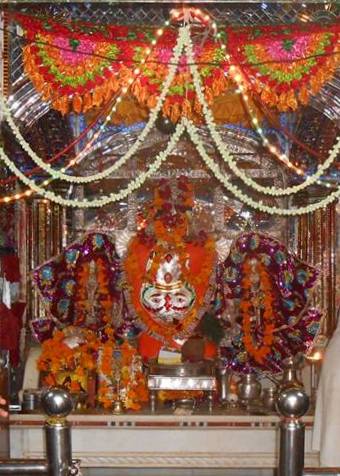
Deep within the ramparts of Ranthambore Fort sits one of the most unique and revered shrines in India: the Trinetra (Three-Eyed) Ganesha Temple. Built in 1299 CE by King Hammir Dev following a divine dream during Khilji's siege, the deity is represented as an uncarved orange-vermilion rock face with three eyes, flanked by his consorts Riddhi and Siddhi and his sons Shubh and Labh.
The temple is famous across the subcontinent for receiving thousands of physical letters and wedding invitation cards daily by mail. By deep-rooted Rajasthani tradition, before any auspicious marriage or event takes place, the first printed invitation card is addressed to 'Lord Trinetra Ganesha, Ranthambore Fort, Sawai Madhopur'. Local postmen climb the fort steps daily delivering sacks of letters, which the temple priests read before the deity to seek divine blessings. Devotees may walk the 1.5-kilometre stone ramp from the fort gate to the temple on foot without paying safari forest fees, though caution is required as monkeys and occasionally leopards inhabit the surrounding cliffs.
3. Safari Zones 1 to 10: Sighting Dynamics
Ranthambore National Park covers 1,334 square kilometres, divided into 10 distinct tourism safari zones to disperse vehicular pressure and preserve core wildlife corridors. The park's terrain is characterized by dry deciduous forests dominated by Dhok trees (*Anogeissus pendula*), open grasslands, and dramatic rocky gorges with natural water bodies:
- Zones 1 to 5 (The Historic Core): These are the most coveted zones, featuring the famous historic lake circuit—Padam Talao, Rajbagh Lake, and Malik Talao. Here, ancient stone watchtowers, ruins of the red sandstone Jogi Mahal, and water lily beds create the iconic backdrop for tiger sightings. High tiger density and frequent sightings around lake shores make these zones premier choices.
- Zone 6 (Kundal): Bordering the hills of Kala-Pani, this zone features undulating scrub and sand terrain, frequently sharing tiger territories with Zone 1.
- Zones 7 and 8 (Balas): Located in rugged, elevated mountainous terrain with rocky escarpments, ideal for spotting leopards, sloth bears, and elusive raptors.
- Zones 9 and 10 (Chidikho and Antri): Situated in the buffer tracts along the Chambal and Banas rivers, featuring wild ravines, riverine forests, and birding spots, with growing tiger residency.
4. The Legend of Machali & Tiger Conservation
Ranthambore holds a revered place in global wildlife conservation history as the proving ground of Project Tiger (launched in 1973). The park was the kingdom of the legendary tigress T-16, affectionately named *Machali* (The Fish) due to a fish-shaped fork marking on her left cheek. Reining over the lake territories for an astonishing 19 years (1997–2016), Machali became the most photographed wild cat in the world, famously filmed battling and killing a 14-foot Mugger crocodile in Padam Talao.
Machali's genetic lineage transformed Ranthambore; more than 60 percent of the park's current tiger population descends from her litters. Her offspring were also used in historic reintroduction programs to repopulate Sariska Tiger Reserve after its local extinction in 2004. Today, Ranthambore's wild Bengal tiger population exceeds 80 individuals, alongside healthy populations of Indian leopards, sloth bears, marsh crocodiles, striped hyenas, sambar deer, and over 320 species of birds.

5. Safari Bookings, Vehicles & Practical Tips
Safari permits in Ranthambore are strictly regulated and monitored by the Rajasthan Forest Department through its official single-sign-on portal (sso.rajasthan.gov.in):
| Vehicle Type | Capacity | Advantages | Recommended For |
|---|---|---|---|
| 6-Seater Maruti Gypsy | 6 passengers + guide + driver | Quiet, maneuverable, handles steep rocky terrain with ease, allows rapid repositioning. | Serious photographers, wildlife enthusiasts, small families. |
| 20-Seater Open Canter | 20 passengers + guide + driver | Elevated seating height allows visibility over tall grassland and scrub. More economical. | Solo travelers, budget tourists, large groups. |
Booking Timeline: Advance online booking opens 90 to 365 days prior to the safari date. Zones are allocated randomly by computerised lottery at the time of permit issuance to prevent vehicle crowding. The park is open from October 1 to June 30 each year, remaining closed during the monsoon breeding months (July to September), though buffer zones (Zones 6 to 10) may remain accessible.
Historical Chronicles, Inscriptions & Hammir Dev Chauhan's Defiance
The historical significance of Ranthambore is indelibly tied to the legendary reign of Rao Hammir Dev Chauhan (reigned 1282–1301 CE), celebrated in Rajasthani folklore through the immortal couplet: 'Tiriya tel, Hammir hath, chadhe na dooji baar' (Just as oil is rubbed on a bride only once before marriage, Hammir's vow is taken but once and never retracted). Hammir granted asylum to Muhammad Shah, a rebel Mongol general fleeing from Sultan Alauddin Khalji of Delhi, refusing to surrender him even when threatened with the complete destruction of his kingdom.
During the catastrophic year-long siege of 1301 CE, imperial Delhi armies constructed massive earthworks (pashib) to match the height of Ranthambore's cliffs. Stone inscriptions preserved near the 32-Pillared Chhatri document the sheer ferocity of the siege: inside the fort, food stocks were exhausted to such an extent that chronicler Amir Khusrau wrote that 'one grain of rice was purchased for two grains of gold, and yet no food was to be had'. When defeat became inevitable, Rani Ranga Devi led the heroic first documented Jauhar of Ranthambore, immolating herself alongside hundreds of Rajput women in the waters of Padam Talao, while Hammir Dev and his surviving warriors donned saffron robes and rode out for their final, fatal Saka charge.
In modern times, Ranthambore Fort was inscribed as a UNESCO World Heritage Site in 2013 under the 'Hill Forts of Rajasthan' cluster. Today, the Archaeological Survey of India (ASI) manages structural conservation across its 4-square-kilometre hilltop perimeter, painstakingly stabilising medieval sandstone arches, cleaning lichen from the Toran Dwar, and preserving the habitat of thousands of Indian flying foxes that roost in the ancient banyan trees shading Hammir's palaces.