Chandipur Beach — The Vanishing Sea & Horseshoe Crab Coast
Nowhere else on the Indian subcontinent does the ocean play such a mesmerizing game of hide-and-seek. Twice each day at Chandipur-on-Sea in Balasore district, the tide recedes up to five kilometers out to the horizon, exposing an immense, firm seabed where visitors can literally walk upon the ocean floor among living-fossil horseshoe crabs.

The Science of the Vanishing Sea
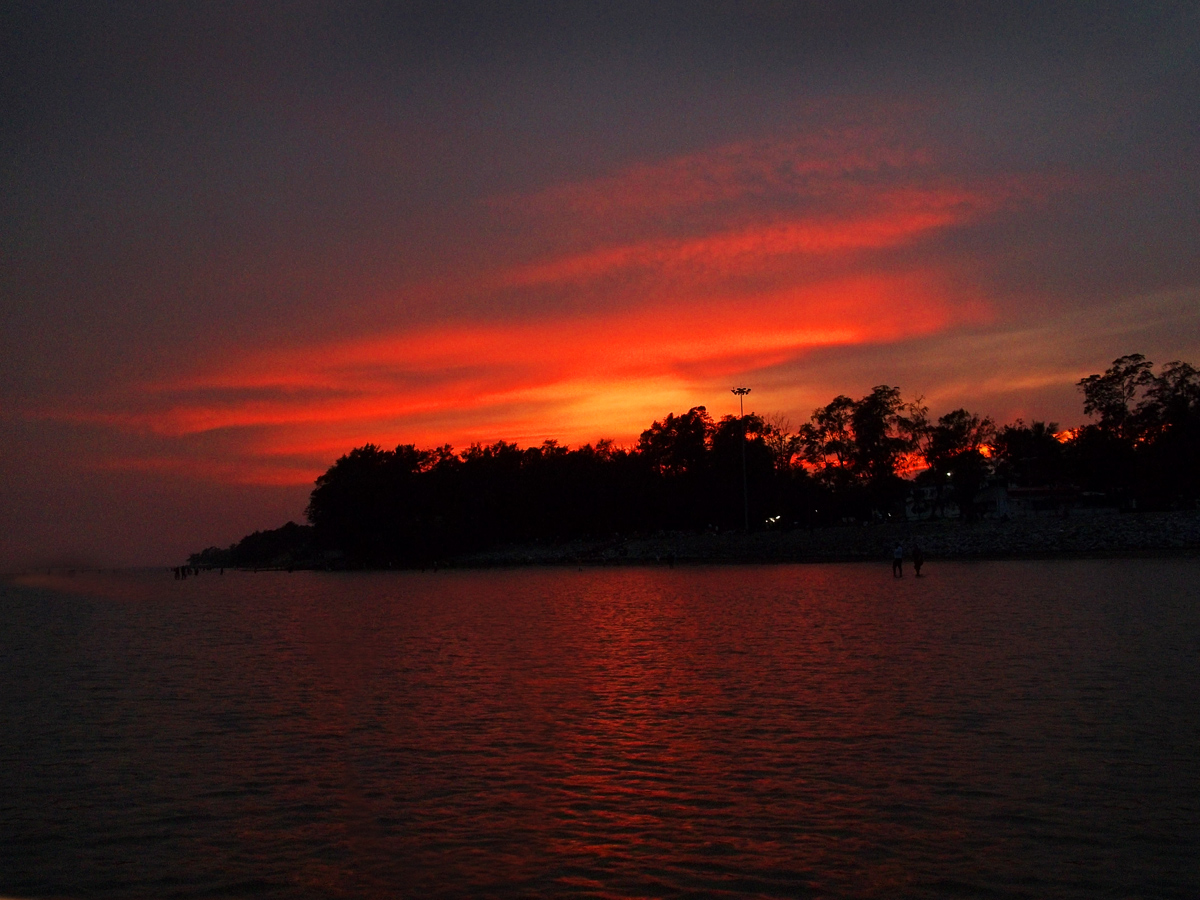
Situated 16 kilometers east of the district headquarters at Balasore in northern Odisha, Chandipur Beach (also known as Chandipur-on-Sea) is home to one of the world's most dramatic tidal phenomena. Twice every 24 hours, the Bay of Bengal retreats between 3 and 5 kilometers away from the shoreline at ebb tide, leaving behind an astonishingly broad, glistening expanse of firm, compacted wet sand. Visitors standing at the water's edge can watch the ocean water visibly retreat into the far distance, completely uncovering a submarine world that remains underwater across other coastlines.
This remarkable occurrence is the result of unique oceanographic and bathymetric conditions. The continental shelf off the Balasore coast features an extraordinarily gentle gradient—sloping at less than 1 in 1,000—combined with a macrotidal range where tidal amplitudes frequently exceed 4 meters. When the astronomical tide recedes, the water must travel kilometers seaward just to drop a few meters in elevation. Because the sand is heavily packed with fine silt deposits carried down by the nearby Budhabalanga and Subarnarekha river estuaries, the exposed sea floor is firm enough for visitors to walk, jog, or even ride bicycles kilometers into the open seabed without sinking into quicksand.
As high tide approaches, the sea returns with astonishing speed. What was a barren expanse of sand turns back into a rhythmic swell within a couple of hours. Local tourism authorities and beach lifeguards sound cautionary sirens and patrol the flats, ensuring that wandering travelers return to the safety of the coastal embankment well before the rising waters close in.
Intertidal Marine Life: Mudskippers, Ghost Crabs & Fiddlers
When the vast continental shelf drains of seawater, Chandipur's intertidal mudflats become an open-air biological stage. Millions of amphibious Mudskippers (*Periophthalmus* species)—specialized fish capable of breathing air through their skin and vascular mouth linings—hop vigorously across the exposed mudbanks, using their muscular pectoral fins like miniature legs. Beside them, dense colonies of Fiddler Crabs (*Uca rosea*) wave their disproportionately enlarged, brightly colored master claws in rhythmic courtship displays, while tiny Ghost Crabs race across the ripples at startling speeds.
Sea anemones, brittle stars, hermit crabs inhabiting discarded gastropod shells, and ribbon worms (*Nemertea*) emerge from subterranean hideouts, sifting nutrients from the moist film of sea salt. This staggering abundance of intertidal invertebrates makes Chandipur a primary winter staging ground for migratory wading birds traveling along the Central Asian Flyway. Birdwatchers strolling the mudflats at dawn regularly sight Whimbrels, Eurasian Curlews, Bar-tailed Godwits, Sanderlings, Lesser Sand Plovers, and Brown-headed Gulls foraging voraciously along the retreating tidal margin.
Living Fossils: The Endangered Horseshoe Crabs
Chandipur's intertidal mudflats serve as one of the most critical breeding and nursery grounds on earth for two species of Horseshoe Crabs: the Tri-spine Horseshoe Crab (*Tachypleus gigas*) and the Mangrove Horseshoe Crab (*Carcinoscorpius rotundicauda*). Despite their popular name, these remarkable creatures are not true crabs; taxonomically, they are marine chelicerates more closely related to spiders and scorpions, having survived virtually unchanged in morphological form for over 450 million years—predating dinosaurs by over 200 million years.
During the full moon and new moon spring tides, pairs of horseshoe crabs emerge from the shallows to lay thousands of translucent greenish eggs in shallow nests along the wet sand. These ancient arthropods possess brilliant copper-based blue blood containing *Limulus Amebocyte Lysate* (LAL), an indispensable biochemical agent used universally by biomedical and pharmaceutical laboratories worldwide to test injectable medicines, vaccines, and surgical implants for dangerous bacterial endotoxins. Marine biologists from Fakir Mohan University in Balasore and the Zoological Survey of India regularly conduct monitoring programs at Chandipur to protect these vulnerable living fossils from habitat disturbance and bottom-trawling nets.
Defense Heritage & Abdul Kalam Island
Chandipur occupies a proud and vital chapter in modern Indian scientific and strategic defense history. Just south of the public tourist beach lies the Integrated Test Range (ITR) of the Defence Research and Development Organisation (DRDO). Established in 1982 under the leadership of Dr. A.P.J. Abdul Kalam, this high-security launch complex has served as the proving ground for India's strategic missile systems, including the Agni, Prithvi, Akash, Trishul, and BrahMos supersonic cruise missiles.
Approximately 70 kilometers down the coast in the Bay of Bengal lies Dr. A.P.J. Abdul Kalam Island (formerly Wheeler Island), where India's longest-range intercontinental ballistic missiles are test-fired into the open ocean. While the military installations are strictly restricted and closed to civilian visitors, tourists at Chandipur beach occasionally catch distant glimpses of missile contrails streaking into the azure sky during authorized testing windows.

Coastal Gastronomy & Fresh Bay Seafood
The convergence of the Budhabalanga river mouth and the nutrient-rich Bay of Bengal makes Balasore one of eastern India's richest marine fisheries. Chandipur is renowned for exceptionally fresh, flavorful seafood prepared in distinct northern Odia coastal culinary style:
- Chingudi Jhola & Malai Curry: Giant freshwater and tiger prawns caught in the estuaries, stewed in mustard paste (*Besaara*) or rich coconut cream with green chilies.
- Kankada Jhola: Mud crabs caught along the intertidal mangroves, cooked in a fiery curry of crushed ginger, garlic, bay leaves, and roasted cumin powder.
- Fried Pomfret & Hilsa (Ilish): Freshly landed fish marinated simply with turmeric, sea salt, and mustard oil, pan-fried crisp and served with steamed rice and tangy tomato-khatta.
- Balasore Mudhi-Mansa: The iconic regional specialty of puffed rice (*Mudhi*) served alongside rich, slow-simmered mutton curry and chopped onions—a beloved breakfast and evening tradition across Balasore and Mayurbhanj districts.
- Balaramgadi Fish Harbor: Located 3 km down the beach where the Budhabalanga River joins the sea, this bustling landing port offers an authentic look at hundreds of colorful trawlers unloading fresh catch each morning.
Visitor Logistics & Excursions
| Aspect | Practical Details |
|---|---|
| Getting There | 16 km east of Balasore railway station via a smooth, tree-lined state highway. Auto-rickshaws and taxis run frequently between Balasore town and Chandipur beach (30-minute ride). |
| Nearest Railway Station | Balasore (BLS), a major railway junction on the Howrah–Chennai mainline, connected by dozens of daily express and Vande Bharat trains to Kolkata (3 hrs) and Bhubaneswar (2.5 hrs). |
| Accommodations | Odisha Tourism Development Corporation (OTDC) operates the well-maintained Panthanivas Chandipur right on the beach, alongside several private seaside resorts and guest houses. |
| Nearby Excursions | Remuna (19 km): Sacred 13th-century Khirachora Gopinath Temple famous for its delicious condensed milk pudding prasada (Amrita Keli). Panchalingeswar (45 km): Five rock-carved Shiva lingas submerged beneath a perennial hill spring in the Nilgiri hills. |
| Best Season | October to March, when coastal breezes are cool and daytime temperatures hover between 20°C and 28°C. |
Nearby Attractions & Explorations
- Balasore District Travel Directory: Maritime heritage, Fakir Mohan Senapati legacy, and golden beaches.
- Talsari Beach & Subarnarekha Estuary: Tranquil beach with red ghost crabs on the Odisha-Bengal border.
- Mayurbhanj District & Baripada: Royal heritage, Chhau dance, and gateway to Simlipal Biosphere.
- Simlipal Tiger Reserve & Biosphere: Odisha's premier tiger reserve harboring rare melanistic black tigers.
- Bhadrak District Travel Guide: Adjoining coastal district with Akhandalamani temple and Dhamra port.
- Chandrabhaga Beach Konark: Blue Flag certified beach adjoining the UNESCO Sun Temple.
- Odisha State Portal: Complete master directory of destinations, districts, and travel guides across Odisha.
Frequently Asked Questions About Chandipur Beach
Why does the sea vanish at Chandipur Beach?
The sea recedes up to 5 kilometers twice a day due to an exceptionally flat, low-gradient continental shelf combined with large tidal variations in the Bay of Bengal. When low tide occurs, the water retreats over the shallow sea floor, allowing people to safely walk on the ocean bed.
Is it safe to walk into the sea at Chandipur during low tide?
Yes, walking on the firm sand during low tide is safe and a unique tourist experience. However, visitors must heed the warnings of local lifeguards and sirens, and return to the shoreline before high tide rushes back.
What is the significance of the horseshoe crabs found at Chandipur?
Horseshoe crabs are living fossils that have existed for over 450 million years. Their unique blue blood contains Limulus Amebocyte Lysate (LAL), a critical substance used globally to test vaccines and medicines for dangerous bacterial contamination.
What are the top attractions near Chandipur Beach?
Top nearby places include the sacred Remuna Khirachora Gopinath Temple (famous for Amrita Keli milk sweet), the picturesque hill spring of Panchalingeswar, Kuldiha Wildlife Sanctuary, and the historic maritime port town of Balasore.