Archaeological Reality: Fifth-Century Buddhist Monastic Cells
Perched atop a low, sandstone knoll rising gracefully near the center of Pachmarhi town, the Pandav Caves represent one of the most historically significant architectural monuments in the Satpura highlands. The complex consists of five individual rock-hewn chambers carved directly into the living sandstone rock face, providing the town of Pachmarhi with its very namesake—'Panch' (five) and 'Marhi' (caves).
While popular folklore links the caves to the mythological Pandava brothers of the Mahabharata, archaeological excavations, stone masonry techniques, and architectural comparative studies conducted by the Archaeological Survey of India date these chambers to approximately the fifth to ninth centuries CE, during the Gupta and post-Gupta eras.
During this historical epoch, Buddhist monks and ascetics traversed ancient trade routes connecting the fertile Narmada valley with the Deccan plateau. The secluded, elevated plateau of Pachmarhi provided an ideal setting for establishing viharas (monastic retreats) where monks could meditate, study scriptures, and seek spiritual tranquility far removed from worldly turmoil.
- Etymological Origin: The five caves ('Panch Marhi') gave the hill station of Pachmarhi its historic name.
- Fifth-Century Buddhist Vihara: Carved by meditating Buddhist monks during the classical Gupta epoch.
- Monolithic Rock Architecture: Hewn directly from natural sandstone hillocks with chisels and mallets.
- Protected ASI Monument: Maintained within beautifully landscaped ornamental floral gardens.
The Pandav Caves complex is maintained as a protected archaeological site by the Archaeological Survey of India (ASI) in collaboration with the MP Tourism Development Corporation. The manicured terraced gardens surrounding the caves are open daily from 8:00 AM to 6:00 PM. A nominal admission ticket of 20 INR per person is collected at the garden turnstile. Stone steps lead up to the cave chambers.
The Five Chambers: Draupadi Kuti, Bhima Kot and Monastic Halls
The five chambers are arranged horizontally along the crest of the sandstone mound, connected by a narrow stone terrace. In local tradition, each cave is named after one of the epic characters: Yudhishthira, Arjuna, Bhima, Nakula-Sahadeva, and Draupadi.
The most prominent and spacious chamber is Draupadi Kuti (Draupadi's Cell), located at the eastern end. Unlike the other relatively dark cells, this chamber is well-ventilated, featuring a wide arched entrance that allows natural light to illuminate its smooth, hand-chiseled interior walls and raised stone sleeping platform.
At the western end lies Bhima Kot, characterized by massive, unadorned stone pillars and a dark, cavernous interior that stays remarkably cool even during midday summer heat. Several chambers feature rectangular recesses carved into the walls that once served as oil lamp niches and book repositories for Buddhist manuscripts, alongside channels cut into the stone floor for water drainage.

Mythological Folklore: The Exiled Pandavas in Satpura
Throughout central India, epic traditions are deeply woven into the physical landscape. According to regional folklore, when the five Pandava brothers—Yudhishthira, Bhima, Arjuna, Nakula, and Sahadeva—along with their consort Queen Draupadi, were exiled for thirteen years following the fateful game of dice, they spent a substantial portion of their wanderings concealed in the dense, impenetrable forests of the Satpura Range.
Local legends recount that the brothers carved these five chambers out of the solid rock using their divine weapons to provide shelter during the harsh monsoon and winter months. The formidable strength of Bhima was believed to have hollowed the largest cave, while Arjuna’s archery skills carved water springs from the underlying stone.
Even after modern historical surveys established the Buddhist monastic origins of the monument, this rich epic narrative remains cherished by local residents and visiting pilgrims, embodying the timeless cultural tendency of Indian civilization to sanctify natural landmarks through the living lens of the great epics.
The interior chambers of the rock-cut caves feature low stone lintels and doorways; watch your head when entering. The sandstone rock is soft and vulnerable to abrasion; defacing walls with graffiti is a punishable legal offense under the Ancient Monuments Act. Photography is permitted throughout the gardens.
Ornamental Terraced Gardens and Town Panoramas
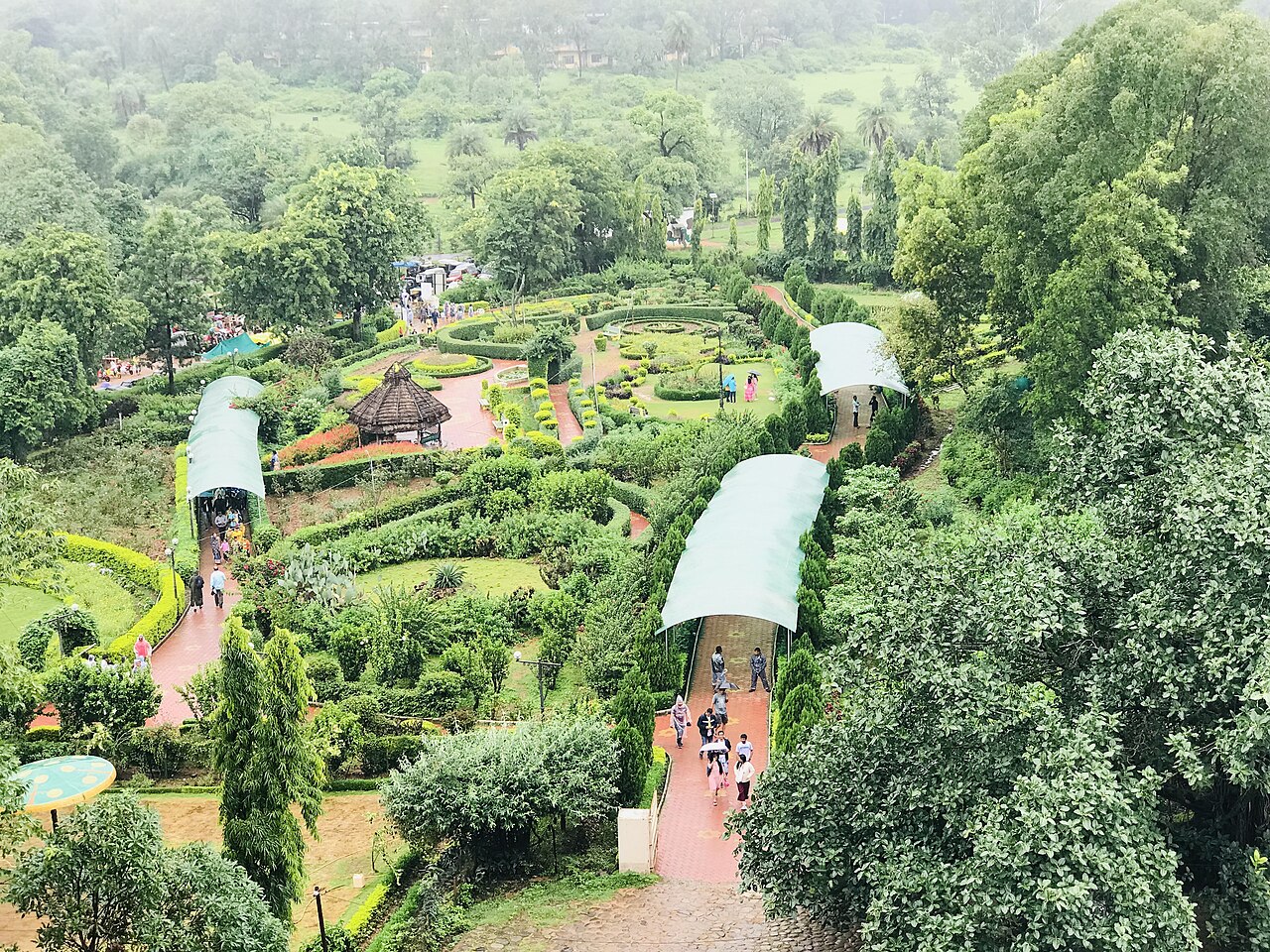
Today, the hillock supporting the Pandav Caves is enveloped by meticulously landscaped terraced gardens maintained with vibrant flower beds, trimmed hedges, flowering bougainvillea, and ornamental weeping fig trees. Stone-paved pathways with gentle steps lead visitors up from the entrance gate through tiered floral terraces.
From the upper stone terrace fronting the caves, visitors enjoy commanding panoramic views overlooking Pachmarhi town, the colonial cantonment church spires, and the distant pine-clad sandstone ridges of the Satpura Range.
The gardens serve as a delightful, peaceful public park where families, travelers, and photography enthusiasts gather in the late afternoon. Benches shaded by royal palm trees provide tranquil vantage points to enjoy the cool mountain breezes and watch the sunset glow illuminate the weathered sandstone facade of the ancient cells.

- Tiered Floral Landscaping: Beautifully maintained rose gardens, bougainvillea, and ornamental lawns.
- Elevated Town Views: Sweeping vantage over Pachmarhi valley, cantonment estates, and pine woods.
- Photography Hotspot: Golden-hour lighting highlights the textured stone chiseling of the cave facades.
- Family-Friendly Promenade: Paved pathways with resting benches and children's park areas.
Access Routes, Best Timing, and Combined Itineraries
The Pandav Caves are situated approximately two kilometers from the central Pachmarhi bus station and market area along the main cantonment road. Ample vehicle parking is available outside the entrance turnstile, and the site is easily reached by bicycle, auto-rickshaw, or private taxi.
A typical visit takes approximately forty-five minutes to an hour, allowing ample time to explore all five chambers, inspect the ancient stone chiseling marks, and stroll through the terraced gardens. The best time to visit is either early in the morning (8:00 AM to 10:00 AM) when the garden air is crisp and birdlife is active, or late afternoon (4:00 PM to 6:00 PM) for comfortable photography.
Because of its central location, a visit to Pandav Caves is effortless to combine with nearby attractions including the Bison Lodge Museum, the Pachmarhi Lake, and the Jatashankar Cave temple situated just two kilometers north.
Curated Field Dossier & Offline Google Maps Pin Pack
Bypass tourist traps with verified local logistics, exact parking coordinates, and field-tested routes.
- ✓Exact GPS Pin Pack: Unmarked parking spots, best dawn photography vantage points, and hidden trailheads.
- ✓Crowd-Avoidance Timing Matrix: Exact hour-by-hour windows to explore with zero tourist chaos.
- ✓Vetted Local Dhabas: 100% authentic, hygiene-checked regional food stops not on commercial maps.
- ✓Scam & Overcharge Shield: Verified taxi rates, auto fares, and local guide fee guidelines.
🛡️ Personally curated by PK Gupta & the Hidden Routes research desk. Delivered directly to your Email & WhatsApp within 4–8 hours.
Frequently Asked Questions
What is the true historical origin of the Pandav Caves in Pachmarhi?
Archaeological evidence confirms the caves were carved as Buddhist monastic cells (viharas) between the 5th and 9th centuries CE by meditating monks, though folklore attributes them to the exiled Pandavas.
How many caves are there in the Pandav Caves complex?
There are five rock-hewn chambers carved into the sandstone hillock, which gave Pachmarhi its name ('Panch Marhi' or five caves).
What are the opening hours and ticket prices for Pandav Caves?
The caves and ornamental gardens are open daily from 8:00 AM to 6:00 PM. Admission is 20 INR per person, collected at the entrance gate.
Is the climb to the Pandav Caves difficult?
No. The caves are situated on a low mound reached by a gentle flight of paved stone garden steps, making it easily accessible for visitors of all age groups.
Can you go inside the cave chambers?
Yes, visitors can enter and explore all five chambers to examine the raised sleeping platforms, lamp niches, and ancient stone chisel marks.