1. Overview & Archaeological Significance
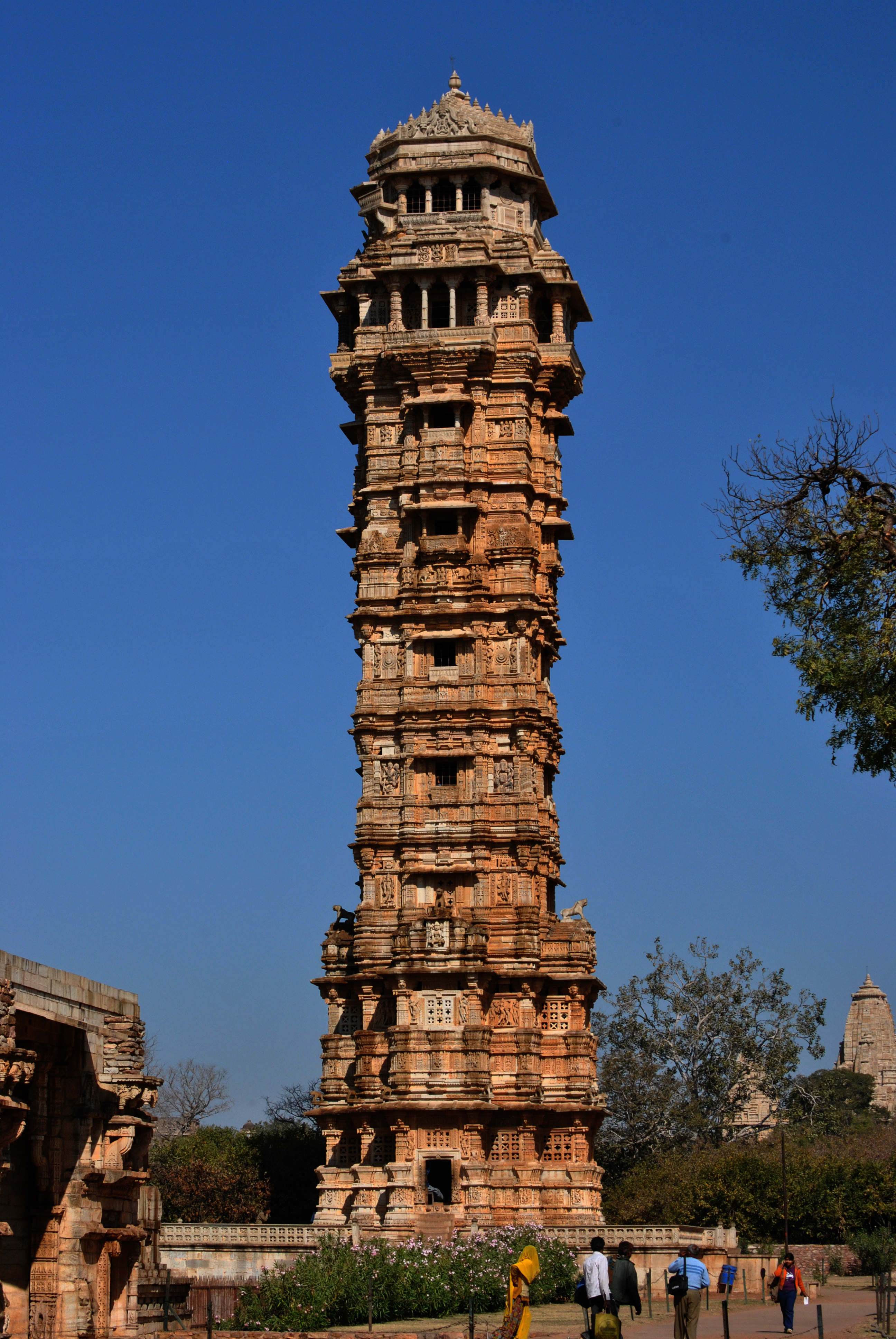
The Vijay Stambha ('Tower of Victory'), majestically crowning the southern plateau of the colossal Chittorgarh Fort in Rajasthan, is universally celebrated as one of the greatest triumphs of medieval Rajput architecture, sculpture, and martial commemorative monumentality. Erected between 1440 and 1448 CE by the legendary warrior-scholar Maharana Kumbha of the Sisodia Rajput dynasty of Mewar, this 122-foot-high tower was commissioned to celebrate his decisive military victory over the combined Sultanate armies of Malwa (under Mahmud Khalji) and Gujarat at the historic Battle of Sarangpur in 1437 CE.
Located in the Chittorgarh district of Rajasthan, Vijay Stambha Chittorgarh is centrally protected by the Archaeological Survey of India (ASI) as an irreplaceable landmark of South Asian civilization. Recognized for its multi-storeyed rajput victory tower, yellow marble & red sandstone iconographical reliefs, the site provides profound insights into the technological prowess, cosmological beliefs, and cultural aesthetics of its ancient builders.
2. Dynastic Origins, Royal Patrons & Chronology
Dedicated primarily to Lord Vishnu, the tower was designed under the visionary supervision of master royal architect Sutradhar Jaita and his three talented sons: Napa, Puja, and Poma, whose inscribed names and portraits are immortalized on the fifth storey. Beyond its martial purpose, Maharana Kumbha conceived the tower as an encyclopedic, three-dimensional compendium of Hindu theology and sculpture. Every square inch of the exterior and interior walls is carved with labeled sculptures of Hindu deities, avatars of Vishnu, celestial damsels, and musicians, earning it the celebrated scholarly title of India's 'Illustrated Dictionary of Hindu Iconography'.
Inscribed upon large marble slabs on the ninth storey is the celebrated *Kumbhalgarh / Chittor Prashasti*, composed by Kumbha's court poets Atri and his son Mahesh, recording the genealogy of the Guhila and Sisodia rulers, Kumbha's literary treatises, and his musical scholarship in extraordinary poetic Sanskrit. Inscribed as part of the Hill Forts of Rajasthan UNESCO World Heritage Site in 2013, Vijay Stambha stands as the immortal symbol of Rajasthani valor and architectural pride.
3. Structural Engineering & Architectural Design
Vijay Stambha rises to a colossal height of 37.2 metres (122 feet) across nine distinct, stepped storeys, constructed of fine yellow sandstone and white Makrana marble quarried from nearby Mewar quarries. It rests upon a massive 10-foot-high, 47-foot-square stepped platform. The tower gently tapers as it ascends, featuring a base width of 30 feet narrowing to 17.5 feet at the eighth storey.

Each of the nine storeys is accessible via an internal winding stone staircase of 157 steps and is encircled by projecting balconies (*jharokhas*) supported by ornate corbelled brackets and covered with curvilinear eaves. These open balconies illuminate the interior corridors and offer sweeping, dramatic vistas over the 700-acre Chittorgarh plateau and the sprawling plains below.
The exterior walls are densely covered with an astonishing array of high-relief carvings: the Dashavatara (ten avatars of Vishnu), Brahma, Saraswati, multi-armed forms of Shiva, the eight Dikpalas (guardians of cardinal directions), the Navagrahas (nine planets), river goddesses Ganga and Yamuna, and dancing apsaras adorned with intricate Rajput jewelry. The eighth storey features eight open pillared pavilions, while the crowning ninth storey was rebuilt by Maharana Swaroop Singh after a lightning strike in the 19th century.
4. Archaeological Excavations, Epigraphy & Conservation
The epigraphical texts of the Prashasti were transcribed and translated by Dr. James Tod in 1829 in his *Annals and Antiquities of Rajasthan* and later analyzed by Dr. G.H. Ojha.
Archaeological clearance around the base revealed the foundations of 15th-century subsidiary shrines and the Mahasati royal cremation ground.
Structural monitoring by the ASI Jaipur Circle confirms that the tower maintains excellent structural verticality and stability despite 580 years of weathering.
A combined ASI UNESCO World Heritage ticket covers access to all monuments inside Chittorgarh Fort, including Vijay Stambha, Kirti Stambha, and Padmini Palace. Online tickets cost ₹40 for Indian, SAARC, and BIMSTEC visitors (₹45 at counter), and ₹600 for foreign tourists (₹650 at counter).
5. Master Highlights & Archaeological Marvels
Climbing the 157 internal spiral stone steps to the upper balconies provides an exhilarating experience with cool breezes and 360-degree views across the fortress.

The encyclopedic sculptural relief carvings covering the exterior walls reward hours of fascinated study by art historians and travelers alike.
The nearby Samadhisvara Shiva Temple and the tranquil emerald waters of Gaumukh Reservoir enhance the sacred historic atmosphere.
6. Visiting Hours, Entry Permits & Visitor Guidelines
Chittorgarh Fort and Vijay Stambha are open daily from 6:00 AM to 6:00 PM throughout the year. Accessible on all days.
Online ticket costs are ₹40 for Indian and SAARC visitors, and ₹600 for foreign tourists. Children under 15 enter free. Local audio guides and certified guides are available at the entrance gate.
Visitors must exercise caution on the narrow internal stone spiral stairs (steep steps and low ceilings).
Personal photography without tripods is permitted; commercial filming and drones require prior written ASI authorization.
Vijay Stambha is a UNESCO World Heritage Site and a supreme architectural masterpiece. Defacing stone carvings or writing graffiti inside the stairwells will attract severe prosecution under the AMASR Act 1958.
7. Site Museum & Interpretation Centers
The Fateh Prakash Palace Museum inside Chittorgarh Fort displays royal weapons, 15th-century sculptures, coins, and paintings of Maharana Kumbha.
Interpretive boards installed near the base provide translations of the architectural inscriptions and identify key iconographical panels.
8. Climate, Best Seasons & Ideal Visiting Hours
The best time to visit Vijay Stambha is from October to March, with pleasant winter weather and temperatures between 14°C and 26°C.
Late afternoons during sunset offer magnificent golden lighting as the yellow sandstone and marble facade glows warmly against the evening sky.
9. Transit Logistics, Rail, Air & Road Access
Vijay Stambha is located inside Chittorgarh Fort, 6 kilometres east of Chittorgarh railway station and 90 kilometres northeast of Udaipur in southern Rajasthan.
Chittorgarh Junction is a major railway station connecting Jaipur, Delhi, Mumbai, and Ahmedabad. Maharana Pratap Airport in Udaipur (UDR, 90 km) connects all major domestic airports via a 4-lane expressway.
10. Regional Heritage Circuits & Sibling Monuments
Vijay Stambha is the premier icon of the Mewar & Rajasthan UNESCO Hill Forts Trail:
Sacred Architecture & Darshan Protocol Guide
Maximize your spiritual journey: VIP vs Sugam Darshan line reality, locker rules, and historical truth.
- ✓Sugam Darshan & Token Blueprint: Accurate online booking rules, pre-dawn passes, and entry lane realities.
- ✓Zero Commercialization Guard: Avoid bogus intermediaries, fake priest fees, and paid blessing scams.
- ✓Locker, Footwear & Mobile Safety: Verified cloakroom locations, authorized phone lockers, and security rules.
- ✓Hidden Architectural Marvels: Inscriptions, subterranean sanctums, and forgotten stone carvings.
🛡️ Personally curated by PK Gupta & the Hidden Routes research desk. Delivered directly to your Email & WhatsApp within 4–8 hours.
11. Frequently Asked Questions
Why was the Vijay Stambha built in Chittorgarh Fort?
It was built between 1440 and 1448 CE by Maharana Kumbha of Mewar to commemorate his glorious military victory over the combined Sultanate armies of Malwa and Gujarat at the Battle of Sarangpur in 1437 CE.
Why is Vijay Stambha called an 'Illustrated Dictionary of Hindu Iconography'?
Because every square inch of its exterior and interior walls across nine storeys is densely carved with labeled sculptures of Hindu gods, goddesses, avatars of Vishnu, celestial dancers, and planetary deities.
How tall is Vijay Stambha and how many steps does it have?
Vijay Stambha stands 122 feet (37.2 metres) tall across nine storeys, accessible via an internal winding staircase of 157 stone steps leading to projecting balconies with sweeping views.
What are the visiting hours and entry ticket prices for Vijay Stambha?
The fort is open daily from 6:00 AM to 6:00 PM. Online ASI tickets cost ₹40 for Indian, SAARC, and BIMSTEC visitors, and ₹600 for foreign tourists. Children under 15 enter free.
Who was the chief architect of Vijay Stambha?
The chief architect was Sutradhar Jaita, who worked alongside his three sons Napa, Puja, and Poma, whose names and portraits are carved on the fifth storey.