1. Overview & Archaeological Significance
The Varaha Cave Temple (Varaha Mandapa), excavated into the granite boulder ridge overlooking the coastal town of Mamallapuram (Mahabalipuram) in Chengalpattu district of Tamil Nadu, represents one of the most artistically refined, iconographically profound, and flawlessly executed rock-cut cave temples of the Pallava Empire. Consecrated in the mid-7th century CE during the golden reign of Emperor Narasimhavarman I (surnamed *Mamalla*, 'the Great Wrestler'), this monolithic sanctuary was excavated to celebrate the cosmic power and compassionate protection of Lord Vishnu.
Located in the Chengalpattu district of Tamil Nadu, Varaha Cave Temple Mamallapuram is centrally protected by the Archaeological Survey of India (ASI) as an irreplaceable landmark of South Asian civilization. Recognized for its high pallava rock-cut architecture, monolithic pink granite excavation, yali-base pillars, the site provides profound insights into the technological prowess, cosmological beliefs, and cultural aesthetics of its ancient builders.
2. Dynastic Origins, Royal Patrons & Chronology
Mamallapuram was the premier international naval port and trading emporium of the Pallava dynasty, through which cultural, religious, and architectural influences flowed across the Bay of Bengal to Southeast Asia (influencing Angkor Wat and Prambanan). The Pallava monarchs transformed the town's natural granite knolls into an open-air laboratory of rock architecture. In 1984, the Varaha Cave Temple was inscribed on the UNESCO World Heritage List as part of the 'Group of Monuments at Mahabalipuram'.
Centrally protected as an ancient monument of national importance by the Archaeological Survey of India (ASI), Varaha Cave Temple is celebrated worldwide by art historians for its four monumental high-relief panels, universally acknowledged as the supreme masterpieces of 7th-century South Indian sculpture.
3. Structural Engineering & Architectural Design
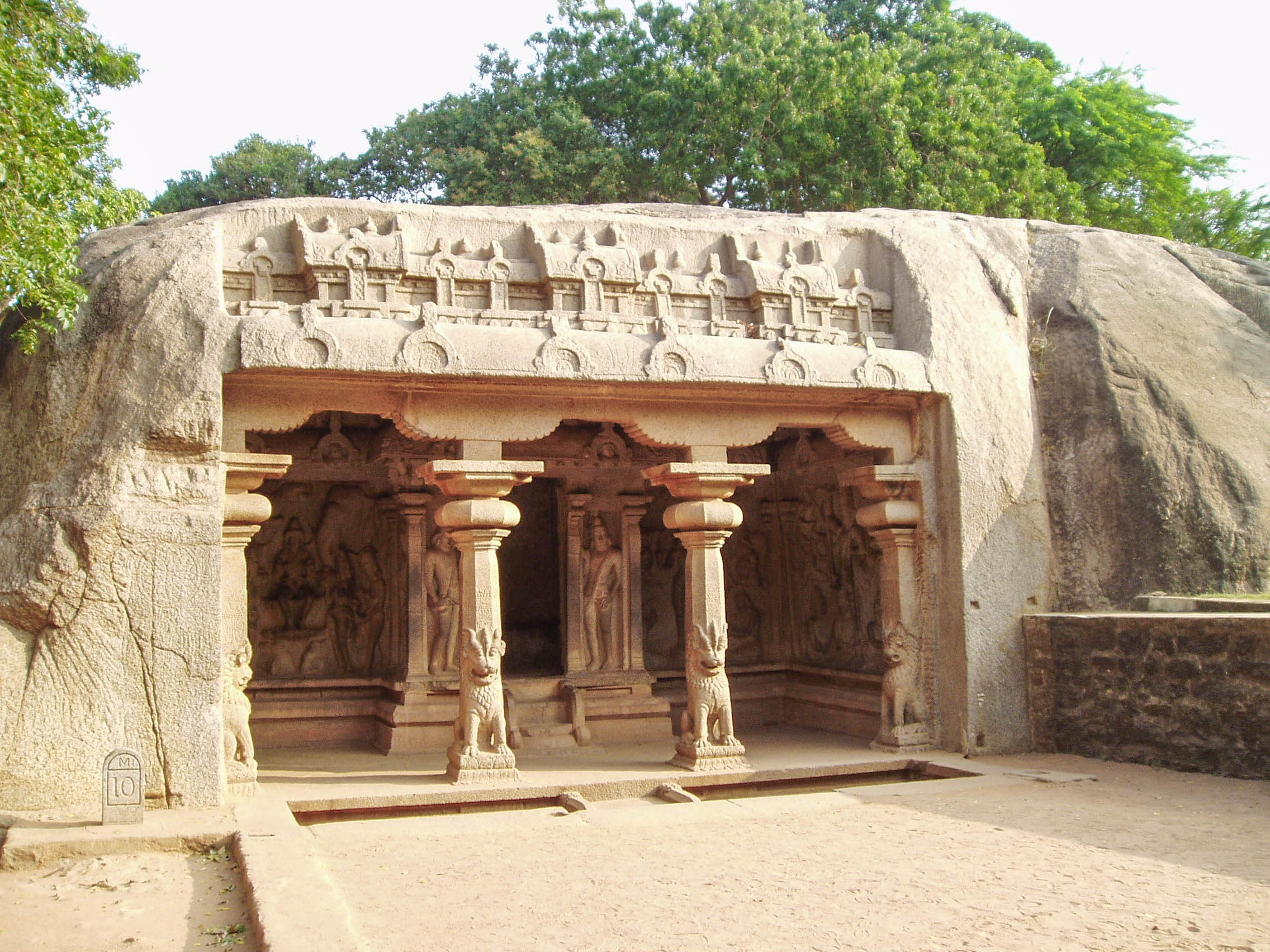
The Varaha Mandapa is an open rock-cut cave temple excavated into a massive pink granite boulder. Its facade features an open verandah supported by two freestanding pillars and two pilasters. The pillars are characteristic of the mature Mamalla style: their bases are sculpted as majestic seated *Yalis* (mythical leonine beasts) supporting slender fluted shafts and cushion capitals.

The interior chamber measures approximately 10 metres wide by 4.5 metres deep. The rear wall features a sunken sanctum guarded by two finely carved guardian *dwarapalas*. The side and rear walls are adorned with four monumental large-format relief panels that exhibit extraordinary naturalistic grace, fluid drapery, and subtle spiritual expression.
The four world-famous panels comprise: (1) *Bhu-Varaha*—the colossal boar avatar lifting the delicate figure of the earth goddess Bhudevi gently upon his right snout, his foot resting upon the serpent king Adisesha; (2) *Gaja-Lakshmi*—Goddess Lakshmi seated upon a full-blown lotus, lustrated by two royal elephants pouring sacred water from golden jars; (3) *Trivikrama*—Vishnu taking the cosmic stride across the three worlds; and (4) *Durga*—the four-armed warrior goddess standing victorious upon the severed head of the buffalo demon Mahishasura.
4. Archaeological Excavations, Epigraphy & Conservation
Archaeological studies by Alexander Rea in the 1890s documented the precise measurements and Sanskrit royal titles (*birudas*) carved across the monument.
ASI structural conservation preserved the overhanging drip ledge cut into the natural granite above the cave, preventing monsoon rainwater from staining the interior reliefs.
Laser photogrammetric mapping created high-resolution 3D models of the Bhu-Varaha relief for international museum archives.
Covered under the unified ASI Mamallapuram World Heritage ticket (valid for Shore Temple, Pancha Rathas, and monuments): ₹40 for Indian citizens and ₹600 for foreign tourists via online booking. Free for children under 15.
5. Master Highlights & Archaeological Marvels
The Bhu-Varaha relief: widely celebrated for the tender, protective posture of the colossal boar god gazing down compassionately at the seated Bhudevi.

The Gaja-Lakshmi panel: celebrated for its classical symmetry, fluid drapery, and depiction of four celestial maidens bearing water vessels.
The Yali pillar bases: exemplifying the definitive architectural transition from simple Mahendra pillars to elaborate sculpted zoomorphic columns.
6. Visiting Hours, Entry Permits & Visitor Guidelines
Open daily from 6:00 AM to 6:00 PM. The monument grounds remain tranquil throughout the early morning.
Visiting between 7:00 AM and 9:30 AM provides soft morning sunlight filtering into the cave verandah, perfectly illuminating the Bhu-Varaha panel.
Visitors must remove footwear before stepping onto the cave's granite platform.
Touching or rubbing the 1,300-year-old high-relief sculptures is strictly prohibited by law.
The path connecting Varaha Cave to Krishna's Butterball passes over smooth granite rock slopes. Wear shoes with good traction.
7. Site Museum & Interpretation Centers
The nearby Descent of the Ganges (Arjuna's Penance, 200 metres away) is the world's largest open-air rock-cut bas-relief.
The iconic Shore Temple and Pancha Rathas are located within a short 10-minute walk through the heritage town.
8. Climate, Best Seasons & Ideal Visiting Hours
November to February offers ideal weather, with pleasant coastal breezes and temperatures between 22°C and 29°C.
The annual Mamallapuram Dance Festival, held in December–January, features classical dance performances against the backdrop of ancient rock monuments.
9. Transit Logistics, Rail, Air & Road Access
Located on the hill ridge in the center of Mamallapuram, 55 km south of Chennai International Airport (MAA).
Easily accessible from Chennai via the scenic East Coast Road (ECR) in approximately 1 hour by car, taxi, or express bus.
10. Regional Heritage Circuits & Sibling Monuments
Varaha Cave Temple is an essential highlight of the UNESCO World Heritage Monuments of Mahabalipuram Trail:
Sacred Architecture & Darshan Protocol Guide
Maximize your spiritual journey: VIP vs Sugam Darshan line reality, locker rules, and historical truth.
- ✓Sugam Darshan & Token Blueprint: Accurate online booking rules, pre-dawn passes, and entry lane realities.
- ✓Zero Commercialization Guard: Avoid bogus intermediaries, fake priest fees, and paid blessing scams.
- ✓Locker, Footwear & Mobile Safety: Verified cloakroom locations, authorized phone lockers, and security rules.
- ✓Hidden Architectural Marvels: Inscriptions, subterranean sanctums, and forgotten stone carvings.
🛡️ Personally curated by PK Gupta & the Hidden Routes research desk. Delivered directly to your Email & WhatsApp within 4–8 hours.
11. Frequently Asked Questions
Who built the Varaha Cave Temple at Mamallapuram?
It was excavated in the mid-7th century CE by Pallava Emperor Narasimhavarman I Mamalla, after whom the town of Mamallapuram is named.
What are the four famous panels inside Varaha Cave Temple?
The four world-famous high-relief panels depict Bhu-Varaha (rescuing the Earth goddess), Gaja-Lakshmi (goddess of wealth lustrated by elephants), Trivikrama (the cosmic stride), and Goddess Durga.
What makes the Bhu-Varaha panel so celebrated?
It is celebrated for its extraordinary emotional tenderness: the massive boar avatar of Vishnu lovingly holds the delicate figure of the earth goddess Bhudevi upon his snout.
What is unique about the pillars of the Varaha Cave?
The pillars feature bases carved as seated Yalis (mythical horned lions), marking the high classical phase of Pallava royal architecture.
Is entry to Varaha Cave Temple included in the Mamallapuram ticket?
Yes, it is covered under the unified ASI UNESCO World Heritage ticket for Mamallapuram (₹40 Indians / ₹600 foreigners).