1. Overview & Archaeological Significance
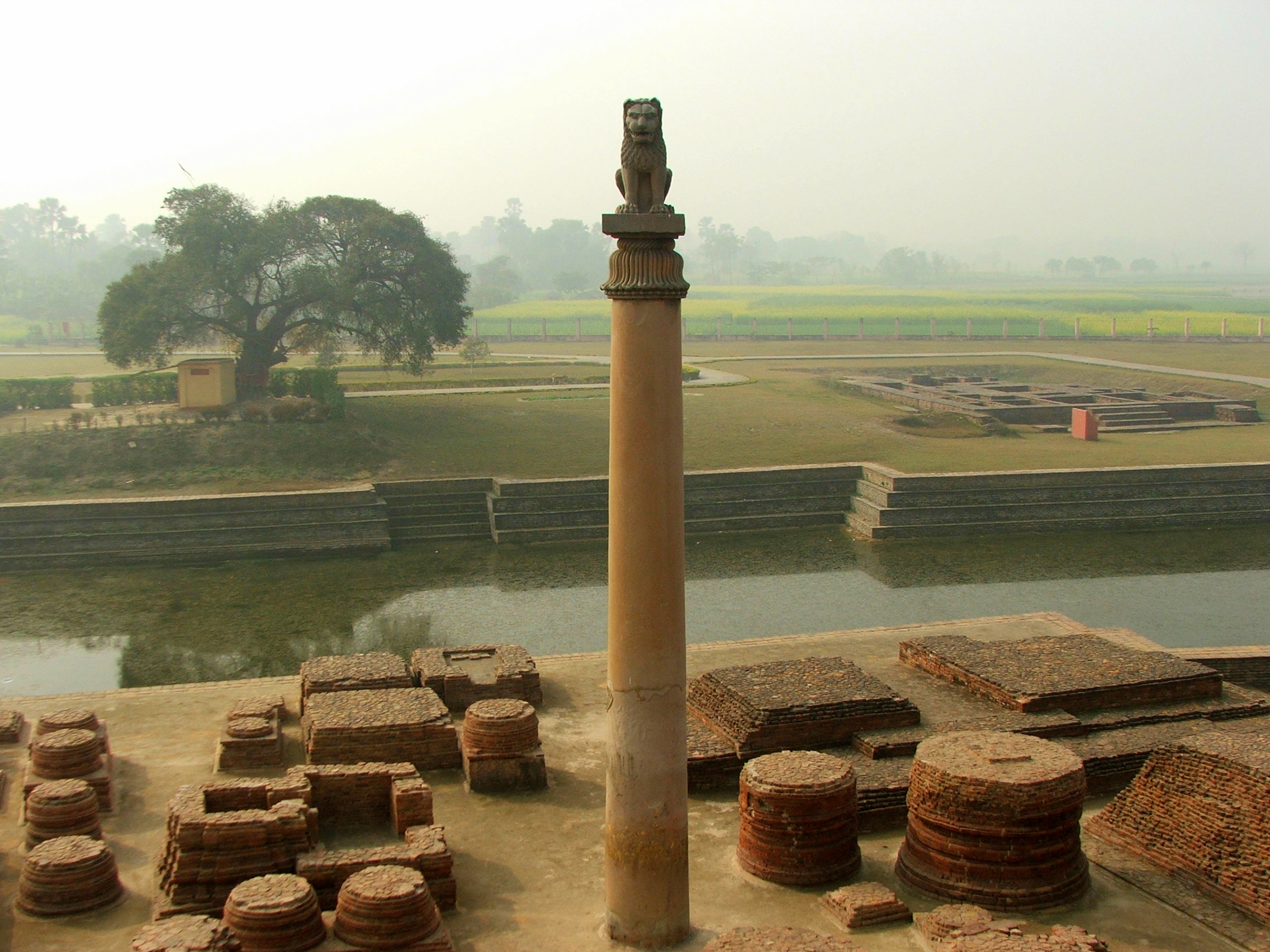
The Ashoka Pillar at Lauriya Nandangarh, situated in the West Champaran district of northwestern Bihar near the Nepal border, is arguably the most complete, pristine, and magnificent standing Ashokan column in India. Erected in 245 BCE by Emperor Ashoka the Great, the monolithic column stands completely undamaged, retaining its original shaft, bell-shaped inverted lotus capital, abacus with grazing geese frieze, and crowning seated lion. The monument was positioned along the ancient imperial highway (*Uttarapratha*) connecting Pataliputra to the Terai foothills, Lumbini, and Kathmandu.
Located in the West Champaran district of Bihar, Ashoka Pillar Lauriya Nandangarh is centrally protected by the Archaeological Survey of India (ASI) as an irreplaceable landmark of South Asian civilization. Recognized for its monolithic polished chunar sandstone, inverted lotus, hamsa frieze & single lion, the site provides profound insights into the technological prowess, cosmological beliefs, and cultural aesthetics of its ancient builders.
2. Dynastic Origins, Royal Patrons & Chronology
The column rises 32 feet (10 metres) above ground, with a base diameter of 0.9 metres tapering gracefully to 0.66 metres below the capital. Weighing approximately 40 tons, it was quarried from Chunar near Varanasi, transported over 300 kilometres by river barge and sledges across the Gandak basin, and polished to a flawless glass-like reflective finish. Unlike many other columns that were toppled by lightning or iconoclasts, the Lauriya Nandangarh pillar stands unbowed in its original location.
Inscribed upon its gleaming shaft are the celebrated Six Major Pillar Edicts of Ashoka, engraved in remarkably crisp, deep Brahmi characters in the Magadhi Prakrit language. Standing less than two kilometres from the column is the colossal Nandangarh Stupa—a gigantic terraced brick stupa mound rising 82 feet (25 metres) high with a polygonal star-shaped base, representing one of the largest ancient Buddhist stupas in South Asia.
3. Structural Engineering & Architectural Design
The architectural composition of the pillar represents the quintessential triumph of Mauryan court art. The shaft is a single piece of polished Chunar sandstone without a single seam. The capital consists of a bell-shaped lotus with graceful recurved petals, surmounted by a circular abacus carved in relief with twelve sacred hamsas (geese) pecking at seeds as they fly in a circle around the capital.

Crowning the abacus is a seated Asiatic lion facing east. Though the lion's mouth suffered slight damage from a cannonball during early modern skirmishes, its posture remains regal, with sinewy muscular shoulders and stylized mane curls anticipating the later classical Indian sculptural tradition.
The Six Major Pillar Edicts inscribed on the pillar detail Ashoka's compassionate administrative philosophy, including the protection of birds, aquatic animals, and pregnant livestock; the appointment of Dhamma Mahamattas (righteousness officers); the remission of prisoner sentences on regnal anniversaries; and the provision of roadside wells, shade trees, and rest houses for weary travelers.
4. Archaeological Excavations, Epigraphy & Conservation
The pillar was first documented by Alexander Cunningham in 1880, who marveled at its pristine preservation. Later, in 1935–1937, N.G. Majumdar of the ASI conducted extensive excavations at the neighboring Nandangarh mound, revealing a polygonal brick stupa built across five terraced circumambulatory levels.
Excavations at the base of the stupa yielded a silver punch-marked coin, terracotta sealings of the 1st century BCE, and a gold leaf depicting the mother goddess Prithvi, demonstrating that the site held sacred funerary significance dating back to Vedic earthen burial mounds (*smashana*).
A small Persian inscription dated 1660 CE recording the name of Mughal Emperor Aurangzeb was incised high on the pillar shaft by an imperial courtier, adding another layer of historic epigraphy.
The Ashoka Pillar at Lauriya Nandangarh is a Centrally Protected Monument under the Archaeological Survey of India (Patna Circle). Entry is free for all visitors. The site is surrounded by an ASI boundary wall and well-maintained lawns.
5. Master Highlights & Archaeological Marvels
Visitors can inspect the complete monolithic column from up close, reading the crisp lines of Brahmi script that look as sharp as if carved yesterday.

The hamsa frieze on the circular abacus and the lion capital offer a rare opportunity to admire complete Mauryan sculpture in its original open-air setting.
A short 1.5 km drive leads to the colossal Nandangarh stupa mound, where one can climb the stepped terraces for panoramic views across the Champaran countryside.
6. Visiting Hours, Entry Permits & Visitor Guidelines
The monument is open daily from sunrise to sunset (approximately 6:00 AM to 6:00 PM). There are no weekly closure days.
Admission is completely free for all Indian and international visitors. Free vehicle parking is available near the entrance.
Visitors must not touch or lean against the ancient polished pillar shaft. Inscribing names or defacing the Brahmi edicts is strictly prohibited under the AMASR Act.
Drones and commercial filming require prior authorization from the ASI Patna Circle. Personal photography is permitted.
The Ashoka Pillar at Lauriya Nandangarh is one of India's most intact ancient treasures. Any act of vandalism or defacement will attract severe prosecution under the AMASR Act 1958.
7. Site Museum & Interpretation Centers
Artifacts recovered from the Nandangarh excavations, including the gold mother goddess leaf, are preserved in the Indian Museum in Kolkata and the Patna Museum.
Interpretive boards installed on site by the ASI explain the transliteration and English translation of all Six Major Pillar Edicts.
8. Climate, Best Seasons & Ideal Visiting Hours
The best time to visit is during winter from October to March, with cool daytime temperatures averaging 15°C to 25°C.
Summer (April to June) is very hot (over 40°C). Monsoon season (July to September) makes the surrounding sugar cane fields intensely green, though roads can be muddy.
9. Transit Logistics, Rail, Air & Road Access
Lauriya Nandangarh is located 28 kilometres northwest of Bettiah and 20 kilometres south of Narkatiaganj in West Champaran district of Bihar.
The nearest railway junction is Bettiah (28 km) or Narkatiaganj (20 km), connected to Patna, Gorakhpur, and Delhi. The nearest airport is Gorakhpur Airport (GOP, 150 km) or Patna Airport (PAT, 220 km).
10. Regional Heritage Circuits & Sibling Monuments
Lauriya Nandangarh is part of the Champaran Buddhist & Freedom Trail:
Sacred Architecture & Darshan Protocol Guide
Maximize your spiritual journey: VIP vs Sugam Darshan line reality, locker rules, and historical truth.
- ✓Sugam Darshan & Token Blueprint: Accurate online booking rules, pre-dawn passes, and entry lane realities.
- ✓Zero Commercialization Guard: Avoid bogus intermediaries, fake priest fees, and paid blessing scams.
- ✓Locker, Footwear & Mobile Safety: Verified cloakroom locations, authorized phone lockers, and security rules.
- ✓Hidden Architectural Marvels: Inscriptions, subterranean sanctums, and forgotten stone carvings.
🛡️ Personally curated by PK Gupta & the Hidden Routes research desk. Delivered directly to your Email & WhatsApp within 4–8 hours.
11. Frequently Asked Questions
Why is the Ashoka Pillar at Lauriya Nandangarh considered the most complete in India?
It is the only Ashokan pillar in India that stands completely intact in its original location with its full 32-foot polished shaft, bell lotus, hamsa abacus, and crowning lion capital undamaged.
What edicts are inscribed on the pillar?
The pillar is inscribed with Ashoka's Six Major Pillar Edicts in pristine Brahmi script, detailing his moral laws, animal protection decrees, and public welfare directives.
What is the Nandangarh Stupa located nearby?
The Nandangarh Stupa is a colossal 82-foot-tall terraced brick Buddhist stupa mound located 1.5 km from the pillar, featuring a unique star-shaped polygonal base.
What are the visiting hours and entry fees for Lauriya Nandangarh?
The monument is open daily from sunrise to sunset with completely free admission for all visitors.
How can I reach Lauriya Nandangarh from Patna?
From Patna, travel north via Hajipur, Muzaffarpur, and Motihari to Bettiah (roughly 220 km, 5–6 hours by car). From Bettiah, the site is a 30-minute drive north.