Netherlands Travel Guide.
The Netherlands is an extraordinary maritime democracy where twenty-six percent of the total land territory rests beneath mean sea level. Between seventeenth-century canal rings, audacious post-war architectural skylines, and centuries-old brick universities, Dutch civic life runs with mechanical precision, unhurried warmth, and an intimate relationship with water.
Public Transit: OVPay vs Physical OV-Chipkaart
For decades, any visitor stepping into Schiphol Airport had to locate an automatic ticketing machine, pay a non-refundable €7.50 issuance fee for a blue disposable or anonymous yellow plastic OV-chipkaart, and load a minimum balance of €20 before boarding an NS (Nederlandse Spoorwegen) train. As of 2026, this entire legacy procedure is obsolete.
The nationwide OVPay network operates across every passenger railway, municipal tram, metro carriage, regional bus line, and public ferry throughout the country. Travelers tap in and tap out using any physical contactless debit or credit card (Visa, Mastercard, Maestro) or mobile wallet on an Apple Watch, iPhone, or Android handset. There is zero registration required, no upfront card activation fee, and no standing deposit balance withheld from your account.
warning The €20 Incomplete Journey Penalty & Tap-Out Protocol
When you board a Dutch train, a temporary boarding authorization (€20 on national NS railways, or €4 on municipal city trams and metros like GVB in Amsterdam or RET in Rotterdam) is held against your card. When you exit at your destination station and touch your payment card against the exit turnstile gate or freestanding platform pole, the system calculates the exact distance traveled and charges the accurate standard fare, releasing the surplus hold overnight.
The Critical Mistake: If you forget to tap out when changing modes or departing an open platform, the entire €20 hold is captured permanently as an incomplete trip charge. Furthermore, if you tap in with a physical bank card, you must tap out with that exact physical card—tapping out with Apple Pay on your phone will register as a brand-new journey on a different device token, doubling your expenditure.
For tracking routes and track assignments, install the official NS App (available in English). Dutch passenger trains operate with such remarkable frequency—often every 10 to 15 minutes between Randstad hubs—that travelers rarely need fixed-time seat reservations. The NS app provides real-time track updates, platform changes, and notifications regarding maintenance closures along the bustling corridors linking Amsterdam, The Hague, Rotterdam, and historical towns like Delft, Leiden, and Haarlem.
Train Types: Intercity, Sprinter, and High-Speed Surcharges
The Dutch passenger rail network operates two principal domestic train tiers. Intercity (IC) trains connect major regional stations rapidly, skipping minor halts and providing two passenger classes (First and Second Class, clearly designated with large numerals on the exterior carriage doors). Sprinter trains stop at every local station along the line and feature wider doorways designed for commuter cycles and strollers.
A notable nuance exists on the high-speed line linking Amsterdam Centraal, Schiphol Airport, and Rotterdam Centraal. Known as the Intercity Direct, this service cuts the journey time between Amsterdam and Rotterdam to approximately 40 minutes. Traveling on the high-speed section between Schiphol and Rotterdam requires an additional supplement (*toeslag*), which costs approximately €3.00. Travelers can pay this supplement simply by tapping their payment card against the red Intercity Direct supplement pole located on the departure platform before boarding.
Night travel is equally straightforward. The Dutch Nachtnet operates hourly overnight passenger trains linking Utrecht, Amsterdam Centraal, Schiphol Airport, Leiden, The Hague, Delft, and Rotterdam 24 hours a day, seven days a week, making late-evening transit between cultural capitals completely seamless.
Bicycle Etiquette: How to Survive Dutch Red Cycle Lanes
With more bicycles than human inhabitants in the country (approximately 23 million bikes for 18 million residents), cycling in the Netherlands is not casual weekend recreation; it is the dominant arterial circulation network of the country. Cyclists move at brisk commuter speeds (often 20 to 28 km/h on traditional upright *omafiets* and electric bikes), and they expect pedestrians to understand traffic regulations unconditionally.
1. The Red Asphalt Rule
Cycle tracks (*fietspaden*) are almost universally paved in distinctive reddish-brown asphalt or marked with bicycle stencils and dashed dividing lines. Never walk on the red asphalt, even for three seconds to take a photograph. Walking in a bike lane will result in sharp bell ringing, loud verbal reprimands, or dangerous collisions.
2. The Double-Check Glance
Before stepping off a pedestrian sidewalk curb, check both directions twice. In historic centres like Amsterdam and Leiden, cycle paths run parallel between automobile lanes and sidewalks, and bikes can approach silently from unexpected angles behind canal bridges or tram shelters.
3. Renting & Hand Signals
If you rent a bicycle, test the brake mechanism before riding (many Dutch rental fleet bikes use back-pedal coaster brakes rather than handlebar levers). Always signal turns by extending your left or right arm straight out, keep firmly to the right side of the lane, and never brake abruptly in the middle of a lane.
Taking Bicycles on Public Transit
Travelers planning cross-country cycling adventures should note the strict rules governing bicycles on Dutch trains. During peak commute hours (06:30 to 09:00 and 16:00 to 18:30 on weekdays), full-sized bicycles are prohibited on NS trains to maintain passenger capacity. However, outside of these peak periods, as well as on weekends and throughout July and August, bicycles are permitted on trains provided you purchase a dedicated bicycle day ticket (*Fietskaart Dal*) through the NS app or ticket kiosk. Folding bicycles that collapse into compact luggage may be carried aboard free of charge at any time.
Water Engineering: Polders, Dikes, and the Battle Against the North Sea
There is a celebrated Dutch adage: "God created the Earth, but the Dutch created the Netherlands." Understanding the physical topography of the country requires acknowledging that the ground beneath your feet was painstakingly reclaimed through centuries of civil engineering, wind-powered water pumping, and communal water governance boards (*waterschappen*) that originated in the thirteenth century as the earliest democratic institutions in Europe.
A polder is a low-lying tract of land enclosed by protective earthen dikes that has been artificially drained of water and subsequently managed through constant mechanical pumping. Without this continuous defensive infrastructure, nearly two-thirds of the nation's present economic engine—including Amsterdam Airport Schiphol, the Port of Rotterdam, and the historical center of The Hague—would be submerged beneath the waters of the North Sea and the Rhine-Meuse-Scheldt delta.
The Historic Drainage Windmills
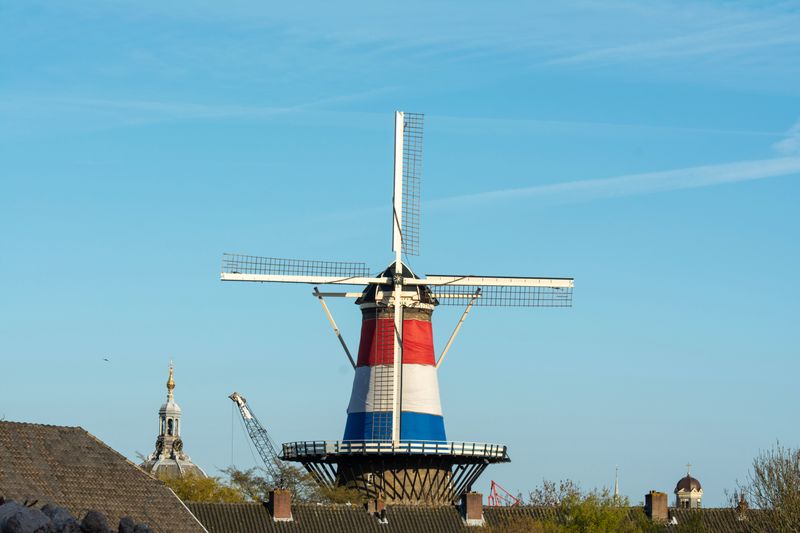
Contrary to pastoral romanticism, Dutch windmills were primarily heavy industrial drainage engines. Millwrights developed internal scoop wheels and Archimedean screws powered by vast sailcloth arms, creating tiered pumping cascades that lifted standing water from low polders into elevated ring canals (*boezems*) that drained into the sea at low tide. This heritage is preserved at UNESCO-listed Kinderdijk and the living outdoor village of Zaanse Schans.
The Afsluitdijk Causeway
Completed in 1932 across 32 kilometers of open water, the immense Afsluitdijk barrier dam tamed the violent, saltwater Zuiderzee inlet, transforming it into the freshwater inland lake of IJsselmeer. This monumental feat of civil engineering shielded hundreds of kilometers of vulnerable coastline from tidal storm surges and allowed the reclamation of the entire modern province of Flevoland.
The Delta Works (Deltawerken)
Constructed following the catastrophic North Sea flood of 1953, the Delta Works in Zeeland and South Holland represent one of the largest engineering achievements in modern human history. Enormous movable storm surge barriers, including the Oosterscheldekering and the Maeslantkering near Rotterdam, stand ready to seal off deep sea approaches whenever meteorological models forecast severe storm tides.
Beyond Stereotypes: What the Dutch Actually Eat
Generic travel websites frequently dismiss Dutch cuisine as bland or pad destination guides with mentions of generic international meals. In reality, Dutch food culture is rooted in robust street market traditions, centuries of global spice trade, and vibrant multi-ethnic migrations that have profoundly reshaped the national palate.
Bitterballen & Borrel Cultuur
The quintessence of Dutch socializing (*borrelen*) is a plate of piping-hot *bitterballen* served with coarse Dutch mustard beside a glass of beer. These crispy, breadcrumbed spheres are traditionally filled with slow-cooked beef ragù. In contemporary Amsterdam, Rotterdam, and Utrecht, artisan cafes and brown bars widely feature exceptional vegetarian and vegan bitterballen crafted from oyster mushrooms, lentils, or plant proteins.
Fresh Warm Stroopwafels
Never judge a stroopwafel by the pre-packaged boxes sold in souvenir shops. Head to an open-air market such as Amsterdam's Albert Cuypmarkt, Haarlem's Grote Markt, or the market square in Delft. Watch the vendor press spiced dough between iron griddle plates, slice the thin waffle horizontally while steaming, and spread warm caramel syrup infused with cinnamon and real butter between the two halves.
Poffertjes with Melting Butter
Prepared on special dimpled copper pans, *poffertjes* are small, fluffy buckwheat batter pancakes turned rapidly with two-pronged forks. They are served piping hot in batches of a dozen, crowned with a generous slab of pure butter and blanketed beneath a snowy mound of powdered confectioner's sugar.
Surinamese & Indonesian Cuisines
Historical maritime migrations have turned Surinamese *eethuizen* and Indonesian dining into the bedrock of modern Dutch urban eating. Surinamese cuisine—blending South Asian, Javanese, Creole, and Indigenous influences—offers warm roti rolls rolled with spiced potatoes, pumpkin, and green beans, as well as savory fried *bara* cakes with spicy mango chutney, presenting superb vegetarian dining across all major Dutch cities.
Cheese Culture & Raw Herring Traditions
Dutch dairy craftsmanship extends far beyond plastic-wrapped supermarket wedges. Varieties like aged Gouda (*Oude Kaas*), matured for over twelve months until crunchy calcium lactate crystals form throughout the paste, deliver intense butterscotch and umami notes. Head to traditional cheese shops (*kaasspeciaalzaken*) in Gouda, Edam, or Alkmaar to taste raw-milk farm cheeses (*Boerenkaas*) paired with fig compote.
For seafood enthusiasts, raw soused herring (*Hollandse Nieuwe*) is a rite of passage. Caught in the early summer when fat content peaks, the fish is cured in brine, filleted, and served at street kiosks (*haringhandels*) sprinkled with finely diced raw sweet onions and sliced pickled gherkins. Traditional etiquette dictates gripping the tail between thumb and forefinger, tilting your head backward, and lowering the fish directly into your mouth.
Amsterdam Regulations & Mandatory Museum Reservations
The Evolving De Wallen (Red Light District) Policies
The municipality of Amsterdam has enacted sweeping regulatory reforms to curb overtourism and preserve civic dignity in historic residential quarters. Since mid-2023, smoking cannabis on the street in public spaces is strictly prohibited throughout the De Wallen (Red Light District), carrying municipal fines in excess of €100 for infractions. Consumption remains restricted to designated licensed coffeeshops.
Furthermore, photography or video filming of sex workers standing in window cubicles is illegal and will lead to camera confiscation or immediate police intervention. Alcohol sales are restricted on weekend evenings in inner-city shops, and guided walking tour group sizes are strictly limited. Visitors are expected to treat the historic medieval core as an inhabited neighborhood rather than an open-air amusement zone.
Museum Booking Strategy: Anne Frank Huis & Van Gogh Museum
The days of queuing at ticket booths for world-renowned Dutch museums are completely finished. The Dutch museum sector has transitioned to mandatory online time-slot capacity management:
- Anne Frank Huis: Every single ticket must be purchased through the official website. Tickets are released six weeks in advance on Tuesday mornings at 10:00 AM Central European Time. They routinely sell out for the entire six-week block within hours of release.
- Van Gogh Museum: Requires a pre-booked entrance time slot. During peak spring and summer travel periods, walk-up tickets are never available, and slots must be reserved 2 to 4 weeks prior to arrival.
- Rijksmuseum: Advance digital booking is strongly recommended to guarantee entry to the Gallery of Honour, displaying Rembrandt's The Night Watch and Vermeer's The Milkmaid.
- Is the Museumkaart Worth It? The national Dutch Museumkaart (Museum Pass) costs approximately €75 and grants admission to over 400 museums nationwide. However, temporary tourist cards are valid for only 31 days and permit a maximum of five museum visits before requiring formal registration with a European postal address. For travelers staying one week and visiting three or four museums, paying individual admissions or bundling with city passes is usually simpler and more flexible.
Key Destinations Across the Netherlands
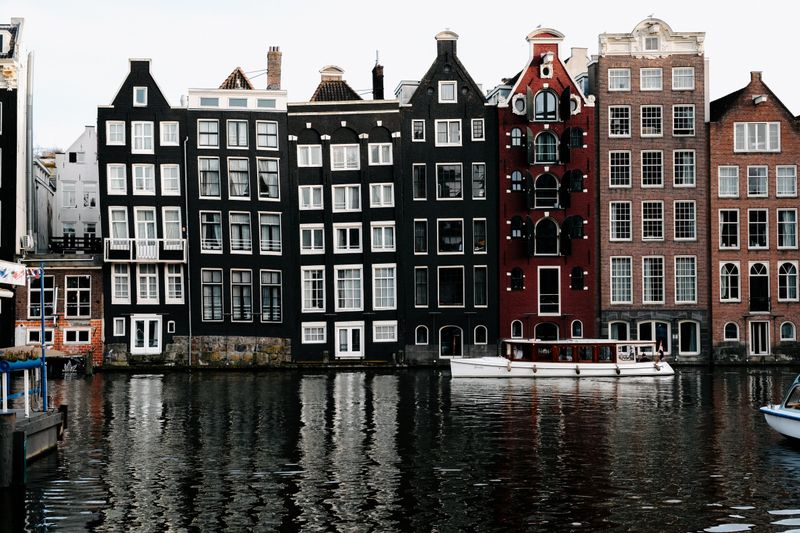
Each Dutch city possesses its own fierce civic individuality. Explore our detailed standalone guides to the six foundational travel hubs:



The 10-Day Classic Randstad & Heritage Circuit
Because Dutch rail distances are extraordinarily compact—rarely exceeding 45 minutes between major urban centres—travelers can easily establish one or two bases (such as Amsterdam and The Hague/Rotterdam) and complete day trips effortlessly without changing accommodation daily.
Days 1–3: Amsterdam's Canal Ring & Masterpiece Collections
Arrive at Schiphol, tap into the train with OVPay, and reach Amsterdam Centraal in 14 minutes. Dedicate day one to walking the UNESCO Grachtengordel (Herengracht, Keizersgracht, and Prinsengracht) and exploring the Jordaan neighborhood. Day two centres on Museumplein: spend morning hours admiring Rembrandt and Vermeer at the Rijksmuseum, followed by an afternoon time slot at the Van Gogh Museum. On day three, tour the historic Anne Frank Huis (reserved weeks in advance), walk through Vondelpark, and sample authentic Surinamese roti rolls in De Pijp.
Day 4: Haarlem's Golden Age Charm
Board a 15-minute commuter train west to Haarlem. Stroll through the cobbled Grote Markt to St. Bavokerk to gaze upon the towering 1738 Christian Müller pipe organ that once enchanted Mozart and Handel. Tour the Frans Hals Museum for peerless Golden Age portraiture, visit the Enlightenment treasures of Teylers Museum beside the Spaarne River, and conclude the evening enjoying locally brewed craft beer inside the converted arches of the Jopenkerk.
Day 5: Leiden's Antiquities & Botanical History
Travel 20 minutes south to Leiden, home to the Netherlands' most ancient university, founded by William of Orange in 1575. Wander along the grand Rapenburg canal, explore the Hortus Botanicus where Carolus Clusius planted the nation's inaugural tulip bulbs in 1593, admire the complete second-century Temple of Taffeh at the Rijksmuseum van Oudheden, and climb the ancient ramparts of the 11th-century Burcht van Leiden for sweeping views over terracotta rooftops.
Days 6–7: The Hague & Royal Scheveningen
Shift base to The Hague or take a 15-minute train from Leiden. Tour the majestic Binnenhof parliamentary quarter beside the Hofvijver lake and step inside the Mauritshuis to stand feet away from Vermeer's Girl with a Pearl Earring and Carel Fabritius's The Goldfinch. On day seven, explore the colossal Peace Palace (seat of the International Court of Justice), browse the geometric optical illusions at Escher in Het Paleis, catch tram 1 or 9 out to Scheveningen Beach, and savor an authentic Indonesian Rijsttafel dinner.
Day 8: Delft's Blue Ceramics & Vermeer Roots
A quick 10-minute train ride brings you to Delft. Tour the Koninklijke Porceleyne Fles (Royal Delft), operating continuously since 1653, to observe master craftsmen hand-painting cobalt oxide designs on glazed earthenware. Stand before the leaning tower of the Oude Kerk, visit the royal crypt of the House of Orange-Nassau at the Nieuwe Kerk, and inspect the bullet marks left on the plaster walls of Museum Prinsenhof where William of Orange fell in 1584.
Days 9–10: Rotterdam's Architectural Frontier
Finish the journey in Rotterdam, a dramatic architectural counterpoint to Holland's brick canal towns. Walk across the harp-like white pylons of the Erasmusbrug, marvel at the whimsical tilted angles of Piet Blom's Cube Houses, dine under Arno Coenen's 11,000-square-meter digital mural inside the Markthal, and explore the shimmering mirrored bowl of the Depot Boijmans Van Beuningen. On your final morning, visit historic Delfshaven, where old Dutch gables survived the wartime bombardment, before catching the 26-minute high-speed Intercity Direct train back to Schiphol Airport.
When to Visit: Weather, Tulip Blooms & Daylight
Spring (Mid-April to May)
The premier season for witnessing the iconic tulip blooms across the Bollenstreek flower strip between Leiden and Haarlem, and at Keukenhof gardens. King's Day (Koningsdag) on April 27 turns every canal and square into an ocean of orange clothing and vibrant street markets. Weather is pleasantly mild (12°C to 18°C), though layers and rain shells remain essential.
Summer (June to August)
Long, luminous evenings with daylight lingering until 10:00 PM. Canal-side terrace culture comes fully alive, open-air boat cruising reaches its peak, and Scheveningen beach draws swimmers and sunbathers. Temperatures range from 20°C to 28°C. This is peak tourist season, demanding advance bookings for all primary museums and intercity hotels.
Autumn & Winter (Sept to March)
September and October offer golden autumn foliage along the canals, thinned crowds, and comfortable weather. From November through February, overcast skies, maritime rain, and temperatures hovering near 3°C to 7°C prevail. However, winter brings genuine Dutch *gezelligheid*—cozy candlelight in wood-paneled brown cafes, steaming bowls of split-pea soup (*erwtensoep*), and the Amsterdam Light Festival illuminating the waterways.
Essential Travel Summary
- Visa & Entry: The Netherlands is a member of the European Schengen Area. Non-EU visitors requiring a Schengen Tourist Visa should lodge biometric applications at VFS Global centres at least 4 to 8 weeks before intended departure.
- Plugs & Electricity: Standard European Type C and Type F round two-pin plugs running at 230V / 50Hz.
- Language: Dutch is the official national language. However, over 90% of the Dutch population speaks fluent English, making independent navigation extraordinarily straightforward.
- Cash vs Cards: The Netherlands is one of the most cashless societies on earth. Many supermarkets (like Albert Heijn), transit turnstiles, and cafes do not accept paper euro banknotes; carry a contactless debit or credit card at all times.