Rome.

41° N · 12° E Italy

Rome, Italy, features the Pantheon’s unreinforced concrete dome, the largest in the world for 1300 years. The cannon on Gianicolo Hill fires daily at noon, a tradition since 1847. The guide covers 343 attractions. Spring (April-May) or Fall (Sept-Oct) is the best season to visit, with a suggested duration of 4-7 days.

The first time you hear your own footsteps echo off the Colosseum's inner walls at 7:30 a.m., something shifts. Rome doesn't greet you with postcard perfection. It hits you with 2,000 years of layered contradictions: baroque fountains splashing where gladiators once died, the smell of guanciale frying three streets from the Vatican, and locals arguing about carbonara technique within sight of the Pantheon.

🧭 Indian Traveler Quick Briefing — Rome:
  • 🛂 Destination: Rome, Italy. Verify tourist visa / entry requirements before flying.
  • ✈️ Flight Access: International connections available from Delhi, Mumbai, and primary Indian hubs to regional gateways.
  • 💰 Card & Currency: Contactless bank cards and contactless digital wallets work seamlessly across city transit validators and hotels.
  • 🍲 Dining & Cuisine: Look for fresh vegetarian options, local grain bowls, and regional Indian dining hubs.
Rome, Italy
Rome · Italy
12
attractions
4-7 days
trip length
Spring (April-May) or Fall (Sept-Oct)
best season
EN · EN
narration
explore

03 Top tickets in Rome.

Book ahead

Curated from places in this city. Same price as official sites.

Prices shown are indicative — final pricing and availability are confirmed at checkout. Hidden Routes may receive a commission from bookings made via these links.

01 An introduction

synthesized from 240+ sources ·

Researched from Wikidata, Wikipedia & official sources · fact-checked · Verified travel intelligence for Indian travelers

RThe first time you hear your own footsteps echo off the Colosseum's inner walls at 7:30 a.m., something shifts. Rome doesn't greet you with postcard perfection. It hits you with 2,000 years of layered contradictions: baroque fountains splashing where gladiators once died, the smell of guanciale frying three streets from the Vatican, and locals arguing about carbonara technique within sight of the Pantheon.

This is a city that refuses to be a museum. The same cobblestones that once carried triumphal processions now bear morning deliveries of fresh artichokes to the Jewish Ghetto. Romans live inside the history rather than around it. They argue politics in the bars of Monti, buy their fifth-quarter cuts in Testaccio, and meet for aperitivo as the evening light turns the ochre buildings of Trastevere the color of burnt honey.

What stays with you isn't any single sight. It's the realization that you're walking through a place where every era is still arguing with every other era. The Pantheon’s unreinforced concrete dome from 118 AD still holds the record. The Knights of Malta keyhole on Aventine Hill still frames St. Peter’s dome perfectly through a keyhole. And every evening at noon, they still fire the cannon on Gianicolo Hill, a tradition unbroken since 1847.

Photography Hotspot Budget Friendly

02 Why Rome.

What makes this place worth slowing down for.

Layered Rome

Stand in the Colosseum where 50,000 Romans once roared for blood in 80 AD, then walk 200 meters and order coffee in a piazza built on a 1st-century stadium. The city refuses to hide its past. Every street corner carries three civilizations at once.

Bernini’s Marble

At Galleria Borghese, Bernini’s Apollo and Daphne shows marble turning into bark and skin mid-flight. The stone feels alive. Book exactly two months ahead or you won’t get in. The effort is non-negotiable.

The Pantheon’s Oculus

A 43.3-metre unreinforced concrete dome from 118 AD still holds the record. Rain falls through the 9-metre hole and drains invisibly. Stand beneath it on a stormy afternoon. The building has outlived every empire that claimed it.

Secret Views

Peer through the Knights of Malta keyhole on Aventine Hill and see St. Peter’s dome perfectly framed by dark green hedges. Romans go to Gianicolo at sunset instead of the Spanish Steps. Both spots stay strangely quiet.


03 Places to Visit.

Not every monument, just the ones we'd walk you past ourselves.

Trevi Fountain
Editor's pick
01 · Place

Trevi Fountain

Trevi's ~$1.5M in tossed coins each year don't fund Rome — they go to Caritas charity to feed the city's poor and run AIDS programs.

Colosseum
02 Place

Colosseum

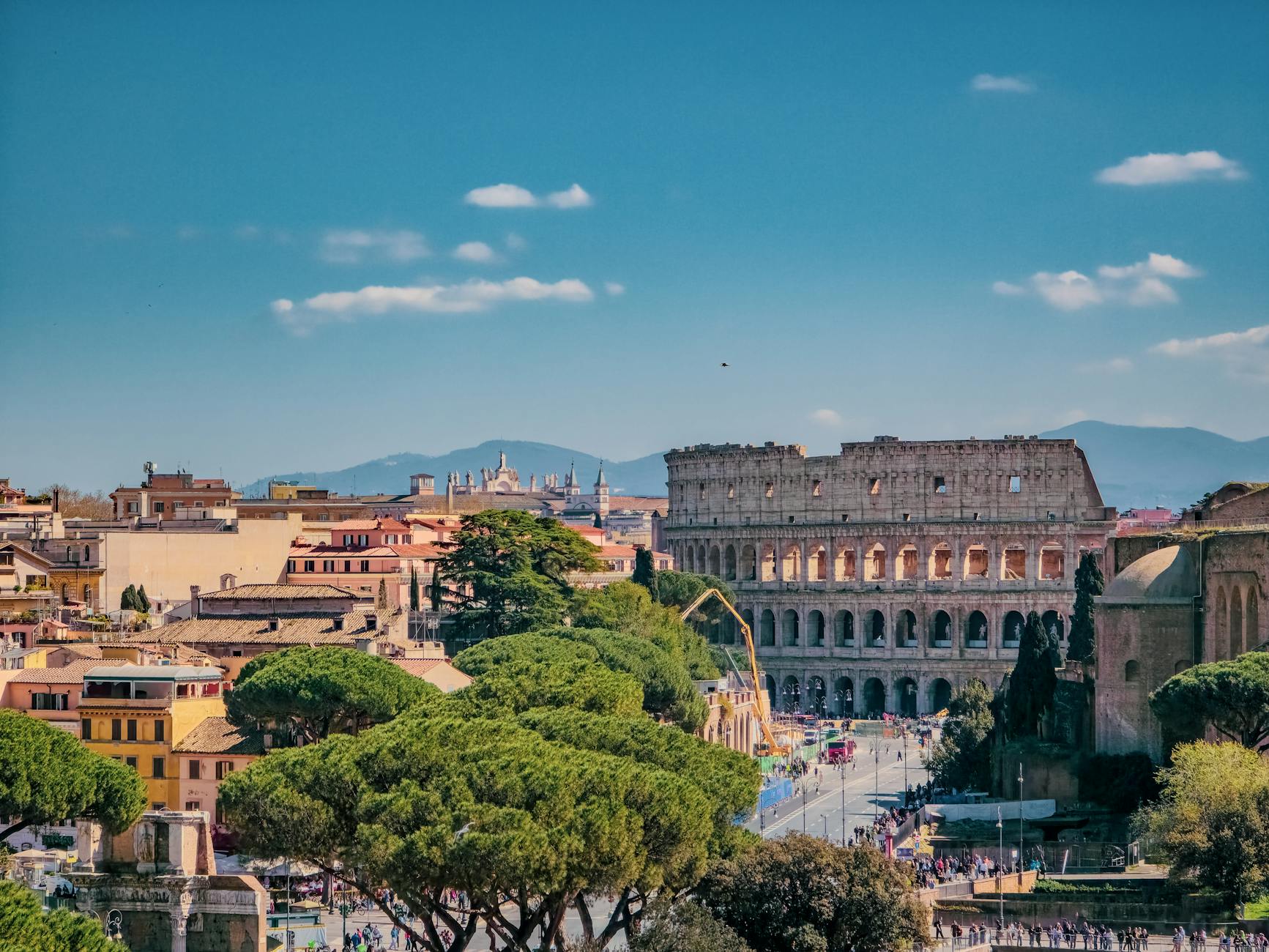
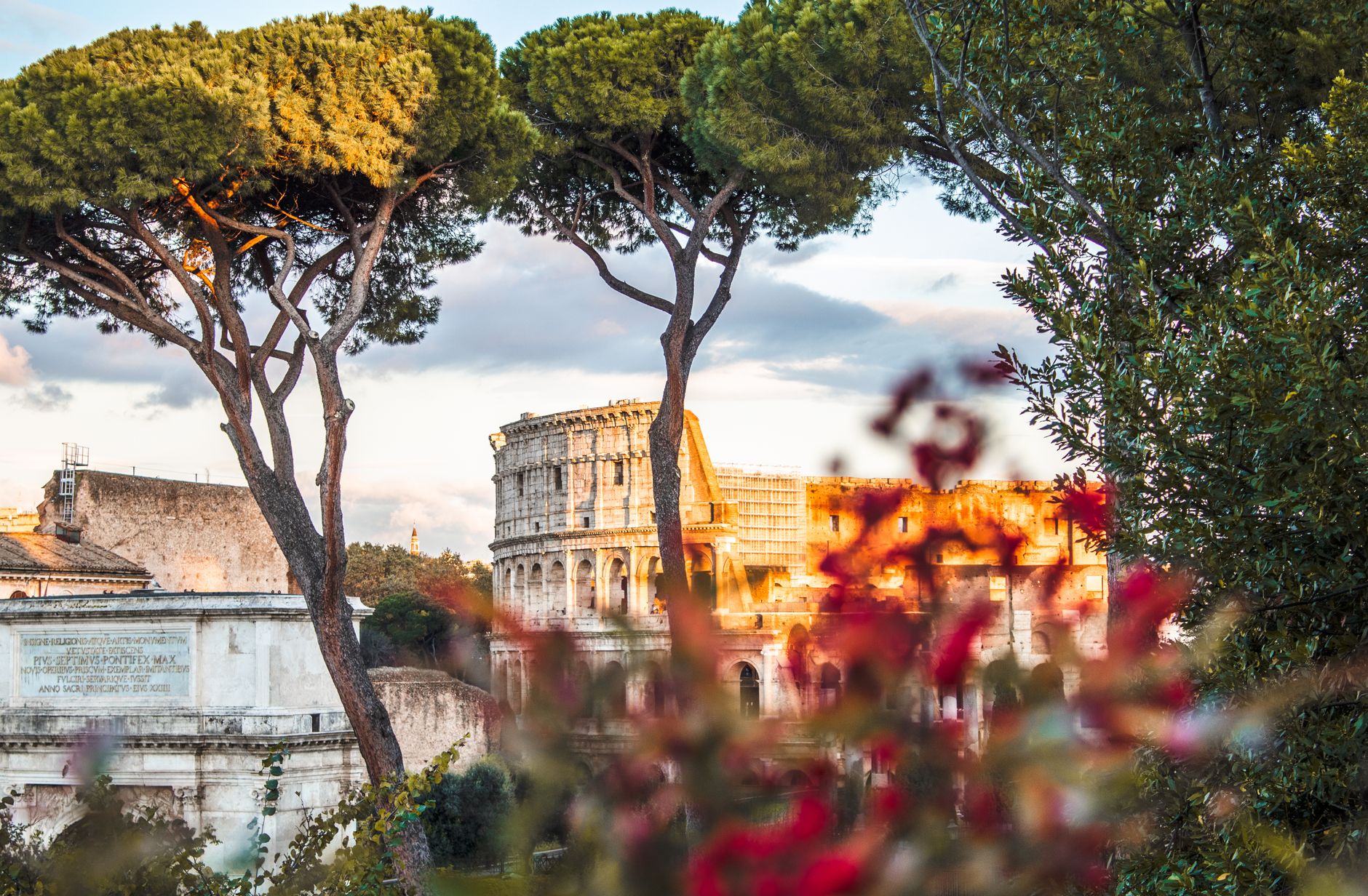
Built atop Nero's private lake as political revenge, the Colosseum wasn't even called that until medieval times — the name came from a lost statue next door.

03 Place

Celio

Nestled among the legendary Seven Hills of Rome, the Celio district—also known as the Caelian Hill—is a captivating historic enclave that offers visitors an…

Roman Forum
04 Place

Roman Forum

For 300 years after Rome fell, the Forum was a cow pasture called Campo Vaccino. Carlo Fea began the excavations only in 1803, after centuries of grazing.

05 Place

Archbasilica of St. John Lateran

The Archbasilica of St.

Pantheon
06 Place

Pantheon

The Pantheon's dome has stood unreinforced for 1,900 years — and on Pentecost, firefighters still rain rose petals through its open oculus.

07 Place

Saint Peter'S Square

Saint Peter’s Square (Piazza San Pietro), situated at the heart of Vatican City, stands as one of the most iconic and historically rich landmarks in Rome and…

04 Neighborhoods.

Where to wander, by quarter — each with its own rhythm.

01

Trastevere

Ochre buildings draped in ivy line streets barely wide enough for a Fiat. Mornings belong to locals buying bread near Basilica di Santa Maria in Trastevere, whose 12th-century mosaics still catch the light exactly as intended. By evening the piazza fills with Romans drinking on the fountain steps at Piazza Trilussa. The Michelin-starred Glass Hostaria sits steps from Freni e Frizioni, where aperitivo spreads rival small meals.

02

Testaccio

This working-class neighborhood remains Rome’s kitchen. The old slaughterhouse hill made entirely of ancient amphorae shards now overlooks stalls selling porchetta and supplì from 7 a.m. Flavio al Velavevodetto serves coda alla vaccinara inside the hill itself. Locals queue at Da Remo for paper-thin Roman pizza. This is where Romans actually eat, not where they take visitors.

03

Monti

Rome’s oldest quarter sits steps from the Colosseum yet feels worlds away. Vine-covered streets lead to Ai Tre Scalini, where aperitivo happens under fairy lights. Piazza della Madonna dei Monti becomes an open-air living room after dark. Residents mix with artists in small wine bars. The neighborhood rewards those who linger instead of rushing between ancient sites.

04

Pigneto

Pasolini’s old neighborhood still carries its neorealist edge. Via del Pigneto closes to traffic each evening so locals can drink at outdoor tables or stand in the street with beers from Birra Piu. Street art covers walls that once appeared in mid-century films. Necci dal 1924 has served everyone from factory workers to filmmakers since opening its doors in 1924.

05

Jewish Ghetto

One of Europe’s oldest continuous Jewish communities sits beside the Tiber with 2,000 years of layered history. The Portico di Ottavia marks the ancient boundary where cafés now occupy ruins. Order carciofi alla giudia, the deep-fried artichokes invented here centuries ago. The quiet streets reveal Rome’s habit of building new lives directly on top of old ones.

06

Aventine Hill

Elegant and residential, this hill offers escape without leaving the city. Peer through the green door at Piazza dei Cavalieri di Malta and see St. Peter’s dome perfectly framed by an avenue of trees, a trick designed by the Knights of Malta. Giardino degli Aranci fills the air with citrus scent. Romans come here for sunset when they want silence.

07

Quartiere Coppedè

Tucked in the Trieste district, this 1920s neighborhood designed by Gino Coppedè looks like a fairytale that wandered into Rome. Art Nouveau, Deco, Gothic and Baroque elements collide at the Fountain of the Frogs and the Spider Palace. Almost no tourists reach these storybook buildings. The contrast with classical Rome could not be sharper.

08

San Lorenzo

The university district delivers Rome’s cheapest drinks and most interesting nights. Piazza dell’Immacolata fills with students after dark. Centri sociali occupy abandoned buildings with underground clubs and political energy. Street art covers nearly every surface. This is where the city sheds its monument polish and becomes something rawer.

Historical Timeline

The City That Refused to Die

From wolf-suckled legend to eternal capital

Monarchical Period
753 BCE

Romulus Founds Rome

According to tradition, Romulus killed his twin Remus on the Palatine Hill and declared the city his own. The story smells of later propaganda, yet archaeologists confirm Iron Age huts appeared on that exact ridge around this time. Within centuries the settlement swallowed its neighbors. Rome began as one more Latin village. It would never be satisfied with that fate.

Roman Republic
509 BCE

Republic Replaces Kings

Tarquinius Superbus was driven out after his son raped a noblewoman. Two consuls took his place and the Senate tightened its grip. The Republic lasted almost five centuries. Its DNA still shapes every constitution written since. No single moment better explains why Romans always feared one-man rule.

390 BCE

Gauls Sack the City

Brennus and his Senonian Gauls slaughtered the army at the River Allia then burned everything except the Capitoline. Romans paid 1,000 pounds of gold to make them leave. The humiliation never left the collective memory. Every later wall, every later legion, carried the echo of that smoke.

44 BCE

Caesar Assassinated

Twenty-three senators stabbed Julius Caesar in Pompey’s theatre on the Ides of March. Blood ran across the marble while the Senate screamed about liberty. The Republic died with him. What replaced it would wear republican clothes for another four centuries.

Roman Empire
27 BCE

Augustus Becomes Emperor

Octavian accepted the title Augustus and claimed he had restored the Republic. In truth he created the Principate. He found a city of brick and left one of marble. The population hit one million. For the next two centuries Rome was the largest city the Western world had ever seen.

64 CE

Nero’s Great Fire

Flames devoured ten of fourteen districts for six days. Nero probably did not start it, but he certainly used the cleared land for his Domus Aurea. Christians became convenient scapegoats and the first imperial persecution began. Peter and Paul are said to have died in its aftermath. The smell of charred timber lingered for years.

80 CE

Colosseum Inaugurated

Vespasian began it on the site of Nero’s private lake. Titus finished and opened the Flavian Amphitheatre with 100 days of blood sports. Fifty thousand people watched gladiators and animals die on the same sand. The engineering still astonishes. Concrete and spectacle created an icon that refuses to be forgotten.

c. 125 CE

Hadrian Rebuilds the Pantheon

The emperor replaced Agrippa’s temple with a building whose unreinforced concrete dome remains the largest ever cast until the 15th century. Light pours through a nine-metre oculus and moves across the coffered ceiling like a sundial. Hadrian left his architectural signature on the city he refused to expand.

Late Empire
312 CE

Constantine Wins at Milvian Bridge

Before battle Constantine reportedly saw a cross in the sky with the words “in this sign conquer.” He won, legalized Christianity, and began shifting the empire’s center eastward. Rome slowly became a religious rather than political capital. The Arch built to celebrate him still stands, stripped of its original bronze.

410 CE

Visigoths Sack Rome

Alaric’s army entered through the Salarian Gate after 800 years without foreign occupation. Three days of looting followed. The psychological wound ran deeper than the physical damage. Augustine wrote City of God to explain how a Christian empire could suffer so. Something fundamental had broken.

476 CE

Western Empire Ends

Odoacer deposed the boy-emperor Romulus Augustulus and sent the imperial regalia to Constantinople. No one bothered to appoint a replacement in the West. The date is convenient rather than precise, yet it still marks the conventional end of ancient Rome. The city itself kept breathing.

Medieval Rome
609 CE

Pantheon Becomes a Church

Pope Boniface IV consecrated the temple as Santa Maria ad Martyres. By turning a pagan building into a Christian one he saved its dome from spoliation. Raphael would later choose it as his burial place. The building has watched every subsequent chapter of the city under a single roof.

1305

Papacy Flees to Avignon

Clement V moved the papal court to France. Rome’s population collapsed toward 20,000. Cattle grazed among the ruins of the Forum. For seventy years the city that once ruled the known world became an afterthought. The emptiness left scars still visible in the medieval fabric.

Renaissance Rome
1377

Papacy Returns from Avignon

Gregory XI brought the papacy home. The city began its long convalescence. Popes became builders again. What followed was one of history’s most spectacular urban makeovers, paid for by the indulgence money of half of Europe.

1508

Michelangelo Paints the Sistine Ceiling

Lying on scaffolding for four years, he covered 500 square metres with 300 figures. The Creation of Adam remains one of the most reproduced images on earth. Julius II demanded it. Michelangelo never forgave him. The ceiling still crackles with tension between patron and artist.

1527

Imperial Troops Sack Rome

Charles V’s unpaid army, mostly Lutheran landsknechts, stormed the city. Pope Clement VII escaped along the secret Passetto di Borgo to Castel Sant’Angelo. Between 12,000 and 45,000 died. The High Renaissance ended in rape and looting. Artists fled. The city took decades to recover.

Baroque Rome
1626

New St. Peter’s Consecrated

After 120 years and dozens of architects, the largest church in the world was finished. Michelangelo’s dome dominates the skyline from almost every vantage. Bernini later added the embracing colonnade. The building remains less a church than a declaration of papal power made in stone and bronze.

1651

Bernini Completes Four Rivers Fountain

In Piazza Navona the sculptor gave the Nile, Ganges, Danube and Río de la Plata human form around an ancient obelisk. The fountain still surprises with its theatrical energy. Locals claim the figure of the Nile covers its eyes to avoid seeing Borromini’s nearby church. The rivalry was real.

1762

Trevi Fountain Completed

Nicola Salvi’s baroque masterpiece was finished after his death. Three thousand euros in coins are thrown into it every day; the money goes to charity. At 7 a.m. the square belongs to Romans and the water sounds like applause. Few monuments better capture the city’s genius for turning utility into theater.

Modern Rome
1870

Italian Troops Breach Porta Pia

On 20 September bersaglieri entered through a hole blown in the Aurelian Wall. Pope Pius IX became “prisoner of the Vatican.” After 1,100 years papal temporal power ended. Rome became capital of a unified Italy. The smell of gunpowder mixed with the scent of unification’s uncertain future.

1929

Lateran Treaty Creates Vatican City

Mussolini and Pius XI signed away fifty-nine years of hostility. The papacy gained a 0.44 square kilometre state and Rome kept its uneasy peace with the Church. The treaty still governs relations between Italy and the Holy See. History’s most successful condominium agreement.

1944

Rome Liberated

Allied troops entered on 4 June. The Eternal City was spared the street-by-street fighting that destroyed so many other capitals. Earlier that year the Ardeatine Massacre had taken 335 lives in reprisal. Romans still argue whether declaring the city “open” saved it or merely postponed its pain.

1957

Treaty of Rome Signed

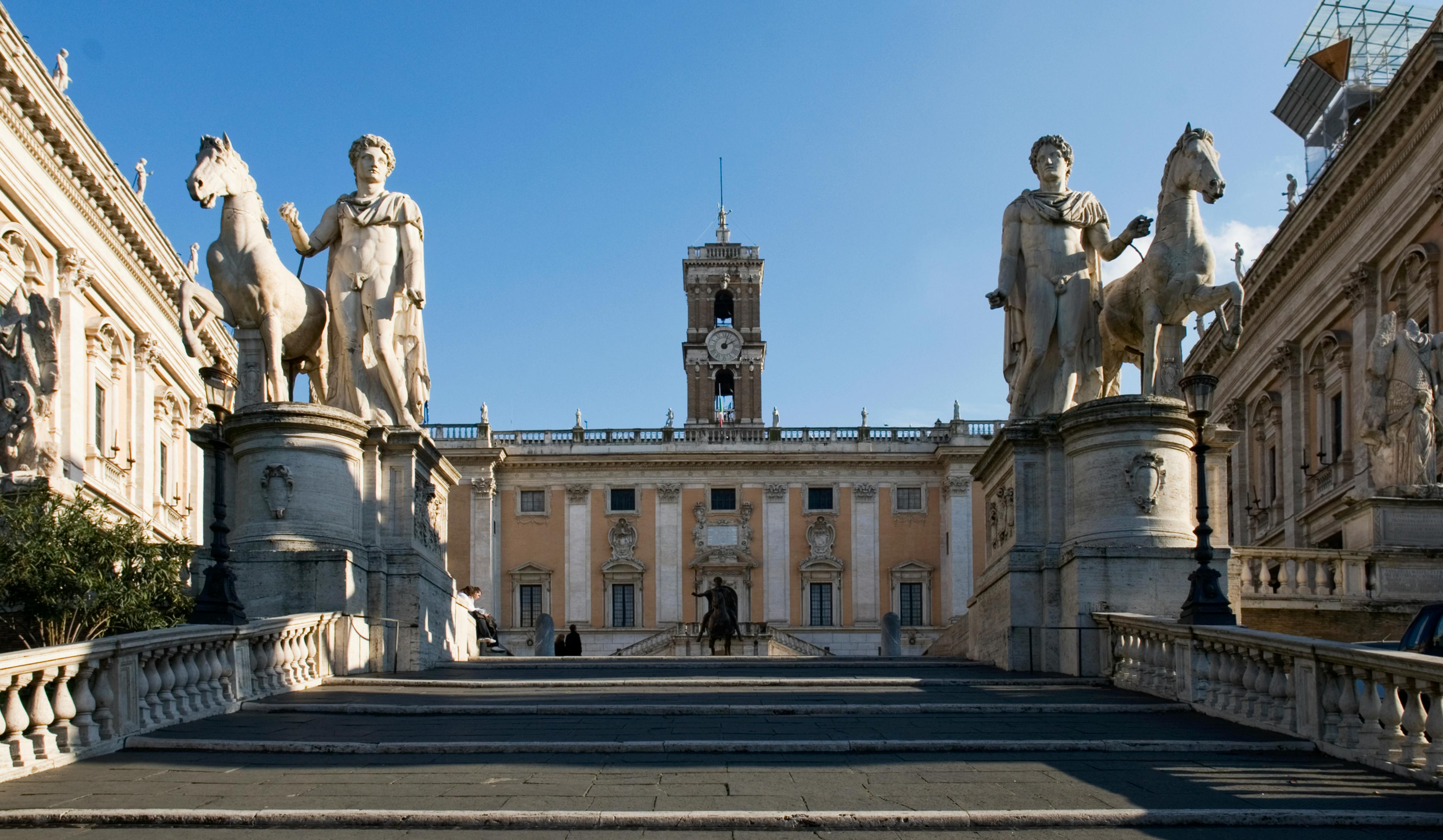
In the Palazzo dei Conservatori on the Capitoline, six nations created the European Economic Community. The same hill where Romulus supposedly began his city now witnessed its latest reinvention. The ink dried while the ancient bronze She-Wolf looked on. Some ironies refuse to stay silent.

Present Day

06 Who lived here.

The people who shaped the city — and were shaped by it.

General and Dictator 100–44 BCE

Julius Caesar

Born and ruled from Rome

Born in the Subura district, he crossed the Rubicon, became Dictator for Life, and was stabbed 23 times in Pompey's Theatre on the Ides of March. The man who gave us the Julian calendar once held the entire known world from a few rooms on the Palatine. He'd probably be horrified by the gift shops now selling his face on t-shirts.

Sculptor and Architect 1598–1680

Gian Lorenzo Bernini

Lived nearly his entire life in Rome

Pope Urban VIII once told him he was made for Rome and Rome for him. He gave the city its Baroque soul — the Fountain of Four Rivers in Piazza Navona, the colonnade of St. Peter's, the ecstasy of Saint Teresa. Watch how his marble seems to breathe. The city still carries his fingerprints everywhere you look.

Film Director 1920–1993

Federico Fellini

Based his career in Rome

He turned the Via Veneto into cinema with La Dolce Vita, capturing the sweet life of paparazzi, movie stars and existential emptiness. Rome wasn't a backdrop for Fellini. It was the subject. Walk those same streets at night and you'll feel like you're inside one of his dreams.

Physicist 1901–1954

Enrico Fermi

Born and educated in Rome

The boy from Rome who split the atom and helped build the atomic bomb before fleeing Mussolini's Italy. He would walk these streets as a young physicist, thinking about neutrons, before changing the course of human history. The city produced the mind that unlocked the power of the universe.

Physician and Educator 1870–1952

Maria Montessori

Trained and launched her method in Rome

The first woman to earn an MD from the University of Rome opened her first Casa dei Bambini here in 1907. She watched children in the city's slums teach themselves with simple materials and changed education worldwide. Rome gave her both the problem and the laboratory.

05 Transit Architecture & The Roman ZTL Trap.

Navigating the capital without municipal fines, tourist markups, or transit confusion.

The Mechanics of Rome's ZTL Driving Boundaries

Navigating a rental car into central Rome is one of the most financially damaging errors an international traveler can make. Rome operates Europe's most intricate and fiercely enforced Zona a Traffico Limitato (ZTL). The historic center (Centro Storico), Trastevere, San Lorenzo, and Testaccio are bounded by electronic surveillance gantries fitted with high-resolution digital cameras that photograph every vehicle license plate that crosses the perimeter. These gates are active Monday through Friday from 06:30 to 18:00, Saturday afternoons, and during nighttime hours on weekends.

Rental car companies do not provide automatic ZTL permits. When an unregistered vehicle drives through a ZTL portal, the municipal database immediately issues a violation notice resulting in a fine between €100 and €330. Furthermore, because the cameras operate independently at every individual portal, driving across three intersections within a restricted quadrant will trigger three distinct fines, followed by administrative surcharges of €45 to €60 levied by your rental agency months after returning home.

If your itinerary requires a rental car for excursions to Tuscany, Umbria, or the Castelli Romani, collect your vehicle directly from Fiumicino Airport or Roma Tiburtina station on the morning of departure. Never pick up a car at Roma Termini with the intention of loading luggage at an inner-city boutique hotel. If you are staying at a central hotel that provides valet parking or garage authorization, you must demand that the front desk register your vehicle's license plate in the municipal police portal within twenty minutes of arrival. Retain physical and digital timestamped copies of your hotel check-in receipt and the whitelist confirmation number for at least twelve months.

Metro, Tram & ATAC Urban Navigation

Rome's public transit authority (ATAC) operates an integrated network consisting of two primary underground heavy rail arteries (Metro Line A and Line B), an emerging third line (Line C), an extensive tram network, and hundreds of surface bus routes. Because Rome's subsoil is an unbroken archaeological stratigraphy of imperial temples, catacombs, and aqueducts, subway expansion moves at a glacial pace. Consequently, the two main lines form a giant 'X' that intersects exclusively at Roma Termini.

  • Metro Line A (Orange): The cultural workhorse. Connects northwest residential quarters to Battistini through Ottaviano (primary stop for St. Peter's Basilica and the Vatican Museums), Flaminio (Piazza del Popolo and Villa Borghese), Spagna (Spanish Steps and luxury shopping corridor), Barberini (Trevi Fountain access), Termini central station, and southeast towards San Giovanni (Archbasilica of Saint John Lateran) and Anagnina.
  • Metro Line B (Blue): The imperial corridor. Runs northeast to southwest from Rebibbia/Jonio through Tiburtina railway hub, Termini, Cavour (the bohemian Monti quarter), Colosseo (emerges directly facing the Colosseum arches and Arch of Constantine), Circo Massimo (Circus Maximus and Aventine Hill), and Piramide (access to the Protestant Cemetery, Testaccio food market, and suburban trains to Ostia Antica).
  • The Tram Network: Trams offer the most scenic above-ground transit in Rome. Tram Line 8 connects the western residential hub of Casaletto through Trastevere (Viale di Trastevere) directly to Piazza Venezia in the historic core. Tram Line 3 provides a magnificent semi-circular tour looping around the Colosseum, San Giovanni, and Villa Borghese.

Ticketing Logistics: Single BIT tickets cost €1.50 and remain valid for 100 minutes from the initial timestamp. A single ticket permits unlimited transfers between buses and trams, but only one entry through underground metro turnstiles. Rome has completed its rollout of contactless EMV payment (Tap & Go) across all metro turnstiles and onboard surface buses: simply tap your physical contactless credit card or smartphone at the yellow readers. Daily 24-hour (€7.00), 48-hour (€12.50), and 72-hour (€18.00) travel passes are cost-effective only if you plan four or more transit journeys daily; because Rome's historic center is exceptionally compact, most visitors discover that walking between sights is faster and far more rewarding than waiting for congested surface buses.

07 Mastering the Monuments: Booking Protocols & Field Rules.

Strategic blueprint for navigating the Colosseum, Vatican Museums, Pantheon, and Borghese Gallery.

The Colosseum, Roman Forum & Palatine Hill

The Flavian Amphitheatre, commissioned by Emperor Vespasian in 72 AD and dedicated by Titus in 80 AD, accommodated over 50,000 spectators seated strictly according to social rank. To visit today without falling victim to predatory ticket scalpers or multi-hour queues in the sweltering Mediterranean heat, you must understand the official ticketing tier system.

The Parco Archeologico del Colosseo issues tickets precisely 30 days in advance on a rolling hourly schedule through its official portal. Three primary access tiers exist:

  • Standard Admission (€18): Permits entry to the first and second tiers of the Colosseum amphitheatre, followed by combined access to the Roman Forum and Palatine Hill archaeological park within a 24-hour window.
  • Full Experience with Arena Floor (€24): Grants specialized entry onto the reconstructed wooden arena stage via the Gladiator's Gate (Porta Libitinaria), providing an unmatched panoramic perspective looking up at the towering cavea tiers and down into the exposed hypogeum labyrinth.
  • Full Experience Subterranean Hypogeum (€24 + reservation fee): The holy grail of Roman archaeology. Accompanied by an authorized guide, visitors descend into the two-story subterranean network of vaulted stone corridors, animal holding cells, and counterweight elevator mechanisms that hoisted lions, leopards, and gladiators directly onto the arena sands. These tickets vanish within seconds of release.

Pro Tip for Entering the Forum: Never attempt to enter the Roman Forum via the central entrance directly opposite the Colosseum on Via dei Fori Imperiali, where queues stretch for hundreds of meters. Instead, walk five minutes south to the quieter entrance on Via di San Gregorio between the Palatine Hill and Circus Maximus, or use the entrance near the Arch of Titus. Begin your visit on the shady pine groves of the Palatine Hill, viewing the imperial palace complexes of Augustus and Domitian, before descending into the monumental ruins of the Curia Julia (Roman Senate), the Temple of Antoninus and Faustina, and the House of the Vestal Virgins.

Vatican Museums, Sistine Chapel & St. Peter's Basilica

Although Vatican City is an independent sovereign enclave measuring just 49 hectares, it contains the densest concentration of world-class Renaissance and classical art on the planet. Navigating this 7-kilometer corridor of galleries requires precise planning.

Ticketing and Timing: Standard entry tickets (€20 + €5 online reservation fee) are released 60 days in advance on the official Vatican Museums website (museivaticani.va). Book the earliest morning slot (08:00 or 08:30) or consider the seasonal Friday/Saturday night openings (May through October), when crowd density drops by over 60%. Never purchase tickets from unofficial street hawkers hovering around the Ottaviano metro station claiming to offer 'skip-the-line' access; their markups are exorbitant, and voucher authenticity is frequently disputed at the security turnstiles.

Navigating the Vatican Galleries: When entering the museums, prioritize the Pio-Clementino Museum to view classical sculptures that ignited the Renaissance aesthetic: the marble Laocoön and His Sons, the Belvedere Torso (which Michelangelo studied obsessively), and the Apollo Belvedere. Proceed through the Gallery of the Candelabra, the Gallery of Tapestries, and the breathtaking 120-meter Gallery of Maps, decorated with 40 topographical fresco murals commissioned by Pope Gregory XIII in 1580 depicting the Italian peninsula with astonishing precision.

Before reaching the Sistine Chapel, pause in the Raphael Rooms (Stanze di Raffaello) within the Papal Palace. In the Stanza della Segnatura, Raphael painted The School of Athens (1509–1511), framing the intellectual titans of ancient philosophy—Plato and Aristotle at the vanishing point, flanked by Pythagoras, Euclid, and a brooding portrait of Michelangelo modeled as Heraclitus—directly opposite his theological fresco Disputation of the Most Holy Sacrament.

The Sistine Chapel & Michelangelo's Double Masterpiece: Silence is strictly enforced within the chapel, and photography is prohibited under international copyright conventions. Spend fifteen minutes examining the vaulted ceiling, completed by Michelangelo between 1508 and 1512 on a complex wooden scaffold system. Nine central panels illustrate Genesis, culminating in the iconic Creation of Adam. Thirty years later, summoned back by Pope Paul III, a disillusioned Michelangelo returned to paint the titanic Last Judgment (1536–1541) on the altar wall, a terrifying vision of apocalyptic reckoning featuring Christ as a muscular judge and the artist's own anguished self-portrait on the flayed skin of Saint Bartholomew.

St. Peter's Basilica Entry & Dress Code: Admission to St. Peter's Basilica is completely free. However, security screening lines in St. Peter's Square can exceed two hours by mid-morning. Arrive at 07:00 when the basilica opens: you will walk straight through airport-style security with zero wait time, experiencing the cavernous interior in profound silence. Dress code is strictly enforced for all visitors regardless of temperature: shoulders and knees must be completely covered; hats must be removed; transparent fabrics, tank tops, and short shorts are strictly turned away at the threshold. Inside, marvel at Michelangelo's Pietà (1499), sculpted when the master was just 24 years old, and Gian Lorenzo Bernini's monumental 29-meter bronze Baldacchino towering over the papal altar beneath the central dome.

The Pantheon & The Borghese Gallery

The Pantheon (Basilica of St. Mary and the Martyrs): Rebuilt by Emperor Hadrian between 118 and 125 AD, the Pantheon remains the world's largest unreinforced concrete dome after nearly two millennia. Its perfection lies in its proportions: the interior diameter (43.3 meters) exactly equals its vertical height, accommodating a perfect hypothetical sphere. The 9-meter open circular aperture (oculus) in the apex serves as the sole light source, creating a moving beam of sunlight across the marble floor; rain falling through the oculus is drained by 22 concealed holes set into the concave floor slabs. In July 2023, Italy introduced a modest €5 admission ticket (free on the first Sunday of each month). Reserve your timed slot online via the Italian Ministry of Culture portal to avoid ticket queues on the Piazza della Rotonda. Pay homage at the tomb of the Renaissance painter Raphael, whose marble epitaph reads: 'Here lies Raphael, by whom Nature feared to be outdone while he lived, and when he died, feared she herself would die.'

The Borghese Gallery (Galleria Borghese): Located within the tranquil gardens of Villa Borghese, this former suburban palace of Cardinal Scipione Borghese contains the world's most dramatic concentration of Gian Lorenzo Bernini's baroque marble sculptures and Caravaggio canvases. Admission is restricted to strictly controlled 2-hour slots for a maximum of 360 visitors at a time; tickets routinely sell out four to six weeks in advance. Inside, observe Bernini's Apollo and Daphne (1622–1625), where cold Carrara marble transforms into translucent laurel leaves, delicate roots sprouting from toenails, and fluttering human skin; and his Rape of Proserpina, where Pluto's marble fingers visibly sink into the soft flesh of the maiden's thigh. The museum also displays six definitive Caravaggio works, including Boy with a Basket of Fruit, David with the Head of Goliath, and the brooding Saint Jerome Writing.
08 Roman Culinary Culture & Indian Vegetarian Navigation.

Authentic pasta traditions, street food heritage, and navigating dietary restrictions in the capital.

The Roman Pasta Canon & Vegetarian Adaptation

Traditional Roman culinary philosophy (cucina romana) is historically grounded in the quinto quarto ('fifth quarter')—the offal and cuts of meat left behind by the nobility in the Testaccio slaughterhouses. The four legendary Roman pasta pillars evolved from this heritage: Gricia (guanciale and pecorino), Carbonara (guanciale, egg yolk, pecorino), Amatriciana (guanciale, tomato, pecorino), and the sacred Cacio e Pepe (Pecorino Romano and freshly cracked toasted black peppercorns).

For vegetarian travelers, Roman cuisine is extraordinarily accommodating once armed with proper Italian phrasing:

  • Pasta all'Arrabbiata: The undisputed king of Roman vegetarian pasta. Penne tossed in an intense sauce of peeled plum tomatoes, generous garlic slices gently browned in extra virgin olive oil, and fiery fresh red peperoncino chilies. Finished with fresh flat-leaf parsley. It is universally vegetarian and naturally vegan without cheese.
  • Cacio e Pepe: Tonnarelli pasta emulsified with reserved starchy cooking water and aged Pecorino Romano cheese. Note for strict lacto-vegetarians: authentic D.O.P. Pecorino Romano is produced using animal rennet (caglio). If strict adherence to vegetarian coagulants is required, request your pasta 'con formaggio vegetale' or indulge in tomato-based preparations.
  • Melanzane alla Parmigiana: Thick slices of globe eggplant salted, lightly pan-fried or baked, and layered in terracotta dishes with sweet tomato sauce, fresh basil leaves, and creamy mozzarella di bufala. Available at nearly every neighborhood trattoria.
  • Carciofi alla Giudìa & Jewish Ghetto Classics: Rome's Jewish community, established along the Tiber banks in 1555, created one of the city's greatest culinary treasures: Carciofi alla Giudìa (Jewish-style artichokes). Whole Romanesco artichokes are trimmed, seasoned with salt and pepper, and twice deep-fried in boiling olive oil until the outer leaves turn into paper-thin, golden, crispy potato-chip-like petals while the heart remains succulent and velvety. They are 100% plant-based, naturally vegan, and unforgettable. Also sample Carciofi alla Romana, braised slowly with mint, garlic, and white wine.

Roman Street Food & Artisanal Pizza al Taglio

While Naples invented round, wood-fired pizza with pillowy charred crusts, Rome perfected Pizza al Taglio (pizza by the slice, baked in long rectangular iron pans and sold by weight). The dough undergoes a 48 to 72-hour cold fermentation process, resulting in an airy, honeycomb-cellular crumb with a glass-like crunchy bottom that never leaves you feeling bloated.

Visit Pizzarium Bonci near Cipro metro station (masterminded by dough pioneer Gabriele Bonci) or Forno Campo de' Fiori in the historic center. Select your slices—such as Pizza Bianca split open with fresh figs, zucchini blossoms stuffed with ricotta, or classic potato and rosemary (patate e rosmarino)—and gesture with your fingers how wide a slice you desire. The baker cuts it with heavy shears, weighs it on digital scales, reheats it in seconds, and folds it in wax paper.

The Roman Supplì: No evening stroll through Trastevere is complete without a Supplì al Telefono. Unlike larger Sicilian arancini, Roman supplì are torpedo-shaped croquettes of arborio rice simmered in savory tomato sauce, stuffed with an ingot of fresh mozzarella, coated in breadcrumbs, and deep-fried to deep bronze perfection. When pulled apart hot, the melted mozzarella strings out like a telephone wire connecting the two halves. Ensure you order the classic Supplì al Pomodoro (tomato and mozzarella) and verify that it does not contain minced beef or chicken giblets by asking: 'Il supplì è fatto solo con pomodoro e mozzarella, senza carne?'

08 Where to Eat.

Where locals actually book dinner — not the tourist menus.

Taverna Lucifero Taverna Lucifero
Local favorite €€

Taverna Lucifero

★ 4.8 View
Pane e Salame Pane e Salame
Local favorite €

Pane e Salame

★ 4.8 View
Ristoro Della Salute Ristoro Della Salute
Local favorite €€

Ristoro Della Salute

★ 4.8 View
Quel che c’è laboratorio Di Cucina Quel che c’è laboratorio Di Cucina
Local favorite €€

Quel che c’è laboratorio Di Cucina

★ 4.9 View
Tonnarello San Pietro Tonnarello San Pietro
Local favorite €€

Tonnarello San Pietro

★ 4.8 View
CiPASSO CiPASSO
Fine dining €€

CiPASSO

★ 4.8 View

09 Insider tips.

Small things that change how the city treats you.

Beat the crowds

Visit the Colosseum, Trevi Fountain and Pantheon between 7-9am or after 10pm. The difference between having the place to yourself and fighting through tour groups is dramatic.

Order like a Roman

Never order cappuccino after noon and never ask for cheese on seafood pasta. Stand at the bar for your espresso — it costs half what sitting at a table does.

Book months ahead

Colosseum, Vatican Museums and Galleria Borghese tickets sell out weeks in advance. The €5 Pantheon entry introduced in 2023 makes skip-the-line tickets almost essential.

Skip the metro

Rome's historic center is best explored on foot. Use the metro only to reach Testaccio, Pigneto or Garbatella when you want authentic Roman life away from tourists.

Eat in Testaccio

The former slaughterhouse district serves the best cacio e pepe, carbonara and coda alla vaccinara at half the price of Trastevere. Go before 7:30pm or after 9pm.

Respect the pausa

Many neighborhood restaurants and shops close between 3pm and 7:30pm. Plan your day around this Roman rhythm instead of fighting it.

09 Imperial Day Trips: Ostia Antica & The Appian Way.

Stepping beyond the Aurelian walls to explore ancient Roman maritime harbors and catacomb roads.

Ostia Antica: Rome's Preserved Ancient Harbor City

While Pompeii commands global fame, Ostia Antica offers an equally astonishing, far less crowded archaeological experience just 25 kilometers southwest of the capital. During the Roman Republic and Empire, Ostia served as Rome's bustling seaport at the mouth of the Tiber River, receiving grain shipments from Egypt, olive oil from Hispania, and garum fish sauce from North Africa that sustained the imperial population of over one million citizens.

Unlike Pompeii, which was sealed abruptly beneath volcanic pumice, Ostia was gradually abandoned when the Tiber silted up during late antiquity, causing the river to change its course. Today, shaded by fragrant Mediterranean umbrella stone pines, you can wander through multi-story brick apartment blocks (insulae), remarkably intact Roman taverns (thermopolia) featuring painted fresco menus and marble counters, functioning communal public latrines, private bathhouses adorned with black-and-white sea-creature mosaics, and an ancient Roman theatre dedicated by Agrippa that still hosts summer musical performances.

How to Reach Ostia Antica: Transit is remarkably simple and costs only a standard €1.50 ATAC transit ticket. Take Metro Line B to Piramide station. Walk inside the station directly to the connected Roma Porta San Paolo suburban rail platforms and board the Roma–Lido suburban train. Disembark at Ostia Antica station (a 25-minute scenic ride). From the station, cross the blue pedestrian footbridge and walk five minutes along the cypress-lined lane to the archaeological ticket office. Allocate 3 to 4 hours to explore the ruins at your own pace.

The Via Appia Antica (The Queen of Long Roads)

Constructed in 312 BC by censor Appius Claudius Caecus, the Via Appia Antica was ancient Rome's most strategic military and commercial highway, linking the capital to the Adriatic port of Brindisi. Because Roman law strictly prohibited burials inside the sacred city perimeter (pomerium), the wealthy patrician families constructed lavish marble mausoleums and family tumuli along both shoulders of the Appian Way.

On Sundays, the historic stretch of the Via Appia Antica is closed entirely to motorized vehicle traffic, transforming into an idyllic pedestrian and cycling corridor. Rent a bicycle near the Porta San Sebastiano or the Church of Domine Quo Vadis and pedal over the massive polygonal basalt cobblestones (basoli), where the deep ruts worn by Roman chariot iron wheels remain visible in the stone. Stop to explore the subterranean Catacombs of San Callisto and San Sebastiano, carved into the soft volcanic tufa rock, where early Christian communities entombed their deceased and concealed underground chapels decorated with ancient Christian symbolic graffiti.

12 Frequently asked

Is Rome worth visiting?

Yes, but only if you avoid the tourist traps. The city still delivers moments that rewire how you see the past — standing on the exact floor where gladiators fought, watching late afternoon light pour through the Pantheon's oculus, eating carbonara where it was invented. Three days isn't enough. Five is better.

How many days do I need in Rome?

Plan for at least four full days. One for Ancient Rome (Colosseum, Forum, Palatine), one for Vatican Museums and St. Peter's, one for Baroque treasures (Trevi, Piazza Navona, Spanish Steps), and one for simply living like a Roman in Testaccio or Trastevere. A week lets you breathe.

Is Rome safe for tourists?

Violent crime is rare but petty theft is common around Termini station and major tourist sites. Use common sense after dark in San Lorenzo and avoid wearing expensive watches near the Colosseum. The biggest danger is actually the traffic — look both ways even on one-way streets.

When is the best time to visit Rome?

April-May or late September-October. Summers are brutally hot and crowded. July and August turn the city into an oven with many Romans away. Winters are mild but some smaller sites close early.

Should I buy the Roma Pass?

Only if you're doing at least two major museums plus lots of public transport. Otherwise skip it. The combined Colosseum-Forum-Palatine ticket is the only one that really matters. Many of the best experiences in Rome are free or cheap.

Where should I eat in Rome?

Head to Testaccio for authentic Roman food. Try Flavio al Velavevodetto for coda alla vaccinara or Da Enzo al 29 in Trastevere for carbonara. Avoid anywhere with menus displayed outside in four languages and pictures of the food.

13Before you go

Practical Information

Flight

Getting There

Fiumicino (FCO) connects via Leonardo Express train to Roma Termini every 15 minutes for €14, taking 32 minutes. Ciampino (CIA) offers the Airlink bus+train to Termini for €2.70. Official white taxis charge a fixed €55 from FCO and €40 from CIA inside the Aurelian Walls. Termini station handles all high-speed rail.

Directions transit

Getting Around

The metro has three lines (A, B/B1, C) with Line C now reaching Colosseo. Six tram lines (especially 3, 8 and 19) and 363 bus routes fill the gaps. As of April 2026 several tram lines are under replacement bus service. Buy a ROMA 72H pass for €22 or use contactless Tap&Go. The historic center is best walked.

Thermostat

Climate & Best Time

Spring (April-May) averages 8–23°C with 65 mm rain. July-August hits 17–30°C but feels hotter on stone streets. September-October offers 11–27°C and thinner crowds. November and December are wettest at 103–130 mm. Avoid July and August unless you like 30°C queues.

Shield

Safety

Petty theft dominates around Termini, Colosseum, Vatican, and crowded buses. Keep valuables in a cross-body zip bag and never in back pockets. Use official taxi ranks or apps only. Drivers rarely stop at crossings even on green. Emergency number is 112.

Explore Rome with Hidden Routes

22 h of Rome,
downloaded once.

All Places to Visit.

341 places to discover

Trevi Fountain
Place

Trevi Fountain

Colosseum
Place

Colosseum

Place

Celio

Roman Forum
Place

Roman Forum

Place

Archbasilica of St. John Lateran

Pantheon
Place

Pantheon

Place

Saint Peter'S Square

Place

Basilica Di Santa Maria Maggiore

Place

Basilica of Saint Paul Outside the Walls

Capitoline Museums
Place

Capitoline Museums

Sistine Chapel
Place

Sistine Chapel

Place

Quirinal Palace

Place

Vatican Museums

Place

Lateran Palace

Capitoline Hill
Place

Capitoline Hill

Place

Arch of Titus

Place

Arch of Constantine

Piazza Navona
Place

Piazza Navona

Place

Trajan'S Forum

Place

Basilica of Saint Sabina

Place

Column of Marcus Aurelius

Place

Basilica of San Clemente

Place

Piazza Del Popolo

Place

Villa Borghese Gardens

Place

Theatre of Marcellus

Place

Temple of Vesta

Place

Basilica of St. Peter in Chains

Place

Basilica of Maxentius

Place

Basilica of the Holy Cross in Jerusalem

Place

Theatre of Pompey

Place

Temple of Saturn

Place

Teatro Dell'Opera Di Roma

Place

Piazza Di Spagna

Place

Magistral Palace

Place

Forum Boarium

Place

Janiculum

Place

Forum of Augustus

Place

Basilica of Saint Lawrence Outside the Walls

Place

Pyramid of Cestius

Place

Forum of Caesar

Place

Basilica Julia

Place

Temple of Castor and Pollux

Sant'Ignazio Church
Place

Sant'Ignazio Church

Place

Orange Garden

Place

Temple of Portunus

Place

Temple of Antoninus and Faustina

Place

National Etruscan Museum

Place

Temple of Caesar

Showing 1–48 of 341 places

🏨 Verified Accommodations ✓ Field-Tested & Highly Rated 📍 Rome, Italy

Where to Stay in Rome

From ancient cobblestone alleyways near the Pantheon to historic palazzos overlooking the Colosseum and vibrant Trastevere piazzas.

🗺️ Neighborhood Orientation: Choosing Your Base
📍 Centro Storico & Pantheon Historic heart of Rome within walking distance of Piazza Navona, the Pantheon, and Campo de' Fiori with atmospheric piazzas.
📍 Trastevere Bohemian riverside quarter across the Tiber, renowned for cobblestone streets, ivy-draped trattorias, and lively evening aperitivo culture.
📍 Monti & Colosseum Rome's ancient artisan rione blending vintage boutiques, hip wine bars, and dramatic views of the Roman Forum and Colosseum.
📍 Prati & Vatican Refined 19th-century residential grid near St. Peter's Basilica and the Vatican Museums with upscale shopping on Via Cola di Rienzo.
Budget-Friendly

Hotel Sonya

📍 Viminale / Termini

Family-run boutique hotel opposite the Rome Opera House, offering quiet air-conditioned rooms, fresh homemade breakfast, and easy walking access to Roma Termini station.

Check Live Rates on Trip.com →
Mid-Range

Boutique Hotel Campo de' Fiori

📍 Campo de' Fiori / Navona

Charming boutique residence featuring romantic canopy beds, antique Venetian mirrors, and a panoramic rooftop garden overlooking Rome's church domes.

Check Live Rates on Trip.com →
Premium / Luxury

Hotel de Russie, Rocco Forte

📍 Piazza del Popolo / Spagna

Legendary five-star luxury hotel between the Spanish Steps and Piazza del Popolo, featuring terraced secret gardens, Stravinskij Bar, and an elite wellness spa.

Check Live Rates on Trip.com →
Little Offbeat but Best

Villa Spalletti Trivelli

📍 Quirinale

Aristocratic neoclassical townhouse adjacent to the Quirinal Palace, boasting museum-worthy antique tapestries, a private Italian garden, and rooftop jacuzzis.

Check Live Rates on Trip.com →
Social Hostel

The YellowSquare Rome

📍 Castro Pretorio / Termini

Europe's premier dynamic lifestyle hostel featuring custom bunk dorms, hair salon, basement club lounge, shared kitchen, and daily culinary classes.

Check Live Rates on Trip.com →
ℹ️ Editorial Disclosure: Recommendations are curated independently from guest reviews and verified amenities. Booking through Trip.com links supports Hidden Routes field research at zero extra cost to you.
✓ Handcrafted on Demand • Zero Automated Fluff ⚡ 4–8h Delivery via Email & WhatsApp 📍 Focus: Rome

Curated Field Dossier & Offline Google Maps Pin Pack

Bypass tourist traps with verified local logistics, exact parking coordinates, and field-tested routes.

  • ✓
    Exact GPS Pin Pack: Unmarked parking spots, best dawn photography vantage points, and hidden trailheads.
  • ✓
    Crowd-Avoidance Timing Matrix: Exact hour-by-hour windows to explore with zero tourist chaos.
  • ✓
    Vetted Local Dhabas: 100% authentic, hygiene-checked regional food stops not on commercial maps.
  • ✓
    Scam & Overcharge Shield: Verified taxi rates, auto fares, and local guide fee guidelines.
₹ 99 ₹499 80% OFF

🛡️ Personally curated by PK Gupta & the Hidden Routes research desk. Delivered directly to your Email & WhatsApp within 4–8 hours.

🔒 Secure Razorpay Checkout 💳 UPI & International Cards

Explore More in Italy & Beyond