Key City Briefing · Bologna
- 🚄 Rail Crossroads of Italy: Bologna Centrale is Italy's most strategic railway junction. High-speed Frecciarossa trains connect to Florence in 37 minutes, Milan in 1 hour, Venice in 1 hour 25 minutes, and Rome in 2 hours. High-speed tracks operate in the subterranean AV terminal 23 meters below street level.
- 🏛️ 62 km of UNESCO Porticoes: Bologna is famed for its covered arched porticoes, inscribed by UNESCO in 2021. You can walk across the entire city shielded from rain and summer sun, culminating in the world's longest covered portico (3.8 km with 666 arches) climbing to the Santuario di San Luca.
- 🎓 Europe's Oldest University: Founded in 1088, the University of Bologna (*Alma Mater Studiorum*) established the Western academic tradition. Tour the historic Archiginnasio palace and its 17th-century wood-paneled Anatomical Theatre.
- 🍝 Italy's Gastronomic Heart (*La Grassa*): The culinary capital of Italy. While famous for Tagliatelle al Ragù (never called 'Spaghetti Bolognese' in Italy), Bologna is a haven for vegetarian pasta: Tortelloni di Ricotta con Burro e Salvia (browned butter and crispy sage), Tagliatelle ai Funghi Porcini, and the ancient *Friggione* onion-tomato stew.
- 🛂 Visa Requirements: Schengen Visa required. Review our comprehensive Schengen Visa Guide.
 Bologna · Emilia-Romagna · Italy
1088 AD
Oldest University in Europe
62 km
UNESCO Portico Arcades
97.2 m
Torre Asinelli Height
666
Arches to San Luca Sanctuary
01
The Red, The Fat, The Learned.
Where medieval brick towers lean above arcaded streets and culinary alchemy reigns supreme.
Bologna is known throughout Italy by three affectionate monikers: La Dotta (The Learned), in honor of Europe's oldest degree-granting university founded in 1088; La Grassa (The Fat), celebrating its status as the supreme culinary capital of the Italian peninsula; and La Rossa (The Red), referencing both the warm terracotta, crimson, and ochre hues of its medieval brick roofscape and its passionate history of civic independence and political resistance.
Unlike Florence or Venice, which can sometimes feel like open-air museums preserved strictly for international sightseers, Bologna is a thriving, dynamic university town where over 85,000 students cycle under Renaissance arches, debate philosophy in smoky cafes, and pack open-air bookstalls. Its 62 kilometers of covered UNESCO-inscribed porticoes create an intimate urban sanctuary where pedestrian life continues seamlessly through Mediterranean rainstorms and summer heatwaves.
02
Monuments of Bologna.
From the leaning medieval towers to the sprawling marble nave of San Petronio.
Medieval Skyscrapers
Le Due Torri (Asinelli & Garisenda)
The twin symbols of Bologna erected between 1109 and 1119. Climb the 498 wooden steps inside the 97.2-meter Torre degli Asinelli for an unforgettable view across Bologna's red terracotta roofs to the Apennine hills. Gaze down at the shorter 47-meter Torre Garisenda, which leans at an alarming 4-degree angle—a tilt that inspired verses by Dante Alighieri in the Inferno.
Civic Heart
Piazza Maggiore & Neptune Fountain
The great communal square laid out in 1200. Dominated by Giambologna's monumental 16th-century bronze Fountain of Neptune (Il Gigante), the medieval Palazzo del Podestà with its whispering gallery vault, and the historic Palazzo d'Accursio city hall.
Gothic Basilica
Basilica di San Petronio
Dedicated to the city's patron saint, this is one of the world's largest Gothic brick basilicas. Its facade remains strikingly half-finished: the lower portion clad in fine polychrome marble carvings by Jacopo della Quercia, the upper portion exposed rough medieval brick. Inside, walk along the world's longest indoor sundial (meridiana) constructed in 1655 by astronomer Gian Domenico Cassini.
Historic University Seat
Palazzo dell'Archiginnasio
The unified seat of the University of Bologna from 1563 to 1803. Stroll through colonnaded loggias decorated with 6,000 student heraldic shields, and enter the magnificent 1637 spruce-wood Anatomical Theatre featuring Ercole Lelli's carved wooden statues of flayed men supporting the lecturer's rostrum.
Sacred Complex
Abbazia di Santo Stefano (The Seven Churches)
Known as 'Le Sette Chiese' (The Seven Churches), this mystical Romanesque complex in Piazza Santo Stefano links four surviving ancient sanctuaries built over an ancient temple of Isis. Explore the octagonal Church of the Holy Sepulchre modeled on Jerusalem, Pilate's courtyard, and tranquil medieval cloistered courtyards.
World's Longest Portico
Santuario di San Luca & The 666 Arches
Climb through 3.8 kilometers of unbroken covered brick arcades—precisely 666 vaulted arches climbing from Porta Saragozza up Colle della Guardia to the baroque pilgrimage basilica holding the Byzantine icon of the Virgin Mary attributed to Saint Luke.
03
The Gastronomic Canon & Vegetarian Navigation.
The Quadrilatero food markets, handmade egg pasta alchemy, and dining without pork lard.
The Quadrilatero Ancient Market Labyrinth
Directly east of Piazza Maggiore lies the Quadrilatero, Bologna's ancient Roman commercial grid. Guilds of butchers, bakers, fishmongers, and goldsmiths have traded along Via Drapperie, Via Pescherie Vecchie, and Via Orefici since the 12th century. The air smells intensely of aged Parmigiano-Reggiano, warm baked sourdough, and cured balsamic vinegar.
Step into Mercato delle Erbe or Mercato di Mezzo to purchase fresh seasonal produce: sweet white onions, wild porcini mushrooms, artichokes, and ripe persimmons. Watch pasta artisans (*sfogline*) roll out immense golden sheets of fresh egg pasta using wooden rolling pins (*mattarello*) before hand-folding tortellini and tortelloni with blinding speed.
Authentic Vegetarian Bolognese Dining
While Emilia-Romagna is famous for Prosciutto di Parma, Mortadella, and pork-rich ragù, Bologna offers extraordinary plant-based eating when you know what to order:
- Tortelloni di Ricotta con Burro e Salvia: The supreme triumph of Bolognese vegetarian pasta. Large egg pasta parcels hand-stuffed with fresh sheep's milk ricotta, finely grated Parmigiano-Reggiano, chopped parsley, and nutmeg, tossed in foaming golden butter and fragrant crispy sage leaves.
- Tagliatelle ai Funghi Porcini: Fresh hand-rolled egg tagliatelle ribbons sauteed with wild porcini mushrooms from the nearby Apennine woods, garlic, and fresh flat-leaf parsley.
- Friggione: A historic peasant relish dating to 1886. White onions are macerated in salt and sugar for hours, then stewed slowly with sweet San Marzano plum tomatoes over gentle heat for four hours until sweet, caramelized, and melting. (Always ask: 'Il friggione è cucinato con olio d'oliva, senza strutto?' to ensure it is cooked with olive oil instead of pork lard).
- Crescentine & Tigelle with Soft Cheeses: Freshly baked, warm pocket breads served with creamy *Squacquerone* or *Stracchino* soft cheeses and fig jams. Note on street food piadine: traditional Romagna piadina flatbreads often use pork lard (*strutto*) in the dough; always ask for 'Piadina all'olio d'oliva' (made with olive oil).
04
Bologna Across the Ages.
Etruscan Felsina, Roman Bononia, communal defiance, and the golden age of Bentivoglio patronage.
Founded around 534 BC by the Etruscans under the name Felsina, the city flourished around a temple dedicated to Tinia. Conquered in the 4th century BC by the Celtic Boii tribe, it fell to the Roman Republic in 189 BC and was refounded as the Roman colony of Bononia. Consuls paved the Via Aemilia (modern Via Emilia) straight through the center of the colony, connecting Rimini on the Adriatic to Piacenza in the west.
During the Middle Ages, Bologna asserted its independence as a fierce self-governing commune. In 1249, the Bolognese army defeated the imperial forces of Holy Roman Emperor Frederick II at the Battle of Fossalta, capturing the emperor's son, King Enzio of Sardinia. Bologna held the king captive in lavish comfort inside the Palazzo Re Enzo for 23 years until his death, resolutely refusing imperial ransoms.
In 1256, Bologna enacted the revolutionary Legge del Paradiso (Paradise Law), paying public municipal funds to buy the freedom of all 5,855 serfs owned by local landowners and declaring absolute human liberty: 'God created man in paradise in absolute freedom; thus let no man be held in bondage.'
Under the aristocratic rule of the Bentivoglio family in the 15th century, Bologna became a radiant Renaissance court, commissioning masterpieces from Francesco Francia and Lorenzo Costa. In 1506, Pope Julius II marched with papal armies, ousting the Bentivoglio and annexing Bologna into the Papal States, where it remained the second most powerful city after Rome until Italian unification in 1859.
The 62 Kilometers of UNESCO Porticoes: Urban Architectural Masterpiece
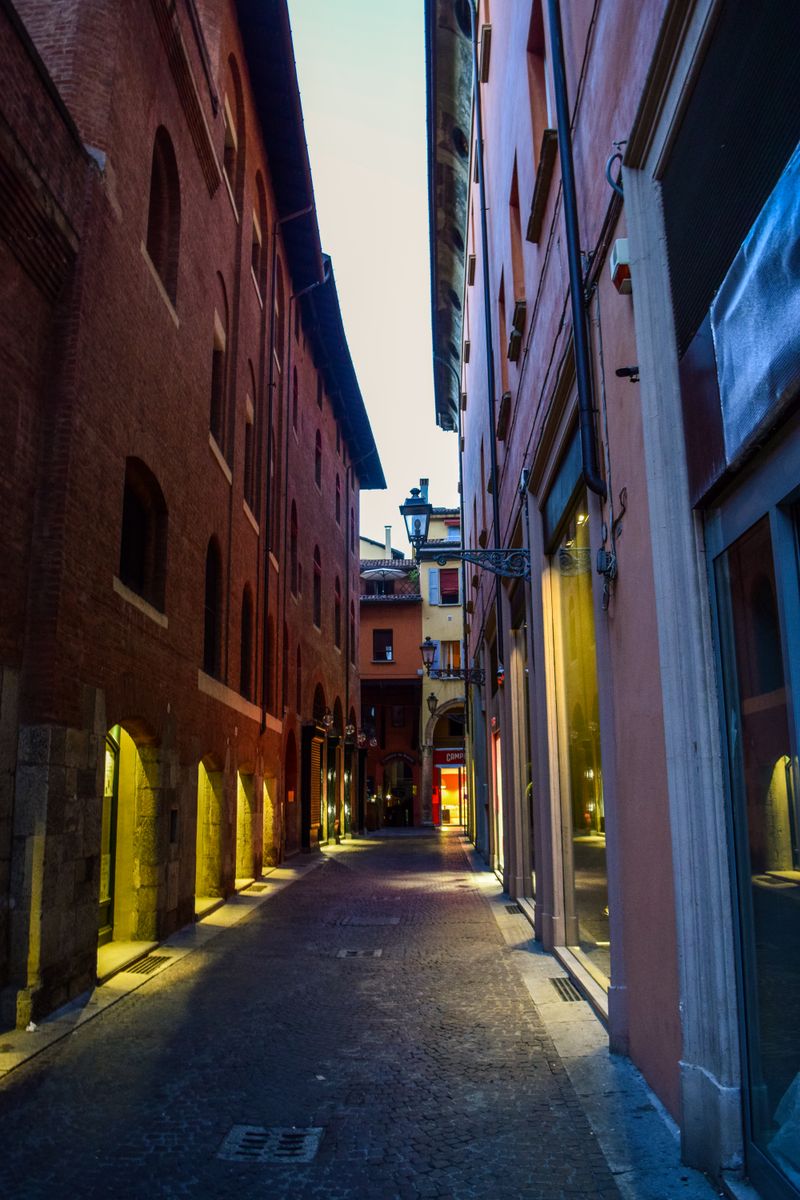
Bologna is defined by its porticoes—an unbroken labyrinth of covered vaulted walkways extending for more than 62 kilometers across the metropolitan territory, with approximately 42 kilometers situated within the historic medieval center alone. In 2021, UNESCO recognized twelve distinct segments of Bologna's porticoes as a World Heritage Site, celebrating them as an architectural, social, and functional triumph unique in human civilization.
The porticoes originated in the 11th and 12th centuries during an explosive population boom driven by the rapid growth of the University of Bologna. As scholars, professors, and students flocked from across Europe, space within the defensive ring walls grew critically constrained. Rather than encroaching onto public streets, inventive Bolognese citizens expanded the upper floors of their private dwellings outward over the public right-of-way, supporting the cantilevered wooden projections (*sporti*) on heavy timber beams. In 1288, the municipal government enacted an enlightened civic decree: rather than demolishing the overhangs, every building owner was required to construct a ground-level portico beneath them, built high and wide enough for a mounted horseman with headgear to pass unimpeded. The owner maintained the upper residential rooms, while the covered space beneath remained perpetually dedicated to public pedestrian passage.
Over nine centuries, the porticoes evolved from modest timber struts to soaring Renaissance marble arcades and monumental Baroque colonnades. Among the most historically evocative segments are:
- Portico di San Luca (Colle della Guardia): The undisputed crown jewel of covered architecture and the longest continuous covered portico on earth. Spanning precisely 3,796 meters with 666 vaulted arches and 15 roadside chapels, it begins at Porta Saragozza and climbs steeply up the forested Colle della Guardia to the Santuario della Madonna di San Luca. Built between 1674 and 1793 through voluntary contributions from every social stratum—from wealthy patrician guilds to humble bricklayers—the portico was designed to shield the annual solemn procession carrying the sacred Byzantine icon of the Virgin Mary from rain and inclement weather. The brisk 90-minute uphill walk offers sweeping panoramic views across the Reno river valley and the green hills of the Bolognese Apennines.
- Portico of Casa Isolani (Strada Maggiore): One of the rare surviving 13th-century wooden porticoes in Europe. Supported by towering oak tree trunks reaching nine meters high, it evokes the authentic medieval ambiance of early university life. Keen-eyed visitors staring upward at the timber beams can spot three mythical iron arrowheads embedded in the ceiling—according to Bolognese folklore, three assassins sent to murder an adulterous nobleman were so captivated by the unexpected sight of a beautiful maiden undressing in an upper window that they misfired their bows skyward into the wood.
- Portico dei Servi (Strada Maggiore): Flanking the magnificent Gothic Basilica of Santa Maria dei Servi, this breathtaking quadriporticus was initiated in 1393 by Antonio di Vincenzo and completed during the Renaissance. Featuring slender fluted Corinthian columns and broad vaulted bays, it hosts the lively annual ancient Christmas Fair (*Fiera di Santa Lucia*) every December.
- Portico dell'Archiginnasio (Il Pavaglione): Stretching for 139 graceful arches along the eastern flank of the Basilica di San Petronio, this monumental arcade was constructed in 1563. Historically known as the Pavaglione because the city's lucrative wholesale silkworm cocoon fairs (*padiglioni*) were held beneath its vaults, it remains Bologna's most aristocratic promenade for luxury window shopping, café culture, and leisurely people-watching.
The Due Torri & The Medieval City of One Hundred Towers
Rising dramatically at the intersection of the five ancient Roman consular routes in the heart of Bologna stand the Due Torri (Two Towers)—the enduring civic symbols of the Emilia-Romagna capital. During the 12th and 13th centuries, Bologna's skyline was an astonishing stone forest of fortified high-rise towers: historians estimate that between 100 and 180 defensive stone spires pierced the sky, each built by rival aristocratic families as symbols of immense dynastic wealth, military watchposts, and fortified strongholds during the bloody civil conflicts between the Guelphs (papal loyalists) and Ghibellines (imperial supporters).
While fires, lightning strikes, defensive demolitions, and urban redevelopments gradually dismantled most of the medieval towers, the iconic pair surviving at Piazza di Porta Ravegnana offers a breathtaking architectural testament to medieval engineering ambition:
- Torre degli Asinelli (97.2 meters): Commissioned between 1109 and 1119 by the noble Asinelli family, this soaring brick monolith was the tallest skyscraper of medieval Europe. The tower leans visibly to the southwest with an overhang of 2.23 meters from vertical alignment. A narrow interior wooden staircase containing precisely 498 steps spirals up through the hollow core of the masonry. Reaching the open-air wooden gallery at the summit rewards climbers with the most breathtaking 360-degree panorama in Emilia-Romagna: a sea of terracotta red-tiled roofs, medieval bell towers, the distant Apennine ridge, and on crystal-clear autumn mornings, the snow-capped Alpine peaks shimmering far across the Po Plain. Local university superstition strictly warns active students never to ascend the Torre degli Asinelli before graduation, under penalty of failing their final degree examination (*laurea*).
- Torre Garisenda (48 meters): Standing immediately beside the Asinelli tower, the Garisenda tower was originally constructed to a height of approximately 60 meters. However, severe ground subsidence and subterranean soil shifting during the 14th century caused the structure to tilt precariously. In 1351, the municipal authorities lopped off the upper 12 meters to prevent catastrophic structural collapse. Today, the Garisenda leans at an alarming 4-degree angle—a 3.22-meter horizontal displacement that actually exceeds the famous tilt of the Leaning Tower of Pisa! Dante Alighieri was so profoundly struck by the dizzying sight of clouds racing past the leaning Garisenda that he immortalized it in Canto XXXI of the Inferno, comparing the giant Antaeus bending down over him to the looming tower. In 2023–2024, the city launched a comprehensive €20-million stabilization and engineering monitoring project, employing tensioned sensor cables and rock reinforcement pylons to safeguard the monument for future generations.
- Hidden Surviving Towers: Travelers wandering the historic core can encounter several other well-preserved defensive towers incorporated into palace facades, including the 60-meter Torre Prendiparte (also called La Coronata, which served as a papal prison in the 18th century), the Torre Azzoguidi on Via San Nicolò, and the sturdy Torre Galluzzi tucked within an intimate medieval courtyard off Corte Galluzzi.
The Archiginnasio & The World's Oldest University (Alma Mater Studiorum)
Founded in 1088 CE, the University of Bologna (*Alma Mater Studiorum*) is universally recognized as the oldest continuously operating university in the Western world. It was here that the formal study of Roman civil law and canon law was revived under master jurist Irnerius, establishing the modern concept of independent higher education and inventing the term *universitas* (a self-governing guild of scholars and students). Over the centuries, luminaries including Dante Alighieri, Francesco Petrarca, Thomas Becket, Erasmus of Rotterdam, Nicolaus Copernicus, Paracelsus, Albrecht Dürer, and Guglielmo Marconi studied or taught within its faculties.
Until the mid-16th century, university lectures were conducted haphazardly across rented private rooms, monastic cloisters, and public squares. In 1561, Pope Pius IV and papal legate Cardinal Carlo Borromeo ordered the construction of a single monumental palace to unify all academic disciplines under one roof. Designed by architect Antonio Morandi (Il Terribilia), the Palazzo dell'Archiginnasio was inaugurated in 1563 adjacent to the Basilica di San Petronio.
Today, the Archiginnasio houses one of Italy's greatest municipal libraries, holding over 800,000 volumes, ancient incunabula, and rare illuminated manuscripts. Visitors exploring its vaulted arcades and upper loggias are greeted by the largest heraldic decorative display in the world: more than 6,000 vibrant, hand-painted heraldic coats of arms (*stemmi*) adorning every ceiling, archway, and wall. Each crest commemorates an individual student who served as student-counselor (*consigliere*) or rector between 1563 and the arrival of Napoleon in 1797, meticulously inscribed with the scholar's surname, home city, and national nation-group (*nationes*).
The undisputed historical highlight of the Archiginnasio is the Teatro Anatomico (Anatomical Theatre). Constructed in 1637 out of fragrant, unpainted Norwegian spruce wood, this tiered amphitheater was engineered for medical demonstrations and forensic human dissections under the watchful scrutiny of the Inquisition. Highlights within the chamber include:
- The Dissection Table: A heavy white Carrara marble slab centered on the wooden floor, slightly sloped with drainage channels where human cadavers—typically executed criminals or deceased hospital patients—were systematically dissected during the cold winter carnival season when temperatures inhibited decomposition.
- The Canopy of Gli Spellati: The professor's ornate carved lecture chair (*cattedra*) is sheltered beneath a Baroque baldachin supported by two extraordinary, life-sized statues carved from linden wood in 1734 by sculptor Ercole Lelli. Known as Gli Spellati (The Skinned Men), these anatomically precise figures depict human bodies stripped of skin, displaying every underlying muscle group, tendon, and ligament with astonishing medical fidelity.
- Statues of Classical Physicians: Busts and full-length statues lining the paneled walls celebrate the pioneers of ancient and Renaissance medicine, including Hippocrates of Kos, Galen of Pergamon, and Bolognese surgeon Gaspare Tagliacozzi (1545–1599), who pioneered the reconstructive rhinoplasty flap technique and is depicted proudly holding a severed artificial nose in his left hand.
- The Stabat Mater Hall: Originally the grand lecture hall for legal scholars (*Aula Magna dei Legisti*), this opulent hall hosted the historic Italian premiere of Gioachino Rossini's sacred choral masterpiece Stabat Mater on March 18, 1842, conducted by Gaetano Donizetti.
The Gastronomic Soul: Why Bologna is Italy's Undisputed Food Capital
Bologna bears the affectionate honorary title La Grassa (The Fat One)—a celebratory nod to its rich, butter-and-pork-saturated culinary heritage that has stood at the epicenter of Italian gastronomy since the Middle Ages. Set amidst the agricultural abundance of the fertile Po River Valley, the region of Emilia-Romagna produces Italy's most celebrated Protected Designation of Origin (DOP) and Protected Geographical Indication (IGP) ingredients: Parmigiano-Reggiano, Prosciutto di Parma, Aceto Balsamico Tradizionale di Modena, and Mortadella Bologna.
Unlike southern Italian cooking, which relies primarily on durum wheat semolina, olive oil, and vibrant sun-ripened tomatoes, classic Bolognese cuisine is rooted in fresh, hand-rolled egg pasta (*sfoglia all'uovo*), rich dairy butter, aged lard (*lardo*), and slow-simmered meat broths. Master pasta grandmothers (*sfogline*) still roll sheets of pasta dough using long wooden rolling pins (*matterello*) across rough wooden boards, rolling and stretching the dough until it achieves a whisper-thin translucency through which one could read the print of a newspaper.
The sacred canon of Bolognese culinary masterworks includes:
- Tagliatelle al Ragù Bolognese: The ultimate benchmark of Emilian pasta craft. Authentic ragù is a patient, three-to-four-hour slow simmer of minced beef and pork, finely diced soffritto (onion, celery, carrot), dry white or red wine, a modest touch of concentrated tomato paste, and whole milk added toward the end to soften the meat's acidity. In 1982, the Accademia Italiana della Cucina officially registered the authentic recipe with the Bologna Chamber of Commerce, specifying that freshly cooked tagliatelle ribbons must measure exactly 8 millimeters wide (equivalent to 7 millimeters raw), mathematically corresponding to the 12,270th part of the height of the Torre degli Asinelli! Italian culinary purists shudder at the mention of "Spaghetti Bolognese"—a tourist-oriented concoction virtually non-existent in authentic local trattorias, as smooth cylindrical spaghetti noodles fail to hold the rich, dense ragù.
- Tortellini in Brodo: Small, ring-shaped parcels of egg pasta shaped to resemble the female navel. According to romantic Bolognese legend, an innkeeper in nearby Castelfranco Emilia caught a glimpse of the goddess Venus through a keyhole and was so entranced by her divine belly button (*ombelico di Venere*) that he rushed to his kitchen and shaped pasta dough in its likeness. The micro-parcels are filled with a finely minced blend of roasted pork loin, Prosciutto di Parma, Mortadella Bologna IGP, aged Parmigiano-Reggiano, fresh eggs, and fragrant ground nutmeg. True Bolognese tortellini are served exclusively swimming in a steaming bowl of double-strained, golden capon broth (*brodo di cappone* or *brodo di manzo*), never smothered in heavy cream or thick sauces.
- Mortadella Bologna IGP: The ancient pork sausage par excellence, dating back to Roman times when pork meat was ground in a mortar (*mortarium*) and seasoned with aromatic myrtle berries. Today, Mortadella is slow-cooked in specialized dry-air ovens for up to 24 hours, studded with tender cubes of top-grade neck fat (*lardelli*), whole black peppercorns, and occasionally Sicilian pistachios. Sliced whisper-thin on a mechanical flywheel slicer, it melts velvety and fragrant across the tongue.
- Friggione: A deeply comforting, rustic peasant condiment dating back to 1886. Finely sliced sweet white Medicina onions are macerated with sugar and salt for several hours, then slowly sweated and simmered with peeled plum tomatoes and lard or extra virgin olive oil over very low heat for four hours until caramelized into a thick, sweet-and-savory jam. It is traditionally served alongside grilled sausages, boiled meats (*bollito misto*), or warm tigelle flatbreads.
- Crescentine & Tigelle: The essential finger-food rituals of Bolognese aperitivo and rustic countryside dinners. Crescentine (known as *gnocco fritto* in Modena and Reggio Emilia) are diamonds of yeasted dough fried in boiling lard until puffed into golden, hollow, pillow-soft pillows. Tigelle (or *crescentine modenesi*) are small, circular disc breads baked in specialized cast-iron embossed presses that stamp a geometric flower emblem onto each face. Both are split open while piping hot and filled with artisanal cured salumi, soft squacquerone cheese, or cunza (a traditional spread made of finely beaten pork lard, fresh rosemary, and garlic).
Indian Vegetarian & Plant-Based Dining in the Capital of Meat
While Bologna is globally renowned for cured pork and rich meat sauces, traveling as a vegetarian or dietary-conscious visitor in Emilia-Romagna is remarkably easy and deeply gratifying. The region's agricultural wealth, world-class cheese production, and vibrant fresh produce markets ensure that traditional Emilian menus are packed with naturally vegetarian culinary treasures.
When dining at authentic osterias and trattorias, vegetarian diners should look for these outstanding traditional regional dishes:
- Tortelloni di Ricotta e Spinaci con Burro e Salvia: The larger, vegetarian sibling of tortellini. These generous hand-folded pasta parcels are stuffed with creamy fresh cow's or sheep's milk ricotta, tender wilted spinach, fresh nutmeg, and aged Parmigiano-Reggiano. They are gently cooked and dressed simply in bubbling melted golden butter infused with crisp garden sage leaves, finished with a generous dusting of 24-month Parmigiano. It is one of the most sublime pasta dishes in Northern Italy.
- Tagliatelle ai Funghi Porcini: In autumn and winter, fresh hand-rolled egg tagliatelle are tossed with earthy, wild Apennine porcini mushrooms sautéed with garlic, fresh flat-leaf Italian parsley, white wine, and extra virgin olive oil.
- Friggione con Tigelle e Squacquerone di Romagna DOP: Order a warm bowl of sweet caramelized onion and tomato friggione accompanied by freshly baked tigelle flatbreads and a dish of creamy, spreadable Squacquerone cheese. Spooning the warm friggione and melting cheese into the hot split bread creates an unforgettable savory combination.
- Gramigna con Piselli e Panna: Small, spiraled hollow pasta tubes served in a delicate, sweet green pea and cream sauce.
- Pinzimonio & Verdure Grigliate: A classic antipasto of crisp raw seasonal vegetables (crunchy Chioggia fennel, celery, radishes, young carrots) served with a small bowl of peppery local extra virgin olive oil, sea salt flakes, and freshly cracked black pepper for dipping, or platters of wood-grilled zucchini, eggplant, and sweet bell peppers.
- Vegetarian-Friendly Dining Recommendations:
- Trattoria di Via Serra (Bolognina): Celebrated for artisanal hyper-local sourcing, featuring sensational vegetarian tortelloni, organic polenta with wild forest mushrooms, and heritage bean stews. Reserve weeks in advance.
- Osteria dell'Orsa (Via Mentana, University Quarter): A legendary, bustling institution serving affordable, freshly rolled egg pastas with daily vegetarian seasonal options in a welcoming communal bench-seating atmosphere.
- Mercato delle Erbe (Via Ugo Bassi): The historic indoor municipal food market features lively food stalls where you can assemble customized boards of aged local cheeses, warm tigelle, fresh salads, and Sicilian caponata.
- Berberè Pizzeria (Via Petroni): Masters of artisanal sourdough pizza crafted with organic stoneground flours and a 24-hour slow fermentation, offering an array of creative seasonal vegetarian and vegan pies with heirloom tomatoes, fiordilatte, and smoked provola.
Bologna's Hidden Subterranean Canals & 'Little Venice' (La Piccola Venezia)
Most travelers exploring Bologna's dry, arcaded stone streets are completely unaware that an intricate network of waterways flows directly beneath their feet. During the Middle Ages and Renaissance, Bologna was one of the most sophisticated hydraulic canal hubs in Southern Europe, crisscrossed by more than 60 kilometers of navigable canals fed by the Reno and Savena rivers via engineered diversion dams (*chiuse*) dating to 1191.
These waterways powered hundreds of grain mills, hydraulic sawmills, tanneries, and most importantly, Bologna's world-dominating silk spinning mills (*filatoi idraulici*). By the 17th century, Bologna had perfected automated water-driven silk-throwing machinery that produced the highest-grade silk thread in Europe, employing thousands of artisans and powering an immense export trade. Barges navigated along the Canale Navile directly connecting Bologna to the Po River, the Adriatic Sea, and the maritime markets of Venice.
During the rapid urban modernizations of the early 20th century, most of the canals were vaulted over and paved into automobile thoroughfares. Today, travelers can uncover magical glimpses of Bologna's water-borne past:
- La Finestrella di Via Piella (The Little Window): Tucked along the narrow brick alley of Via Piella, this tiny wooden square shutter set into a residential wall opens unexpectedly onto a postcard-perfect view of the Canale delle Moline flowing gently between the pastel backs of medieval houses, with iron balconies, climbing ivy, and small stone bridges reflecting in the rippling water. This romantic viewpoint has earned the district the affectionate moniker La Piccola Venezia (Little Venice).
- Ponte delle Moline: A short stroll away on Via Oberdan, look down through the balustrades of the stone bridge to see where the fast-flowing water once rushed over the grinding wheels of fifteen historic municipal flour mills.
- Bologna Sotterranea (Underground Tours): Specialized subterranean walking tours organized by the *Amici delle Acque* cultural association descend beneath the street level into the vaulted brick tunnels of the Torrente Aposa, the subterranean Roman theater foundations beneath Palazzo di Residenza, and the vaulted cellars of the Salara (the 18th-century papal salt warehouse along the ancient port basin).
Piazza Maggiore, San Petronio & Neptune's Fountain
Since the year 1200, Piazza Maggiore has functioned as the civic, commercial, and social heartbeat of Bologna. Flanked by monumental medieval civic palaces and the colossal Gothic facade of San Petronio, this vast pedestrian esplanade is anchored by the *Crescentone*—a slightly elevated rectangular platform of pink and white granite pavers laid in 1934 where locals gather to converse, read morning newspapers, and take the evening *passeggiata*.
- Basilica di San Petronio: Dominating the southern edge of Piazza Maggiore, this is the sixth-largest church in Europe and the world's largest brick Gothic basilica (132 meters long, 66 meters wide, with vaults soaring 45 meters high). Commissioned in 1390 by the free municipality of Bologna to honor the city's 5th-century patron saint, it was originally intended to be larger than St. Peter's Basilica in Rome. According to local legend, papal authorities intervened in the 16th century by ordering the construction of the Archiginnasio university palace directly adjacent, deliberately blocking the church's intended transept expansion. The monumental facade remains dramatically unfinished—the lower half clad in exquisite white and red Verona marble featuring masterwork Old and New Testament bas-relief sculptures carved by Sienese master Jacopo della Quercia (including the *Porta Magna*), while the upper half remains raw brown exposed brickwork.
- The Meridian Line of Cassini (1655): Embedded into the marble pavement of the basilica's left aisle stretches an extraordinary scientific instrument: the longest indoor sundial meridian line in the world, measuring precisely 66.8 meters (one 600,000th of the earth's meridian). Designed by the genius Italian-French astronomer Gian Domenico Cassini, a tiny hole (*gnomon*) perforated high in the vaulted ceiling 27 meters above projects an elliptical image of the sun onto the bronze-inlaid marble scale every day at solar noon. Cassini used this exact meridian line to make fundamental astronomical discoveries, including proving Johannes Kepler's theory of the elliptical orbit of the earth around the sun.
- Fontana del Nettuno (Fountain of Neptune): Standing proudly in adjacent Piazza del Nettuno, this monumental bronze fountain was sculpted between 1563 and 1566 by the Flemish-Italian master Giambologna (Jean de Boulogne) to symbolize papal authority calming the turbulent world. Atop a multi-tiered pedestal stands a powerful, muscular bronze Neptune extending his calm right hand over the waters. Surrounding the base are four cherubs representing the four sacred rivers of the known world (Ganges, Nile, Danube, Amazon) and four lactating sea-nymphs (nereids) squeezing water from their breasts. When the Maserati brothers founded their luxury automobile company in Bologna in 1914, Mario Maserati chose Neptune's iconic three-pronged trident (*il tridente*) from this very statue as the company's world-famous luxury badge.
- Palazzo del Podestà & The Whispering Gallery: Dating to 1200 as the seat of the city's chief magistrate, this palace features the famous Voltone del Podestà, a high vaulted brick crossing supported by four massive corner pillars bearing statues of Bologna's patron saints. The crossing possesses an astounding acoustic anomaly: two people standing with their faces pressed against diagonal corner pillars can whisper softly into the stone and hear each other's voices with absolute, crystalline clarity 15 meters away across the echoing public passage. In medieval times, this acoustic curiosity allowed lepers to confess their sins to priests without risking physical contagion.
Motor Valley Excursions & High-Speed Day Trips from Bologna Centrale
Bologna is not only the culinary heart of Italy, but also the world capital of high-performance automotive engineering. The surrounding strip of Emilia-Romagna between Parma, Modena, and Rimini is officially designated as the **Motor Valley** (*Terra dei Motori*)—home to the greatest concentration of legendary supercar manufacturers, motorcycle marques, and championship racing circuits on earth.
Supercar enthusiasts can embark on effortless day trips directly from Bologna:
- Ducati Museum & Factory (Borgo Panigale): Located in Bologna's western suburbs, reachable via a 10-minute regional train from Bologna Centrale to Borgo Panigale or city bus #13. The museum chronicles Ducati's evolutionary trajectory from 1926 radio components to the Desmosedici MotoGP championship-winning motorcycles, with guided factory tours through active assembly lines.
- Ferrari Museums (Maranello & Modena): Dedicated to the vision of Enzo Ferrari. The Museo Enzo Ferrari in Modena (accessible via 20-minute train to Modena) encompasses Enzo's birth house and a striking futuristic yellow canopy pavilion displaying rare classic roadsters. A dedicated shuttle bus connects to the flagship Museo Ferrari Maranello, showcasing Formula 1 championship cars, racing simulators, and the famous Fiorano test track.
- Lamborghini Museum (Sant'Agata Bolognese): Located 25 kilometers northwest of Bologna, accessible via bus #576. MUDETEC (Museum of Technologies) displays iconic scissor-door supercars from the legendary Miura and Countach to modern hybrid hypercars.
Unmatched High-Speed Rail Crossroad: Top Day Trips
Because Bologna Centrale functions as the primary high-speed rail intersection linking northern and central Italy, travelers can use Bologna as an ultra-efficient base to explore the region without changing hotels:
- Modena (20 minutes by regional/high-speed rail): Visit the UNESCO-listed Romanesque Duomo and soaring Ghirlandina tower, followed by a guided tour of a family-owned *acetaia* in the countryside to taste certified 25-year-old Aceto Balsamico Tradizionale di Modena DOP aged in aromatic wooden barrels of cherry, chestnut, and juniper.
- Parma (50 minutes by train): Renowned for the pink Verona marble Romanesque Baptistery, Correggio's illusionistic dome frescoes in the Duomo, the spectacular all-wood Teatro Farnese inside Palazzo della Pilotta, and visits to artisanal dairies producing 24-month Parmigiano-Reggiano DOP.
- Ferrara (25 minutes by Frecciarossa): The UNESCO Renaissance capital of the Este dynasty, featuring the moat-encircled Castello Estense, the Palazzo dei Diamanti with its 8,500 diamond-faceted marble blocks, and miles of bicycle-friendly Renaissance city walls.
- Ravenna (1 hour 10 minutes by direct regional train): Home to the world's most glorious 5th- and 6th-century Byzantine mosaics across eight UNESCO World Heritage monuments and the Tomb of Dante Alighieri.
- Florence (37 minutes by high-speed Frecciarossa): Whisk through the Apennine mountain rail tunnel in just over half an hour directly into Firenze Santa Maria Novella.
Frequently Asked Questions About Visiting Bologna
How many days are recommended to visit Bologna?
Two to three full days are ideal to experience Bologna's historic center at a relaxed pace: Day 1 dedicated to Piazza Maggiore, San Petronio, Archiginnasio, climbing the Asinelli tower, and wandering the Quadrilatero food lanes; Day 2 dedicated to walking the 3.8 km Portico di San Luca up to the sanctuary, exploring the hidden canals and Pinacoteca Nazionale, and savoring an extended osteria dinner; Day 3 dedicated to a Motor Valley excursion (Ferrari or Lamborghini) or a day trip to Modena or Ravenna.
How do I travel between Bologna Airport and the city center?
The fastest and most seamless option is the Marconi Express, an elevated monorail train connecting Bologna Guglielmo Marconi Airport (BLQ) directly to Bologna Centrale railway station in just 7 minutes. Trains run every 7 to 15 minutes from 05:40 to 00:00 daily. Tickets cost approximately €12.80 one-way and can be purchased via contactless card tap-and-go at the entrance turnstiles.
Is a rental car useful in Bologna?
No, a rental car is a major liability in Bologna. The entire historic center inside the ring road is an aggressively enforced Zona a Traffico Limitato (ZTL Sirio) monitored by automatic plate-recognition cameras 24/7. Unauthorized entry incurs automatic municipal fines exceeding €110 per crossing. Furthermore, Bologna's center is compact, pedestrianized, and covered by 42 kilometers of porticoes, making walking and cycling by far the most enjoyable ways to navigate.
Can I order Spaghetti Bolognese in Bologna?
Spaghetti Bolognese does not exist in traditional Italian gastronomy and is considered a tourist invention. In Bologna, authentic meat sauce (ragù) is served exclusively with wide, coarse egg tagliatelle (*Tagliatelle al Ragù*) or baked in layered green spinach lasagna (*Lasagna alla Bolognese*). The rough egg pasta holds the rich meat sauce, whereas smooth dry spaghetti noodles cause the ragù to slip off to the bottom of the plate.
What is the best season to visit Bologna?
Spring (April through June) and Autumn (September through early November) offer optimal conditions, with crisp, comfortable walking weather and vibrant food festivals celebrating the harvest of white truffles, mushrooms, and new wine. July and August can be intensely hot and humid in the Po Valley basin, and many independent family trattorias close for two weeks in mid-August for Ferragosto.
Explore Emilia-Romagna & Beyond
Direct high-speed rail connections from Bologna Centrale: