Destinations Brazil Brasília

Brasília.

15° S · 47° W Brazil

Brasília, Brazil was built from scratch in 41 months. The guide covers 86 listed attractions, including the Cathedral and the National Congress. The best season to visit is May–September (dry, 26 °C days), with an average visit duration of 2–3 days.

The first thing that feels wrong is the silence. Brasília, Brazil’s capital, spreads so wide that traffic noise dissolves into the 12-lane voids between superquadras, leaving only wind and the faint smell of cerrado dust baking in the sun. You expect a tropical capital to sweat; instead it floats — a city lifted on pilotis, reflected in 2 cm of water that makes marble palaces hover like mirages.

  • 🧭 Layout & Transit: The Monumental Axis is built on a monumental scale; walking between sights is unfeasible. Rely on ubiquitous Ubers (R$ 10–25 per ride) or rent an e-bike.
  • 🏛️ Architecture Access: Itamaraty Palace and Congress require pre-booked guided tours; the Cathedral and Santuário Dom Bosco are open daily with free admission.
  • 💳 Card & Payment: International credit and debit cards (Visa/Mastercard) are accepted everywhere; carry R$ 50–100 cash only for the Feira da Torre de TV artisan market.
  • 🥗 Dining & Cuisine: Exceptional diplomatic dining, central Cerrado gastronomy (pequi, baru nuts), and dedicated vegetarian buffets in Asa Sul (Girassol, Bhumi).
Brasília, Brazil
Brasília · Brazil
15
attractions
2–3 days
trip length
May–September (dry, 26 °C days)
best season
EN · EN
narration
explore

03 Top tickets in Brasília.

Book ahead

Curated from places in this city. Same price as official sites.

Prices shown are indicative — final pricing and availability are confirmed at checkout. Hidden Routes may receive a commission from bookings made via these links.

01 An introduction

synthesized from 240+ sources ·

Researched from Wikidata, Wikipedia & official sources · fact-checked · Verified travel intelligence for Indian travelers

BThe first thing that feels wrong is the silence. Brasília, Brazil’s capital, spreads so wide that traffic noise dissolves into the 12-lane voids between superquadras, leaving only wind and the faint smell of cerrado dust baking in the sun. You expect a tropical capital to sweat; instead it floats — a city lifted on pilotis, reflected in 2 cm of water that makes marble palaces hover like mirages.

Everything here was drawn before it was poured. In 1956 Lúcio Costa stamped an airplane onto the high plains of Goiás, and Oscar Niemeyer filled the outline with curves that refuse to meet at right angles. The result feels like walking through a blueprint that refused to stay flat: the Cathedral’s 16 ribs rise 40 m before your eyes, the National Congress wears its dome upside-down, and the TV Tower hands you the whole plan from 75 m up — fuselage, wings, and the artificial lake that keeps the city from bursting into savanna fire every dry season.

Beneath the concrete, 63 years of improvised life have taken root. Government clerks lunch on frango com pequi in pay-by-weight buffets, embassy kids skate the Monumental Axis at dusk, and Forró bands turn Asa Norte parking lots into dance floors where suits and students negotiate politics one two-step at a time. You don’t come to Brasília for postcard beaches; you come to see what happens when a nation decides to build its own future, then watches the future develop cracks, graffiti, and a taste for cold chopp.

Photography Hotspot Budget Friendly Family Friendly Wheelchair Accessible

02 Why Brasília.

What makes this place worth slowing down for.

Oscar Niemeyer's Concrete Dreams

Sixteen concrete fingers of the Cathedral arc 40 m skyward like a prayer frozen mid-gesture. Walk the Monumental Axis at dusk and every government building floats above its mirror pool, turning Brasília into a scale model of itself.

Cerrado on the City's Edge

Drive 15 km and you're in Parque Nacional de Brasília where natural spring pools lie under buriti palms and maned wolves trot past at twilight. The same red laterite soil that built the city still stains your sandals.

Lake Paranoá After Dark

Ponte JK's three white arches light up like harp strings at 19:00 sharp. Locals gather at Pontão do Lago Sul for moqueca served two meters from black-water lapping at wooden decks.


The Concrete Utopia: Oscar Niemeyer, Lúcio Costa & the Architecture of the Future

Brasília is the only 20th-century city designated a UNESCO World Heritage site in its entirety. Conceived under the ambitious visionary presidency of Juscelino Kubitschek ("50 years of progress in 5") and inaugurated on April 21, 1960 after just 41 months of breathless construction, Brazil's capital was carved out of the red dust of the high central plateau (Planalto Central) to physically reorient national destiny inward, away from maritime colonial dependency.

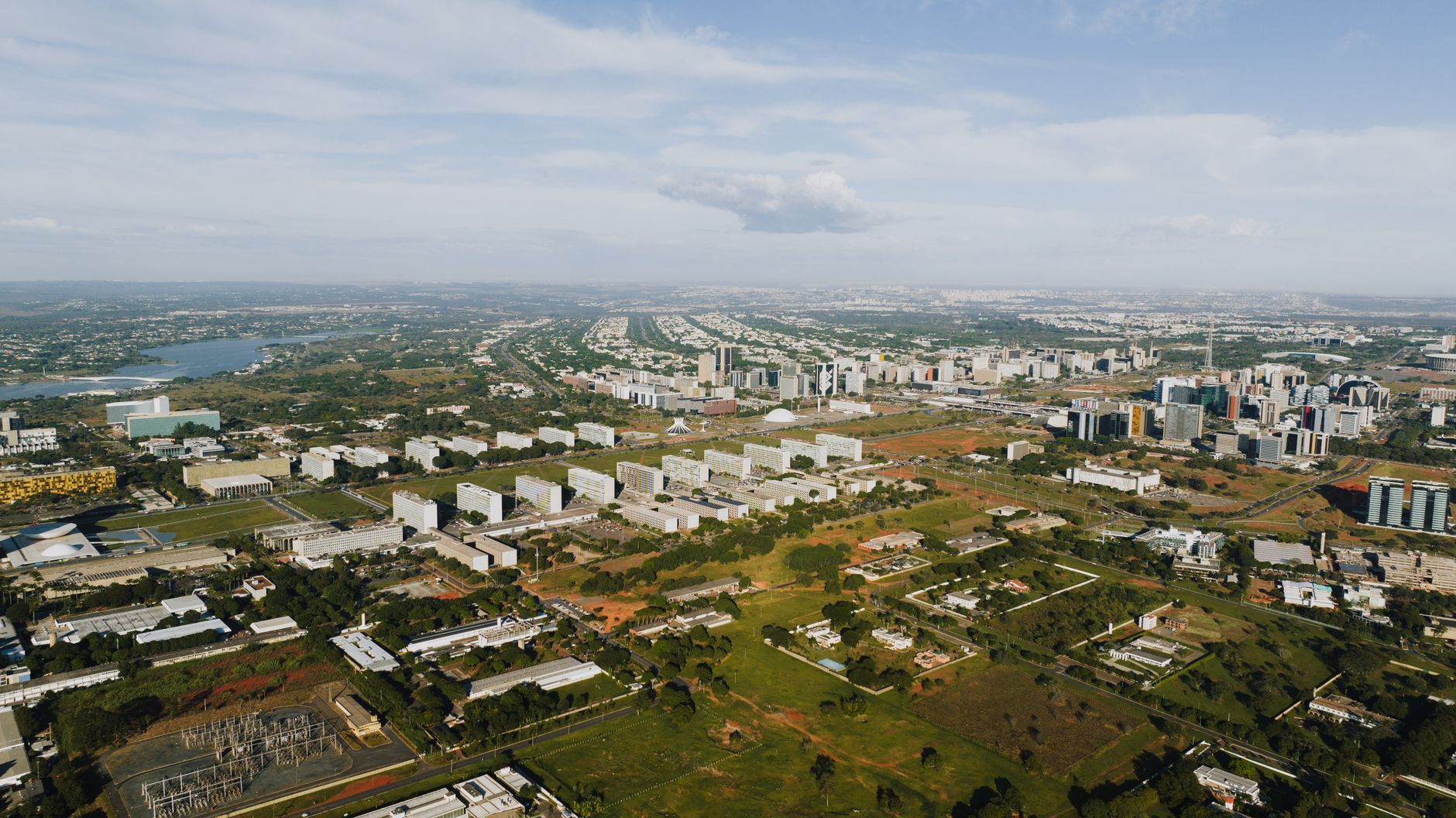
The urban design was the synthesis of three creative giants: urban planner Lúcio Costa, who sketched the aerodynamic Plano Piloto; architect Oscar Niemeyer, who sculpted reinforced concrete into sweeping, poetic curves; and landscape architect Roberto Burle Marx, who integrated native Cerrado flora and water gardens into monumental public courtyards.

The Plano Piloto: Deciphering the Monumental Grid

Lúcio Costa designed the city along two intersecting axes resembling an airplane or a bowing cross:

  • Eixo Monumental (Monumental Axis): The east-west fuselage, a 16-kilometer ceremonial boulevard crowned by the Praça dos Três Poderes (Three Powers Square) at its eastern tip, housing the Executive (Palácio do Planalto), Legislative (Congresso Nacional), and Judiciary (Supremo Tribunal Federal) branches. Along this axis stand the Cathedral, the National Museum, the National Theatre, and the 224-meter TV Tower offering panoramic vistas of the entire city.
  • Eixo Rodoviário (Residential Axis / Eixão): The curved north-south wings—Asa Sul (South Wing) and Asa Norte (North Wing)—spanning 13 kilometers. On Sundays and federal holidays, the Eixão is completely closed to motor vehicles (Eixão do Lazer), transforming into a massive open-air recreational park where thousands of residents jog, rollerblade, skate, cycle, and drink fresh cold coconut water from street stalls.

The Architectural Masterpieces

Congresso Nacional

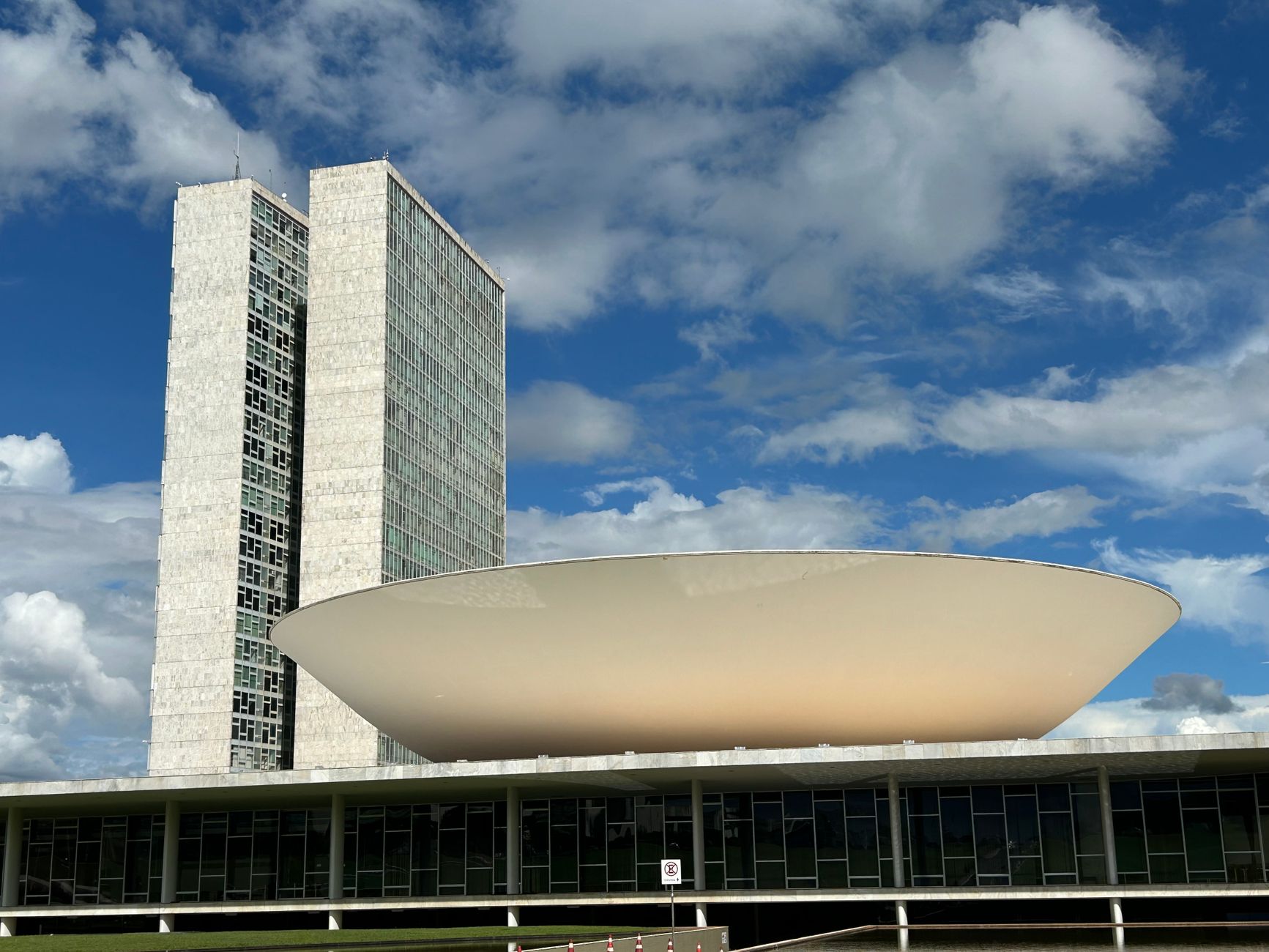
The visual signature of Brazil. A massive horizontal podium supports twin 28-story administrative towers flanked by two contrasting concrete domes: the wide, upward-curving bowl housing the Chamber of Deputies (symbolizing openness to the citizenry) and the smaller, inverted dome of the Federal Senate (symbolizing solemn reflection, deliberation, and composure). Book free guided tours in advance to walk through the salons adorned with masterworks by Di Cavalcanti and Athos Bulcão.

Catedral Metropolitana

A crown of 16 curved concrete hyperbolic columns, each weighing 90 tons, soaring 40 meters toward the sky. Visitors descend through a darkened subterranean tunnel before emerging into an ethereal interior flooded with colored natural light through Marianne Peretti’s 2,000-square-meter stained glass installation. Three sculpted bronze angels by Alfredo Ceschiatti hover suspended on steel cables directly above the altar.

Palácio do Itamaraty

Headquarters of the Ministry of Foreign Affairs, widely celebrated as Niemeyer's most refined and acoustically flawless building. Its soaring concrete arches rise directly out of a reflective water mirror filled with giant Amazonian water lilies (Vitória-régia) and Bruno Giorgi's marble sculpture Meteoro. Inside, a dramatic helical concrete staircase floats without central pillars between polished tapestries by Roberto Burle Marx and Portuguese tile murals.

Santuário Dom Bosco

Designed by Carlos Alberto Naves to honor Saint John Bosco—the 19th-century Italian priest who in 1883 prophesied that a futuristic utopian capital of unprecedented wealth would rise between the 15th and 20th parallels. The sanctuary consists of 80 Gothic-modernist concrete pillars holding 7,400 square meters of hand-blown stained glass in twelve gradations of midnight blue and amethyst purple. At its center hangs a 3-ton Murano glass chandelier containing 7,400 crystal pieces.

The Superquadra: A Social Experiment in Urban Living

Unlike traditional cities where neighborhoods grow organically around crowded street grids, Brasília’s residential sectors are organized into self-contained hexagonal blocks called Superquadras (SQS in the South, SQN in the North). Designed with democratic socialist egalitarian ideals in mind:

  • No Gated Enclosures: Buildings have no perimeter walls or gates. By federal urban code, every building is elevated on pilotis (concrete stilts), ensuring that ground-level green parklands remain fully open, walkable, and publicly accessible to all citizens regardless of status.
  • Strict Height Limits: Residential blocks are strictly capped at six stories to maintain human proportion and preserve unobstructed views of the expansive Cerrado sky and horizons.
  • Neighborhood Micro-Centers (Comércio Local): Between pairs of superquadras run commercial strip avenues lined with neighborhood bakeries (padarias), corner pharmacies, independent bookshops, artisan coffee houses, and casual bistros shaded by flourishing mango and ipê trees. Superquadra 308 Sul (SQS 308), known as the "Model Superquadra," is the finest living example of this vision, complete with Athos Bulcão tiled kindergarten schools and Burle Marx landscaped parkways.

The Cerrado Wilderness, Lago Paranoá & Regional Expeditions

Brasília is not merely a concrete museum; it is surrounded by the Cerrado, the oldest and most biologically diverse tropical savanna biome on Earth. Covering over 20% of Brazil, the Cerrado is often referred to as the "cradle of waters," as its deep taproot trees and ancient aquifers feed eight of the twelve major Brazilian river basins, including tributaries of the Amazon, the São Francisco, and the Paraná.

Parque Nacional de Brasília (Água Mineral)

Spanning over 42,000 hectares northwest of the city center, the National Park of Brasília protects pristine Cerrado vegetation and serves as a vital wildlife sanctuary for giant armadillos, maned wolves, and anteaters. Its primary visitor attraction is the Piscinas de Água Mineral—two vast outdoor natural swimming pools continuously fed by pure, cold subterranean mineral springs. It offers hiking trails (Trilha da Capivara and Trilha do Cristal) through native gallery forests.

Lago Paranoá & Pontão do Lago Sul

Conceived as part of the original master plan to mitigate the arid Cerrado climate, this artificial 40-square-kilometer freshwater lake is Brasília’s maritime playground. The monumental Ponte Juscelino Kubitschek (JK Bridge), designed by Alexandre Chan with three dramatic crisscrossing steel arches spanning 1,200 meters, is an engineering triumph. Head to Pontão do Lago Sul for sunset cocktails, stand-up paddleboarding, and waterside dining under royal palm trees.

Expedition: Chapada dos Veadeiros National Park

Located 220 kilometers north of Brasília in the state of Goiás, Chapada dos Veadeiros is a UNESCO World Heritage wilderness situated on an ancient 1.8-billion-year-old quartz crystal plateau. Renowned for dramatic lunar landscapes (Vale da Lua), roaring 120-meter waterfalls (Saltos do Rio Preto, Cachoeiras Almécegas), and quartz crystal outcrops that glow under the sun. Gateway towns Alto Paraíso de Goiás and São Jorge offer rustic-chic lodges and esoteric wellness retreats.

Dry Season Survival in the High Plateau

At 1,172 meters altitude, Brasília’s dry winter (May through September) brings cloudless azure skies and zero rainfall. By August and September, relative humidity frequently plummets below 15%—dryer than the Sahara Desert. Travelers must drink at least 3 liters of water daily, carry saline nasal drops (soro fisiológico), apply lip balm, and avoid strenuous outdoor exercise between 11:00 AM and 3:00 PM.

03 Places to Visit.

Not every monument, just the ones we'd walk you past ourselves.

Cathedral of Brasília
Editor's pick
01 · Place

Cathedral of Brasília

The Catedral Metropolitana Nossa Senhora Aparecida, commonly known as the Brasília Cathedral, is an architectural marvel designed by the celebrated architect…

02 Place

National Congress Palace

The National Congress Palace (Palácio do Congresso Nacional) in Brasília stands as a monumental testament to Brazil’s democratic ideals, architectural…

Juscelino Kubitschek Bridge
03 Place

Juscelino Kubitschek Bridge

Ponte Juscelino Kubitschek, also known as Ponte JK, stands as one of Brasília's most iconic landmarks.

04 Place

Ermida Dom Bosco

Nestled on the southern shores of Lake Paranoá in Brasília, Brazil, the Ermida Dom Bosco chapel stands as a serene testament to architectural brilliance and…

05 Place

Itamaraty Palace

Nestled in the heart of Brasília, the Itamaraty Palace stands as a monumental emblem of Brazil’s rich cultural heritage, modernist architectural innovation,…

Praça Dos Cristais
06 Place

Praça Dos Cristais

Nestled within the Setor Militar Urbano of Brasília, Brazil, Praça dos Cristais, also known as Praça Cívica, stands as a testament to the innovative spirit of…

Santuário Dom Bosco
07 Place

Santuário Dom Bosco

Santuário São João Bosco, often referred to as Santuário Dom Bosco, is a remarkable spiritual and architectural landmark in Brasília, Brazil.

04 Neighborhoods.

Where to wander, by quarter — each with its own rhythm.

01

Asa Sul

The south wing of Costa’s airplane houses most of the city’s civil servants and its best boteco circuit. Between Superquadras 307 and 413 you can eat comida por quilo at noon, dance Forró by midnight, and still find a hammock to digest the plate of carne-de-sol you paid for by weight. Weekends turn the 115 commercial strip into an open-air political salon — journalists, senators, and students argue over cold chopp while skateboarders glide past Niemeyer apartment blocks.

02

Asa Norte

Slightly younger, slightly louder. Proximity to the University of Brasília injects cheap beer, experimental theatre, and 2 a.m. samba circles into the superquadra grid. The Feira do Parque da Cidade, Sunday’s biggest open-air market, spreads handicrafts and tapioca stands between exercise stations designed by Niemeyer himself. Come at dusk when the cerrado grass smells like burnt caramel and the sunset lines up with the 12-lane W3 axis.

03

Lago Sul

Where politicians who made money build glass houses. The lakeshore road delivers yacht clubs, weekend brunch patios, and the Pontão do Lago Sul entertainment pier — Brasília’s closest approximation of a beach promenade. Joggers share the path with embassy staff on rollerblades; herons land on the breakwater as bass-heavy sertanejo drifts from cocktail kiosks. You’ll need a car, but the breeze off Lago Paranoá shaves five degrees off the plateau heat.

04

Setor Hoteleiro Norte & Sul

Two identical hotel strips flank the Monumental Axis like landing lights. They exist for lobbyists and delegations, but the concentration of 24-hour lanchonetes and Lebanese cafés makes them unexpectedly useful to stranded travelers. At 3 a.m. you can still find esfirra fresh from the oven and watch congressional aides argue over spreadsheets while feeding coins into espresso machines that sound like jet turbines.

05

Eixo Monumental

Not a neighbourhood but the city’s spinal avenue, 16 km from the Bus Station to the TV Tower. Walk it at dawn and you’ll share the pavement with cyclists, photographers chasing Niemeyer shadows, and security guards changing shifts beneath 27 identical ministry façades. By day it’s a sun-blasted esplanade; after dark the same emptiness turns the civic core into an open-air modernist cathedral where every light pole echoes like a metronome.

06

SQS 308 / 408 (Superquadras)

These residential ‘superblocks’ are Brasília’s original social experiment: apartments, schools, cinemas and supermarkets inside a 300 m x 300 m square. Trees planted in 1960 now arch over the pavements, shading bakeries that still sell pão francês for R$0.75 and bars where locals play dominoes on Niemeyer benches. Walk one loop and you’ll understand how a city designed for cars survives on foot — and why residents refuse to move to glass towers by the lake.

Historical Timeline

A Capital Written in Concrete and Light

From indigenous cerrado to Oscar Niemeyer's masterpiece in four lightning years

Colonial Era
1734

First Muleteer Crosses

José da Costa Diogo's journal records crossing the future capital's territory. Not desert at all—just an active trade corridor linking coastal sugar ports to the gold mines of Goiás. His maps show Sobradinho farms already scattered across the high plateau.

1750

First Colonial Map

Portuguese cartographer Ângelo dos Santos Cardoso inks the first official map of the Captaincy of Goyaz. The future Federal District appears as empty space between Santa Luzia and Corumbá—misleading wilderness that would haunt capital plans for two centuries.

Imperial Era
1822

Brasília Named in Secret

José Bonifácio drafts his Memoir proposing an interior capital at exactly 15° south latitude. He calls it Brasília—two centuries before ground is broken. The proposal dies with his exile, but the name sticks in bureaucratic whispers.

Republican Planning
1892

Cruls Quadrilateral Born

Belgian-Brazilian astronomer Luís Cruls surveys 14,400 square kilometers of central plateau. His 'Quadrilátero Cruls' defines the rough boundaries of what will become the Federal District—far larger than the final 5,850 km² slice.

Construction Era
1907

Oscar Niemeyer born

The boy who would design every major building in Brasília enters the world in Rio. His concrete curves will later transform how Brazil sees itself—modern, optimistic, unafraid of empty space. The city becomes his life's work.

1956

Kubitschek's audacious vow

President Juscelino Kubitschek arrives at Fazenda Gama and promises to build a new capital in five years. 'Fifty years in five' becomes his battle cry. The empty cerrado suddenly feels like the center of Brazil's future.

1957

Costa wins the contest

Lúcio Costa sketches the Plano Piloto on a napkin—an airplane or bird depending on who you ask. His design beats 5,000 entries. The shape isn't just symbolic; it channels prevailing winds and creates natural ventilation through superblocks.

1958

Palácio da Alvorada rises

The first building completed isn't a ministry or monument—it's the presidential residence. Niemeyer's white columns seem to float above the reflecting pool. Kubitschek will live here exactly 21 days before inauguration.

1960

Capital moves inland

April 21: Brasília becomes Brazil's capital precisely 168 years after Tiradentes' execution. The date isn't coincidence—it's deliberate symbolism. 64,000 people watch Rio's government apparatus pack up for the high plains.

Military Dictatorship
1960

Renato Russo arrives

Future Legião Urbana frontman moves to Brasília at age three. The planned city's teenage boredom breeds Brazil's most influential rock scene. His lyrics will capture the capital's existential emptiness better than any urban plan.

1964

Military coup arrives

The modernist capital built for democracy becomes headquarters for military dictatorship. Tanks roll down the Monumental Axis. The city's open spaces suddenly feel designed for parades rather than protests.

1971

Ceilândia forced birth

The military relocates 30,000 squatters from Plano Piloto's periphery to a planned satellite city. Families receive plots but no infrastructure. The move creates Brasília's most populous suburb and its deepest social divide.

Redemocratization
1987

UNESCO calls it heritage

Barely 27 years old, Brasília becomes a World Heritage Site. The youngest city ever honored. UNESCO cites it as 'a unique example of urban planning'—validation that modernism can age into history faster than medieval walls.

1992

Collor falls hard

President Fernando Collor faces impeachment hearings in the very Congress he tried to dismiss. Brasília's marble halls echo with corruption testimony. The new democracy proves it can police its own palace.

Modern Era
2006

Museu Nacional opens

Niemeyer's final major work—a white dome reflecting the sky—welcomes visitors with free admission. Inside, Brazilian art finally has a space worthy of the capital. The architect was 99 when it opened.

January 8, 2023

Democracy attacked

Rioters storm the Praça dos Três Poderes, smashing Niemeyer's windows and defacing Athos Bulcão tiles. They breach the same Congress their grandparents helped build. The attack forces Brazil to confront whether its capital's ideals still hold.
Present Day

06 Who lived here.

The people who shaped the city — and were shaped by it.

Architect 1907–2012

Oscar Niemeyer

Designed every major civic building

He sketched Brasília’s key structures from a Rio office, never living in the city, yet its curves carry his signature rhythm. Today you can walk beneath the same concrete ribs he drew at 52, unchanged and still controversial.

President 1902–1976

Juscelino Kubitschek

Founder—promised ‘50 years in 5’

JK staked his presidency on moving the capital inland; when inflation bit, he doubled down. His tomb at the JK Memorial faces the city he willed into existence, lit at night like a perpetual campaign rally.

Urban Planner 1902–1998

Lúcio Costa

Won the 1957 master-plan contest

His ‘Plano Piloto’ sketch was scribbled on a flight back from Brasília’s site visit—an airplane shape that still dictates where traffic lands. He later admitted the city needed denser neighborhoods; residents still debate the missing wings.

Visual Artist 1918–2008

Athos Bulcão

Moved from Rio in 1958 to tile the city

Bulcão turned raw concrete into pixelated color, embedding himself so deeply that locals call blue-and-white mosaics ‘Athos tiles’. Walk any superquadra and you’re tracing his brushwork underfoot.

Rock Singer 1962–2001

Cássia Eller

Born in Brasília

She belted out ‘Malandragem’ in the city’s gritty early bars before conquering Brazil’s charts. Brasília’s indie scene still measures itself against her raw 1990 shows in Asa Norte basements.

Footballer born 1982

Kaká

Born in Brasília

The Ballon d’Or winner learned to dribble on the indoor courts of Taguatinga, a satellite city planners never imagined. When he lifted the 2002 World Cup, the capital’s TV Tower flashed his name in lights—proof the planned city could improvise heroes.

08 Where to Eat.

Where locals actually book dinner — not the tourist menus.

Caminito Parrilla Asa Sul Caminito Parrilla Asa Sul
Local favorite €€€

Caminito Parrilla Asa Sul

★ 4.9 View
Vasto Restaurante 108 Sul: Parrilla, Sushi, Carnes, Vinho, Chopp, Delivery DF Vasto Restaurante 108 Sul: Parrilla, Sushi, Carnes, Vinho, Chopp, Delivery DF
Local favorite €€

Vasto Restaurante 108 Sul: Parrilla, Sushi, Carnes, Vinho, Chopp, Delivery DF

★ 4.9 View
Nonna Augusta Trattoria: Comida Italiana | Asa Norte Brasília Nonna Augusta Trattoria: Comida Italiana | Asa Norte Brasília
Local favorite €€

Nonna Augusta Trattoria: Comida Italiana | Asa Norte Brasília

★ 4.8 View
Sallva Bar e Ristorante - Pontão Lago Sul - Brasília DF Sallva Bar e Ristorante - Pontão Lago Sul - Brasília DF
Fine dining €€€

Sallva Bar e Ristorante - Pontão Lago Sul - Brasília DF

★ 4.8 View
Oliva Cafe Oliva Cafe
Cafe €€

Oliva Cafe

★ 4.9 View
Aroma Brasília Aroma Brasília
Local favorite €€€

Aroma Brasília

★ 4.8 View

09 Insider tips.

Small things that change how the city treats you.

Pequi Pit Warning

Never bite the stone inside pequi fruit—its internal spines can lodge in your throat. Scrape off the fragrant yellow pulp and leave the pit on the side of your plate.

Lunch at Quilo

Buffets priced ‘por quilo’ charge by weight, letting you sample dozens of regional dishes for under R$15. Hit them before 12:30 pm—government workers empty the trays by one.

Cathedral After Dark

Niemeyer’s cathedral closes at 6 pm, but come back at 7—the exterior lighting makes the 16 concrete ribs glow like a crown suspended in mid-air.

Sunday Car-Free Axis

Every Sunday the Monumental Axis closes to traffic from 7 am to 5 pm. Rent a bike at the TV Tower and ride straight down the middle of Brazil’s capital—no cars, full skyline.

Free Culture Circuit

National Museum, Library, JK Memorial and all Three-Powers Plaza tours cost nothing. You can tick off every major monument in one day without spending a real on entry.

12 Frequently asked

Is Brasília worth visiting if I’m not into politics?

Absolutely—most visitors come for the architecture, not the congress floor. Niemeyer’s concrete curves, Athos Bulcão’s tile murals and a lake built like a leisure park give the city a sci-fi feel you won’t find anywhere else in South America.

How many days do I need in Brasília?

Two full days cover the Monumental Axis core, a lake sunset and a cerrado park dip. Add a third if you want a day-trip to Pirenópolis colonial town or Chapada dos Veadeiros waterfalls.

Is Brasília safe to walk at night?

The hotel sector and Asa Sul bar strips are generally safe with normal precautions, but the central bus station area empties after 9 pm—take a cab back. Weekend nights around Pontão lake are busy and well-lit.

Do I need a car to get around?

The bus-rapid-transit (BRT) links the main wings and the Monumental Axis, but attractions are 2–4 km apart. Ride-hailing is cheap; without wheels you’ll spend a lot of time waiting or walking under harsh sun.

What’s the best time of year to visit?

May–September: dry season, daytime highs around 26 °C and almost zero rain. December–March is hot, humid and stormy—great for lake swims, bad for open-air architecture walks.

Are the government buildings open on weekends?

Congress tours run hourly on Saturdays; the Supreme Court opens Tuesday–Sunday. The Presidential Palace interior is only possible on ceremonial open-door Sundays—check the official agenda a week ahead.

13Before you go

Practical Information

Flight

Getting There

Fly into Presidente Juscelino Kubitschek International Airport (BSB), 12 km south of the pilot plan. Highway BR-040 connects Brasília to Belo Horizonte; BR-050 runs south to São Paulo.

Directions transit

Getting Around

Metro-DF runs two lines (Orange 1 and Green 2) but neither reaches the Monumental Axis. Buy a Cartão Fácil (R$5 base fare) for integrated metro/BRT rides; most tourists rely on Uber (R$8–20 between major sights).

Thermostat

Climate & Best Time

May–August is the sweet spot: 25 °C days, 12 °C nights, and virtually no rain. Wet season (October–April) brings 4 pm downpours that turn the concrete plazas into mirrors. June/July evenings need a light jacket.

Translate

Language & Currency

Portuguese only outside hotels and tour desks. Brazilian Real (R$) in cash for weekend craft fairs at TV Tower; cards accepted everywhere else. ATMs: Banco do Brasil at Conjunto Nacional mall, open until 22:00.

Take Brasília with you

7 h 40 min of Brasília,
downloaded once.

All Places to Visit.

86 places to discover

Cathedral of Brasília
Place

Cathedral of Brasília

Place

National Congress Palace

Juscelino Kubitschek Bridge
Place

Juscelino Kubitschek Bridge

Place

Ermida Dom Bosco

Place

Itamaraty Palace

Praça Dos Cristais
Place

Praça Dos Cristais

Santuário Dom Bosco
Place

Santuário Dom Bosco

Place

Tancredo Neves Pantheon of Fatherland and Freedom

Place

National Congress of Brazil

Place

Cláudio Santoro National Theater

Place

Memorial Jk

Brasilia Tv Tower
Place

Brasilia Tv Tower

Place

Memorial Dos Povos Indígenas

Place

Palace of Justice

Place

National Museum of the Brazilian Republic

Esplanada Dos Ministérios
Place

Esplanada Dos Ministérios

Place

Sarah Kubitschek City Park

Place

Palácio Do Planalto

Place

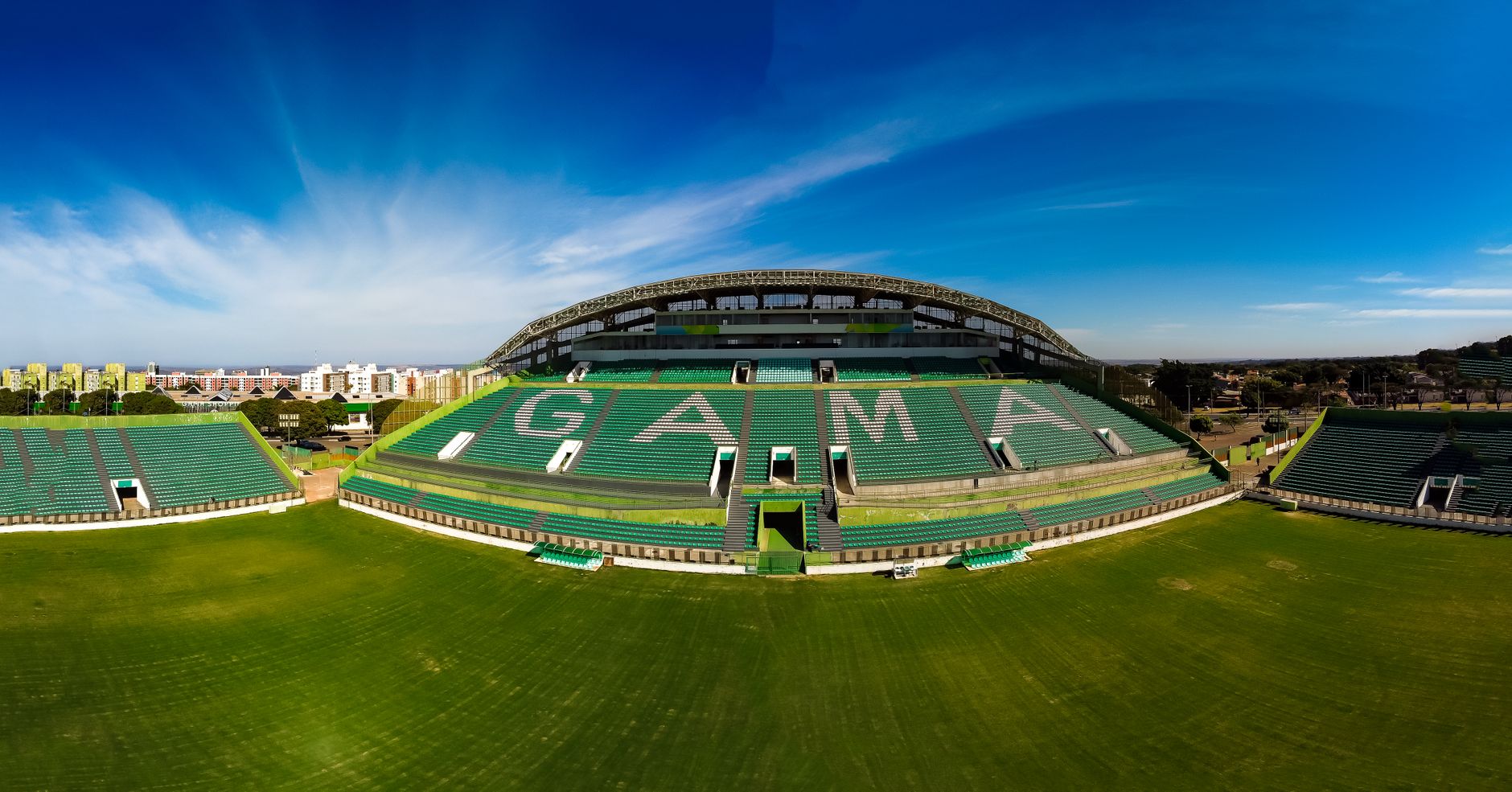
Estádio Nacional De Brasília

Place

Palácio Da Alvorada

Praça Dos Três Poderes
Place

Praça Dos Três Poderes

Praça Do Buriti
Place

Praça Do Buriti

Place

Pilot Plan of Brasília

Place

Fountain at Torre De Tv De Brasília

Place

Supremo Tribunal Federal Building

Place

Nilson Nelson Gymnasium

Place

Granja Do Torto

Place

Cine Brasília

Place

Embassy of Portugal, Brasília

Place

Biblioteca Nacional De Brasília

Place

Catedral Militar Rainha Da Paz

Place

Palácio Do Buriti

Place

Zoológico De Brasília

Place

Igrejinha Nossa Senhora De Fátima

Place

Library Acadêmico Luiz Viana Filho

Place

Apostolic Nunciature to Brazil

Place

Brazilian Electricity Regulatory Agency

Place

Central

Place

Central Bank of Brazil

Place

Centro Cultural Banco Do Brasil (Brasília)

Place

Dulcina De Moraes College of Arts

Place

Embassy of Algeria, Brasília

Place

Embassy of Colombia, Brasília

Place

Embassy of Denmark in Brazil

Place

Embassy of France, Brasília

Place

Embassy of Germany, Brasília

Place

Embassy of Guinea in Brazil

Place

Embassy of India, Brasilia

Showing 1–48 of 86 places

✓ Handcrafted on Demand • Zero Automated Fluff ⚡ 4–8h Delivery via Email & WhatsApp 📍 Focus: Brasília

Curated Field Dossier & Offline Google Maps Pin Pack

Bypass tourist traps with verified local logistics, exact parking coordinates, and field-tested routes.

  • ✓
    Exact GPS Pin Pack: Unmarked parking spots, best dawn photography vantage points, and hidden trailheads.
  • ✓
    Crowd-Avoidance Timing Matrix: Exact hour-by-hour windows to explore with zero tourist chaos.
  • ✓
    Vetted Local Dhabas: 100% authentic, hygiene-checked regional food stops not on commercial maps.
  • ✓
    Scam & Overcharge Shield: Verified taxi rates, auto fares, and local guide fee guidelines.
₹ 99 ₹499 80% OFF

🛡️ Personally curated by PK Gupta & the Hidden Routes research desk. Delivered directly to your Email & WhatsApp within 4–8 hours.

🔒 Secure Razorpay Checkout 💳 UPI & International Cards

Explore More in Brazil & Beyond