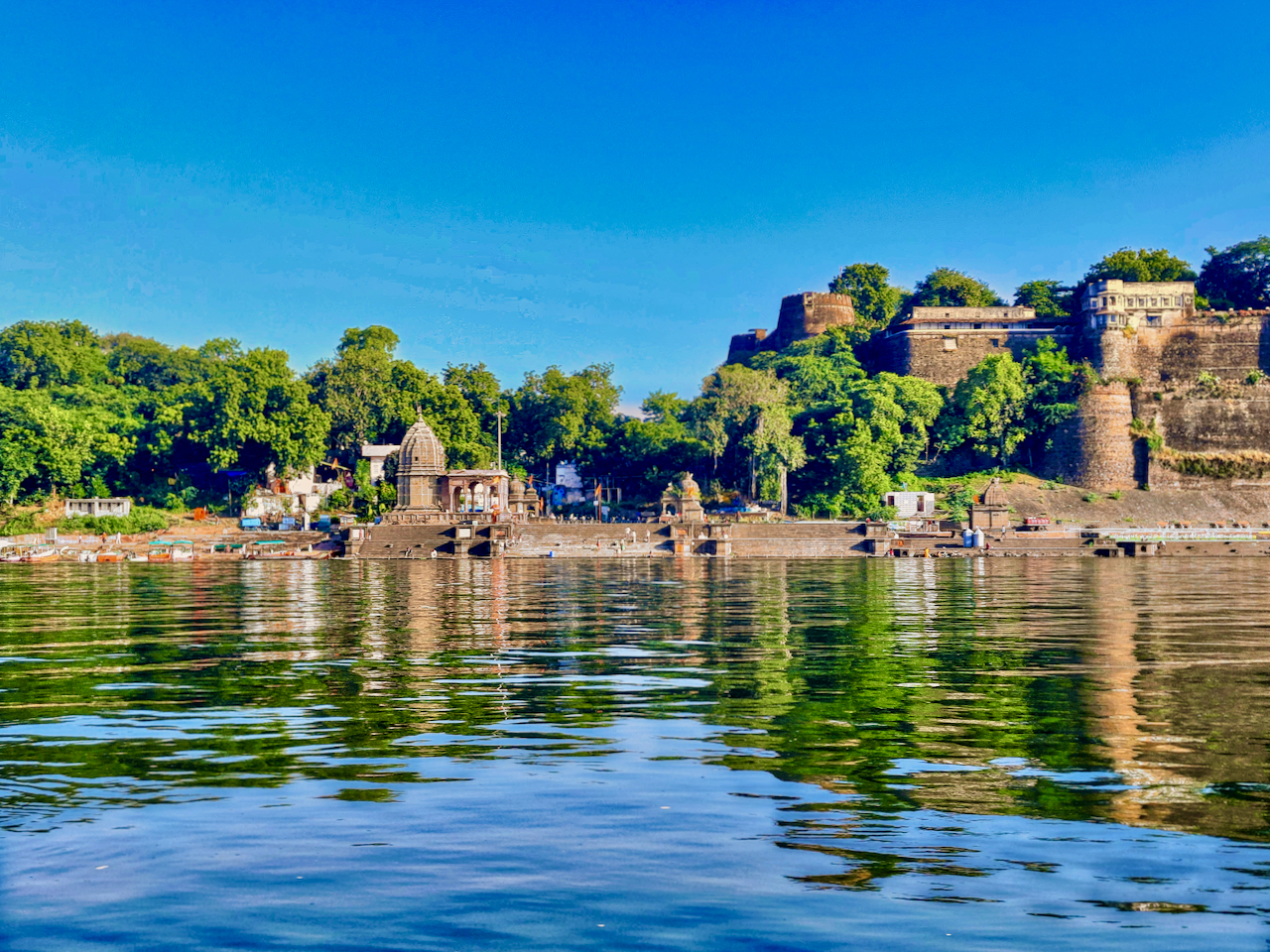
Maheshwar — Architecture, Devotion & Silk Along the Narmada
Maheshwar in Khargone district, Madhya Pradesh, situated along the northern bank of the sacred Narmada River, 90 km from Indore, is a town of immense historical, architectural, and spiritual grandeur. Chosen by Great Queen Maharani Ahilyabai Holkar as the capital of the Holkar Kingdom in 1767 CE, it is famous for its grand stone river ghats, royal fort palace, and GI-tagged Maheshwari silk sarees...
How to Visit Maheshwar Narmada Ghats & Ahilya Fort — Timings, Reach & Travel Tips
🚗 How to Reach
Accessible via nearest major railway junctions and state highways. Local taxi rentals, auto-rickshaws, and state bus transport services connect directly to the site hub.
📅 Best Time to Visit
October to March offers pleasant temperatures for outdoor exploration, photography, and walking tours of the surrounding heritage complex.
💡 Traveler Tips & Etiquette
Wear comfortable footwear for step navigation. Respect local cultural norms, carry drinking water, and follow ASI / local heritage preservation guidelines.
Authoritative References & Documentation
- Archaeological Survey of India (ASI) — Monuments of National Importance Records & Conservation Reports for Maheshwar Narmada Ghats & Ahilya Fort.
- State Tourism Development Corporation — Official Travel & Heritage Archives.
- District Administration Gazetteers — Geographical, Cultural & Transport Information.
- Hidden Routes Field Research — Direct site verification, accessibility logs, and seasonal travel advisories.
Key Highlights & Cultural Significance of Maheshwar Narmada Ghats & Ahilya Fort
Maheshwar Narmada Ghats & Ahilya Fort represents one of the premier destination highlights on the Hidden Routes heritage network. Recorded for its unique architectural features, natural beauty, and deep historical resonance, visiting this location offers travelers an authentic glimpse into regional traditions and field-verified travel circuits.
🏛️ Architectural & Historical Heritage
Exhibiting authentic regional craftsmanship, structural engineering, and traditional motifs preserved across generations.
🚗 How to Reach & Transport
Well-connected via nearest major railway junctions and state highways. Local taxi rentals and bus transport services connect directly to the site hub.
📅 Best Season & Photography
October through March provides ideal weather conditions for outdoor walking, heritage photography, and local sightseeing.
Authoritative References & Documentation
- Archaeological Survey of India (ASI) / State Tourism Archives — Official Gazetteers & Conservation Records.
- Department of Forest & Wildlife / District Travel Authority — Regional Access Logs & Eco-Tourism Rules.
- Hidden Routes Field Research & Verification — Direct location audits and seasonal travel advisories.
Deep Dive: Architectural, Historical & Regional Context of Maheshwar Narmada Ghats & Ahilya Fort
Maheshwar Narmada Ghats & Ahilya Fort stands as a cornerstone destination within the regional heritage circuit. Documented extensively by field researchers and regional historians, this location represents an essential stop for cultural enthusiasts, eco-tourists, and heritage travelers. From its architectural nuances to its ecological setting, exploring this site provides deep insights into the living history of the region.
🏛️ Architectural Significance & Heritage Design
The structural layout of Maheshwar Narmada Ghats & Ahilya Fort showcases traditional craftsmanship mastered over centuries. Every pillar, archway, and carved motif carries distinct artistic traditions passed down through master artisans. Conservation studies led by national heritage bodies highlight how local sandstone, mortar, and stone joinery techniques were optimized to withstand weather variations while maintaining subterranean structural balance.
🌿 Ecological Setting & Micro-Climate Characteristics
Surrounded by native flora and regional micro-ecosystems, the site benefits from natural micro-climatic cooling and thermal regulation. Natural shade elements, subterranean water retention, and seasonal air circulation channels keep ambient temperatures significantly milder during peak summer months, making early morning and evening visits particularly pleasant.
🚗 Transport Connections & Route Access
Seamlessly connected via state motorways and nearest district rail terminals. Registered taxi cabs, autorickshaws, and regular state transit buses run frequent daily services directly to the entrance plaza.
📅 Recommended Season & Optimal Hours
October through March delivers pleasant clear skies and comfortable walking temperatures. For photography enthusiasts, golden-hour light between 07:00 AM – 09:30 AM and 04:00 PM – 06:00 PM offers superior visual angles.
💡 Visitor Etiquette & Safety Regulations
Follow designated walking corridors, refrain from touching delicate stone carvings, carry refillable water bottles, and adhere strictly to official Archaeological Survey of India (ASI) or local municipal guidelines.
Authoritative References & Documentation
- Archaeological Survey of India (ASI) — National Monument Records & Architectural Gazetteers.
- State Tourism Development Corporation — Official Destination Repositories & Cultural Records.
- District Gazetteer & Botanical Survey Records — Topographical & Forest Conservation Archives.
- Hidden Routes Field Research Desk — Direct location audits, access verification, and seasonal travel logs.