Offshore Coral Island • 1898 Lighthouse • Marine Sanctuary
Pirotan Island Sanctuary
An isolated, uninhabited coral island 12 nautical miles into the Gulf of Kutch from Jamnagar, Gujarat — enveloped by living coral reefs, dense mangrove forests, sea cucumbers, octopuses, and a historic 19th-century lighthouse.
Lying approximately 12 nautical miles (around 20 kilometers) off the coast of Jamnagar across the open waters of the Gulf of Kutch, Pirotan Island (historically known as *Pir-o-Tan*, meaning "Island of the Saint") covers approximately 3.0 square kilometers of unblemished coral sand, dense mangrove thickets, and living intertidal coral reefs.
As one of only two islands within the 42-island Marine National Park archipelago where restricted eco-tourism is permitted, Pirotan is completely uninhabited by permanent civilian populations, except for the resident lighthouse keepers and Forest Department marine rangers.
The island is anchored by two iconic landmarks: a towering **24-meter-tall masonry lighthouse** constructed by the British in 1898, and the sacred coastal shrine of the revered Sufi saint **Khwaja Khizr**, revered by local Kutch and Saurashtra seafaring communities for centuries as the guardian protector of mariners.
Tidal Voyage Mechanics & Island Navigation
Reaching Pirotan Island is a true nautical adventure governed entirely by the Gulf of Kutch's colossal astronomical tides. Because the island is surrounded by shallow coral reef flats, motorized boats can approach and depart the island **ONLY during high tide**:
The High-Tide / Low-Tide Expedition Cycle
Expedition Phase
Tidal Condition & Navigation
Activity & Marine Observation
Inbound Voyage (Port to Island)
Depart Bedi Port / Rozi Port on the rising High Tide (+4 to +5 meters).
2-hour motorized boat crossing across the Gulf; view dolphins and pelicans.
Low-Tide Island Exploration (4 to 5 Hours)
Water recedes completely, stranding the boat safely on soft sandbanks.
Walk on the exposed coral reef around the entire island; observe octopuses, brain corals, and sea anemones.
Outbound Return Voyage
Next incoming High Tide refloats the boat in the late afternoon.
Return navigation back to Bedi Port before darkness falls over the Gulf.
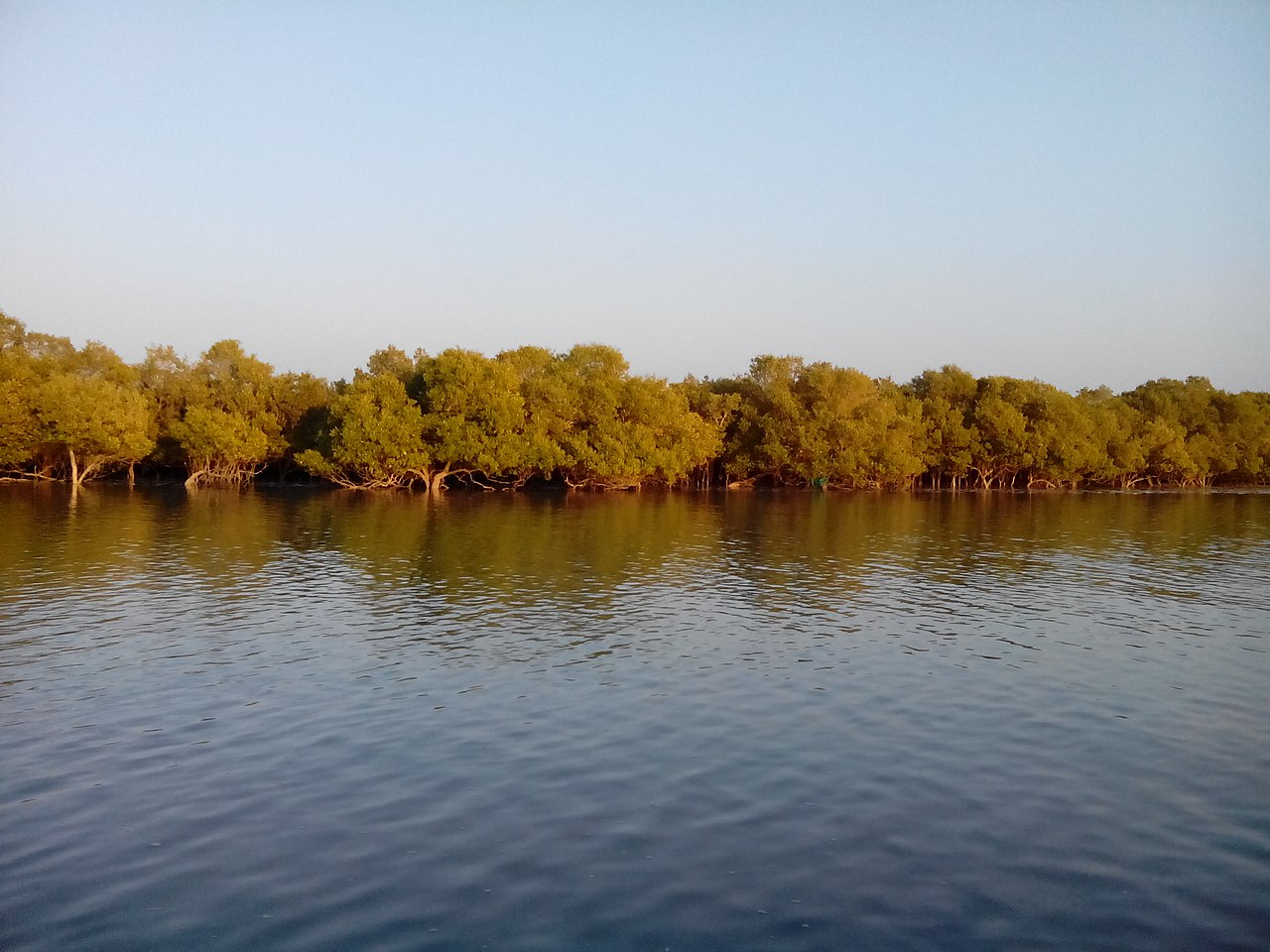
The island's geomorphology is stabilized by dense fringing belts of Grey Mangrove (Avicennia marina). The dense thicket of vertical aerial roots (*pneumatophores*) acts as a living sediment trap, capturing oceanic silts, preventing coastal erosion, and creating sheltered nurseries for juvenile reef fish and crustaceans.
Coral Diversity & Intertidal Invertebrates
During low tide, the sea retreats for nearly a kilometer around Pirotan Island, exposing extensive intertidal reef flats populated by diverse marine organisms:
Brain & Honeycomb Corals
Favia speciosa • Favites • Porites
Massive boulder-like coral heads flourishing in the clear tidepools, showcasing intricate geometric skeletal polyps.
Giant Sea Cucumber
Holothuria leucospilota • Echinoderm
Leathery sausage-shaped marine invertebrate that feeds on organic detritus on the sandy sea floor, essential for reef cleanliness.
Giant Clams & Oysters
Tridacna & Pearl Oyster (Pinctada)
Embedded directly within the limestone reef flats, filtering seawater and historically harvested for Kathiawar pearl culture.
Blue-spotted Stingray
Neotrygon kuhlii • Elasmobranch
Glides across shallow sandy channels between coral clusters, burying itself under thin layers of sediment when low tide approaches.
Sea Hares & Nudibranchs
Aplysia • Vivid Sea Slugs
Soft-bodied marine gastropods with vibrant electric blue and violet color patterns, releasing purple ink when alarmed.
Crab-plover
Dromas ardeola • Specialized Wader
Forages in large flocks along the exposed reef edges, using its stout black bill to crush hard crab shells.
Ornithological surveys on Pirotan regularly record wintering flocks of Masked Boobies (Sula dactylatra), Great Crested Terns, Lesser Crested Terns, Eurasian Oystercatchers, and Ruddy Turnstones flipping coral rubble in search of small marine molluscs.
Cultural Heritage: Shrine of Saint Khwaja Khizr
Pirotan Island holds immense spiritual significance for the coastal seafaring and fishing communities of Saurashtra. The whitewashed Dargah of Saint **Khwaja Khizr** (associated in Islamic maritime folklore with the immortal guide of green waters) stands shaded beneath ancient mangrove canopies.
Before setting sail on extended deep-sea voyages across the Arabian Sea, fishermen from Bedi, Salaya, and Mandvi traditionally visit the shrine to offer flags and prayers for safe navigation through rough waters and bountiful harvests.
The Historic 1898 Pirotan Lighthouse
Soaring 24 meters above the coral sands, the Pirotan Lighthouse was commissioned in 1898 to guide merchant ships entering the busy waterways of Bedi and Navlakhi ports.
Constructed with heavy ashlar stone masonry to withstand ferocious monsoon cyclones, the lighthouse features an automated flashing optic visible for over 15 nautical miles across the Gulf of Kutch. Ascending the spiral staircase to the gallery offers breathtaking 360-degree vistas of the mangrove forests and the vast coral reefs submerged under turquoise ocean currents.
Special Permits & Expedition Logistics
Because Pirotan is a sensitive national park island near international border waters, visiting requires prior multi-agency permissions:
Mandatory Permits & Travel Guidelines
Prior Approvals Required: Written entry permits must be secured in advance from the **Gujarat Forest Department (Marine National Park Office, Jamnagar)**, **Customs Department**, and **Port Officer at Bedi Port**. Non-Indian citizens additionally require clearance from the District Collector / Police.
Charter Boat Hire: Motorized wooden fishing boats must be chartered privately from **Bedi Port** or **Rozi Port** in Jamnagar.
Essential Provisions: There are no shops, restaurants, or fresh water sources on Pirotan Island. Visitors must carry sufficient drinking water, snacks, sun protection, and a trash bag (strict zero-waste policy).
Footwear: Hard-soled sneakers or reef booties with thick socks are indispensable for walking on razor-sharp barnacle-encrusted coral rocks.
How to Reach Pirotan Island
Jamnagar is the sole departure base for boat charters to Pirotan:
Gateway Transit Routes
To Departure Ports:Bedi Port (~8 km) and Rozi Port (~12 km) north of Jamnagar city center.
Boat Crossing Time: Approx. 1.5 to 2 hours each way, depending on wind and sea currents.
By Train:Jamnagar Railway Station (JAM) and Hapa (HAPA) are directly connected to Mumbai, Ahmedabad, Jaipur, and Delhi.
Nearest Airport:Jamnagar Domestic Airport (JGA) (~12 km to Bedi Port) and Rajkot International Airport (HSR) (~100 km).
✓ Handcrafted on Demand • Zero Automated Fluff⚡ 4–8h Delivery via Email & WhatsApp📍 Focus: Pirotan Island Sanctuary
Curated Field Dossier & Offline Google Maps Pin Pack
Bypass tourist traps with verified local logistics, exact parking coordinates, and field-tested routes.
✓
Exact GPS Pin Pack: Unmarked parking spots, best dawn photography vantage points, and hidden trailheads.
✓
Crowd-Avoidance Timing Matrix: Exact hour-by-hour windows to explore with zero tourist chaos.
✓
Vetted Local Dhabas: 100% authentic, hygiene-checked regional food stops not on commercial maps.
✓
Scam & Overcharge Shield: Verified taxi rates, auto fares, and local guide fee guidelines.
₹99₹49980% OFF
🛡️ Personally curated by PK Gupta & the Hidden Routes research desk. Delivered directly to your Email & WhatsApp within 4–8 hours.
🔒 Secure Razorpay Checkout💳 UPI & International Cards
Ecology, Conservation History & Field Guide: Pirotan Island (Marine National Park)
Preserving 3 sq km (Island Core) of Intertidal Coral Reef, Mangrove & Mudflat Marine Park across Jamnagar District — established in 1982 as a sanctuary of international ecological significance.
Pirotan Island is the most famous of the 42 coral reef islands comprising India's first Marine National Park in the Gulf of Kutch. What makes Pirotan globally unique is its dramatic intertidal zone: during low tide, the sea recedes for over two kilometers, allowing visitors to walk on the exposed seabed without scuba diving gear. The pristine waters and exposed reef flats host 52 species of hard and soft corals, sea anemones, giant sea cucumbers, octopus, pufferfish, stingrays, sea horses, and rare dugongs. Dense mangrove forests of Rhizophora and Avicennia line the island fringes.
Mangroves Jungle.jpg — Natural habitat of Pirotan Island (Marine National Park).Mangroves Jungle besides water canal towards Pirotan.jpg — Diverse wildlife species within the protected reserve.
Wilderness Experience & Guided Safari Trails
Visiting Pirotan requires boat transit from Bedi Port or Rozi Port in Jamnagar, meticulously coordinated with the astronomical tide timetable. Exploring the exposed reef alongside Forest Department naturalists reveals living marine biodiversity in tidal pools. The island is also crowned by the historic Pirotan Lighthouse (built 1867) and the revered Dargah of Saint Khwaja Khizr.
Visitor Planning & Field Logistics
Located 28 km offshore from Jamnagar. Requires mandatory entry permits from the Forest Department, Port Authorities, and Customs in Jamnagar. Best visited between October and March during spring low tides.
Explore Jamnagar District — Pearl City of Saurashtra
Pirotan Island is the ultimate marine adventure of Jamnagar. Continue your journey with a visit to the Narara intertidal walking reef, explore the bird paradise of Khijadiya Sanctuary, marvel at the 16th-century Lakhota Fort, and shop for authentic Jamnagari Bandhani tie-dye sarees in the historic walled city bazaars.
Pirotan Island is an uninhabited 3.0 sq km coral island located 12 nautical miles off Jamnagar in the Gulf of Kutch, famous for living coral reef flats, marine wildlife, and a historic 1898 lighthouse.
Do I need permits to visit Pirotan Island?
Yes, visiting Pirotan requires prior written permits from the Gujarat Forest Department (Marine NP Office, Jamnagar), Customs Department, and Port Authority.
Can visitors stay overnight on Pirotan Island?
No, overnight stays are strictly prohibited for civilian tourists to protect fragile marine ecology. All trips are organized as single-day high-tide-to-high-tide expeditions.
Where do boats depart for Pirotan?
Charter boats depart from Bedi Port or Rozi Port located near Jamnagar city during the rising high tide.