Agro-Geography: The 130-Acre Tropical Valley of Curti
Nestled in the lush, river-fed foothills of Curti village just two kilometers east of Ponda town, Sahakari Spice Farm spans over 130 acres of fertile agricultural land. Surrounded by rolling laterite hills and fed by perennial mountain streams, the plantation enjoys an optimal microclimate of rich alluvial soil, warm tropical humidity, and abundant sunshine.
The farm is cultivated using traditional, eco-friendly organic farming methods that avoid synthetic chemical fertilizers and pesticides. The layout is a masterpiece of multi-tier canopy agroforestry: towering areca nut (betel) palms and coconut trees provide the high canopy shade, while climbing black pepper and vanilla vines wrap around their trunks.
Beneath this canopy, intermediate fruit trees—including nutmeg, cinnamon, clove, allspice, and wild jackfruit—thrive alongside ground-level medicinal herbs, pineapples, turmeric, and ginger, creating a self-sustaining tropical rainforest garden.
Traditional Goan Welcome & Herbal Hospitality
Upon arrival at Sahakari Spice Farm, guests are welcomed with a traditional Goan hospitality ritual: greeted with a fragrant garland of fresh marigolds, a cooling vermillion tilak applied to the forehead, and a steaming brass cup of warm herbal tea brewed on-site from fresh lemongrass, ginger, cardamom, and palm jaggery.
Botanical Exploration: The Guided Spice and Medicinal Herb Walk
Visitors to Sahakari are taken on an engaging, 45-minute guided walking tour led by expert local naturalists. The tour offers an intimate, multi-sensory educational journey through the world of spices that once drove global naval exploration and colonial conflicts.
Travelers can see, touch, and smell raw spices in their natural botanical forms: crushing fresh green cardamom pods to release aromatic oils, examining the intricate scarlet lace of mace wrapping around the hard nutmeg seed, and smelling the fragrant bark of true Ceylon cinnamon peeled from young branches.
The guides also demonstrate the traditional medicinal uses of indigenous Goan herbs: wild turmeric for skin healing, lemongrass for digestive wellness, bitter neem leaves for blood purification, and clove oil for tooth remedies, reflecting centuries of Ayurvedic wisdom passed down through Goan rural families.

Rural Traditions: The Daring Betel Palm Harvesters
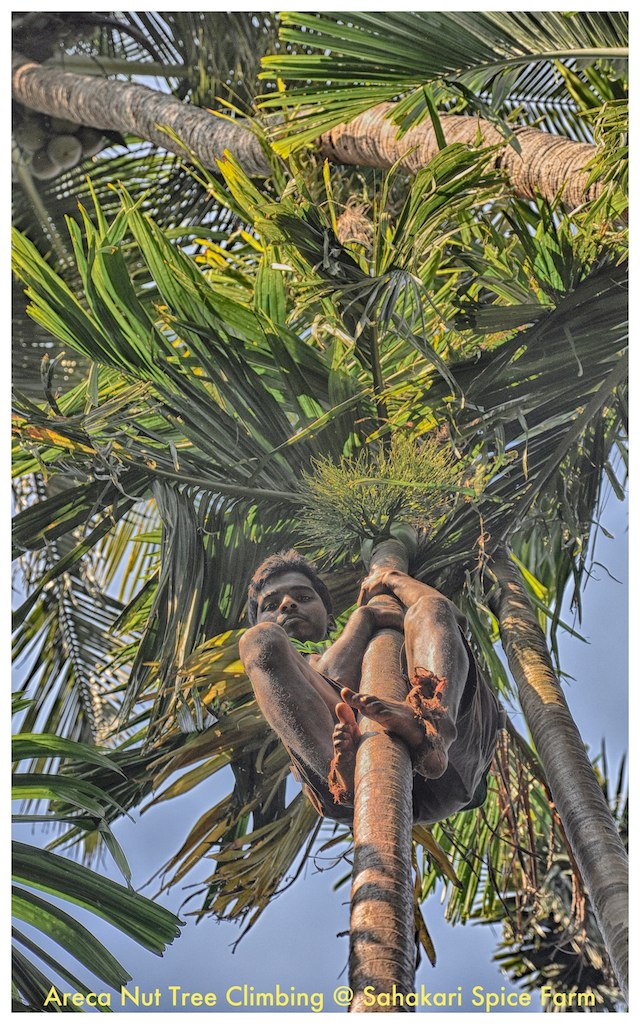
One of the most thrilling cultural spectacles at Sahakari is the demonstration by local betel nut harvesters. The slender areca nut palm grows up to 60 feet tall with a trunk only a few inches wide, bending gracefully under the harvester's weight.
Equipped only with a small rope loop binding their ankles, nimble local harvesters shinny up the vertical trunk in seconds. Once at the top, they harvest ripe nut bunches with a curved sickle, and then perform a heart-stopping feat: instead of climbing down, they sway the flexible tree violently back and forth until the crown reaches an adjacent palm, leaping fearlessly across from tree to tree high above the ground.
The farm also features gentle interactions with resident Asian elephants, where visitors can watch them being washed in the river pool and feed them fresh sugarcane under the supervision of experienced mahouts.
Humid Forest Footpaths & Insect Precautions
The guided spice plantation trail traverses dense, humid tropical undergrowth; wear light, breathable cotton clothing and comfortable walking shoes with good tread. Applying natural insect repellent is recommended during the rainy and post-monsoon months.
Culinary Feast: The Wood-Fired Goan Lunch on Betel Leaves
The climax of the Sahakari experience is an expansive, authentic Goan buffet lunch served in a grand open-air dining pavilion roofed with woven palm thatch. All dishes are cooked over traditional wood-fired laterite stoves (*chulhas*) using clay pots and fresh spices harvested directly from the farm.
Served traditionally on eco-friendly, biodegradable plates woven from pressed areca palm leaves, the spread includes both vegetarian and non-vegetarian delicacies: fragrant spiced chicken xacuti, fresh fried fish in golden rava, Goan prawn curry with local red rice, tempered pumpkin (*bhopla bhaji*), sprouted moong curry, dal, and warm puris.
The meal is accompanied by spicy kokum kadhi (*sol kadhi*), freshly prepared vegetable salads, roasted papads, and sweet Goan vermicelli kheer or banana halwa. Adults can also sample a complimentary shot of authentic Goan cashew or palm feni distilled on the property.

Transit Log, Operating Protocols and Guidelines
Sahakari Spice Farm is situated in Curti, just 2 kilometers east of Ponda town along the Belgaum highway, 20 kilometers from Margao (Madgaon) Railway Station, and 30 kilometers from Panaji. Dabolim International Airport is 38 kilometers away via the Borim Bridge.
The farm is open to visitors daily from 9:00 AM to 4:30 PM. The all-inclusive visitor package covers the traditional welcome, guided plantation walking tour, betel palm acrobatic demonstration, and the lavish buffet lunch. The on-site farm boutique sells vacuum-packed whole spices, pure essential oils, vanilla pods, and Ayurvedic remedies.
A visit to Sahakari takes approximately three hours. It combines seamlessly with morning temple visits to Shree Shantadurga at Kavlem (6 km southwest) or Shri Mangueshi at Priol (8 km northwest), forming the ultimate cultural day tour of central Goa.
Curated Field Dossier & Offline Google Maps Pin Pack
Bypass tourist traps with verified local logistics, exact parking coordinates, and field-tested routes.
- ✓Exact GPS Pin Pack: Unmarked parking spots, best dawn photography vantage points, and hidden trailheads.
- ✓Crowd-Avoidance Timing Matrix: Exact hour-by-hour windows to explore with zero tourist chaos.
- ✓Vetted Local Dhabas: 100% authentic, hygiene-checked regional food stops not on commercial maps.
- ✓Scam & Overcharge Shield: Verified taxi rates, auto fares, and local guide fee guidelines.
🛡️ Personally curated by PK Gupta & the Hidden Routes research desk. Delivered directly to your Email & WhatsApp within 4–8 hours.