Cosmic Genesis: Kali Yuga Vaikuntham and the Seven Sacred Hills
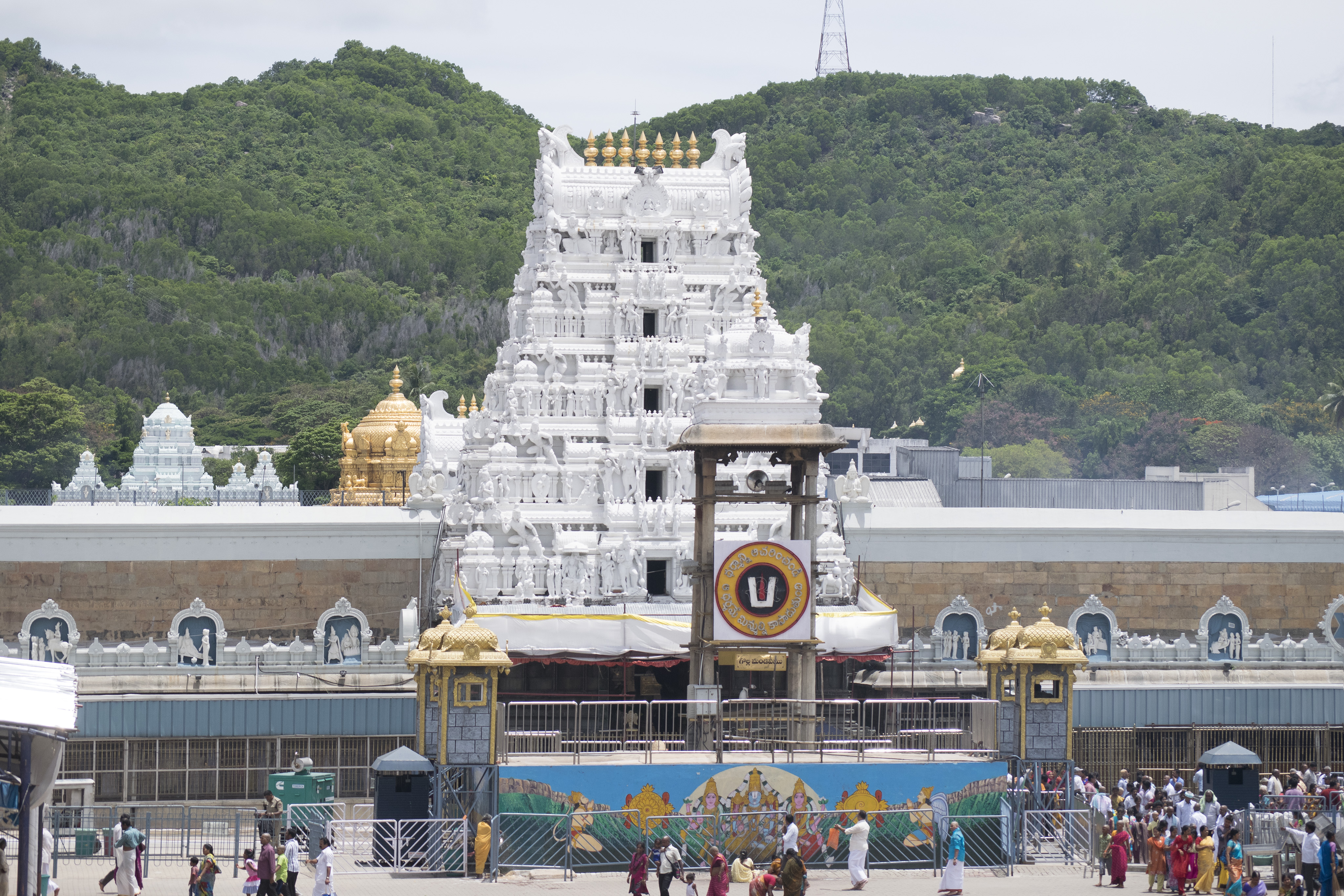
Perched at an elevation of 3,200 feet (976 meters) atop the sacred Seshachalam range in Tirupati district, Sri Venkateswara Swamy Temple at Tirumala reigns supreme as the most venerated, culturally influential, and visited religious destination on planet Earth. In Hindu sacred cartography, Tirumala is universally acclaimed as the 'Kali Yuga Vaikuntham'—the earthly manifest heaven where the Supreme Lord Vishnu descended in personal form to protect humanity from the cosmic degeneration of the fourth age.
The temple is situated amidst a magnificent natural amphitheater formed by seven sacred hill peaks, recognized as the seven hooded heads of the cosmic serpent Adisesha: Seshadri, Neeladri, Garudadri, Anjanadri, Vrishabhadri, Narayanadri, and Venkatadri. The temple sanctum rests upon Venkatadri, representing the crest of the divine serpent's hood.
According to the Sri Venkatachala Mahatmyam, Lord Vishnu arrived on the Venkata hill following his divine marriage to Goddess Padmavathi (an incarnation of Mahalakshmi), borrowing a colossal sum from the divine treasurer Kubera to finance the cosmic wedding, with the promise that he would reside on the hill and collect voluntary gifts (hundi offerings) from devotees to repay the divine debt until the end of the Kali Yuga.
The Golden Ananda Nilayam and the Majestic Swayambhu Idol
The architectural focal point of Tirumala is the Ananda Nilayam Vimana, the three-storied golden tower that crowns the Garbhagriha (inner sanctum). First gilded in gold by the Pallava and Chola monarchs, and comprehensively covered in pure gold sheets by Emperor Sri Krishnadevaraya of Vijayanagara in the 16th century, the golden dome radiates an unmistakable aura that can be seen from miles across the hill plateau.
Inside the sanctum stands the towering, nine-foot-tall Swayambhu idol of Lord Venkateswara (Balaji), carved out of a mysterious, fine-grained black stone that geologists identify as possessing unique acoustic and electromagnetic properties. The deity stands with four arms, holding the celestial Conch (Panchajanya) and Discus (Sudarshana Chakra), while his lower right hand is in the Varada mudra (pointing downward toward his lotus feet as the sole refuge) and his lower left hand rests gracefully on his hip (Katyavalambita posture).
The idol is adorned in peerless royal regalia, including the monumental diamond-encrusted crown (Vajra Kireetam), glittering Makarakanti necklaces, and pure gold armor. Strikingly, despite centuries of intense burning of camphor and lamps in the enclosed sanctum, the idol maintains a natural body warmth and sweet fragrance of sacred camphor (Pachcha Karpooram).
The Sacred Footpaths: Trekking via Alipiri Mettu and Srivari Mettu
For millions of devout pilgrims, ascending the Seven Hills on foot is an essential act of spiritual penance (Tapam) and surrender. Two ancient stone footpaths ascend through the forested slopes of Seshachalam from the base town of Tirupati to the hilltop sanctum.
The primary, historic pathway is the Alipiri Mettu, which commences at the Alipiri foot-gateway in Tirupati. This challenging trail spans approximately 9 kilometers and comprises 3,550 stone steps, winding past the colossal statue of Garuda, the Galigopuram (Windy Gateway), and the Deer Park before reaching the hilltop after approximately 3.5 to 5 hours of walking.
The alternative, steeper, and shorter route is the Srivari Mettu, located near Chandragiri (15 km west of Tirupati). This ancient trail of 2,388 steps follows the precise path walked by Emperor Sri Krishnadevaraya and the saint-poet Annamacharya, ascending steeply through dense forest shade to reach the summit in approximately 1.5 to 2.5 hours.
Tirumala experiences massive daily pilgrim footfalls (70,000 to 100,000 devotees daily). To avoid waiting in free Sarvadarsanam queue compartments for 18 to 24 hours, pilgrims must book Special Entry Darshan (SED, Rs. 300) or Arjitha Seva tickets online through the official TTD portal (tirupatibalaji.ap.gov.in) several months in advance. Keep valid original government photo IDs (Aadhaar/Passport) handy.
Divine Sustenance: The GI-Tagged Tirumala Laddu and Free Annadanam
No pilgrimage to Tirumala is complete without receiving the world-famous Tirumala Srivari Laddu, a sacred culinary masterpiece that was granted a prestigious Geographical Indication (GI) tag in 2009. Prepared inside the massive traditional temple kitchen complex (the Potu) by hereditary temple cooks using centuries-old recipes, over 350,000 laddus are produced daily using pure country cow ghee, gram flour, sugar, cashews, raisins, and aromatic cardamom.
Equally monumental is the Tarigonda Vengamamba Nitya Annaprasadam complex, one of the largest free community dining institutions in the world. Operating under the philosophy that no devotee shall go hungry on the sacred hill, the complex serves freshly cooked, delicious sanctified vegetarian meals (rice, sambar, rasam, kootu, and sweet payasam) to over 100,000 pilgrims every single day in continuous batches.
In addition, the sacred tonsuring (Kalyanakatta) ritual—where millions of men, women, and children voluntarily surrender their hair as an offering of humility and ego-surrender to the Lord—operates across round-the-clock modern facilities staffed by thousands of trained barbers.

Transit Gateways, Road Logistics, and Transport Infrastructure
Tirupati is one of the most seamlessly connected transit junctions in South India. Tirupati Main Railway Station (TPTY) and Renigunta Junction (RU) are major railway nodes offering non-stop superfast and Vande Bharat train connections to Chennai (130 km), Bengaluru (250 km), Hyderabad (550 km), Mumbai, and New Delhi.
Tirupati International Airport (TIR) at Renigunta is located 40 km from the hilltop, featuring frequent daily commercial flights to major Indian metropolitan centers. Chennai International Airport (MAA) lies 140 km to the southeast.
The ascent from Tirupati to Tirumala is accomplished via two separate, master-engineered toll ghat roads (Up-Ghat road: 18 km; Down-Ghat road: 19 km) that wind through dramatic mountain scenery with smooth asphalt, heavy safety barriers, and continuous speed monitoring. APSRTC operates its dedicated 'Saptagiri' bus fleet, with air-conditioned and luxury buses departing between Tirupati central bus stand and Tirumala every two minutes around the clock.
Trekking up the traditional pedestrian footpaths (Alipiri Mettu - 3,550 steps, 9 km; or Srivari Mettu - 2,388 steps, 3.5 km) passes through the core Seshachalam Biosphere Reserve, home to wild leopards and sloth bears. Trek strictly in groups between designated operating hours (Alipiri: 3:00 AM to 10:00 PM; Srivari Mettu: 6:00 AM to 5:00 PM). Non-vegetarian food, alcohol, and tobacco are strictly prohibited on Tirumala hills.
TTD Management, Temple Protocols, and Environmental Directives
The administrative and spiritual affairs of Tirumala are governed by the Tirumala Tirupati Devasthanams (TTD), an autonomous trust board that operates world-class crowd management, security scanning, free healthcare, and subsidized pilgrim accommodations spanning thousands of rooms and cottages on the hill.
Strict dress codes are enforced for all darshan categories: men must wear white dhotis or pyjamas with upper shirts or angavastram (western trousers, shorts, and jeans are barred); women must wear traditional sarees, half-sarees, or churidars with dupattas. Mobile phones, smart watches, cameras, and all electronic equipment are strictly prohibited inside the inner temple complex and must be deposited in electronic lockers.
Tirumala is an ecologically protected, plastic-free zone. Single-use plastic bottles, carry bags, and non-biodegradable packaging are strictly banned. Devotees are encouraged to preserve the divine tranquility and pristine cleanliness of the sacred Seven Hills.
Curated Field Dossier & Offline Google Maps Pin Pack
Bypass tourist traps with verified local logistics, exact parking coordinates, and field-tested routes.
- ✓Exact GPS Pin Pack: Unmarked parking spots, best dawn photography vantage points, and hidden trailheads.
- ✓Crowd-Avoidance Timing Matrix: Exact hour-by-hour windows to explore with zero tourist chaos.
- ✓Vetted Local Dhabas: 100% authentic, hygiene-checked regional food stops not on commercial maps.
- ✓Scam & Overcharge Shield: Verified taxi rates, auto fares, and local guide fee guidelines.
🛡️ Personally curated by PK Gupta & the Hidden Routes research desk. Delivered directly to your Email & WhatsApp within 4–8 hours.
Frequently Asked Questions
Field-verified practical and cultural answers for planning your expedition to Tirumala Sri Venkateswara Swamy Temple:
Connecting Andhra Routes
Continue your journey across the Eastern Ghats, Godavari river deltas, Bay of Bengal coastline, and sacred pilgrimage shrines: