Ecological Stature: The Only Asian Elephant Sanctuary in Andhra Pradesh
Sprawling across 357.6 square kilometers of rugged hills, deep valleys, and dry deciduous forests in Palamaner and Kuppam taluks of Chittoor district, Koundinya Wildlife Sanctuary is an ecological sanctuary of immense regional significance. It holds the proud and unique distinction of being the sole designated wild Asian elephant (Elephas maximus) sanctuary in the entire state of Andhra Pradesh.
The sanctuary is situated at the ecological transition zone where the high Deccan plateau of Karnataka descends into the rugged tablelands of the southern Eastern Ghats. The topography is characterized by steep, boulder-strewn hill ridges rising between 600 and 900 meters elevation, bisected by deep river valleys formed by the Kaigal and Koundinya streams, which are seasonal tributaries of the Palar River.
The re-establishment of resident breeding elephant herds here in the mid-1980s is regarded by conservationists as one of modern India's most successful examples of natural wildlife recolonization across human-dominated landscapes.
Floral Diversity: Southern Dry Deciduous Forests and Bamboo Thickets
The vegetation of Koundinya comprises Southern Tropical Dry Deciduous and Thorn-Scrub forests, interspersed with extensive patches of bamboo brakes (Dendrocalamus strictus) along river gullies. The diverse floral mosaic provides year-round forage for herbivorous megafauna.
Important browse tree species for elephants include Albizia lebbeck, Acacia catechu, Ficus bengalensis (banyan), Ficus religiosa (peepal), Tamarindus indica, and Ziziphus mauritiana. Dense bamboo thickets in the stream ravines provide crucial nutritional protein and fibrous fodder during the dry summer months.
The rocky slopes support valuable stands of medicinal plants, wild sandalwood (Santalum album), and red sanders, conserved under strict anti-poaching protocols enforced by the Andhra Pradesh Forest Department.
Faunal Spectrum: Leopards, Sloth Bears, and Herbivore Herds
While the Asian elephant is the flagship species (with an estimated population of 60 to 80 elephants roaming the landscape), Koundinya shelters an extraordinary diversity of other wildlife. The apex predator of the sanctuary is the Indian Leopard, which thrives in the boulder-strewn caverns and rocky hills.
The sanctuary hosts substantial populations of Sloth Bears (Melursus ursinus), spotted deer (chital), sambar, four-horned antelope (chausingha), wild boars, and the elusive Indian wolf. The southern plains support small herds of blackbuck antelope, while the nocturnal scrub is inhabited by jungle cats, civets, and the endangered slender loris.
Birdlife is rich, with over 130 documented species including the grey francolin, jungle bush quail, crested hawk-eagle, Indian pitta, and large populations of peafowl whose calls resound across the forested valleys at dawn.
For over two hundred years, wild Asian elephants were considered locally extinct in Andhra Pradesh. In 1983–1984, a remarkable ecological event occurred: breeding herds of wild elephants began migrating eastward from the contiguous forests of Bannerghatta in Karnataka and Hosur in Tamil Nadu, naturally re-colonizing the lush valleys of Palamaner. Recognizing this historic migration, the government notified the 358 sq km Koundinya Wildlife Sanctuary in 1990.
Sanctuary Highlights: Kaigal Falls, Kalyani Dam, and Watchtowers
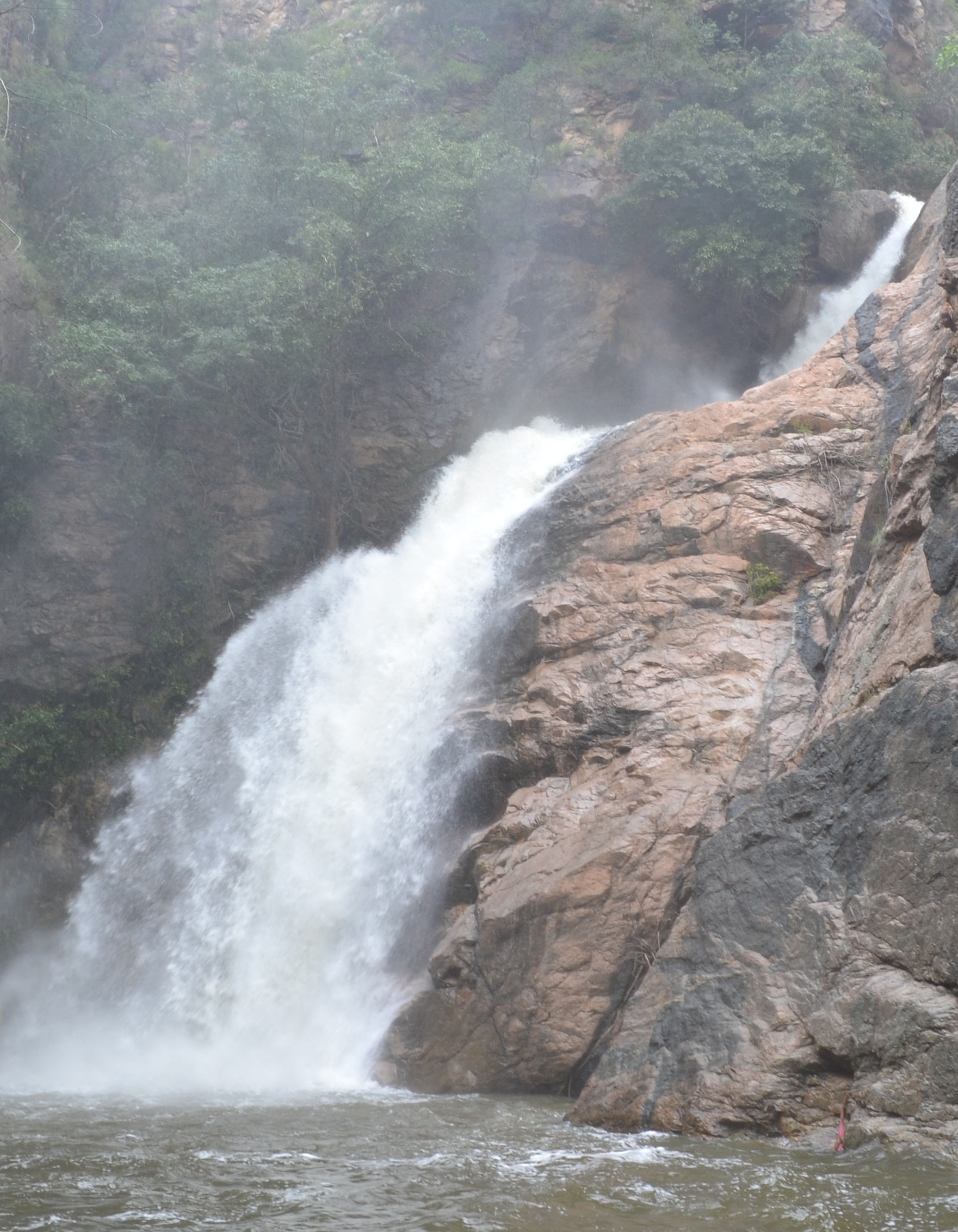
Within the folds of the sanctuary lie several scenic natural attractions. The most famous is Kaigal Waterfalls (Dumukurallu Falls), a 40-foot perennial forest cataract where clear mountain waters tumble into a serene natural pool, providing a major watering point for wildlife.
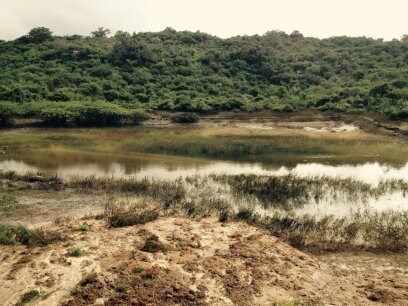
Another scenic landmark is the Kalyani Reservoir, nestled between forested hills, which serves as a favored foraging area where elephant family groups can frequently be observed bathing and drinking during the late afternoon hours.
The Forest Department maintains elevated wildlife observation watchtowers near natural salt licks and watering holes, allowing eco-tourists to observe animal behavior safely from above without disturbing natural movement corridors.
Transit Gateways, Road Logistics, and Regional Connectivity
Koundinya Wildlife Sanctuary is located in southwestern Chittoor district. The primary administrative headquarters and visitor gateway is Palamaner town (15 km), situated along National Highway 40 (the Bengaluru-Chennai highway).
Kuppam Railway Station is located 30 km to the south on the Bengaluru-Chennai mainline, while Chittoor town lies 50 km to the east. Bengaluru city is situated just 120 km to the west (about a 2.5-hour drive via Hoskote, Kolar, and Mulbagal), making Koundinya an exceptionally accessible wilderness weekend getaway from Karnataka.
APSRTC operates frequent buses between Bengaluru, Kolar, Palamaner, and Chittoor. The Forest Department eco-tourism office in Palamaner coordinates permits, guided safari jeeps, and nature walks.
Koundinya is a wilderness sanctuary with free-ranging, wild, un-tamed Asian elephant herds. Never alight from your vehicle along forest roads. If elephants cross the road, stop at a safe distance (at least 100 meters), turn off headlights and engine noise, and never honk or flash high beams. Avoid driving on interior sanctuary forest tracks after 5:30 PM.
Conservation Directives: Human-Elephant Coexistence and Eco-Ethics
Because Koundinya is an interstate elephant migration corridor bordered by agricultural villages, the Forest Department has pioneered innovative human-elephant coexistence initiatives, including solar-powered perimeter fencing, elephant-proof trenches (EPTs), and community Early Warning Systems using SMS alerts.
Visitors must strictly obey wildlife safety regulations: vehicle speeds must not exceed 30 km/h along forest roads. Honking horns, playing loud music, or throwing food items to wild monkeys along the road is strictly prohibited.
When elephant herds are sighted, tourists must remain inside their vehicles, maintain absolute silence, and never attempt to approach on foot for photographs. By respecting the wild dignity of these magnificent pachyderms, visitors help ensure the survival of Andhra's only elephant sanctuary.
Curated Field Dossier & Offline Google Maps Pin Pack
Bypass tourist traps with verified local logistics, exact parking coordinates, and field-tested routes.
- ✓Exact GPS Pin Pack: Unmarked parking spots, best dawn photography vantage points, and hidden trailheads.
- ✓Crowd-Avoidance Timing Matrix: Exact hour-by-hour windows to explore with zero tourist chaos.
- ✓Vetted Local Dhabas: 100% authentic, hygiene-checked regional food stops not on commercial maps.
- ✓Scam & Overcharge Shield: Verified taxi rates, auto fares, and local guide fee guidelines.
🛡️ Personally curated by PK Gupta & the Hidden Routes research desk. Delivered directly to your Email & WhatsApp within 4–8 hours.
Frequently Asked Questions
Field-verified practical and cultural answers for planning your expedition to Koundinya Asian Elephant Sanctuary:
Connecting Andhra Routes
Continue your journey across the Eastern Ghats, Godavari river deltas, Bay of Bengal coastline, and sacred pilgrimage shrines: