
1. Opening Panorama
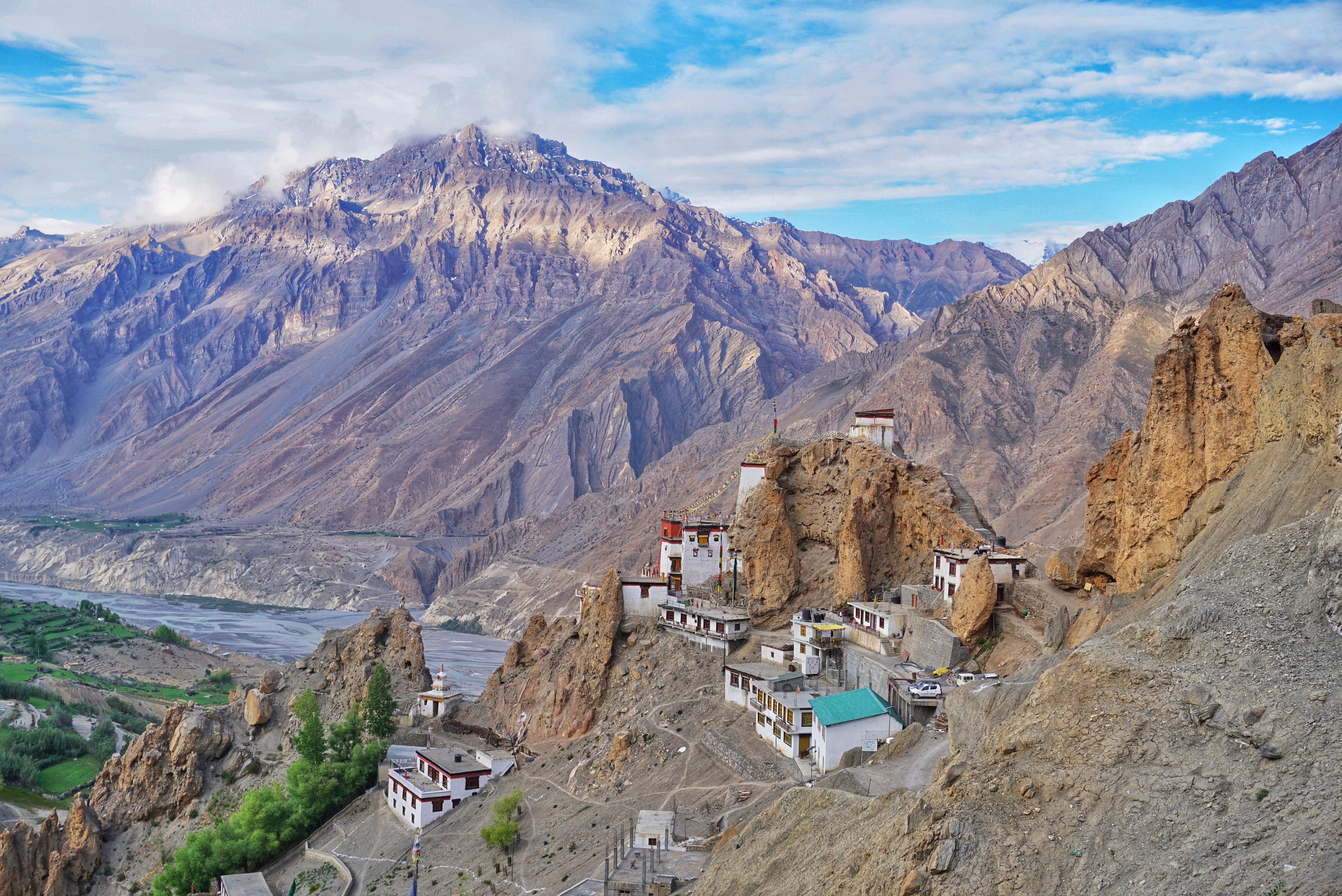
Rising into the rarified trans-Himalayan stratosphere at an average elevation exceeding 3,800 metres, Spiti Valley—the Middle Land between India and Tibet—unfolds as one of the most surreal, visually arresting wedding destinations on planet Earth. Surrounded by soaring barren shale peaks, stark moonscape valleys, and the turquoise waters of the Spiti River, this remote Himalayan realm is anchored by thousand-year-old cliffside Buddhist monasteries, including Key Gompa perched fortress-like on a conical hill, ancient Tabo Monastery founded in 996 CE, and dramatic Dhankar Gompa overlooking the confluence of the Spiti and Pin rivers. Destination weddings in Spiti are deeply intimate, soulful gatherings staged at premier regional properties, including Grand Dewachen in Kaza—the valley's flagship luxury eco-hotel featuring traditional mud-brick and timber architecture—Spiti Heritage Himalayan Resort, Hotel Deyzor Kaza with its celebrated mountain hospitality, Parasol Retreat in Tabo, and Echor Spiti Valley. Hosting a wedding celebration in Spiti is an extraordinary adventure: wedding parties gather under crystal-clear skies revealing the blazing arc of the Milky Way, ceremonial vows are framed by fluttering five-coloured Buddhist prayer flags and acoustic Tibetan singing bowls, while evening celebrations feature crackling tandoor hearths and artisanal sea-buckthorn cocktails. However, executing a wedding here demands absolute logistical discipline: guests must strictly undergo two days of altitude acclimatization to prevent Acute Mountain Sickness (AMS), road transit requires traversing high mountain passes like Kunzum La (4,551m), and events can only be staged during the short summer window between June and September.
Planning a wedding in Spiti Valley requires understanding the cultural and physical fabric that separates this region from other celebration destinations across India. Historic architectural traditions and distinct coastal or hill geography establish celebration settings engineered to project dignity, beauty, and authentic hospitality. In Spiti Valley, that setting is an intact reality where open courtyards, seaside lawns, and historic pavilions provide a magnificent stage for memorable nuptials.
2. The USP — What Makes Spiti Valley Irreplaceable
Spiti Valley is the only destination wedding setting in India offering high-altitude trans-Himalayan ceremonies amidst thousand-year-old Tibetan cliffside gompas, dramatic stark moonscapes, and unpolluted night skies revealing the brilliant Milky Way.
3. Complete Venue Landscape & Performance Ratings
Hospitality infrastructure across Spiti Valley is defined by boutique eco-hotels, heritage Tibetan lodges, and seasonal luxury glamping setups in Kaza and Tabo. Below is our verified assessment of primary properties based on live Google Maps reviews as of October 2026.
Tier 1 — Flagship Heritage Palaces & Luxury Buyouts
Tier 1 is represented by an exclusive full-property buyout of Grand Dewachen in Rangrik or combining Hotel Deyzor with Spiti Heritage. Ideal for intimate gatherings of 40 to 120 guests with budgets between ₹85 Lakhs and ₹2.2 Crores, these buyouts offer complete estate privacy, heated luxury rooms, and master chefs delivering traditional Spitian specialties—including Thukpa, Tingmo, and Momos—alongside North Indian and continental banquet spreads.
Tier 2 — Mid-Scale Premium Heritage Resorts
Tier 2 venues comprise dependable properties such as Spiti Heritage Resort and Parasol Retreat. Accommodating 40 to 100 guests with budgets between ₹48 Lakhs and ₹88 Lakhs, these venues provide comfortable mountain lodgings, open courtyard spaces, and reliable local logistics for serene alpine nuptials.
Tier 3 — Boutique Havelis & Intimate Enclaves
Tier 3 venues feature charming mountain lodges like Echor Spiti Valley. Designed for micro-weddings and vow renewals of 25 to 50 guests with budgets between ₹32 Lakhs and ₹52 Lakhs, this setup provides cozy heated rooms and dramatic rooftop terraces for stargazing celebrations.
| Venue Name | Guest Capacity | Est. Cost / Day | Google Rating & Data Pull | Speciality & Architectural Features |
|---|---|---|---|---|
| Grand Dewachen (Rangrik, Kaza) 30 luxury heritage rooms |
60 – 200 pax | ₹7,500 – ₹14,000/plate | (1,890 reviews · October 2026) | Premier luxury eco-hotel, traditional Spitian stone-and-mud architecture, solar-heated suites, and panoramic valley lawns. |
| Hotel Deyzor (Kaza Main Area) 20 comfortable guest rooms |
40 – 150 pax | ₹6,500 – ₹12,000/plate | (2,450 reviews · October 2026) | Acclaimed mountain retreat, famous bohemian garden cafe, personalized host hospitality, and cozy rooms. |
| Spiti Heritage Himalayan Resort (Kaza Bypass) 24 mountain-facing rooms |
50 – 180 pax | ₹6,000 – ₹11,500/plate | (1,420 reviews · October 2026) | Open valley celebration lawn, mountain-view dining hall, solar power, and spacious family rooms. |
| Parasol Retreat (Tabo) 22 peaceful guest rooms |
50 – 160 pax | ₹5,500 – ₹10,500/plate | (1,180 reviews · October 2026) | Steps from 1,000-year-old Tabo Monastery, tranquil apple orchard setting, and authentic Tibetan-Indian dining. |
| Echor Spiti Valley (Kaza) 18 modern mountain rooms |
40 – 140 pax | ₹6,000 – ₹11,000/plate | (1,050 reviews · October 2026) | Modern boutique mountain property, open rooftop terrace for stargazing, and heated indoor lounge. |
4. Realistic Budget Breakdown — No Guessing
Budgeting for a Spiti Valley destination wedding requires planning for specialized 4x4 vehicle convoys, portable medical oxygen concentrators, and transporting decor materials across high mountain passes. Below is an itemized breakdown for a 50-guest, 3-day wedding celebration. Statutory Indian taxes apply: 18% GST on event services and catering, and 12% to 18% GST on resort accommodations.
Budget Tier 1: Intimate Mountain Lodge Tier (₹32 – ₹52 Lakhs)
Capacity & Duration: 50 Guests · 3 Days / 3 Nights
| Line Item | Estimated Cost (₹) | Logistical Notes & Statutory Considerations |
|---|---|---|
| Mountain Lodge Lawn & Dining Hall Rental | ₹2,50,000 – ₹4,50,000 | Three-day private rental of courtyard lawn and indoor heated dining space. |
| Catering Services (6 Major Meals for 50 Pax) | ₹4,00,000 – ₹6,50,000 | ₹2,650 – ₹4,300/plate; regional Spitian & North Indian banquets, hot beverages + 18% GST. |
| Guest Accommodation (25 Rooms × 3 Nights) | ₹9,00,000 – ₹15,00,000 | Solar-heated rooms at ₹12,000 – ₹20,000/night with breakfast included. |
| Tibetan Prayer Flag & Wildflower Styling | ₹3,00,000 – ₹5,50,000 | Buddhist prayer flags, local sea-buckthorn branches, marigolds, and brass butter lamps. |
| Acoustic Audio & Starry Night Illumination | ₹1,80,000 – ₹3,00,000 | Acoustic audio console, singing bowls, and subtle warm terrace lighting. |
| Cinematic Photo & 4K Drone Filming Crew | ₹2,50,000 – ₹4,00,000 | 3-member crew, Key Monastery and Langza Buddha pre-wedding shoots, teaser. |
| High-Altitude Logistics & Medical Team | ₹2,20,000 – ₹3,80,000 | Dedicated paramedic, medical oxygen cylinders, pulse oximeters, and transit desk. |
| Guest 4x4 Fleet (Manali-Spiti Convoy) | ₹3,50,000 – ₹5,50,000 | Fleet of Toyota Fortuners and 4x4 Scorpios navigating Rohtang and Kunzum Pass. |
| Lama Blessings, Ritual Samagri & Puja | ₹35,000 – ₹60,000 | Senior Buddhist lamas, ceremonial khata scarves, and traditional incense rituals. |
| Contingency Fund & Dedicated Power Generator | ₹2,00,000 – ₹3,50,000 | High-capacity diesel generator fuel, space heaters, and emergency reserves. |
| TOTAL ESTIMATED BUDGET | ₹30,85,000 – ₹51,90,000 | All-in baseline estimate before bespoke production upgrades |
Budget Tier 2: Mid-Scale Mountain Resort Tier (₹55 Lakhs – ₹98 Lakhs)
Capacity & Duration: 50 Guests · 3 Days / 3 Nights
| Line Item | Estimated Cost (₹) | Logistical Notes & Statutory Considerations |
|---|---|---|
| Resort Grounds & Terrace Rental | ₹5,50,000 – ₹10,00,000 | Three-day private resort grounds and stargazing terrace at Spiti Heritage or Parasol. |
| Gourmet Banquet Catering | ₹7,50,000 – ₹13,00,000 | ₹5,000 – ₹8,650/plate; multi-cuisine banquet, live barbecue, sea-buckthorn bar. |
| Resort Accommodations (25 Rooms × 3 Nights) | ₹15,00,000 – ₹26,00,000 | Superior valley-view rooms at ₹20,000 – ₹34,500/night with buffet breakfast. |
| Designer Scenography & Cold Desert Mandap | ₹6,00,000 – ₹11,00,000 | Stone carved mandap framing mountain peaks, imported florals, fairy light canopy. |
| Audio Rigging, Intelligent Lighting & Stage | ₹3,00,000 – ₹5,50,000 | Digital sound arrays, stage wash, LED backdrop, and wooden dance floor. |
| Premier Photo & Cinema Production | ₹3,50,000 – ₹6,00,000 | 4-member crew, dual 4K cameras, drone coverage, and signature photo book. |
| Turnkey Mountain Event Management | ₹3,50,000 – ₹6,00,000 | Full guest hospitality, acclimatization schedule, and vendor oversight. |
| VIP 4x4 Fleet & Transit Logistics | ₹4,50,000 – ₹7,50,000 | Dedicated fleet of Toyota Fortuners on continuous standby throughout Spiti. |
| Folk Artists, Tibetan Music & Sangeet DJ | ₹2,00,000 – ₹4,00,000 | Spitian folk dancers, acoustic guitar duo, and sangeet DJ. |
| Specialized High-Altitude Bar Experience | ₹2,00,000 – ₹3,80,000 | Hot spiced rum, mulled wine bar, artisanal herbal concoctions, and bartenders. |
| TOTAL ESTIMATED BUDGET | ₹52,50,000 – ₹92,80,000 | Comprehensive 5-star celebration budget |
Budget Tier 3: Luxury Grand Dewachen Buyout Tier (₹95 Lakhs – ₹2.2 Crores+)
Capacity & Duration: 50 Guests · 3 Days / 3 Nights
| Line Item | Estimated Cost (₹) | Logistical Notes & Statutory Considerations |
|---|---|---|
| Complete Grand Dewachen Estate Buyout | ₹18,00,000 – ₹35,00,000 | Exclusive buyout of Grand Dewachen grounds, heated luxury suites, and panoramic lawns. |
| Master Chef Curated Trans-Himalayan Dining | ₹14,00,000 – ₹25,00,000 | ₹9,300 – ₹16,600/plate; bespoke high-altitude tasting menus, artisanal food stations. |
| Heated Luxury Suites (25 Suites × 3 Nights) | ₹28,00,000 – ₹52,00,000 | Solar-heated luxury suites with private oxygen enrichment for all guests. |
| Couture Thematic Scenography & Glass Mandap | ₹12,00,000 – ₹24,00,000 | Glass mandap framing barren mountain peaks, thousands of fairy lights, imported blooms. |
| Concert Line Arrays & Mountain Lighting Rig | ₹5,50,000 – ₹11,00,000 | Professional outdoor sound arrays, ambient mountain illumination, cold pyrotechnics. |
| Top Documentary Cinema & Fine Art Crew | ₹6,00,000 – ₹11,00,000 | Award-winning documentary photo team, dual aerial drones, luxury album. |
| Dedicated Mountain Wedding Concierge & Medical | ₹5,50,000 – ₹11,00,000 | Private medical doctor on standby, personalized yak-wool gift hampers. |
| VIP Fleet: Luxury 4x4 SUVs & Convoy | ₹5,00,000 – ₹9,00,000 | Dedicated Toyota Fortuner fleet for seamless trans-Himalayan movement. |
| Celebrity Performers & Fusion Acoustic Band | ₹7,50,000 – ₹16,00,000 | Celebrity folk fusion band, acoustic live singer, and high-energy sangeet DJ. |
| Curated Single Malts & Artisanal Cocktail Bar | ₹4,50,000 – ₹9,00,000 | Curated single malt bar, signature mountain cocktails, and professional mixologists. |
| TOTAL ESTIMATED BUDGET | ₹1,06,00,000 – ₹2,03,00,000+ | Full exclusive estate buyout budget |
Statutory Indian taxation strictly governs destination weddings in Himachal Pradesh: 18% GST applies to event planning services, catering contracts, floral production, and sound setup, while 18% to 28% GST applies to luxury hotel rooms with published rack tariffs exceeding statutory slabs. To serve liquor, couples must secure an official temporary commercial one-day liquor permit from the regional State Excise Department, costing approximately ₹12,000 to ₹25,000 per day depending on domestic versus imported spirits. Venues charge corkage fees ranging between ₹1,000 and ₹3,000 per bottle for client-supplied alcohol.

5. Guest Travel & Logistics Management
Spiti Valley does not possess a commercial airport or railway station. Access requires traversing high mountain roads. The primary route begins at Chandigarh International Airport (IATA: CHD) or Kullu Airport at Bhuntar (IATA: KUU). From Manali (via Atal Tunnel and the 4,551-metre Kunzum Pass), the road distance to Kaza is approximately 200 km, taking 6 to 8 hours by sturdy 4x4 vehicle; this route is open strictly between June and mid-October. The alternative year-round route ascends via Shimla, Kinnaur (Kalpa), and Tabo along the NH5/NH505 highway, covering 440 km over two days with an essential acclimatization overnight stop in Kalpa or Nako. Wedding planners mandate high-clearance 4x4 SUVs like Toyota Fortuners and provide portable oxygen concentrators for all guest vehicles.
Managing guest movement across Spiti Valley requires clear pre-arrival communication. For guests traveling from Mumbai, Delhi, or international hubs, wedding organizers should dispatch personalized digital transit itineraries 30 days in advance outlining designated airport meeting points, baggage handling procedures, and recommended footwear for outdoor grounds. While luxury hotels provide wheelchair assistance within their central lobbies, historic or coastal grounds inherently involve stone ramps or sandy corridors; assigning ground-floor rooms to senior family members is essential for guest comfort.
6. What Most Destination Wedding Blogs Won't Tell You
Mainstream luxury wedding magazines routinely gloss over the gritty on-ground operational challenges that can derail an otherwise magnificent celebration. Below are five verified friction points that experienced planners must actively navigate in Spiti Valley.
Severe High-Altitude Acclimatization (3,800m+)
Kaza sits at 3,800 metres (12,500 feet), where atmospheric oxygen is roughly 40% lower than sea level. Guests arriving rapidly can suffer from Acute Mountain Sickness (AMS). A strict 48-hour acclimatization period, hydration protocol, and on-site oxygen concentrators are mandatory.
Short Operational Window (June to September)
Due to heavy winter snowfall, sub-zero temperatures (-25°C), and closure of Kunzum Pass, destination weddings can only be hosted between early June and late September.
Rugged Road Conditions & Landslide Vulnerability
Mountain roads across Kunzum Pass and Malling Nallah in Kinnaur are prone to shooting stones and temporary washouts. Transit itineraries must include one full buffer day.
Production Rigging Mobilization from Manali/Delhi
All sound equipment, staging materials, imported florals, and specialized culinary ingredients must be trucked up from Manali or Delhi, requiring experienced mountain drivers.
Limited Digital Connectivity & Power Fluctuations
Mobile cellular connectivity in Spiti is largely restricted to BSNL and select Airtel 4G nodes in Kaza, and satellite internet is recommended for event operations.
7. Festival Synergy Calendar
Timing your destination wedding to coincide with regional cultural festivals can elevate the guest experience into an unforgettable cultural immersion, or alternatively, create severe hotel rate spikes and traffic gridlocks. Review the seasonal calendar below to evaluate synergy opportunities and conflict windows.
Historic annual fair bringing together traders, artisans, and folk performers from Spiti, Ladakh, and Kinnaur for archery, horse races, and dances. Explore festival guide →
Sacred masked Chaam dance festival performed by Buddhist lamas in colorful silk robes to ward off negative energies. Explore festival guide →
Traditional winter celebration where Spitian villagers gather for community feasts, local music, and warmth during peak freeze. Explore festival guide →
8. Best Season Analysis — Month by Month
The sweet spot for Spiti Valley weddings is Jun – Sep · 10°C–22°C, when weather conditions remain pleasant, humidity levels are comfortable, and rainfall probability is practically zero percent.
Peak Wedding Window
June to September (10°C – 22°C, daytime humidity 35%, rain probability < 2%). Radiant high-altitude sunshine, crystal-clear blue skies, and chilly starry nights ideal for outdoor celebrations.
Shoulder Window
May & October (2°C – 14°C, humidity 40%, rain probability 10%). Crisp shoulder months with dramatic snow dustings on surrounding peaks; passes can experience early/late closures.
Avoid Window
November to April (-25°C – 4°C, humidity 65%, heavy snow). Severe Arctic winter freeze when roads through Kunzum Pass close and life moves indoors around Bukhari wood stoves.
9. Honeymoon Extensions
Extend your celebration with 3 days of romantic wilderness and spiritual adventure: send postcards from Hikkim (the world's highest post office at 4,400m), gaze up at the giant golden Buddha statue at Langza overlooking Chau Chau Kang Nilda peak, hike to the pristine turquoise waters of Chandratal Lake (the Lake of the Moon), explore the ancient 1,000-year-old mud murals of Tabo Monastery, or camp under the unpolluted starlit skies of Pin Valley National Park.
Curated Field Dossier & Offline Google Maps Pin Pack
Bypass tourist traps with verified local logistics, exact parking coordinates, and field-tested routes.
- ✓Exact GPS Pin Pack: Unmarked parking spots, best dawn photography vantage points, and hidden trailheads.
- ✓Crowd-Avoidance Timing Matrix: Exact hour-by-hour windows to explore with zero tourist chaos.
- ✓Vetted Local Dhabas: 100% authentic, hygiene-checked regional food stops not on commercial maps.
- ✓Scam & Overcharge Shield: Verified taxi rates, auto fares, and local guide fee guidelines.
🛡️ Personally curated by PK Gupta & the Hidden Routes research desk. Delivered directly to your Email & WhatsApp within 4–8 hours.
10. Frequently Asked Questions
How much does a destination wedding in Spiti Valley cost for 50 guests?
A destination wedding in Spiti Valley for 50 guests typically ranges from ₹30 Lakhs to ₹51 Lakhs at a mountain lodge, ₹52 Lakhs to ₹92 Lakhs for a mid-scale resort celebration, and ₹1.06 Crores to ₹2.03 Crores for an exclusive luxury buyout of Grand Dewachen with private 4x4 convoys. These figures include accommodation, dining, decor, 4x4 transport from Manali/Shimla, and medical oxygen support.
How do wedding guests travel to Spiti Valley?
Guests travel by air to Chandigarh (CHD) or Kullu-Manali (KUU), then take 4x4 SUVs like Toyota Fortuners through the Atal Tunnel and Kunzum Pass to Kaza (approx. 6 to 8 hours from Manali). Alternatively, groups take the gradual scenic route via Shimla, Kinnaur, and Tabo over two days to ensure smooth altitude acclimatization.
How is high-altitude sickness (AMS) managed for wedding guests in Spiti?
Planners enforce a 48-hour gradual acclimatization schedule, provide preventive medications (Diamox) under medical consultation, supply portable medical oxygen cylinders in every vehicle, and station a qualified paramedic on-site throughout the wedding.
What is the best month to plan a wedding in Spiti Valley?
June through September is the only viable wedding window, offering pleasant daytime temperatures between 12°C and 22°C, clear dry skies, and accessible mountain passes.
Can Buddhist lamas perform blessings at a Spiti wedding?
Yes, senior Buddhist lamas from Key or Tabo monasteries can be invited to conduct traditional Tibetan Buddhist blessing rituals, chanting sacred mantras and tying consecrated silk khata scarves around the couple's necks.
What local cuisine can be served at a Spiti wedding feast?
Menus feature delicious trans-Himalayan specialties: steaming Thukpa, Tingmo steamed bread, handmade mutton and cheese momos, butter tea, Spitian wild mushroom curry, freshly harvested barley dishes, and signature sea-buckthorn fruit tarts.
Is alcohol recommended at weddings in Spiti Valley?
Alcohol consumption must be kept very modest during the first 48 hours to prevent severe dehydration and altitude sickness. Once acclimatized, guests can enjoy warm spiced rum, mulled wine, or signature mountain cocktails around evening bonfires.