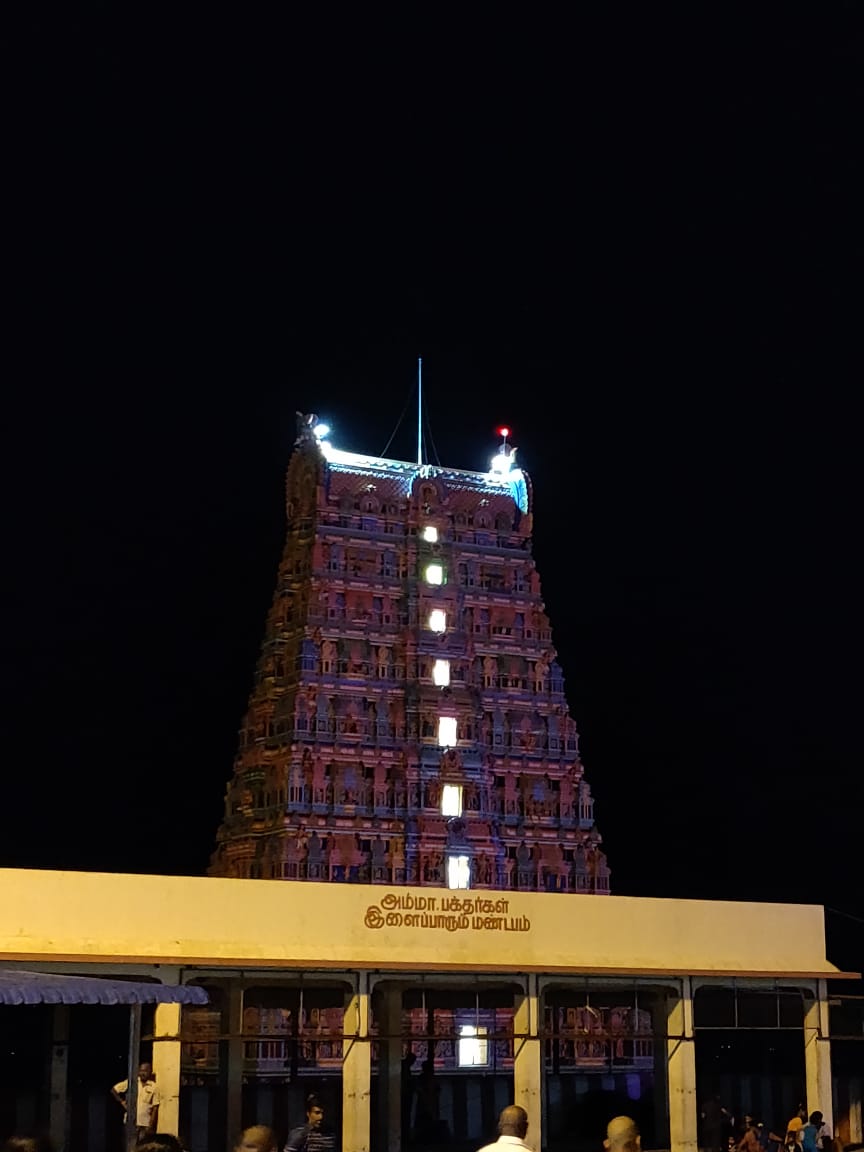
Mythological Serenity: The Quelling of Wrath & Celestial Wedding
Perched gracefully upon the solitary granite outcrop of Tanikasalam (the Hill of Peace) in Tiruvallur district, Thiruthani reigns as the fifth among the sacred *Arupadaiveedu* (the six abodes of Lord Murugan). The name *Thiruthani* translates from classical Tamil as "the sacred place where anger was quelled" (*Thani* meaning to calm, pacify, or cool). Having vanquished the demon-king Surapadman at the stormy seashore of Tiruchendur, Murugan’s righteous warrior fury remained intense.
Seeking tranquility and solitude, the Lord ascended this peaceful northern hillock. In its cool, breeze-swept forests, his warrior spirit calmed into serene, benevolent grace. It was also upon this sacred hill that Murugan encountered and courted Goddess Valli, the beautiful foster daughter of the mountain hunter chieftain Nambirajan. To win her heart, Murugan assumed various disguises—an old ascetic, a hunter, and a weary traveler—assisted by his elder brother Ganesha, who took the guise of a wild elephant to frighten Valli into Murugan’s protective embrace.
The divine wedding (*Valli Kalyanam*) was solemnized on the hilltop with the blessings of the forest tribe and celestial celestials. Consequently, unlike the ascetic renunciation of Palani or the military prowess of Tiruchendur, Thiruthani radiates the energy of marital bliss, joy, spiritual reconciliation, and peaceful fulfillment.
The 365 Sacred Steps: Chronological Ascent of the Solar Year
The physical ascent to the temple represents a profound symbolic journey through cosmic time. The eastern face of Tanikasalam hill is climbed via a monumental flight of 365 broad granite steps, where each individual step symbolizes one day of the solar calendar year. Devotees climb the stairs chanting the sacred *Tiruppukazh* hymns of saint Arunagirinathar, contemplating the preciousness of human time and dedicating each day of their mortal lives to divine purpose.
At the base of the hill sits the sacred *Saravana Poigai* water tank, fed by natural mountain springs. Pilgrims traditionally perform ceremonial ablutions in its cool waters before commencing their upward climb. The steps are paved with polished marble flags and flanked by shaded masonry pavilions (*Mandapams*) erected by Vijayanagara and Pallava chieftains where weary climbers can rest.
An extraordinary festival unique to Thiruthani is the *Padi Thiruvizha* (The Festival of the Steps), celebrated annually on New Year’s Eve (December 31 and January 1). On this day, tens of thousands of devotees light camphor lamps and smear holy turmeric and vermilion on every single one of the 365 steps, climbing the hill while singing classical Tamil devotional hymns to welcome the new year with spiritual awakening.

Hilltop Architecture: Pallava Origins & The Diamond Spear
The antiquity of Thiruthani is affirmed in Sangam literature, with celebrated poems in the *Tirumurukarruppatai* of Nakkirar (c. 3rd century CE) praising the hill under its ancient name *Kundrutoradal*. Inscriptions preserved on the granite basement confirm that structural additions were made by the Later Pallavas during the ninth century, followed by extensive endowments from the Chola kings and the Vijayanagara rulers.
The central sanctum sanctorum (*Garbhagriha*) is an elegant apsidal structure (*Gajaprashta* or elephant-back design), characteristic of early Pallava architecture. Enshrined within is the majestic four-foot granite icon of Lord Subramanya Swamy standing in a posture of serene authority. Uniquely, the deity’s chest features a hollow indent representing the battle wound inflicted by the demon Tarakasura during the mythological war.
Instead of holding a standard metal spear, the deity is adorned with a priceless celestial weapon: the *Vajra Vel*, an exquisite spear encrusted with uncut diamonds and precious rubies. Furthermore, unlike other Murugan temples where the divine mount facing the sanctum is a peacock, at Thiruthani, the mount is a majestic stone elephant known as *Airavata*, presented to Murugan by King Indra as a wedding dowry.
Devotees can ascend Tanikasalam Hill via two modes: (1) The traditional flight of 365 consecrated marble-faced granite steps, where each step represents one day of the solar year (approx. 25–35 minutes on foot); or (2) The motorable Ghat Road leading directly to the upper parking terrace (shared auto-rickshaws and private vehicles operate continuously from 05:30 to 21:00; nominal toll fee applies). The temple sanctum is open from 05:45 to 21:00 daily.
Aadi Krithigai & The Ecstatic Floral Kavadi Festivities
The crowning annual celebration of Thiruthani is the magnificent three-day *Aadi Krithigai* festival, celebrated during the Tamil month of Aadi (July–August) when the Krithigai star ascends the night sky. Over half a million pilgrims converge upon the hill from across northern Tamil Nadu, Andhra Pradesh, and Karnataka.
The signature spiritual offering at Thiruthani during Aadi Krithigai is the *Malar Kavadi* (The Floral Canopy). Unlike the milk or spear kavadis of other hill temples, devotees at Thiruthani craft massive, fragrant arched frames woven entirely with fresh mountain flowers—jasmine, marigold, roses, and fragrant screwpine blossoms—carrying them upon their shoulders up the 365 steps as a cool, fragrant offering to soothe the Lord after his intense mythological battle.
The festival also features the grand *Theppam* (Float Festival), conducted upon the serene waters of the Saravana Poigai tank. The processional icons of Lord Murugan, Valli, and Deivanai are mounted upon an illuminated multi-tiered raft and pulled across the water mirrors under the full moon, accompanied by classical *Nadaswaram* concerts.

Cultural Surroundings, Hill Geography & Borderland Ecology
Thiruthani is situated in the picturesque transitional zone where the flat northern coastal plains of Tamil Nadu meet the rugged granitic hills of the Eastern Ghats. The surrounding landscape is characterized by isolated quartz hills, palmyra palm orchards, and fertile irrigation tanks fed by the seasonal flows of the Kusasthalai River.
The climate is tropical, with warm dry winters from October to March (24°C to 30°C) providing ideal trekking and pilgrimage conditions. The summer months from April to June bring intense thermal heat exceeding 40°C, making the ascent of the marble staircase feasible only during the early morning hours before 09:00 or after sunset.
Just a few kilometres from Thiruthani lie other ancient sacred sites, including the eighth-century *Vaikunta Perumal Temple* and the historic *Nallatur Sri Angalamman Temple*. The town’s location on the cultural border between Tamil and Telugu linguistic traditions gives its local festivals and cuisine a vibrant, cross-cultural flavor.
The uncovered stone terraces of the hilltop complex become hot between 11:30 and 15:30; follow the green coir runners provided across the courtyards. Large troops of wild bonnet macaques inhabit the stairway and outer gopurams; keep food items, fruit bags, and coconut offerings securely concealed in backpacks.
Chennai Suburban Rail Access, Transit Gateways & Itineraries
Thiruthani enjoys outstanding connectivity with Chennai, making it one of the easiest Arupadaiveedu temples to visit on a day trip. Thiruthani Railway Station (TRT) is the western terminus of the Chennai Suburban Railway network (West Line), with local electric trains (EMUs) running every 45 to 60 minutes directly from Chennai Central (Moore Market Complex) into Thiruthani, completing the 84-kilometre journey in about two hours.
Additionally, major long-distance express trains on the Chennai-Mumbai and Chennai-Bengaluru main lines stop at Thiruthani. By road, National Highway 716 connects the town smoothly to Chennai (84 km east via Tiruvallur) and Tirupati (65 km north via Nagari). Chennai International Airport (MAA, 80 km) provides the nearest flight gateway.
Because of its proximity, travelers frequently combine Thiruthani with a morning pilgrimage to *Tirupati Balaji* (65 km north) or the historic silk-weaving center of *Kanchipuram* (42 km south). Clean pilgrim guesthouses maintained by the temple Devasthanam and comfortable private hotels are situated at the foot of the hill along Arakkonam Road.
Curated Field Dossier & Offline Google Maps Pin Pack
Bypass tourist traps with verified local logistics, exact parking coordinates, and field-tested routes.
- ✓Exact GPS Pin Pack: Unmarked parking spots, best dawn photography vantage points, and hidden trailheads.
- ✓Crowd-Avoidance Timing Matrix: Exact hour-by-hour windows to explore with zero tourist chaos.
- ✓Vetted Local Dhabas: 100% authentic, hygiene-checked regional food stops not on commercial maps.
- ✓Scam & Overcharge Shield: Verified taxi rates, auto fares, and local guide fee guidelines.
🛡️ Personally curated by PK Gupta & the Hidden Routes research desk. Delivered directly to your Email & WhatsApp within 4–8 hours.
Frequently Asked Questions
How many steps are there to climb Thiruthani hill on foot?
There are exactly 365 consecrated granite steps leading from the base to the temple summit, where each step represents one day of the solar calendar year. The climb takes approximately 25 to 35 minutes on foot.
Is there a motorable road to reach the top of Thiruthani hill?
Yes, a well-paved motorable Ghat Road leads directly from the hill base to the upper temple terrace parking area. Shared auto-rickshaws, private cars, and taxis operate continuously for visitors who cannot climb the stairs.
Can Thiruthani be easily reached by train from Chennai?
Yes, direct Chennai Suburban EMU trains run from Chennai Central (MMC) to Thiruthani railway station every 45 to 60 minutes throughout the day. The train journey takes about 2 hours and costs less than ₹30.
Why is the divine mount at Thiruthani an elephant instead of a peacock?
At Thiruthani, the divine vehicle facing the sanctum is a stone elephant named Airavata, gifted to Lord Murugan by King Indra as a wedding dowry following his marriage to Goddess Deivanai.
What is the Padi Thiruvizha festival at Thiruthani?
The Padi Thiruvizha (Festival of the Steps) is celebrated on December 31 and January 1 every year. Thousands of devotees light camphor lamps and apply sacred turmeric to each of the 365 steps, climbing the hill while singing devotional hymns to welcome the new year.