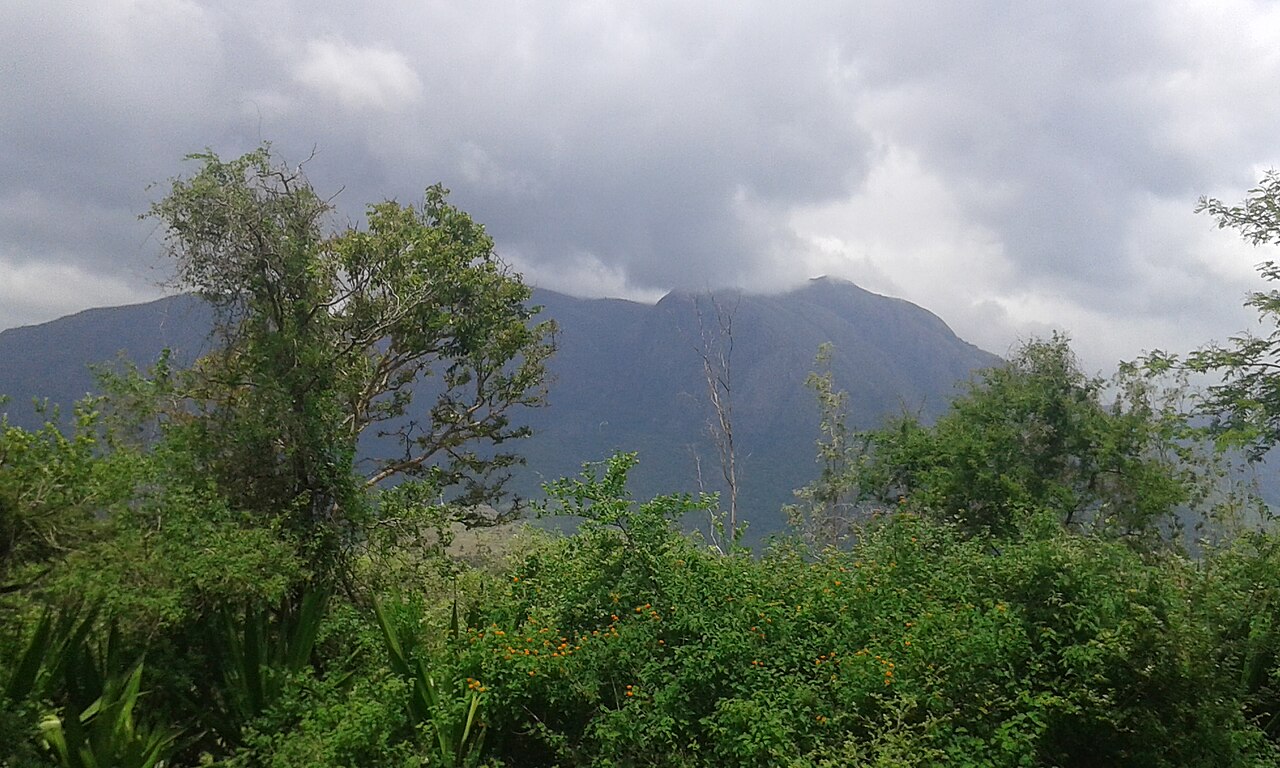
Origins & Ecological Nexus: The Gateway to the Sigur Plateau
Nestled dramatically at the northern base of the soaring Nilgiri mountain wall, Masinagudi lies at an elevation of 940 metres in the rain-shadow trough of the Sigur Valley. Unlike the chilly, mist-shrouded temperate sholas and tea plantations of upper Ooty, Masinagudi presents a wildly contrasting ecological landscape characterized by dry deciduous scrub jungles, open savannah grasslands, thorny acacia forests, and rocky granite outcrops. The village functions as the vital northern buffer zone of the Mudumalai Tiger Reserve and forms an integral component of the UNESCO Nilgiri Biosphere Reserve.
The historical importance of Masinagudi is rooted in its role as a frontier garrison outpost during the eighteenth-century Anglo-Mysore Wars. Hyder Ali and Tipu Sultan fortified the surrounding passes to protect the southern approaches to the Mysore kingdom against British forces operating from the Madras Presidency. The local population includes indigenous Irula and Kurumba forest-dwelling communities whose ancestral hamlets have dotted these scrub forests for millennia, coexisting with apex predators through deep traditional ecological knowledge.
Today, Masinagudi is celebrated as one of the premier wildlife and ecotourism destinations in South India. Surrounded by thousands of square kilometres of contiguous protected forests spanning Bandipur in Karnataka, Wayanad in Kerala, and Mudumalai and Sathyamangalam in Tamil Nadu, it represents one of the few places in peninsular India where mega-herbivores and large carnivores roam in substantial numbers.
The Legendary 36 Hairpin Bends: Engineering the Sigur Ghat
The journey connecting Ootacamund (Ooty) down to Masinagudi via the famous *Kalhatti Ghat Road* (Sigur Ghat) is widely regarded as one of the most thrilling and perilous mountain drives in Asia. Over a distance of just 36 kilometres, the road plunges from the 2,240-metre high plateau of Ooty down to the 940-metre scrub plains of Masinagudi, descending through an astonishing series of thirty-six numbered, consecutive, hair-raising hairpin bends.
Engineered during the British colonial era as an express shortcut between Ooty and Mysore, the gradient of the Kalhatti Ghat is extraordinarily steep, exceeding a 1:8 incline on several stretches. Each bend is chiseled directly out of sheer vertical granite cliffs, offering sensational, vertigo-inducing vistas across the vast plains of the Mysore tableland and the serpentine silver ribbon of the Moyar River far below.
Due to the extreme gradient, descending the 36 hairpin bends requires expert driving technique: drivers must maintain second or first engine gear to allow engine braking, as continuous foot-braking causes catastrophic brake fluid vaporization and brake failure. The Tamil Nadu Police and Forest Department operate a mandatory checkpoint at Kalhatti to inspect vehicle brakes, check tire tread depth, and turn back oversized vehicles.

Moyar River Canyon & The Maravakandy Dam Reservoir
Flowing eastwards along the northern boundary of Masinagudi is the perennial *Moyar River*, which carves a colossal geological fault line known as the *Moyar River Canyon* (or Mysore Ditch). This dramatic gorge, plunging over 260 metres (850 feet) into the earth, separates the southern Nilgiri highland plateau from the northern Mysore plateau, functioning as a natural physical boundary between Tamil Nadu and Karnataka.
The gorge is a critical lifeline for wildlife throughout the scorching summer months (March to May), when water holes across the surrounding savannah dry up. Herds of hundreds of wild elephants, gaurs (Indian bison), sambar deer, spotted deer (chital), and wild boars congregate along the rocky riverbanks to drink and bathe in the cool mountain currents. The canyon walls provide nesting ledges for critically endangered Indian white-rumped vultures and long-billed vultures.
Located just 6 kilometres from Masinagudi village lies the scenic *Maravakandy Dam*, constructed in 1951 to feed the Pykara hydro-electric power network. The tranquil reservoir is encircled by dense bamboo thickets and elephant grass. A dedicated forest watchtower on the reservoir bank allows travelers to observe wild elephants wading through the shallows, while marsh crocodiles (*Crocodylus palustris*) bask on the sunny mudflats.
The steep Sigur Ghat Road (Kallar-Masinagudi road with 36 hairpin bends) is strictly restricted to light private passenger vehicles and authorized local transport; heavy commercial vehicles must detour via Gudalur. Commercial wildlife safaris inside the core tiger reserve can only be booked through official Tamil Nadu Forest Department counters at Theppakadu reception center (open 06:00–09:00 and 15:00–18:00; bus and jeep safari options available).
The Sigur Elephant Corridor: The Critical Ecological Lifeline
Masinagudi occupies international prominence in wildlife conservation as the core anchor of the *Sigur Elephant Corridor*. This narrow ecological land bridge connects the moist, high-altitude rainforests of the Western Ghats with the dry deciduous hills of the Eastern Ghats (the Biligirirangana and Sathyamangalam ranges). It allows genetic flow between India’s largest elephant population (estimated at over 6,000 individuals) and prevents dangerous genetic inbreeding.
In recent years, the Supreme Court of India and the Tamil Nadu Forest Department instituted landmark legal protections to safeguard this vital corridor from commercial encroachment, ordering the demolition of unauthorized luxury tourist resorts and fencing that blocked traditional elephant migration trails. Today, wild herds move freely along these ancestral pathways under the vigilant monitoring of forest anti-poaching watchers.
For ornithologists, Masinagudi is a dream destination. The transitional dry scrub habitat supports over 250 species of birds, including the Malabar grey hornbill, the blue-bearded bee-eater, the crested serpent eagle, the Changeable hawk-eagle, the Sirkeer malkoha, the Indian pitta, and the nocturnal Jerdon’s nightjar whose eerie calls resonate through the acacia woods after nightfall.

Wildlife Safaris: Tigers, Leopards & Forest Enclaves
Wildlife safaris in the Masinagudi region are organized through the Mudumalai Tiger Reserve headquarters at Theppakadu, located 7 kilometres northwest of the village. The reserve operates both open-topped four-wheel-drive jeeps and high-clearance safari minibuses twice daily—in the early morning (06:00 to 09:00) and late afternoon (15:00 to 18:00)—venturing deep into the designated tourism zones of Kargudi and Theppakadu.
Traversing the forest tracks flanked by towering teak trees (*Tectona grandis*) and axlewood trees (*Anogeissus latifolia*), safari-goers frequently encounter massive herds of spotted deer, playful troops of grey langurs, solitary wild tuskers, and formidable Indian gaurs whose muscular black bodies and white-stockinged legs cut an imposing figure in the bamboo thickets. With a healthy tiger density of over 100 individuals across the larger biosphere, fortunate travelers may even spot the striped monarch of the Indian jungle.
A visit to Theppakadu must also include the historic *Theppakadu Elephant Camp*, established in 1927, making it the oldest elephant training camp in Asia. Here, visitors can watch trained captive elephants (*Kumkis*) receive their evening nutritional feeding of ragi balls, jaggery, and sugarcane, and learn about the indigenous mahouts of the Kurumba tribe who have cared for these gentle giants across generations.
All vehicular traffic on the Sigur Ghat and Moyar road is strictly prohibited between 21:00 and 06:00 by order of the Forest Department to prevent wildlife casualties. Never walk alone outside resort boundaries after dusk. Wild elephants, sloth bears, and leopards frequently cross estate roads; maintain silence, never honk, and remain inside your vehicle.
Transit Access, Responsible Eco-Lodges & Travel Planning
Masinagudi is strategically situated between two major urban gateways. From Mysuru (90 km north), the drive takes approximately 2 hours via Nanjangud, Gundlupet, and the Bandipur-Mudumalai highway (NH-766 and NH-181). From Bengaluru (235 km north), the journey takes around 5 hours via the smooth Bengaluru-Mysuru Expressway. From Ooty (36 km south), the route descends the dramatic Kalhatti Ghat in about 1 hour.
The nearest commercial airport is Mysore Airport (MYQ, 85 km), while Coimbatore International Airport (125 km) and Kempegowda International Airport Bengaluru (280 km) offer extensive global flight networks. Mysuru Junction (90 km) provides the nearest major railway hub.
Accommodations in Masinagudi are oriented toward responsible nature lovers and wildlife enthusiasts. Registered eco-resorts, rustic treehouse lodges, and jungle homestays are located along the Bokkapuram and Singara roads, offering stunning views of the towering Nilgiri mountain wall. Visitors should allocate at least two to three days to experience morning and evening forest safaris, visit the elephant camp, and enjoy unhurried birdwatching in the scrub wilderness.
Curated Field Dossier & Offline Google Maps Pin Pack
Bypass tourist traps with verified local logistics, exact parking coordinates, and field-tested routes.
- ✓Exact GPS Pin Pack: Unmarked parking spots, best dawn photography vantage points, and hidden trailheads.
- ✓Crowd-Avoidance Timing Matrix: Exact hour-by-hour windows to explore with zero tourist chaos.
- ✓Vetted Local Dhabas: 100% authentic, hygiene-checked regional food stops not on commercial maps.
- ✓Scam & Overcharge Shield: Verified taxi rates, auto fares, and local guide fee guidelines.
🛡️ Personally curated by PK Gupta & the Hidden Routes research desk. Delivered directly to your Email & WhatsApp within 4–8 hours.
Frequently Asked Questions
How dangerous is the drive down the 36 hairpin bends of the Sigur Ghat?
The Sigur Ghat (Kalhatti Ghat) is very steep (1:8 gradient) and can be dangerous for inexperienced drivers. Descending vehicles must strictly remain in second or first gear to utilize engine braking and avoid brake fluid boiling. Heavy vehicles and commercial buses are prohibited; drivers must be cautious and maintain low speeds.
How can one book a wildlife safari in Masinagudi?
Official safaris into the Mudumalai Tiger Reserve must be booked in person at the Forest Department reception center at Theppakadu (7 km from Masinagudi). Morning safaris operate from 06:00 to 09:00 and evening safaris from 15:00 to 18:00 using forest department buses and jeeps.
Are there night driving restrictions in Masinagudi?
Yes, all vehicular traffic on roads passing through the wildlife corridor—including the Kalhatti Ghat and the Moyar road—is strictly prohibited between 21:00 and 06:00 to protect nocturnal wildlife and migrating elephant herds.
What wildlife species can be seen in and around Masinagudi?
Commonly spotted wildlife includes Asian elephants, Bengal tigers, leopards, Indian gaurs (bison), spotted deer (chital), sambar deer, sloth bears, dholes (wild dogs), stripe-necked mongooses, and over 250 species of birds including hornbills and eagles.
What is the best season to visit Masinagudi for wildlife sightings?
The dry winter and summer months from December to May offer the best wildlife sightings, as animals congregate around the perennial water holes of the Moyar River and undergrowth is thinner. The post-monsoon period (October–November) offers lush green scenery and excellent birding.