1. Overview & Archaeological Significance
Warangal Fort, situated in the historic city of Warangal in Telangana, is universally renowned as the imperial heart, military citadel, and architectural crowning glory of the Kakatiya dynasty. Known in ancient inscriptions as *Orugallu* (meaning 'A Single Rock', in reference to the massive granite hillock around which the city arose) or *Ekashila Nagaram*, the fortress was initiated in 1199 CE by the visionary monarch King Ganapati Deva and brought to triumphant completion by his daughter, the legendary warrior queen Rani Rudrama Devi (reigned 1262–1289 CE), one of the few women in world history to rule an empire in her own right.
Located in the Warangal district of Telangana, Warangal Fort Kakatiya Keerti Toranas is centrally protected by the Archaeological Survey of India (ASI) as an irreplaceable landmark of South Asian civilization. Recognized for its imperial kakatiya monolithic granite architecture, triumphal keerti toranas, concentric triple-ring citadels & svayambhu temple plinth, the site provides profound insights into the technological prowess, cosmological beliefs, and cultural aesthetics of its ancient builders.
2. Dynastic Origins, Royal Patrons & Chronology
Under Rani Rudrama Devi and her grandson King Prataparudra II, Warangal was transformed into an impregnable military metropolis defended by three concentric rings of fortified walls spanning a circuit of 19 kilometers: an outer earthen rampart, a middle stone wall of interlocking granite boulders, and an inner royal citadel. When Italian traveler Marco Polo visited the Kakatiya realm in 1293 CE, he wrote with profound admiration of the kingdom's immense diamond wealth, textile refinement, and Rudrama Devi's enlightened sovereign rule.
In 1323 CE, following repeated sieges, the fortress was besieged and breached by the armies of the Delhi Sultanate under Prince Juna Khan (later Sultan Muhammad bin Tughluq), who dismantled the central Svayambhu Shiva temple. However, the four colossal, freestanding monolithic granite gateways—the *Keerti Toranas*—survived intact. Conserved today as a Monument of National Importance by the Archaeological Survey of India (ASI), the Kakatiya Kala Thoranam is so iconic that its stylized silhouette was officially adopted as the permanent State Emblem of Telangana upon the state's formation in 2014.
3. Structural Engineering & Architectural Design
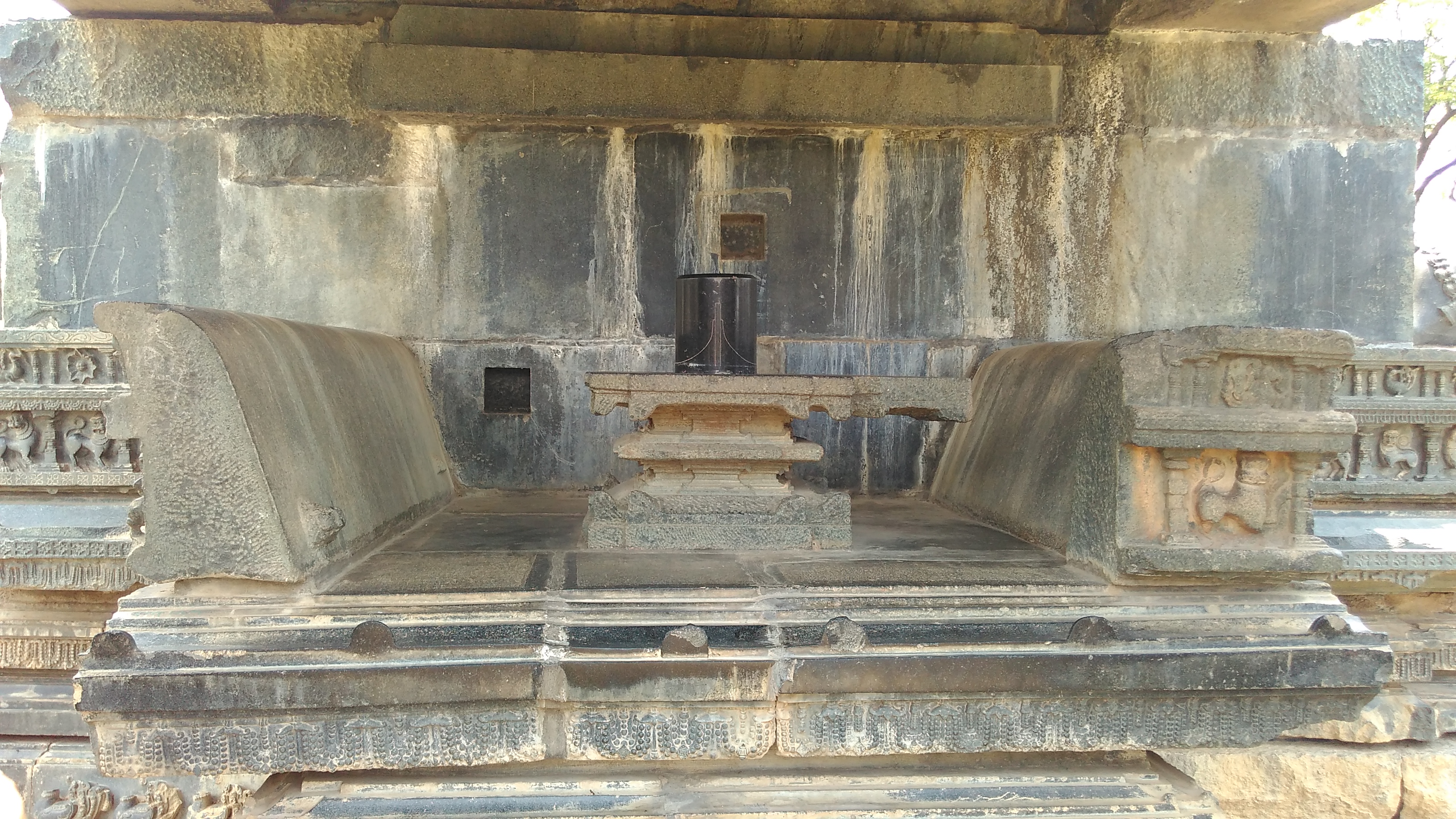
The architectural centerpiece of Warangal Fort is the central archaeological park, which preserves the foundation plinth of the colossal Svayambhu Shiva Temple and the four freestanding *Keerti Toranas* (Gateways of Glory) precisely oriented toward the four cardinal directions (North, South, East, and West).

Each Keerti Torana stands nearly 33 feet (10 meters) tall, carved entirely from fine-grained monolithic grey granite. The archways consist of two massive vertical pillars supporting a multi-tiered horizontal lintel. The pillars are embellished with delicate scrollwork, beaded garlands, and bracket figures. The lintel features a magnificent cusped arch adorned with mythical sea-monsters (*Makaras*) spouting cascading floral arabesques, surmounted by the double-headed eagle (*Gandaberunda*) and sacred swans (*Hamsas*).
Scattered across the manicured lawns are dozens of recovered museum-grade black basalt sculptures: life-sized *Nandi* bulls with polished mirror surfaces, colossal guardian figures (*Dvarapalas*), dancing Apsaras with musical instruments, and ceiling panels depicting the churning of the cosmic ocean. Nearby within the fort walls stands the historic *Kush Mahal*, an imposing 14th-century slanted-wall administrative audience hall erected during the Tughluq occupation.
4. Archaeological Excavations, Epigraphy & Conservation
The ASI stabilized the four freestanding monolithic Keerti Torana gateways and pointed ancient stone joints.
Archaeological clearance mapped the complete foundation footprint of the multi-pillared Svayambhu Shiva Temple.
Developed manicured ornamental gardens, paved pedestrian trails, and installed high-definition evening sound-and-light show infrastructure.
Entry fee is ₹25 for Indian citizens, SAARC & BIMSTEC visitors; ₹300 for foreign tourists. Video cameras incur nominal charges.
5. Master Highlights & Archaeological Marvels
Official Emblem of Telangana: The celebrated four Kakatiya Keerti Toranas chosen as the permanent state symbol.

Rani Rudrama Devi's Citadel: Capital of the legendary 13th-century warrior queen who defeated Yadava and Pandyas.
Three Concentric Ring Forts: An extraordinary 19-km defensive circuit of earthen and stone ramparts.
6. Visiting Hours, Entry Permits & Visitor Guidelines
Open daily from 9:00 AM to 6:00 PM. A complete exploration of the central toranas, Kush Mahal, and museum takes 2 to 3 hours.
The daily evening sound-and-light show (in Telugu and English) brings the dramatic history of Rani Rudrama Devi to life.
Do not touch, climb on, or deface the ancient 800-year-old monolithic granite Keerti Torana pillars.
Commercial video filming and drone flights require advance authorization from the ASI Hyderabad Circle.
The archaeological park is open and spacious; wear comfortable walking shoes and carry sun protection during midday.
7. Site Museum & Interpretation Centers
An open-air sculpture gallery inside the fort displays recovered black basalt icons, inscriptions, and hero stones.
The famous 12th-century Thousand Pillar Temple at Hanamkonda is located 8 km to the northwest.
8. Climate, Best Seasons & Ideal Visiting Hours
October through March is the premier visiting season, with pleasant daytime temperatures between 16°C and 28°C.
Winter months offer clear skies and comfortable breezes ideal for exploring both the fort and nearby temple monuments.
9. Transit Logistics, Rail, Air & Road Access
Located in Warangal city, northern Telangana, approximately 145 km northeast of Hyderabad.
Warangal and Kazipet are major railway junctions on the Indian railway network; accessible from Hyderabad by road in 2.5 hours.
10. Regional Heritage Circuits & Sibling Monuments
Warangal Fort is the imperial anchor of the Kakatiya Heritage Trail:
Sacred Architecture & Darshan Protocol Guide
Maximize your spiritual journey: VIP vs Sugam Darshan line reality, locker rules, and historical truth.
- ✓Sugam Darshan & Token Blueprint: Accurate online booking rules, pre-dawn passes, and entry lane realities.
- ✓Zero Commercialization Guard: Avoid bogus intermediaries, fake priest fees, and paid blessing scams.
- ✓Locker, Footwear & Mobile Safety: Verified cloakroom locations, authorized phone lockers, and security rules.
- ✓Hidden Architectural Marvels: Inscriptions, subterranean sanctums, and forgotten stone carvings.
🛡️ Personally curated by PK Gupta & the Hidden Routes research desk. Delivered directly to your Email & WhatsApp within 4–8 hours.
11. Frequently Asked Questions
Why is the Keerti Torana of Warangal Fort famous across India?
The Keerti Torana is famous as a masterpiece of Kakatiya stone engineering and serves as the official State Emblem of Telangana.
Who was Rani Rudrama Devi?
Rani Rudrama Devi (1262–1289 CE) was one of the few sovereign ruling queens in Indian history, who governed the Kakatiya Empire with great military and administrative success.
How many Keerti Toranas are there at Warangal Fort?
There are four colossal monolithic granite Keerti Toranas, precisely aligned toward the four cardinal directions (North, South, East, and West).
What is the Kush Mahal inside Warangal Fort?
Kush Mahal is an imposing 14th-century rectangular audience hall built with sloping walls during the Tughluq occupation after the fall of Warangal.
How far is Warangal Fort from Hyderabad?
Warangal Fort is located approximately 145 km northeast of Hyderabad, an easy 2.5 to 3 hour drive via the National Highway 163 expressway.