1. Overview & Archaeological Significance
Vikramashila Mahavihara, situated near Antichak village in the Kahalgaon sub-division of Bhagalpur district in eastern Bihar, was one of the two most illustrious Buddhist universities in India alongside Nalanda. Founded in the late 8th century CE (c. 783–820 CE) by King Dharmapala of the Pala Dynasty—who bore the royal title *Vikramashila* ('He of Resolute Character')—the university was specifically established to serve as the international epicenter of Tantric Buddhism (Vajrayana), logic, metaphysics, astronomy, and grammar.
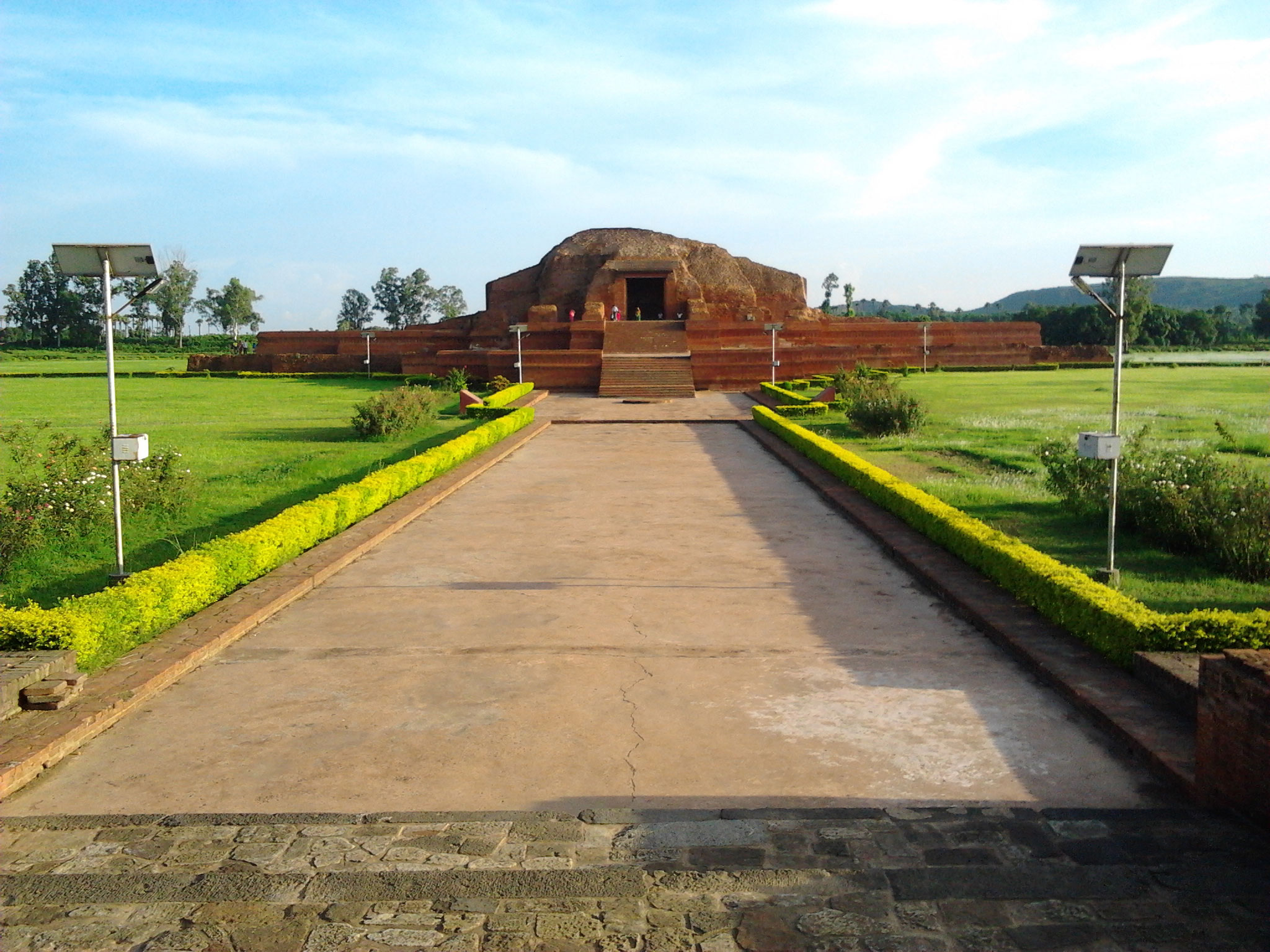
Located in the Bhagalpur district of Bihar, Vikramashila Mahavihara Ruins is centrally protected by the Archaeological Survey of India (ASI) as an irreplaceable landmark of South Asian civilization. Recognized for its colossal cruciform brick stupa with terracotta plaques & quadrangular 208-cell monastery, the site provides profound insights into the technological prowess, cosmological beliefs, and cultural aesthetics of its ancient builders.
2. Dynastic Origins, Royal Patrons & Chronology
Vikramashila was governed by a sophisticated academic council headed by six 'Gate Scholars' (*Dwarapanditas*), who guarded the intellectual gates by examining prospective candidates in rigorous public debates. The most revered luminary of Vikramashila was the celebrated Acharya Atisa Dipankara Srijnana (982–1054 CE), who served as the university's Chancellor before embarking on his historic mission across the Himalayas to Tibet in 1042 CE, where he reformed Tibetan Buddhism and founded the Kadam tradition.
The university enjoyed direct royal patronage from the Pala kings, housing over 1,000 monks and welcoming hundreds of scholars from Tibet, Nepal, and Central Asia. The university was tragically destroyed around 1200 CE by the invading forces of Bakhtiyar Khalji, who mistook the fortified brick walls and towers of the monastery for a military fortress. Systematic excavations were conducted between 1960 and 1969 by Patna University and between 1972 and 1982 by the ASI.
3. Structural Engineering & Architectural Design
The architectural plan of Vikramashila is monumental in scale and geometric symmetry. The entire establishment is enclosed within a colossal square boundary wall measuring 330 metres (1,080 feet) on each side. Built of solid kiln-fired red bricks, the perimeter wall is lined with 208 individual residential monk cells (52 on each side), each measuring roughly 4 x 4 metres and fronted by a continuous pillared verandah facing a massive central courtyard.

Rising majestically at the exact mathematical center of the vast quadrangle is the central stupa—a colossal cruciform structure rising 15 metres high across two stepped terraced levels. Built on a cross-shaped plan with four projecting arms oriented toward the cardinal directions, each arm terminates in a vaulted shrine chamber housing a colossal seated stone image of one of the Dhyani Buddhas (Akshobhya, Ratnasambhava, Amitabha, Amoghasiddhi).
The plinth of the stupa is decorated with an extraordinary frieze of over 400 molded terracotta plaques—a hallmark of Pala folk and court art. The plaques portray Buddhist deities (Tara, Avalokiteshvara, Manjushri), Shaivite and Vaishnavite figures, yogis in ascetic postures, musicians, dancers, warriors, animals, and charming moral fables from the Panchatantra.
4. Archaeological Excavations, Epigraphy & Conservation
Excavations between 1972 and 1982 by the ASI under Dr. B.S. Verma uncovered the grand Northern Gateway flanked by massive circular bastions, the underground vaulted meditation chambers, and the ancient library building equipped with an air-cooling water reservoir.
The excavations yielded hundreds of exquisite Pala bronze sculptures of Maitreya, Tara, and Jambhala, silver coins of the Pala kings, inscribed stone stelae, and clay sealings reading *Srimad-Vikramashila-Mahavihariya-Arya-Bhikshu-Sanghasya*.
Conservation works by the ASI have preserved the lower terraced pradakshina path and restored damaged terracotta plaques using authentic clay casting methods.
Vikramashila is a Centrally Protected Monument under the Archaeological Survey of India (Patna Circle). Entry tickets booked online cost ₹20 for Indian, SAARC, and BIMSTEC visitors (₹25 at counter), and ₹250 for foreign tourists (₹300 at counter).
5. Master Highlights & Archaeological Marvels
Visitors can climb the broad stone stairs to the upper circumambulatory terrace of the central cruciform stupa, viewing the four cardinal shrine chambers.

The extensive frieze of Pala terracotta plaques along the stupa plinth provides hours of captivating artistic and cultural study.
Walking along the northern gateway and inspecting the endless rows of residential cells gives a profound sense of the immense scale of ancient university living.
6. Visiting Hours, Entry Permits & Visitor Guidelines
Vikramashila ruins are open daily from sunrise to sunset (6:00 AM to 6:00 PM). Accessible all days of the year.
Online ticket costs are ₹20 for Indian and SAARC visitors, and ₹250 for foreign tourists. Children under 15 enter free. The on-site museum is open 10:00 AM to 5:00 PM, closed on Fridays.
Visitors must not touch or remove the delicate terracotta plaques on the stupa plinth.
Personal photography without tripods is allowed; drones require prior written ASI authorization.
Vikramashila is a protected national monument of supreme cultural importance. Defacing ancient bricks or terracotta plaques is punishable under the AMASR Act 1958 with imprisonment.
7. Site Museum & Interpretation Centers
The ASI Archaeological Site Museum at Vikramashila houses over 500 antiquities, including the famous bronze images of Tara, Buddha, and Mahakala.
The museum also exhibits stone carvings, terracotta seals, iron implements, and educational panels on Atisa Dipankara's journey to Tibet. Closed on Fridays.
8. Climate, Best Seasons & Ideal Visiting Hours
The best time to visit Vikramashila is from October to March, with pleasant winter weather and temperatures between 15°C and 27°C.
Summers (April to June) are hot and humid. Late afternoons offer golden sunlight on the red-brick stupa.
9. Transit Logistics, Rail, Air & Road Access
Vikramashila is located at Antichak, 13 kilometres northeast of Kahalgaon railway station and 40 kilometres east of Bhagalpur in Bihar.
Kahalgaon and Bhagalpur Junction have direct express trains to Patna, Kolkata, and Delhi. The nearest airport is Patna Airport (PAT, 260 km) or Bagdogra Airport (IXB, 240 km).
10. Regional Heritage Circuits & Sibling Monuments
Vikramashila anchors the Eastern Bihar & Bengal Buddhist Heritage Trail:
Sacred Architecture & Darshan Protocol Guide
Maximize your spiritual journey: VIP vs Sugam Darshan line reality, locker rules, and historical truth.
- ✓Sugam Darshan & Token Blueprint: Accurate online booking rules, pre-dawn passes, and entry lane realities.
- ✓Zero Commercialization Guard: Avoid bogus intermediaries, fake priest fees, and paid blessing scams.
- ✓Locker, Footwear & Mobile Safety: Verified cloakroom locations, authorized phone lockers, and security rules.
- ✓Hidden Architectural Marvels: Inscriptions, subterranean sanctums, and forgotten stone carvings.
🛡️ Personally curated by PK Gupta & the Hidden Routes research desk. Delivered directly to your Email & WhatsApp within 4–8 hours.
11. Frequently Asked Questions
Who founded Vikramashila University and why?
Vikramashila was founded in the late 8th century CE by King Dharmapala of the Pala Dynasty to serve as a premier international university dedicated to Buddhist philosophy, logic, and especially Tantric Vajrayana Buddhism.
Who was the most famous scholar from Vikramashila?
The most famous scholar was Acharya Atisa Dipankara Srijnana (982–1054 CE), who served as the university's Chancellor before traveling to Tibet in 1042 CE to reform Tibetan Buddhism.
What is the architectural plan of the central stupa at Vikramashila?
The central stupa has a unique cruciform (cross-shaped) plan rising 15 metres high across two stepped terraces, with four cardinal shrine chambers housing colossal seated statues of Dhyani Buddhas.
What are the visiting hours and entry fees for Vikramashila?
The ruins are open daily from sunrise to sunset. Online tickets are ₹20 for Indian, SAARC, and BIMSTEC visitors, and ₹250 for foreign tourists. Children under 15 enter free. The museum is closed on Fridays.
How can I travel to Vikramashila from Bhagalpur?
Vikramashila is 40 km east of Bhagalpur city via Kahalgaon. You can take a taxi, private car, or local train to Kahalgaon (13 km from the site) in about 1.5 hours.