1. Overview & Archaeological Significance
Rohtasgarh Fort (Rohtas Fort), majestically crowning a sheer 1,500-foot-high (450-metre) plateau in the Kaimur Range overlooking the Son River in Rohtas district of southwestern Bihar, is the largest and most extensive hill fortress in eastern India. Ancient traditions trace its foundation to Prince Rohitashwa, son of the legendary truth-teller King Harishchandra of the Solar Dynasty (Suryavansha). Over centuries, this natural mountain redoubt was held by the medieval Kharwar chieftains, the Chero kings, and the Delhi Sultanate.
Located in the Rohtas district of Bihar, Rohtasgarh Fort Bihar is centrally protected by the Archaeological Survey of India (ASI) as an irreplaceable landmark of South Asian civilization. Recognized for its kaimur plateau fortification, indigenous dressed sandstone, rajput-mughal palaces & jami masjid, the site provides profound insights into the technological prowess, cosmological beliefs, and cultural aesthetics of its ancient builders.
2. Dynastic Origins, Royal Patrons & Chronology
In 1538 CE, the Afghan visionary Sher Shah Suri captured Rohtasgarh from the Hindu king through a legendary stratagem: he requested permission to shelter the women of his royal household inside the fort, but smuggled hundreds of armed soldiers concealed in covered palanquins (*dolis*), seizing the citadel without a battle. Sher Shah constructed massive defensive walls and the Jami Masjid. Later, from 1587 to 1607 CE, Mughal general Raja Man Singh I of Amer served as Governor of Bengal and Bihar, choosing Rohtasgarh as his viceregal headquarters and building a magnificent royal palace complex that rivaled Amer.
Centrally protected by the Archaeological Survey of India (ASI), Rohtasgarh Fort encloses an astonishing area of over 42 square kilometres (16 square miles) with a perimeter of 45 kilometres, making it one of the largest plateau fortresses on earth.
3. Structural Engineering & Architectural Design
Rohtasgarh Fort spans an enormous triangular plateau rising 1,500 feet sheer from the plains, bounded by vertical cliffs that provide natural defenses on all sides. It is defended by 84 passage gates, the primary entry being the formidable Medini Pol and Chhatri Pol.

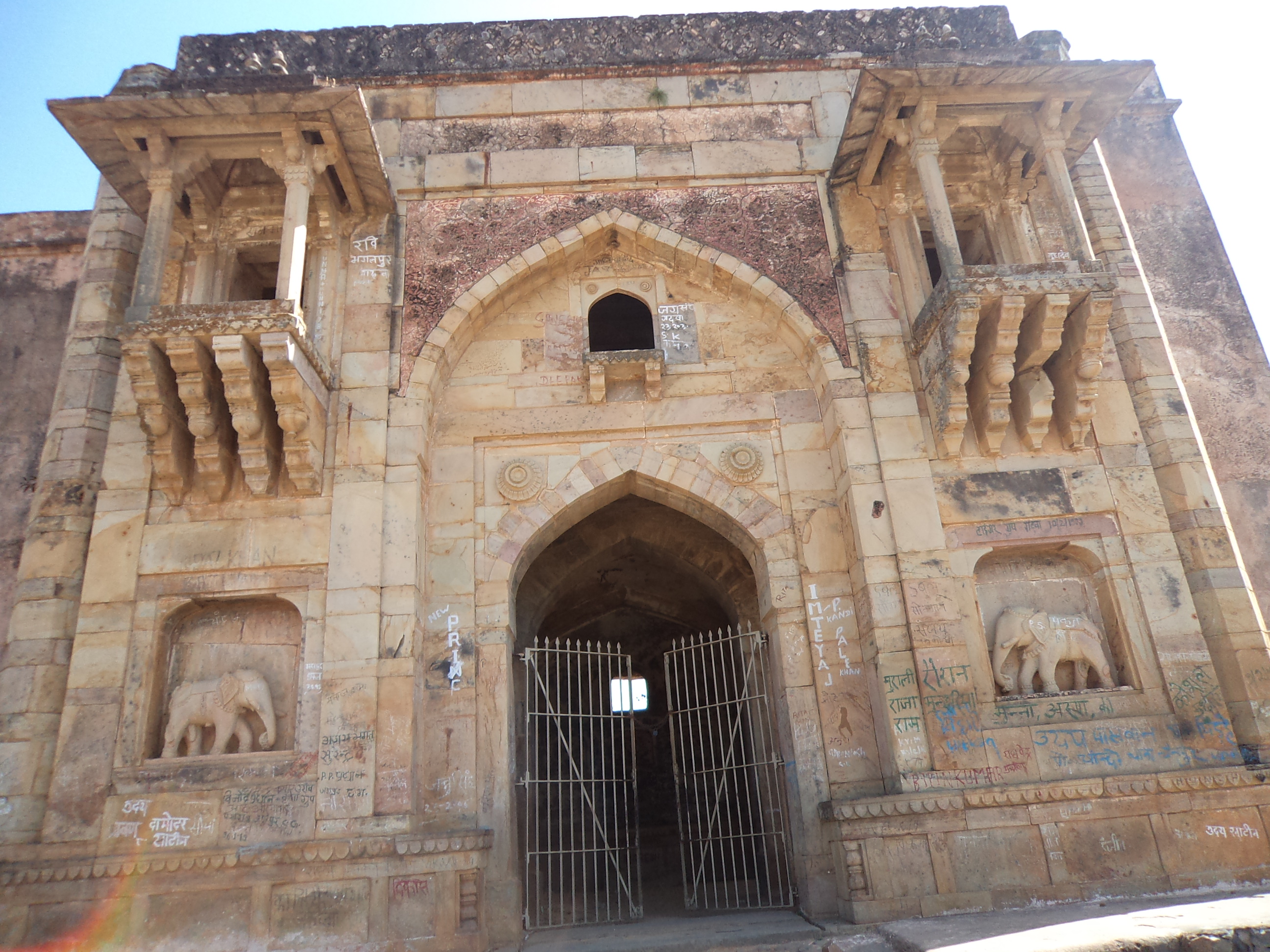
The palace quarter is dominated by *Raja Man Singh's Palace*, entered through the *Hathi Pol* (Elephant Gate), guarded by two life-sized carved stone elephants. Built of dressed grey and yellow sandstone, the palace features three-storeyed pavilions, the *Shish Mahal*, the *Phool Mahal*, and overhanging *jharokhas* commanding dizzying views down into the deep gorge.
Within the vast enclosure sit the 1543 CE *Jami Masjid* built by Haibat Khan; the *Chunhar Burj*; the ancient *Rohtasan Temple* dedicated to Lord Shiva; and the *Harishchandra Temple*, alongside deep natural water reservoirs like the Phuldhar and Chor Khirki springs.
4. Archaeological Excavations, Epigraphy & Conservation
The ASI Patna Circle executed structural consolidation on the Hathi Pol gateway and restored the stone jalis of Raja Man Singh's palace.
Archaeological clearance around the Rohtasan Temple plinth recovered 11th-century stone inscriptions recording the Kharwar dynasty.
Surveys documented ancient rock paintings and megalithic stone alignments on the southern edges of the Kaimur plateau.
Rohtasgarh Fort is an ASI protected monument with free entry for all visitors. Hiring a local village guide at the base in Akbarpur is highly recommended for navigating the extensive plateau trails.
5. Master Highlights & Archaeological Marvels
Walking through the colossal Hathi Pol into Raja Man Singh's 16th-century palace, discovering Rajput architecture in the heart of Bihar.

Standing at the edge of the 1,500-foot vertical cliff at Hanging Point, gazing across the vast Son River basin.
Exploring the serene 1543 CE Jami Masjid, built with fine stone domes during the reign of Sher Shah Suri.
6. Visiting Hours, Entry Permits & Visitor Guidelines
Rohtasgarh Fort is open daily from 6:00 AM to 5:30 PM throughout the year. Visitors must begin descent before sunset.
Entry is completely free. The hike from the base village of Akbarpur involves a 2-hour trek up the historic stone pathway.
Wear sturdy trekking boots and carry ample drinking water and provisions as there are no commercial shops on the 42-sq-km plateau.
Do not wander off main trails into dense forest areas bordering the Kaimur Wildlife Sanctuary. Personal photography is permitted.
Rohtasgarh Fort is a Centrally Protected Monument under the AMASR Act 1958. Defacing ancient palace walls or stone carvings attracts severe legal penalties.
7. Site Museum & Interpretation Centers
The nearby Sasaram archaeological sites (50 km away) house the Tomb of Sher Shah Suri and Hasan Khan Suri with interpretive exhibits.
ASI interpretive boards at the Medini Pol outline the history of Prince Rohitashwa, Sher Shah Suri, and Raja Man Singh.
8. Climate, Best Seasons & Ideal Visiting Hours
The best time to visit Rohtasgarh Fort is from October to March, with cool breezes, sunny skies, and pleasant temperatures between 14°C and 26°C.
Winter mornings offer spectacular views of mist rolling across the Son River valley below the 1,500-foot precipice.
9. Transit Logistics, Rail, Air & Road Access
Rohtasgarh Fort is approached from Akbarpur village, 40 km south of Dehri-on-Sone and 55 km from Sasaram in Rohtas district.
Dehri-on-Sone Railway Station (40 km) and Sasaram Junction (55 km) connect all major express trains on the Grand Chord line. Gaya Airport (GAY, 140 km) is the nearest airport.
10. Regional Heritage Circuits & Sibling Monuments
Rohtasgarh Fort anchors the South Bihar Mountain Forts & Grand Trunk Heritage Trail:
Sacred Architecture & Darshan Protocol Guide
Maximize your spiritual journey: VIP vs Sugam Darshan line reality, locker rules, and historical truth.
- ✓Sugam Darshan & Token Blueprint: Accurate online booking rules, pre-dawn passes, and entry lane realities.
- ✓Zero Commercialization Guard: Avoid bogus intermediaries, fake priest fees, and paid blessing scams.
- ✓Locker, Footwear & Mobile Safety: Verified cloakroom locations, authorized phone lockers, and security rules.
- ✓Hidden Architectural Marvels: Inscriptions, subterranean sanctums, and forgotten stone carvings.
🛡️ Personally curated by PK Gupta & the Hidden Routes research desk. Delivered directly to your Email & WhatsApp within 4–8 hours.
11. Frequently Asked Questions
How large is Rohtasgarh Fort?
Rohtasgarh Fort spans a staggering 42 square kilometres (16 square miles) atop a 1,500-foot-high plateau with a perimeter of 45 kilometres, making it the largest plateau fort in eastern India.
How did Sher Shah Suri capture Rohtasgarh Fort in 1538 CE?
Sher Shah requested shelter for the women of his royal household, but sent hundreds of armed Afghan soldiers hidden inside covered palanquins (dolis), capturing the fortress without a frontal siege.
Who built the grand palace inside Rohtasgarh Fort?
Raja Man Singh I of Amer, the Mughal Governor of Bengal and Bihar under Emperor Akbar, built the grand palace complex between 1587 and 1607 CE.
What are the visiting hours and entry fees?
Open daily from 6:00 AM to 5:30 PM with free entry for all visitors.
How do visitors reach the top of Rohtasgarh Fort?
Visitors hike up a scenic 2-hour stone staircase trail from the base village of Akbarpur, ascending 1,500 feet to the plateau gate.