1. Overview & Archaeological Significance
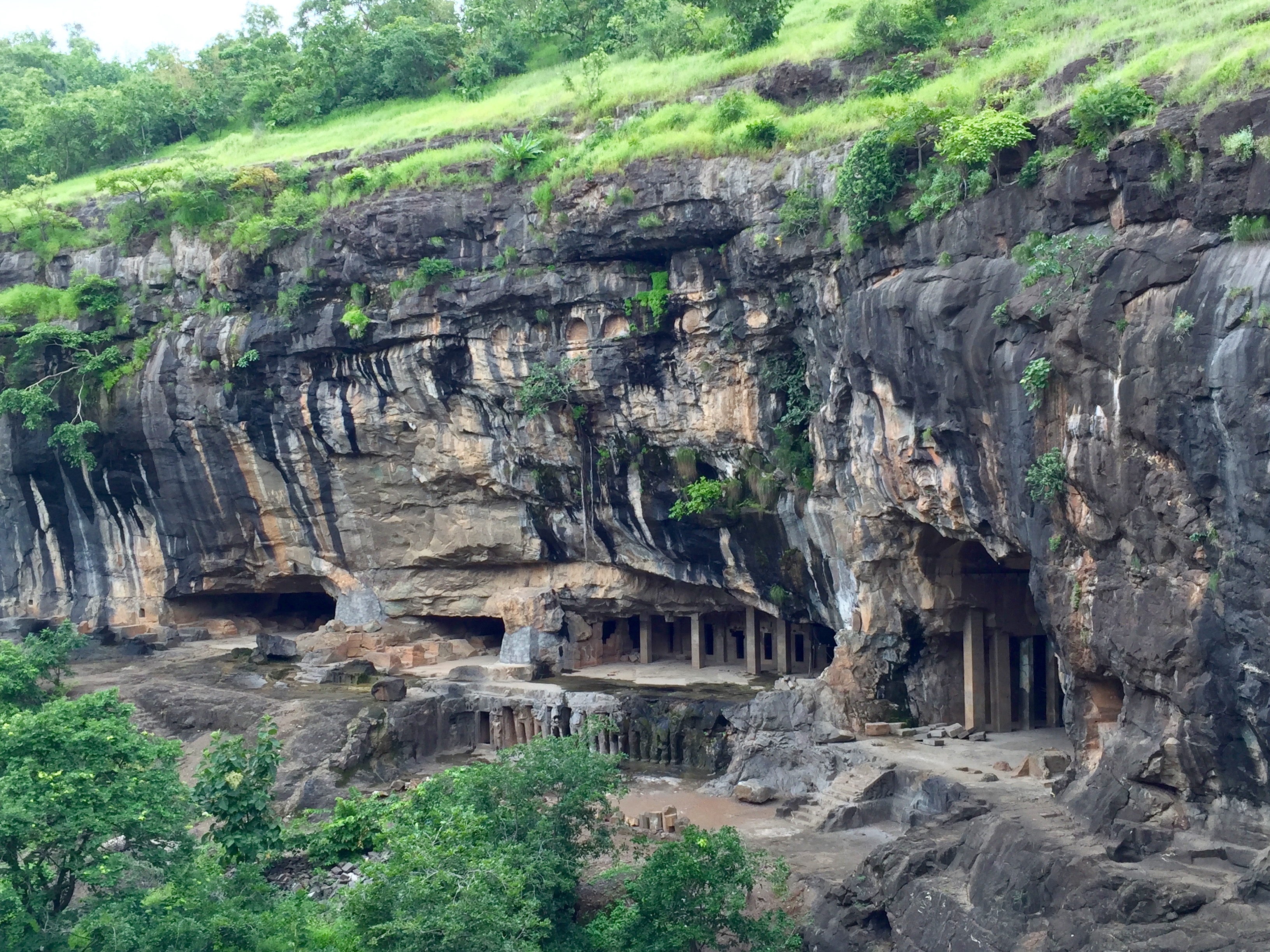
Pitalkhora Caves, nestled deep within a secluded, crescent-shaped volcanic gorge of the Satmala Hills near Kannad in Chhatrapati Sambhajinagar district (Aurangabad), represents what archaeological consensus regards as the oldest rock-cut Buddhist sanctuary in western India. Predating even the earliest excavations at Ajanta and Karla, Pitalkhora's primary excavations commenced around 250–200 BCE during the formative era of the Satavahana dynasty. Located along the ancient royal dakshinapatha trade route linking the imperial capital of Paithan (Pratishthana) with Ujjain and the northern Gangetic plains, the retreat served as a peaceful cloister for Hinayana ascetics.
Located in the Chhatrapati Sambhajinagar district of Maharashtra, Pitalkhora Caves Rock-Cut Buddhist Sanctuary is centrally protected by the Archaeological Survey of India (ASI) as an irreplaceable landmark of South Asian civilization. Recognized for its archaic hinayana rock-cut architecture, winged animal capitals, monolithic stupas & integrated cascading water chutes, the site provides profound insights into the technological prowess, cosmological beliefs, and cultural aesthetics of its ancient builders.
2. Dynastic Origins, Royal Patrons & Chronology
In 1853, British archaeologist John Wilson first systematically described the site, which had suffered severe structural fractures due to subterranean seismic shifts and porous basalt weathering. In the 1950s, comprehensive excavations by M.N. Deshpande of the Archaeological Survey of India (ASI) revealed an astonishing artistic hoard: a two-foot-tall standing stone Yaksha sculpture inscribed in archaic Brahmi as a gift of 'Kanhadasa, the goldsmith', winged centaur figures, and a colossal stepped flight of stairs flanked by nine lifesize elephants emerging from the rock facade.
Today, under the stewardship of the ASI Aurangabad Circle, Pitalkhora stands as an unparalleled archaeological treasure, celebrated for its raw antiquity, intricate water engineering, and rare early sculptural masterpieces that bridge Mauryan folk iconography with classical Satavahana rock art.
3. Structural Engineering & Architectural Design
The sanctuary comprises fourteen excavations divided into two distinct groups across a natural ravine. Group 1 on the eastern escarpment contains Caves 1 through 9, anchored by Cave 3, a magnificent apsidal Chaitya Griha measuring 86 feet long and 35 feet wide. Its vaulted ceiling was originally ribbed with teak rafters, and its 37 inward-sloping octagonal pillars are adorned with 5th-century Mahayana painted frescoes of standing Buddhas executed over earlier Satavahana polished surfaces.

The grand entrance to Cave 3 is one of the architectural marvels of ancient India. The approach stair is flanked by an imposing socle carved with nine projecting monolithic elephants whose massive heads and trunks form an imposing balustrade. Flanking the entrance stood the famous Yaksha guardians and a dual-winged horse (*gajalakshmi*) frieze, demonstrating the synthesis of indigenous nature deities into the Buddhist visual cosmos.
Cave 4 is an expansive Vihara monastery remarkable for its sophisticated hydraulic design. Ancient Buddhist masons carved subterranean drainage conduits, stone cisterns, and a cascading decorative water chute that directed seasonal torrents away from the living quarters while creating a melodious acoustic backdrop for monastic meditation.
4. Archaeological Excavations, Epigraphy & Conservation
ASI salvage excavations in 1953 unearthed the inscribed Yaksha Sankarin, now proudly housed in the National Museum, New Delhi.
Major rock-anchoring and tensile stitching operations stabilized the fractured cliff facades of Caves 3 and 4 against landslide risks.
Epigraphical analysis deciphered seven Satavahana Brahmi records documenting gifts from guilds of perfumers (*gadhika*) and royal goldsmiths.
Entry to Pitalkhora Caves is free. Centrally protected as a monument of national importance by the Archaeological Survey of India.
5. Master Highlights & Archaeological Marvels
The Elephant Socle: A monumental row of nine projecting lifesize elephants guarding the main Chaitya threshold.

Cave 3 Apsidal Chaitya: An archaic 2nd-century BCE prayer hall preserving inward-raking columns and surviving painted Buddha halos.
Hydraulic Chutes & Cisterns: Ancient rock-cut drainage networks designed to manage waterfall cascades during torrential monsoons.
6. Visiting Hours, Entry Permits & Visitor Guidelines
Open daily from 9:00 AM to 5:00 PM. Visitors must descend approximately 150 concrete steps down into the secluded canyon.
Plan to spend 2.5 to 3 hours exploring both groups of caves. Avoid late afternoon descents as the ravine loses sunlight early.
Wear sturdy walking shoes with strong traction; natural rock paths inside the ravine can be uneven and moss-covered.
Carry adequate water and light snacks; the remote canyon location has no commercial cafeterias.
The steep descent into the ravine can be strenuous for elderly visitors. Flash floods in the seasonal stream can occur during intense monsoon rains.
7. Site Museum & Interpretation Centers
The National Museum in New Delhi exhibits the celebrated original inscribed Pitalkhora Yaksha and associated Mauryan-Satavahana sculptures.
The Ellora Caves and Daulatabad Fort are located 50 km south, making Kannad an exceptional heritage excursion base.
8. Climate, Best Seasons & Ideal Visiting Hours
October through March offers the most pleasant climate, with mild temperatures (18°C to 28°C) and lush green vegetation.
August and September feature flowing seasonal waterfalls that cascade right past the cave facades, creating a mystical landscape.
9. Transit Logistics, Rail, Air & Road Access
Located 23 km west of Kannad town and 80 km northwest of Chhatrapati Sambhajinagar (Aurangabad) via National Highway 52.
Chhatrapati Sambhajinagar Airport (IXU) is 85 km southeast, offering regular domestic flights to Mumbai, Delhi, and Hyderabad.
10. Regional Heritage Circuits & Sibling Monuments
Pitalkhora is the chronological wellspring of the Marathwada Buddhist Heritage Trail:
Sacred Architecture & Darshan Protocol Guide
Maximize your spiritual journey: VIP vs Sugam Darshan line reality, locker rules, and historical truth.
- ✓Sugam Darshan & Token Blueprint: Accurate online booking rules, pre-dawn passes, and entry lane realities.
- ✓Zero Commercialization Guard: Avoid bogus intermediaries, fake priest fees, and paid blessing scams.
- ✓Locker, Footwear & Mobile Safety: Verified cloakroom locations, authorized phone lockers, and security rules.
- ✓Hidden Architectural Marvels: Inscriptions, subterranean sanctums, and forgotten stone carvings.
🛡️ Personally curated by PK Gupta & the Hidden Routes research desk. Delivered directly to your Email & WhatsApp within 4–8 hours.
11. Frequently Asked Questions
Why is Pitalkhora considered historically unique among Indian caves?
Pitalkhora represents the oldest rock-cut Buddhist sanctuary in western India (dating to c. 250 BCE) and boasts unique sculptural elements like the nine-elephant facade and inscribed Yaksha guardians.
How do you reach Pitalkhora Caves from Aurangabad?
Drive 80 km northwest via NH 52 through Kannad town to the parking plateau, followed by a descent of 150 steps into the Chandora valley ravine.
Where are the original Yaksha sculptures of Pitalkhora now displayed?
The iconic 2nd-century BCE Yaksha statues excavated by the ASI in 1953 are preserved and exhibited at the National Museum in New Delhi.
Are there waterfalls at Pitalkhora Caves?
Yes, during the monsoon (July to September), a natural waterfall cascades directly down the cliff face between Caves 3 and 4 into the deep canyon below.
Is an entry fee charged at Pitalkhora Caves?
No, entry to Pitalkhora Caves is free under the Archaeological Survey of India.