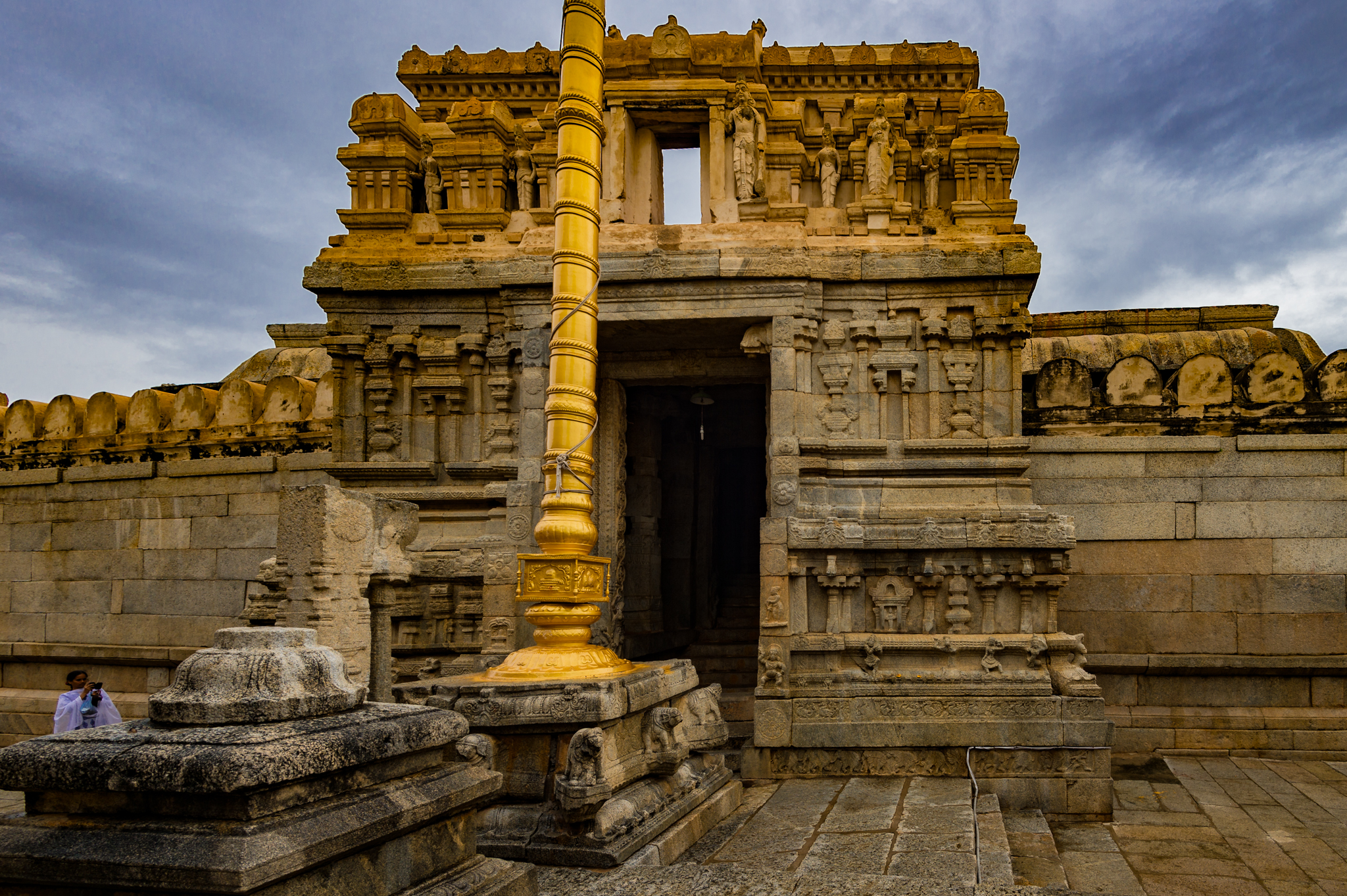
1. Overview & Archaeological Significance
The Colossal Monolithic Nandi of Lepakshi, situated in Sri Sathya Sai district (formerly Anantapur) in southwestern Andhra Pradesh, is universally celebrated as the largest and most sculpturally refined freestanding monolithic sculpture of Nandi—the sacred celestial bull and divine mount of Lord Shiva—anywhere in India. Carved during the zenith of the Vijayanagara Empire between 1530 and 1538 CE under the patronage of the royal treasurer Virupanna and his brother Veeranna during the reign of Emperor Achyuta Deva Raya, this granite colossus was sculpted from a single massive natural boulder of Peninsular Gneiss situated approximately 200 metres east of the world-famous Veerabhadra Temple.
Located in the Sri Sathya Sai district of Andhra Pradesh, Colossal Monolithic Nandi Bull Lepakshi is centrally protected by the Archaeological Survey of India (ASI) as an irreplaceable landmark of South Asian civilization. Recognized for its vijayanagara monolithic granite sculpture, courtyard bas-relief carving, bell chains & ornate royal vestments, the site provides profound insights into the technological prowess, cosmological beliefs, and cultural aesthetics of its ancient builders.
2. Dynastic Origins, Royal Patrons & Chronology
What elevates the Lepakshi Nandi above all other colossal animal sculptures of ancient India is not merely its staggering physical proportions—measuring 4.5 metres (15 feet) in height and 8.23 metres (27 feet) in length—but its uncanny anatomical realism, relaxed dignified posture, and exquisite sculptural ornamentation. Positioned with its head held high and turned slightly towards the west, the sacred bull gazes serenely directly toward the colossal multi-hooded Naga Linga sculpture enshrined within the outer courtyard of the Veerabhadra Temple complex.
Centrally protected by the Archaeological Survey of India (ASI) Hyderabad Circle and inscribed on India's UNESCO World Heritage Tentative List as part of the 'Monuments of Lepakshi' ensemble, the Monolithic Nandi sits within a beautifully maintained landscaped garden. It attracts hundreds of thousands of pilgrims, art historians, and cultural travelers who marvel at the Vijayanagara sculptors' supreme mastery over hard crystalline granite.
3. Structural Engineering & Architectural Design
The Lepakshi Nandi is rendered in a seated, couchant posture with its right foreleg tucked beneath its chest and its left foreleg gracefully poised, conveying an impression of alert vigilance blended with deep meditative composure. The sculpture's contours display proportional accuracy, from the gentle curve of its powerful hump to the muscular folds of skin across its dewlap and the naturalistic curve of its ears.

The colossus is lavishly adorned with ceremonial royal vestments typical of the Vijayanagara imperial court. Around its massive neck hang multiple tiered necklaces carved with remarkable precision, including strings of heavy cast metal bells (*ghanta*), beaded chains, floral medallions, and jeweled amulets. An ornate saddle blanket (*jhul*) intricately carved with scrolling vine borders and beaded tassels covers its back, held in place by an elaborate girth band.
The head of the bull is crowned with an ornamental headband set with pearls and gemstones, from which small bells dangle between its curved horns. The smooth, polished finish of the stone contrasts with the deeply undercut relief work of the ornamental trappings, exemplifying the peak of the 16th-century Vijayanagara sculptural idiom.
4. Archaeological Excavations, Epigraphy & Conservation
ASI landscape conservation created an insulated green lawn surrounding the monolithic platform, preventing rainwater erosion around the foundation boulder.
Laser-scanning and photogrammetry conducted during UNESCO tentative listing documentation captured high-resolution 3D models of every carved bell and ornament.
Drainage channels were gently carved into the surrounding rock outcrop to divert monsoon runoff away from the base of the sculpture.
Entry to the Lepakshi Nandi complex is completely free of charge. The monument is open every day of the week under ASI administration.
5. Master Highlights & Archaeological Marvels
India's largest monolithic Nandi: standing 4.5 metres high and over 8.2 metres long, sculpted from a single granite boulder.

Direct alignment with the Veerabhadra Naga Linga: gazing westward across 200 metres toward the colossal rock-cut serpent shrine.
Unrivaled sculptural ornamentation: dozens of intricately detailed bells, floral garlands, and woven saddle blankets carved into raw granite.
6. Visiting Hours, Entry Permits & Visitor Guidelines
Open from 6:00 AM to 6:00 PM daily. Early morning hours (6:30 AM to 8:30 AM) provide soft morning sunlight ideal for photography.
Pair your visit with the adjacent Veerabhadra Temple, allowing 2 to 3 hours to comfortably explore both monuments.
Visitors must not climb onto the body or head of the monolithic bull.
Commercial photography and videography require prior written permission from the ASI Hyderabad Circle.
The granite floor around the garden can get quite warm during mid-afternoon hours. Comfortable walking shoes are advised.
7. Site Museum & Interpretation Centers
The main Veerabhadra Temple, renowned for its hanging stone pillar, monolithic Nagalinga, and exquisite 16th-century ceiling frescoes, is a 3-minute walk away.
The Sri Sathya Sai Museum and Spiritual Center at Prasanthi Nilayam (Puttaparthi) is located 65 km north.
8. Climate, Best Seasons & Ideal Visiting Hours
November through February is the ideal season to visit Lepakshi, with pleasant daytime temperatures between 18°C and 28°C.
Monsoon months (July to September) bring refreshing cloud cover and cool breezes across the Deccan plateau.
9. Transit Logistics, Rail, Air & Road Access
Located in Lepakshi village, Sri Sathya Sai district, Andhra Pradesh. Hindupur railway station is located 14 km west.
Bengaluru Kempegowda International Airport (BLR) is located just 100 km south (a comfortable 2-hour drive via National Highway 44).
10. Regional Heritage Circuits & Sibling Monuments
The Lepakshi Monolithic Nandi is an anchor of the Vijayanagara Deccan Imperial Heritage Circuit:
Sacred Architecture & Darshan Protocol Guide
Maximize your spiritual journey: VIP vs Sugam Darshan line reality, locker rules, and historical truth.
- ✓Sugam Darshan & Token Blueprint: Accurate online booking rules, pre-dawn passes, and entry lane realities.
- ✓Zero Commercialization Guard: Avoid bogus intermediaries, fake priest fees, and paid blessing scams.
- ✓Locker, Footwear & Mobile Safety: Verified cloakroom locations, authorized phone lockers, and security rules.
- ✓Hidden Architectural Marvels: Inscriptions, subterranean sanctums, and forgotten stone carvings.
🛡️ Personally curated by PK Gupta & the Hidden Routes research desk. Delivered directly to your Email & WhatsApp within 4–8 hours.
11. Frequently Asked Questions
Is the Lepakshi Nandi the largest in India?
Yes, measuring 4.5 metres (15 feet) in height and 8.23 metres (27 feet) in length, it is widely recognized as the largest freestanding monolithic Nandi bull sculpture in India.
Who built the monolithic Nandi at Lepakshi?
It was carved between 1530 and 1538 CE by master sculptors commissioned by royal brothers Virupanna and Veeranna during the reign of Vijayanagara Emperor Achyuta Deva Raya.
Why does the Lepakshi Nandi face away from the temple?
The Nandi is located 200 metres from the Veerabhadra Temple, but its head is turned westward to gaze directly at the colossal monolithic Naga Linga within the temple courtyard.
How far is Lepakshi from Bangalore?
Lepakshi is located approximately 120 km north of central Bengaluru (and only 100 km from Bengaluru International Airport), making it a popular 1-day heritage trip via NH 44.
Is there an entry fee to see the Lepakshi Nandi?
No, entry to the Lepakshi Nandi park is completely free for all visitors.