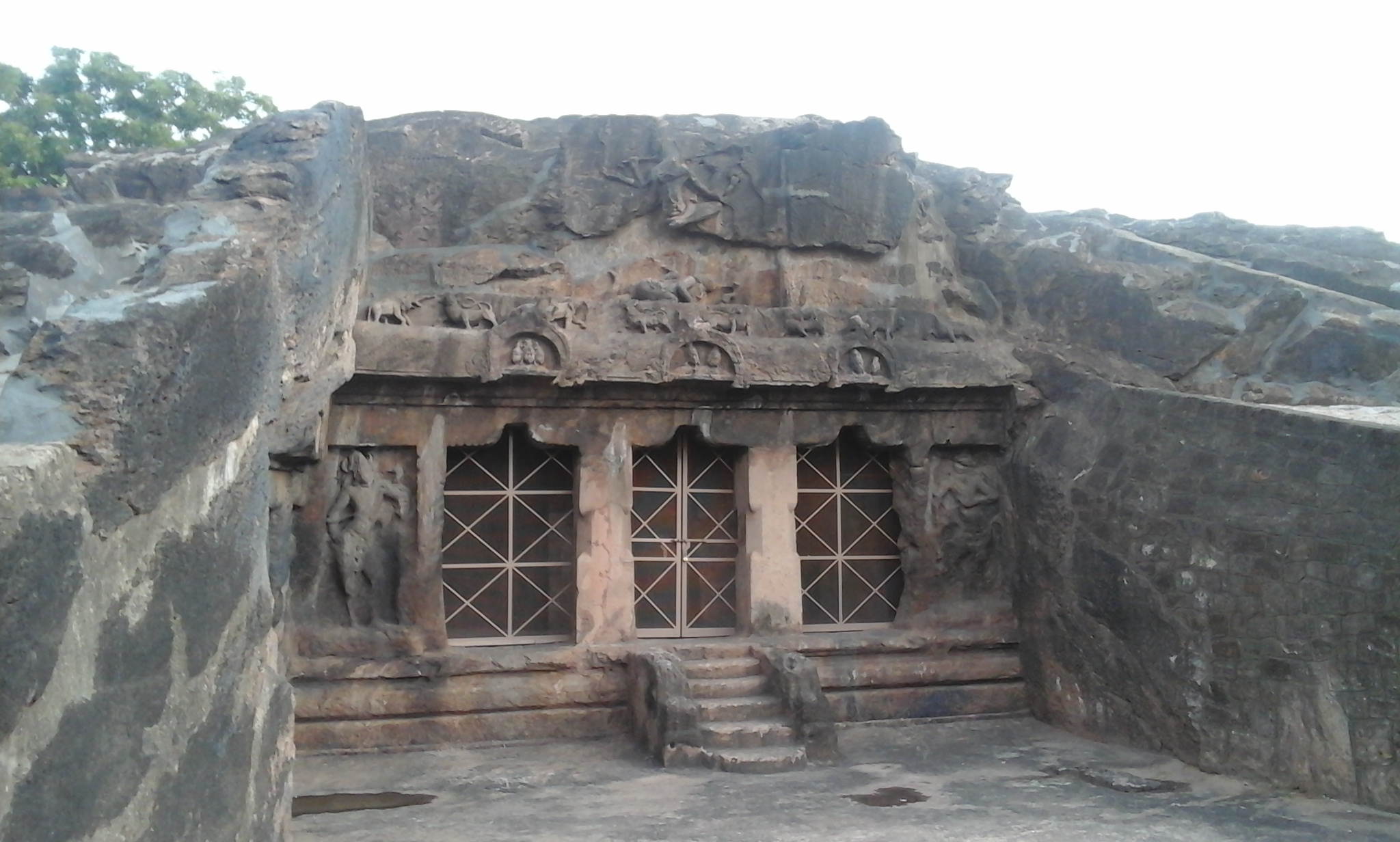
1. Overview & Archaeological Significance
The Moghulrajpuram Caves, chiseled directly into the rocky sandstone hillocks in the heart of Vijayawada city in NTR district, Andhra Pradesh, preserve some of the oldest, most artistically seminal, and historically precious rock-cut Hindu sanctuaries in Southern India. Excavated during the 5th and 6th centuries CE under the enlightened royal patronage of the Vishnukundina dynasty (who ruled the Deccan between the 5th and 7th centuries), these rock-cut shrines mark the crucial architectural transition from early Buddhist rock-cut traditions to classical Brahmanical rock-cut temple design.
Located in the NTR district of Andhra Pradesh, Moghulrajpuram Caves Vijayawada is centrally protected by the Archaeological Survey of India (ASI) as an irreplaceable landmark of South Asian civilization. Recognized for its classical vishnukundina rock-cut cave temple architecture, monolithic pillared facades, chaitya arches & nataraja reliefs, the site provides profound insights into the technological prowess, cosmological beliefs, and cultural aesthetics of its ancient builders.
2. Dynastic Origins, Royal Patrons & Chronology
In ancient times, Vijayawada was known as *Vijayavatika* or *Rajamahendravaram*, an essential riverine crossing point on the sacred Krishna River. The Vishnukundina monarchs, devout patrons of Shaivism and Sanskrit learning, employed master rock-cutters to excavate five distinct cave shrines into the living stone, dedicating them to the Hindu Trinity of Shiva, Vishnu, and Brahma. Cave 2 is of supreme importance in Indian art history, preserving one of the earliest known rock-cut representations of *Nataraja* (Lord Shiva dancing the cosmic Tandava) in all of South India.
Another exceptional iconographic marvel is the rare high-relief carving of *Ardhanarishvara*—the composite androgynous manifestation of Shiva uniting the masculine and feminine divine cosmic principles in a single body. Conserved today as a centrally protected monument of national importance by the Archaeological Survey of India (ASI), Moghulrajpuram Caves offers an enchanting encounter with the dawn of classical Hindu rock-cut architecture.
3. Structural Engineering & Architectural Design
The architectural complex consists of five rock-cut caves carved into different tiers of the sandstone ridge. Cave 2 is the largest, most complete, and most artistically opulent, featuring a pillared verandah (*Mukhamandapa*) supported by two heavy square pillars and two pilasters.

The facade is adorned with a decorative cornice embellished with miniature *Kudu* (chaitya-arch) dormer windows housing sculpted human heads. Crowned over the central chaitya arch is the celebrated relief of *Nataraja*, depicted dancing with dynamic kinetic energy on the back of the dwarf Apasmara, flanked by celestial attendants.
The interior features three sanctum cells excavated into the back wall, originally designed for the Hindu Trinity. Nearby Cave 4 and Cave 5 feature carved dvarapalas, a monolithic seated Ganesha, and rock-cut cisterns. The simple, robust geometric lines of the pillars showcase the pure structural directness of early Vishnukundina masonry before the elaborate decorative flourishes of the Chalukyas.
4. Archaeological Excavations, Epigraphy & Conservation
The ASI stabilized the sandstone rock facades, treated weathered pillar bases, and repaired water drainage channels.
Cleaned moss and atmospheric biological deposits from the 1,500-year-old Nataraja and Ardhanarishvara carvings.
Constructed paved protective walkways, landscaped green garden lawns, and erected bilingual historical interpretive plaques.
Entry to the Moghulrajpuram Caves archaeological park is free. Maintained under national protection by the ASI.
5. Master Highlights & Archaeological Marvels
Early 5th-Century Vishnukundina Masterpiece: Rare rock-cut temples marking the birth of Hindu cave architecture in Andhra.

Earliest South Indian Nataraja: Houses one of the earliest known rock-cut depictions of Dancing Shiva in Southern India.
Ardhanarishvara & Trimurti Sanctums: Exquisite high-relief carvings uniting the divine masculine and feminine cosmic forces.
6. Visiting Hours, Entry Permits & Visitor Guidelines
Open daily from 9:00 AM to 5:30 PM. Exploring all five cave shrines and the surrounding garden takes 45 minutes to 1 hour.
Morning light illuminates the eastern rock-cut facades, revealing the subtle facial contours of the 5th-century sculptures.
Do not touch, scratch, or lean against the ancient 1,500-year-old carved sandstone rock reliefs.
Help keep the archaeological garden clean; deposit litter in designated bins.
The sandstone rock floor can be uneven; watch your footing while exploring the cave interiors.
7. Site Museum & Interpretation Centers
Akkanna Madanna Caves, another ancient rock-cut wonder, is located 4 km to the west near the Krishna River.
The famous Kanaka Durga Temple perched atop Indrakeeladri Hill lies 5 km to the west.
8. Climate, Best Seasons & Ideal Visiting Hours
October through March is the premier season to visit, featuring pleasant daytime temperatures between 16°C and 28°C.
Winter months offer cool breezes and clear skies, ideal for city heritage excursions across Vijayawada.
9. Transit Logistics, Rail, Air & Road Access
Located in Moghulrajpuram, central Vijayawada city, NTR district, Andhra Pradesh.
Vijayawada railway station is 3 km away; easily accessible by city auto-rickshaw, taxi, or local bus in 10 minutes.
10. Regional Heritage Circuits & Sibling Monuments
Moghulrajpuram Caves is the ancient rock anchor of the Vijayawada Heritage Trail:
Sacred Architecture & Darshan Protocol Guide
Maximize your spiritual journey: VIP vs Sugam Darshan line reality, locker rules, and historical truth.
- ✓Sugam Darshan & Token Blueprint: Accurate online booking rules, pre-dawn passes, and entry lane realities.
- ✓Zero Commercialization Guard: Avoid bogus intermediaries, fake priest fees, and paid blessing scams.
- ✓Locker, Footwear & Mobile Safety: Verified cloakroom locations, authorized phone lockers, and security rules.
- ✓Hidden Architectural Marvels: Inscriptions, subterranean sanctums, and forgotten stone carvings.
🛡️ Personally curated by PK Gupta & the Hidden Routes research desk. Delivered directly to your Email & WhatsApp within 4–8 hours.
11. Frequently Asked Questions
How old are the Moghulrajpuram Caves in Vijayawada?
They date back to the 5th and 6th centuries CE during the Vishnukundina dynasty, making them approximately 1,500 years old.
What famous sculpture is carved over Cave 2 at Moghulrajpuram?
Cave 2 features one of the earliest known rock-cut reliefs of *Nataraja* (Dancing Shiva) in South India, carved above the central chaitya arch.
Which deities were worshipped in these caves?
The caves were dedicated to the Hindu Trinity of Shiva, Vishnu, and Brahma, alongside shrines for Ardhanarishvara and Ganesha.
How many caves are located at Moghulrajpuram?
There are five distinct rock-cut cave shrines excavated across the sandstone hillock, with Cave 2 being the largest and most complete.
Is there an entry fee to visit Moghulrajpuram Caves?
No, entry to the Moghulrajpuram Caves is completely free and protected by the Archaeological Survey of India.