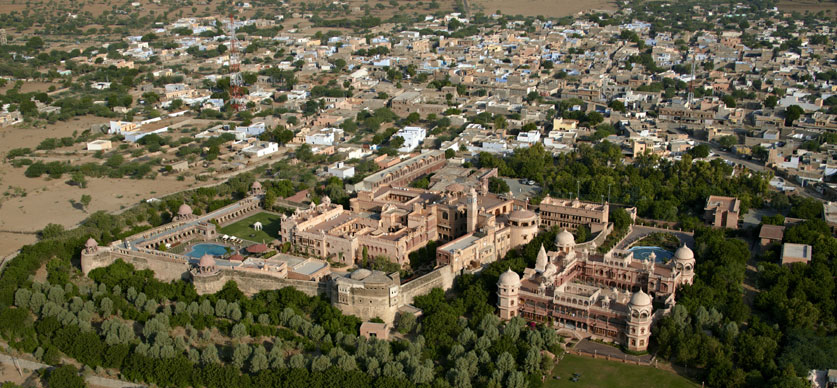
1. Overview & Archaeological Significance
Khimsar Fort, situated amidst the rolling golden sand dunes of the Thar Desert halfway between Jodhpur and Bikaner in Nagaur district, Rajasthan, is a magnificent 16th-century desert fortress of the Karamsot Rathore clan. Founded in 1523 CE by Rao Karamsiji—the eighth son of Rao Jodha, the legendary founder of Jodhpur—the citadel was constructed as a fortified desert military outpost guarding the northern trade caravans of the Marwar kingdom.
Located in the Nagaur district of Rajasthan, Khimsar Fort Thar Desert Citadel is centrally protected by the Archaeological Survey of India (ASI) as an irreplaceable landmark of South Asian civilization. Recognized for its high thar desert military fortification, golden sandstone ashlar masonry, high bastions & zenana jharokhas, the site provides profound insights into the technological prowess, cosmological beliefs, and cultural aesthetics of its ancient builders.
2. Dynastic Origins, Royal Patrons & Chronology
Originally constructed purely as a rugged martial stronghold with high curtain walls, parapets, and arrow slits, Khimsar evolved over centuries into an opulent royal palace. In the mid-18th century, Thakur Badan Singh added the elegant *Zenana Mahal* (ladies' palace), adorned with delicate stone screens and breezy rooftop pavilions. In 1544 CE, Afghan Emperor Sher Shah Suri garrisoned his imperial troops here during his Marwar campaign, while Mughal Emperor Aurangzeb stayed at Khimsar during his western expeditions.
Sensitively preserved by the direct descendants of Rao Karamsiji and operating today as a world-renowned heritage hotel, Khimsar Fort enchants visitors with its authentic royal artifacts, tranquil palm-shaded courtyards, and a spectacular companion eco-camp nestled amidst ancient sand dunes.
3. Structural Engineering & Architectural Design
The fortress layout is enclosed by massive defensive curtain walls constructed of dressed golden-yellow sandstone blocks assembled without mortar, anchored by twenty imposing circular and semicircular bastions. Access is guarded by a colossal fortified wooden gateway armored with thick iron plates and anti-elephant spikes.

The interior is organized around several shaded, stone-paved courtyards (*angans*). The multi-storey Zenana palace features hundreds of delicate stone *jharokhas* (overhanging balconies) and intricately pierced stone lattice screens (*jalis*) that allowed royal noblewomen to observe courtly durbars while enjoying natural desert ventilation.
The palace interiors feature vaulted sandstone ceilings, antique brass cannons, hand-painted hunting frescoes, and heirloom armory. Deep subterranean stepped cisterns and covered wells ensured complete water security during prolonged desert sieges.
4. Archaeological Excavations, Epigraphy & Conservation
Heritage conservation stabilized the 16th-century golden sandstone battlements and restored the historic corner watchtowers.
Chemical cleaning removed environmental dust and restored the delicate carved stone jharokha balconies and jali screens.
Restoration of the inner courtyards re-established traditional stone paving and historic fountain pools.
Entry to the outer village and fort battlements is free. Inner palace courtyards and dining verandas are accessible for heritage hotel guests and visitors with prior dining reservations.
5. Master Highlights & Archaeological Marvels
Golden Desert Fortress: A magnificent 1523 CE desert citadel built of local golden sandstone blending with Thar dunes.

Zenana Mahal Jharokhas: Exquisite 18th-century royal residential quarters adorned with delicate stone filigree screens.
Desert Dune Oasis: Pristine companion eco-camp set around a natural desert water body amidst shifting sand dunes.
6. Visiting Hours, Entry Permits & Visitor Guidelines
Open daily from 9:00 AM to 5:00 PM for day visitors with prior reservation. Hotel guests enjoy 24-hour access.
Late afternoons (4:00 PM to 6:00 PM) offer breathtaking golden-hour light that turns the sandstone walls into glowing amber.
Maintain respectful decorum in the palace residential wings and private courtyards.
Photography is permitted in public courtyards and ramparts; respect the privacy of resident guests.
The fortress is located in the desert heartland; carry sun protection and stay hydrated.
7. Site Museum & Interpretation Centers
The private royal museum inside the fort displays vintage cars, medieval weapons, and royal turbans.
The historic Ahichhatragarh Fort in Nagaur lies 40 km northeast.
8. Climate, Best Seasons & Ideal Visiting Hours
October through March is the premier travel season, offering cool breezes and pleasant daytime temperatures between 18°C and 26°C.
Winter evenings offer crisp desert skies, roaring courtyard bonfires, and traditional Rajasthani folk music and dance.
9. Transit Logistics, Rail, Air & Road Access
Located in Khimsar village, situated directly on National Highway 62, 85 km north of Jodhpur and 40 km southwest of Nagaur in Rajasthan.
Jodhpur Airport (JDH) is 90 km south, offering extensive domestic flight connectivity.
10. Regional Heritage Circuits & Sibling Monuments
Khimsar Fort is a shimmering desert oasis jewel of the Thar Desert & Marwar Trail:
Sacred Architecture & Darshan Protocol Guide
Maximize your spiritual journey: VIP vs Sugam Darshan line reality, locker rules, and historical truth.
- ✓Sugam Darshan & Token Blueprint: Accurate online booking rules, pre-dawn passes, and entry lane realities.
- ✓Zero Commercialization Guard: Avoid bogus intermediaries, fake priest fees, and paid blessing scams.
- ✓Locker, Footwear & Mobile Safety: Verified cloakroom locations, authorized phone lockers, and security rules.
- ✓Hidden Architectural Marvels: Inscriptions, subterranean sanctums, and forgotten stone carvings.
🛡️ Personally curated by PK Gupta & the Hidden Routes research desk. Delivered directly to your Email & WhatsApp within 4–8 hours.
11. Frequently Asked Questions
Who founded Khimsar Fort and when?
Khimsar Fort was founded in 1523 CE by Rao Karamsiji, the eighth son of Rao Jodha of Jodhpur, as a fortified desert military stronghold.
What historical rulers stayed at Khimsar Fort?
Both Afghan Emperor Sher Shah Suri (in 1544 CE) and Mughal Emperor Aurangzeb stayed at Khimsar Fort during their desert military expeditions.
What is unique about the fort's setting?
The fort is built of golden-yellow sandstone that blends seamlessly into the surrounding sand dunes of the Thar Desert, accompanied by an oasis eco-camp.
Can travelers stay at Khimsar Fort?
Yes, Khimsar Fort operates as a premier luxury heritage hotel, offering royal palace suites, dune safaris, and traditional cultural experiences.
How far is Khimsar from Jodhpur?
Khimsar is located approximately 85 km north of Jodhpur along National Highway 62, reachable in about 1.5 hours.