1. Overview & Archaeological Significance
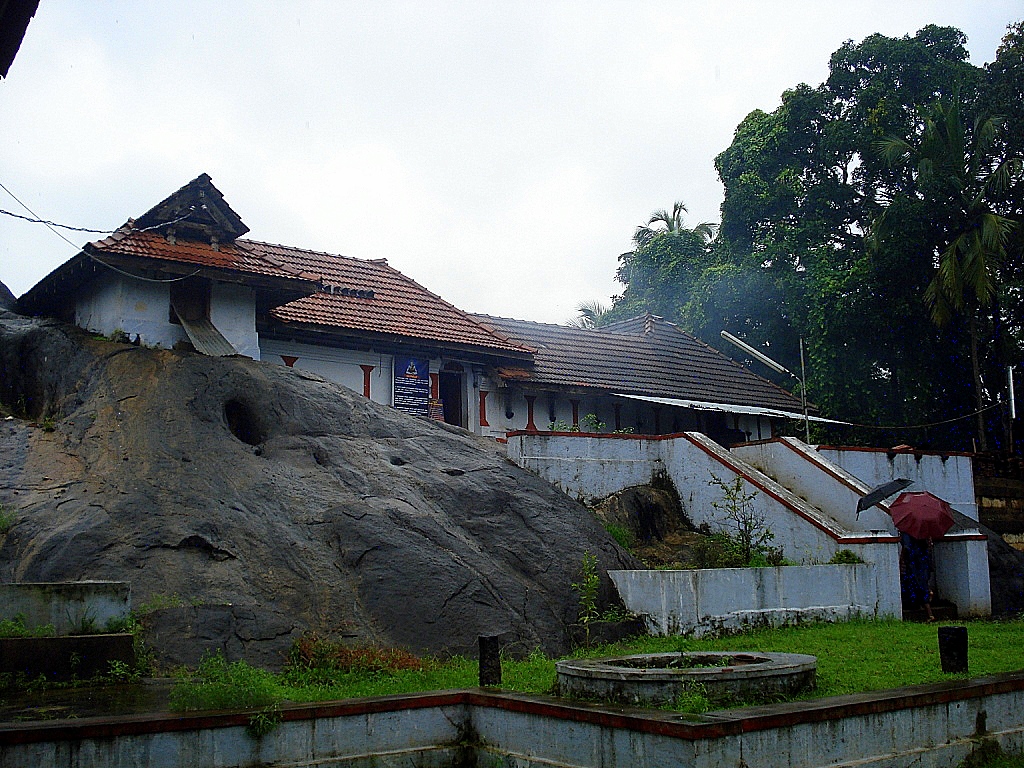
Kaviyoor Rock-Cut Cave Temple, situated in the village of Kaviyoor near Thiruvalla in Pathanamthitta district, Kerala, is one of the earliest, most complete, and artistically refined monolithic rock-cut monuments in the state. Popularly referred to by local villagers as *Thrikkakkudi Cave Temple*, the monument represents the earliest phase of monumental stone architecture in Kerala, dating to the late 8th century CE during the flourishing of the Second Chera Empire (Kulasekharas of Mahodayapuram) and the northern frontier of the ancient Ay dynasty.
Located in the Pathanamthitta district of Kerala, Kaviyoor Rock-Cut Cave Temple of Shiva is centrally protected by the Archaeological Survey of India (ASI) as an irreplaceable landmark of South Asian civilization. Recognized for its early medieval rock-cut cave temple architecture, granite monolithic excavation, bas-relief sculptures & fluted pillars, the site provides profound insights into the technological prowess, cosmological beliefs, and cultural aesthetics of its ancient builders.
2. Dynastic Origins, Royal Patrons & Chronology
Unlike later Kerala temples constructed predominantly of timber and laterite masonry, the Kaviyoor temple is hewn entirely out of a solitary massive granite hillock rising above surrounding paddy fields. Its sculptural style demonstrates strong affinities with contemporary Pallava rock architecture at Mahabalipuram and Early Pandya rock shrines at Kalugumalai, reflecting the vibrant trans-peninsular artistic exchanges of the 8th century.
Today, protected and maintained as a monument of national importance by the Archaeological Survey of India (ASI), Kaviyoor Cave Temple continues to serve as an active sanctuary where worship is offered to the primordial rock-cut Shiva lingam, bridging twelve centuries of unbroken spiritual contemplation.
3. Structural Engineering & Architectural Design
The cave temple faces west, sculpted into the vertical face of a massive granite boulder. The architectural plan comprises an open rock-cut veranda (*ardha mandapa*) measuring approximately 6 meters wide and 2.5 meters deep, leading into a square rock-cut sanctum sanctorum (*garbhagriha*) measuring 2.5 meters on each side.

The facade is supported by two massive monolithic granite pillars and two matching pilasters featuring square bases and octagonal central sections, echoing classical Dravidian rock-cut proportions. Carved directly into the central rock floor of the inner sanctum is a cylindrical *Shiva Lingam* resting upon a monolithic circular *peetham* (yoni-base) hewn from the living bedrock.
The walls of the outer mandapa feature four world-renowned bas-relief sculptural panels executed with astonishing fluidity and expressive realism: on the northern wall stands a life-sized, serene *Rishi* (sage) with an elongated beard, matted hair (*jata*), and hands folded across his chest in deep meditation; flanking the sanctum doorway are two graceful *Dvarapalas* (guardian deities) leaning casually on their clubs; while a charming four-armed seated relief of *Lord Ganapati* adorns the southern wall.
4. Archaeological Excavations, Epigraphy & Conservation
Archaeological surveys by the ASI have documented the iconographical parallels between Kaviyoor and 8th-century Pandya rock-cut shrines.
Chemical washing and moss-removal treatments are periodically carried out to protect the ancient granite reliefs from monsoon humidity.
Protective stone retaining walls and paved access steps were constructed to safeguard the site from hillside soil runoff.
Entry to the Kaviyoor Rock-Cut Cave Temple is free for all visitors.
5. Master Highlights & Archaeological Marvels
8th-Century Monolithic Sanctum: Completely hewn out of living granite rock, dating to the earliest dawn of Kerala stone sculpture.

The Meditating Rishi Relief: A world-renowned masterpiece of early medieval Indian sculpture depicting a sage in contemplation.
Living Monolithic Lingam: The central rock-cut Shiva lingam remains under active daily worship after twelve centuries.
6. Visiting Hours, Entry Permits & Visitor Guidelines
Open for worship and visitors daily from 6:00 AM to 11:30 AM and 5:00 PM to 7:30 PM.
Morning sunlight reaches the outer mandapa, casting sharp cross-shadows that illuminate the intricate lines of the bas-relief carvings.
Remove footwear before stepping onto the rock-cut stone veranda of the cave temple.
Do not touch, scratch, or apply oils to the ancient 8th-century granite bas-relief sculptures.
The rock surface around the cave can be slippery during the monsoon months (June-August); tread carefully.
7. Site Museum & Interpretation Centers
The ancient Kaviyoor Mahadevar Temple, famous for its magnificent 10th-century wood carvings, is situated just 1.5 km away.
The historic Sree Vallabha Temple in Thiruvalla, famous for daily Kathakali ritual performances, lies 6 km west.
8. Climate, Best Seasons & Ideal Visiting Hours
October through March is the best season to visit, featuring dry, pleasant weather with temperatures around 23°C to 30°C.
Visiting in winter allows travelers to explore both the rock cave and the surrounding heritage temple circuit comfortably.
9. Transit Logistics, Rail, Air & Road Access
Located in Kaviyoor village, 5 km east of Thiruvalla town in Pathanamthitta district, Kerala.
Thiruvalla Railway Station (TRVL) is 6 km away, offering excellent express train connections across South India.
10. Regional Heritage Circuits & Sibling Monuments
Kaviyoor Cave Temple is the ancient monolithic stone anchor of the Central Travancore Heritage Trail:
Sacred Architecture & Darshan Protocol Guide
Maximize your spiritual journey: VIP vs Sugam Darshan line reality, locker rules, and historical truth.
- ✓Sugam Darshan & Token Blueprint: Accurate online booking rules, pre-dawn passes, and entry lane realities.
- ✓Zero Commercialization Guard: Avoid bogus intermediaries, fake priest fees, and paid blessing scams.
- ✓Locker, Footwear & Mobile Safety: Verified cloakroom locations, authorized phone lockers, and security rules.
- ✓Hidden Architectural Marvels: Inscriptions, subterranean sanctums, and forgotten stone carvings.
🛡️ Personally curated by PK Gupta & the Hidden Routes research desk. Delivered directly to your Email & WhatsApp within 4–8 hours.
11. Frequently Asked Questions
When was the Kaviyoor Rock-Cut Cave Temple built and by whom?
The temple was carved in the late 8th century CE during the era of the Second Chera Empire and the northern sphere of the Ay dynasty.
What makes the sculptures at Kaviyoor Cave Temple unique?
The cave features remarkably naturalistic high-relief figures of a bearded meditating Rishi, two elegant Dvarapalas, and Lord Ganapati carved into living granite.
Is the temple carved from a mountain or built of stone blocks?
It is a monolithic rock-cut cave temple excavated directly out of a solitary living granite hillock, not built from masonry blocks.
Is worship still conducted at Kaviyoor Cave Temple?
Yes, it is a living archaeological temple where traditional daily poojas and lamps are lit for the 1,200-year-old rock-cut Shiva lingam.
How can travelers reach Kaviyoor from Thiruvalla?
Kaviyoor is located just 5 km east of Thiruvalla town, easily reached by auto-rickshaw, taxi, or local bus in 10 to 15 minutes.