1. Overview & Archaeological Significance
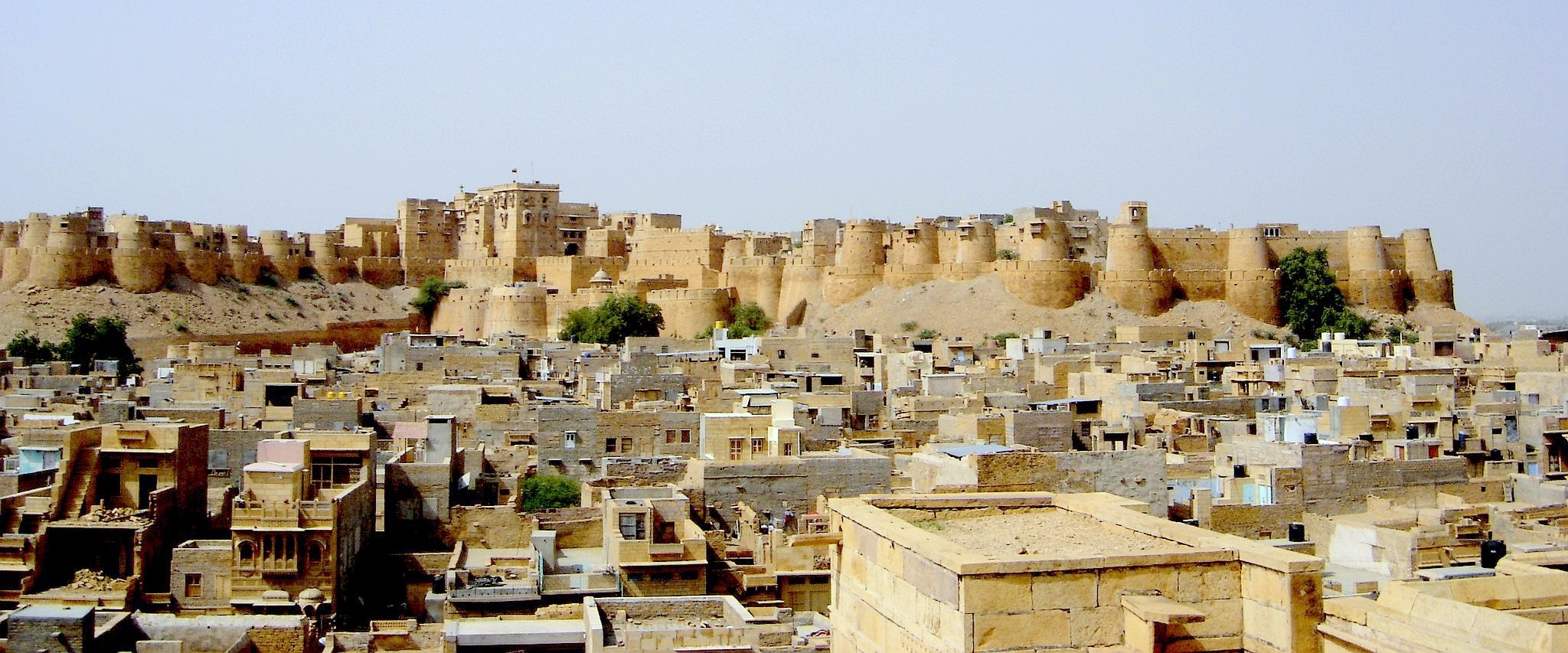
Jaisalmer Fort (popularly celebrated as *Sonar Qila* or the 'Golden Fortress'), dramatically rising atop the triangular Trikuta Hill in the heart of the Great Indian Thar Desert in western Rajasthan, is universally famous as the only major 'living fort' in India. Founded in 1156 CE by the Bhati Rajput ruler Rawal Jaisal upon the advice of a hermit named Eesul, who revealed an ancient prophecy made by Lord Krishna to Arjuna, the fortress replaced the older, vulnerable Bhati capital at Lodhruva.
Located in the Jaisalmer district of Rajasthan, Jaisalmer Fort Citadel is centrally protected by the Archaeological Survey of India (ASI) as an irreplaceable landmark of South Asian civilization. Recognized for its thar desert rajput architecture, golden yellow jurassic sandstone, mortarless masonry & jharokhas, the site provides profound insights into the technological prowess, cosmological beliefs, and cultural aesthetics of its ancient builders.
2. Dynastic Origins, Royal Patrons & Chronology
Strategically positioned at the crossroads of lucrative ancient trans-Asian camel caravan trade routes connecting India with Persia, Arabia, and Central Asia via the Silk Road, Jaisalmer flourished as a fabulously wealthy commercial oasis. The fort endured legendary medieval sieges: a seven-year siege by Sultan Alauddin Khalji in the late 13th century that culminated in the first tragic *Jauhar* (mass self-immolation) of 24,000 Rajput women, and subsequent sieges by Sultan Firoz Shah Tughlaq. Immortalized in modern global culture by master filmmaker Satyajit Ray in his 1974 detective film and novel *Sonar Kella*, the fort continues to shelter a thriving resident population of over 4,000 descendants of the original Rajput and Brahmin court families.
Inscribed as part of the UNESCO World Heritage serial site 'Hill Forts of Rajasthan' in 2013, Jaisalmer Fort is centrally protected by the Archaeological Survey of India (ASI). Constructed entirely of local yellow Jurassic sandstone without mortar, the fort glows a rich honey-gold at midday and turns an incandescent tawny lion-gold as the desert sun sets.
3. Structural Engineering & Architectural Design
Jaisalmer Fort is constructed of interlocking blocks of soft, fine-grained yellow Jurassic sandstone fitted together without mortar, using ancient tongue-and-groove jointing techniques. The citadel measures 460 metres (1,500 feet) in length and 230 metres in width, ringed by a triple-tiered defensive wall (*perkoote*) reinforced by 99 massive rounded bastions (*burjs*), 92 of which were added between 1633 and 1647 CE.

The citadel is approached via a steep, paved serpentine ramp defended by four monumental successive gateways: Akhai Pol, Ganesh Pol, Suraj Pol (Sun Gate), and Hawa Pol (Wind Gate). Beyond Hawa Pol opens the central paved square, *Chaugan*, dominated by the seven-storeyed *Raj Mahal* (Royal Palace) with its exquisitely carved cantilevered *jharokhas* (overhanging balconies) and the white marble coronation throne of the Rawals.
Within the southern quarter of the fort sits a world-famous group of seven interconnected 12th- to 15th-century Digambara and Shvetambara Jain Temples, constructed of golden sandstone with an astonishing degree of micro-carving rivaling Dilwara and Ranakpur. Most celebrated are the Parshvanatha, Rishabhanatha, and Sambhavanatha temples, housing the legendary *Jatha Bhandar* (Gyan Bhandar), one of the oldest subterranean manuscript libraries in India, containing palm-leaf manuscripts dating back to 1100 CE.
4. Archaeological Excavations, Epigraphy & Conservation
Under the World Monuments Watch and ASI Jodhpur Circle, comprehensive subterranean drainage stabilization was executed between 2017 and 2022 to prevent wastewater seepage into the soft sandstone foundations.
Structural restoration repointed the dry-stone masonry along the crumbling lower ramparts of the 99 bastions using authentic lime mortar.
The ancient palm-leaf manuscripts of the Gyan Bhandar library were digitized and preserved under controlled humidity archives.
Entering the living public streets of Jaisalmer Fort is completely free 24 hours daily. Visiting the Raj Mahal Palace Museum costs ₹100 for Indian visitors and ₹500 for foreign tourists. The Jain Temples are open from 8:00 AM to 12:00 PM (nominal entry/camera fee ₹50 / ₹200).
5. Master Highlights & Archaeological Marvels
Wandering through the living medieval labyrinth of cobblestone alleys where fourth-generation families live in golden sandstone havelis.

Marveling at the seven golden Jain temples whose ceilings, pillars, and torana arches are carved with lace-like micro-sculptures.
Watching the sunset from Cannon Point, gazing out as the desert sky turns crimson and the golden fort walls appear to ignite.
6. Visiting Hours, Entry Permits & Visitor Guidelines
Jaisalmer Fort's living city streets and viewpoints are open 24 hours daily. The Palace Museum is open from 9:00 AM to 6:00 PM.
General fort entry is free. The historic Jain temples are open for visitor viewing from 8:00 AM to 12:00 PM daily.
Remove footwear and leather items before entering the seven sacred Jain temples.
Be mindful of local residents and avoid blocking narrow residential alleys. Personal photography is permitted.
Jaisalmer Fort is an endangered living UNESCO World Heritage Site. Waste dumping or unauthorized commercial construction is strictly penalized under Rajasthan municipal laws.
7. Site Museum & Interpretation Centers
The Jaisalmer Fort Palace Museum inside the Raj Mahal displays royal silver howdahs, medieval astrological charts, turbans, and chainmail armor.
Explanatory signboards along the Chaugan describe the Rajput defense tactics, the legend of Rawal Jaisal, and the 1294 siege.
8. Climate, Best Seasons & Ideal Visiting Hours
The best time to visit Jaisalmer is from October to March, with sunny winter days and crisp desert nights with temperatures between 10°C and 26°C.
Visiting during the annual Jaisalmer Desert Festival in February brings colorful folk dance, camel pageants, and musical celebrations across the dunes.
9. Transit Logistics, Rail, Air & Road Access
Jaisalmer Fort is located in the center of Jaisalmer, 2 km from Jaisalmer Railway Station (direct express trains from Delhi, Jaipur, Jodhpur).
Jaisalmer Airport (JSA, 12 km) operates seasonal domestic flights. Jodhpur Airport (JDH, 285 km, 4.5 hours drive via NH-11) offers year-round flight connectivity.
10. Regional Heritage Circuits & Sibling Monuments
Jaisalmer Fort is the supreme jewel of the Great Thar Desert & Silk Route Heritage Trail:
Sacred Architecture & Darshan Protocol Guide
Maximize your spiritual journey: VIP vs Sugam Darshan line reality, locker rules, and historical truth.
- ✓Sugam Darshan & Token Blueprint: Accurate online booking rules, pre-dawn passes, and entry lane realities.
- ✓Zero Commercialization Guard: Avoid bogus intermediaries, fake priest fees, and paid blessing scams.
- ✓Locker, Footwear & Mobile Safety: Verified cloakroom locations, authorized phone lockers, and security rules.
- ✓Hidden Architectural Marvels: Inscriptions, subterranean sanctums, and forgotten stone carvings.
🛡️ Personally curated by PK Gupta & the Hidden Routes research desk. Delivered directly to your Email & WhatsApp within 4–8 hours.
11. Frequently Asked Questions
Why is Jaisalmer Fort called a 'living fort'?
Because unlike most historic forts in India which are uninhabited tourist monuments, over 4,000 people (about one-fourth of the old city's population) still live inside Jaisalmer Fort in ancestral homes, operating shops, havelis, and restaurants.
What stone was used to build Jaisalmer Fort?
It was constructed entirely of local golden-yellow Jurassic sandstone without using cement or mortar. The stone has the unique property of glowing a warm honey-gold during the day and tawny lion-gold at sunset, earning it the name Sonar Qila.
Who founded Jaisalmer Fort and in what year?
It was founded in 1156 CE by Rawal Jaisal, a Bhati Rajput ruler, who shifted his capital from Lodhruva to the defensible Trikuta Hill.
What famous film brought global fame to Jaisalmer Fort?
Legendary Indian filmmaker Satyajit Ray directed the famous 1974 detective film Sonar Kella (The Golden Fortress), based on his novel set inside Jaisalmer Fort, introducing it to global cinematic audiences.
What are the visiting hours and entry fees for Jaisalmer Fort?
The fort is a public living city open 24 hours daily with free entry. The Palace Museum is open from 9:00 AM to 6:00 PM (₹100 Indian / ₹500 foreign).