1. Overview & Archaeological Significance
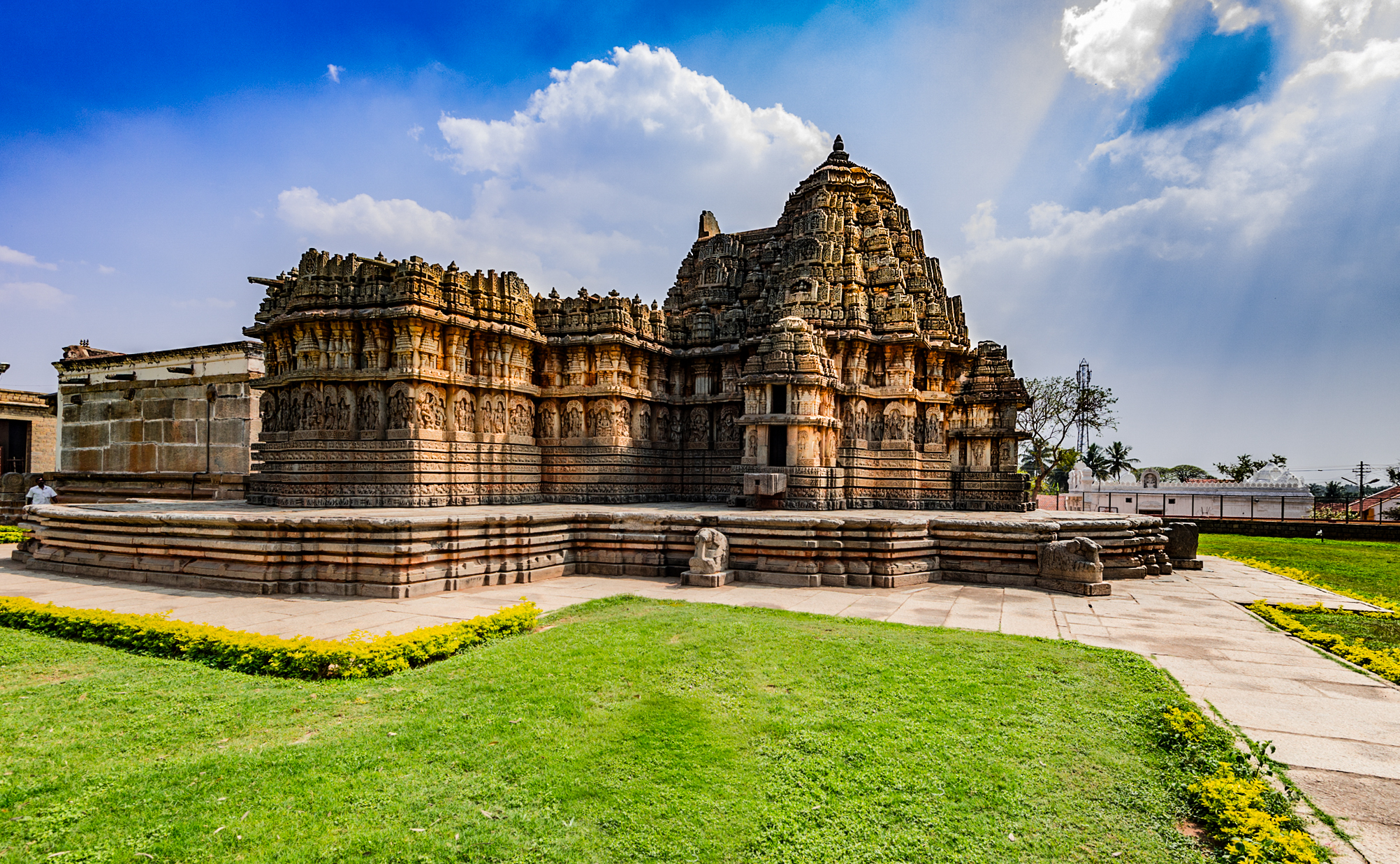
The Lakshminarayana Temple, situated in the rural town of Hosaholalu approximately 3 kilometres east of Krishnarajapete (K.R. Pete) in Mandya district, Karnataka, represents one of the most richly adorned and artistically accomplished temples built by the Hoysala Empire. Dating to approximately 1250 CE during the reign of King Vira Someshwara, the temple is dedicated to Lord Vishnu as Lakshminarayana. Art historians place Hosaholalu on the same elevated aesthetic plateau as Somanathapura and Nuggehalli.
Located in the Mandya district of Karnataka, Hosaholalu Lakshminarayana Temple Trikuta Masterpiece is centrally protected by the Archaeological Survey of India (ASI) as an irreplaceable landmark of South Asian civilization. Recognized for its high hoysala trikuta stellate architecture, chloritic schist (soapstone) masonry, lathe-turned columns & intricate friezes, the site provides profound insights into the technological prowess, cosmological beliefs, and cultural aesthetics of its ancient builders.
2. Dynastic Origins, Royal Patrons & Chronology
What distinguishes Hosaholalu is the sheer decorative exuberance and technical mastery of its exterior wall ornamentation, largely attributed to the guild of the celebrated master sculptor Mallitamma. The outer walls display a breathtaking continuum of over 120 large sculptural panels and hundreds of feet of continuous narrative friezes depicting scenes from the Ramayana, Mahabharata, and Bhagavata Purana, chiseled from fine chloritic schist with jewel-like delicacy.
Centrally protected as an ancient monument of national importance by the Archaeological Survey of India (ASI) Bengaluru Circle, Hosaholalu is a must-visit destination for enthusiasts of medieval sculpture, Hoysala mathematical layout, and sacred iconography.
3. Structural Engineering & Architectural Design
The temple plan is a classic *Trikuta* (three-sanctum) arrangement erected upon an elevated star-shaped stone plinth (*jagati*). The central western sanctum is dedicated to Lord Narayana, while the northern and southern sanctums enshrine Lord Venugopala playing the flute and Lakshminarasimha respectively. The central vimana is crowned by a fully intact Vesara stone tower featuring rhythmic tiers of miniature decorative shrines, while the flanking shrines have tiered flat roofs.

The base of the temple features six continuous horizontal friezes: marching elephants, charging cavalry, floral creepers, epic narrative friezes, mythical *makaras*, and swans (*hamsas*). Above these run the magnificent life-sized deity panels, including breathtaking representations of dancing Saraswati, Mahishasuramardini, Trivikrama stepping across the heavens, and Lord Krishna lifting Mount Govardhana with his little finger.
The interior comprises a magnificent closed *navaranga* hall supported by four mirror-polished, lathe-turned soapstone pillars that gleam like polished lacquer. The ceiling is divided into nine deeply coffered bays featuring intricately carved concentric floral domes and multi-petaled hanging lotus buds. The sanctum doorway is framed by an ornate *makara-torana* supported by sculpted Dvarapalas.
4. Archaeological Excavations, Epigraphy & Conservation
ASI structural conservation waterproofed the central vimana tower and restored the displaced stone balustrades along the star plinth.
Chemical cleaning removed microbial lichen and mineral encrustations from the soapstone friezes of the outer stellate facade.
Archaeological clearance around the temple courtyard revealed ancient stone drainage channels designed to manage seasonal rainfall.
Entry to the Lakshminarayana Temple in Hosaholalu is completely free under the Archaeological Survey of India.
5. Master Highlights & Archaeological Marvels
Trikuta Stellate Terrace: An expansive star-shaped stone platform that served as an elevated circumambulatory path.

Mallitamma Guild Carvings: Exquisite narrative wall panels depicting the Ramayana and Bhagavata Purana with miniature precision.
Lathe-Turned Bell Pillars: Mirror-finished soapstone interior columns exhibiting razor-sharp mouldings and reflections.
6. Visiting Hours, Entry Permits & Visitor Guidelines
Open daily from 8:30 AM to 5:30 PM. Allow about 1 to 1.5 hours to examine the exterior wall friezes and sanctum deities.
Visiting between 9:00 AM and 11:30 AM provides optimal natural sunlight across the southern and eastern sculptural facades.
Remove footwear before stepping onto the temple plinth; maintain quiet reverence.
Do not touch the delicate undercut stone carvings; respect the ancient soapstone craftsmanship.
Hosaholalu is located in rural Mandya district; carry drinking water and snacks as tourist amenities are limited.
7. Site Museum & Interpretation Centers
Kikkeri Brahmeshvara Temple is situated just 14 km northwest, forming an ideal combined Hoysala excursion.
Basaralu Mallikarjuna Temple lies 40 km east, another world-class Hoysala monument in Mandya district.
8. Climate, Best Seasons & Ideal Visiting Hours
October through March is the premier travel season, offering cool breezes and pleasant daytime temperatures between 20°C and 28°C.
The annual temple car festival (Rathotsava) in April sees vibrant local celebrations and cultural processions.
9. Transit Logistics, Rail, Air & Road Access
Located in Hosaholalu village, 3 km east of Krishnarajapete (K.R. Pete) and 45 km north of Mysuru in Mandya district, Karnataka.
Mysuru Airport (MYQ) is 60 km south, while Bengaluru Kempegowda Airport (BLR) is 165 km northeast.
10. Regional Heritage Circuits & Sibling Monuments
Hosaholalu is an indispensable jewel of the Mandya & Mysuru Hoysala Heritage Trail:
Sacred Architecture & Darshan Protocol Guide
Maximize your spiritual journey: VIP vs Sugam Darshan line reality, locker rules, and historical truth.
- ✓Sugam Darshan & Token Blueprint: Accurate online booking rules, pre-dawn passes, and entry lane realities.
- ✓Zero Commercialization Guard: Avoid bogus intermediaries, fake priest fees, and paid blessing scams.
- ✓Locker, Footwear & Mobile Safety: Verified cloakroom locations, authorized phone lockers, and security rules.
- ✓Hidden Architectural Marvels: Inscriptions, subterranean sanctums, and forgotten stone carvings.
🛡️ Personally curated by PK Gupta & the Hidden Routes research desk. Delivered directly to your Email & WhatsApp within 4–8 hours.
11. Frequently Asked Questions
When was the Lakshminarayana Temple at Hosaholalu built?
The temple was built around 1250 CE during the reign of Hoysala King Vira Someshwara, crafted from fine chloritic schist (soapstone).
What deities are enshrined in the temple?
It is a Trikuta (three-shrine) temple housing idols of Lord Narayana in the central sanctum, Venugopala in the northern shrine, and Lakshminarasimha in the southern shrine.
Why is the temple compared to Somanathapura?
Like Somanathapura, Hosaholalu features exquisite wall sculptures attributed to the master sculptor Mallitamma and a complete star-shaped stellate plinth.
How far is Hosaholalu from Mysuru?
Hosaholalu is located approximately 45 km north of Mysuru city, taking about one hour by road via Pandavapura and K.R. Pete.
Is an entry fee charged to visit Hosaholalu Temple?
No, entry to the Lakshminarayana Temple in Hosaholalu is completely free under the Archaeological Survey of India (ASI).