1. Overview & Archaeological Significance
The Galageshvara Temple, located along the scenic southern bank of the Tungabhadra River in the village of Galaganatha in Haveri district, Karnataka, is an exceptionally fine 11th-century monument of the Western Chalukya Empire. Built around 1080 CE during the early reign of Emperor Vikramaditya VI, the temple is dedicated to Lord Shiva as Galageshvara. The ancient village was historically known as Pulluni, celebrated in Kannada inscriptions as an esteemed center of Vedic scholarship (*agrahara*) and riverside pilgrimage.
Located in the Haveri district of Karnataka, Galaganatha Galageshvara Temple Riverfront Sanctum is centrally protected by the Archaeological Survey of India (ASI) as an irreplaceable landmark of South Asian civilization. Recognized for its high western chalukya architecture, pyramid stepped vimana, tungabhadra river embankment & lathe-turned columns, the site provides profound insights into the technological prowess, cosmological beliefs, and cultural aesthetics of its ancient builders.
2. Dynastic Origins, Royal Patrons & Chronology
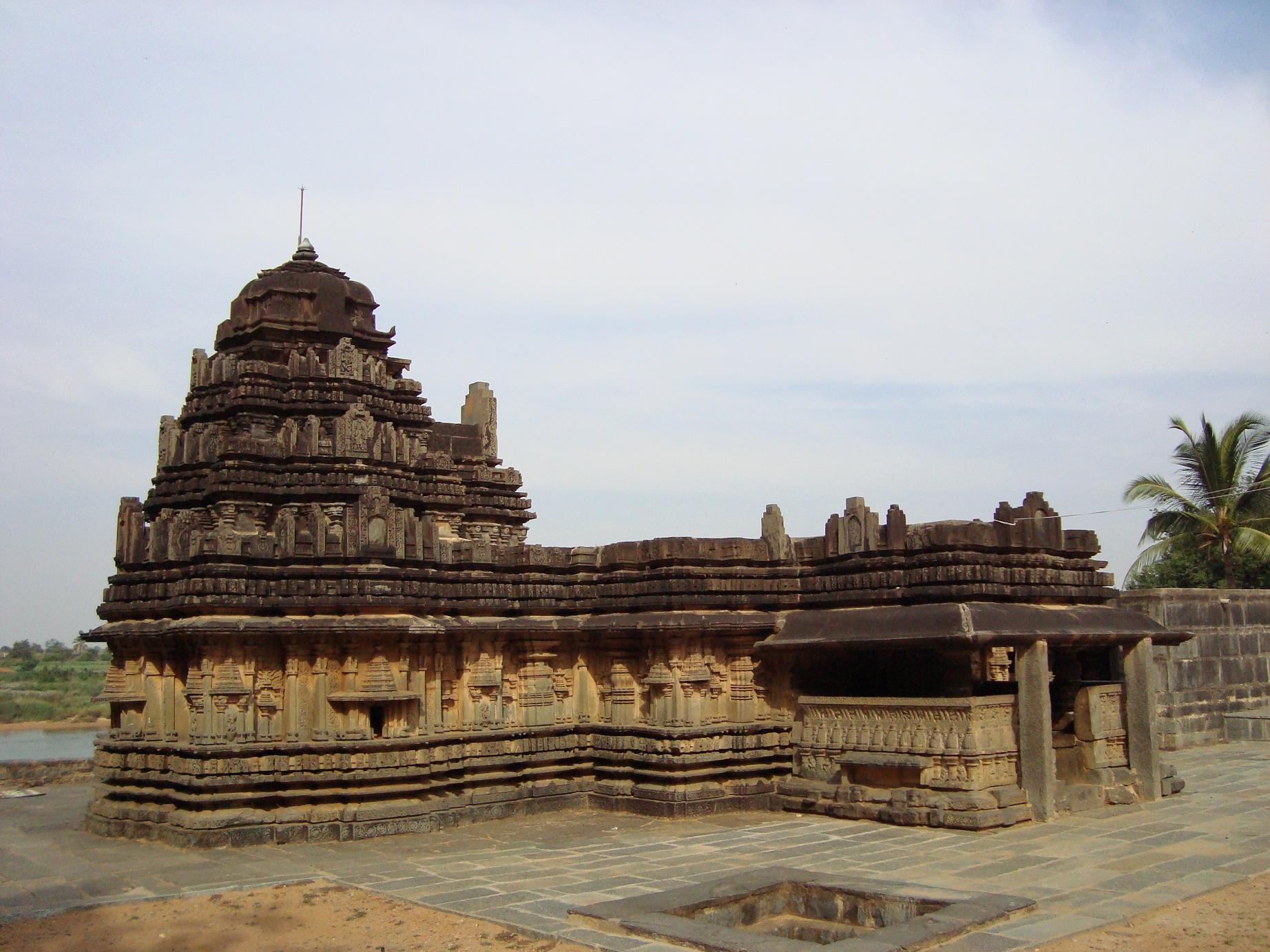
What distinguishes the Galageshvara Temple is its dramatic, towering *pyramidal stepped shikhara* rising directly above the riverbank. Unlike the curved Vesara towers typical of the Western Chalukya heartland, Galaganatha exhibits a steep, soaring pyramidal outline that demonstrates the architects' mastery of geometric massing and proportion. The stone foundations were engineered with heavy granite revetments specifically designed to withstand seasonal floods of the swollen Tungabhadra River.
Centrally protected as an ancient monument of national importance by the Archaeological Survey of India (ASI) Bengaluru Circle, Galaganatha enchants travelers with its pristine riverine setting, intact medieval stone tower, and peaceful spiritual ambiance.
3. Structural Engineering & Architectural Design
The temple plan consists of a sanctum (*garbhagriha*), an enclosed vestibule (*sukhanasi*), a closed hall (*navaranga*), and an open pillared porch opening toward the river. The sanctum tower is an imposing stepped pyramidal structure crowned by an intact stone *amalaka* and *kalasha*. The exterior walls are articulated with slender pilasters, miniature tiered decorative shrines, and deeply recessed niches that cast striking geometric shadows under the riverside sun.

The river-facing porch features stone bench seating (*kakshasana*) decorated with delicate floral arabesques and balustrades. The interior of the closed navaranga is supported by four mirror-polished, lathe-turned soapstone pillars whose bell profiles reflect interior light. The ceiling bays are adorned with deeply carved concentric floral rosettes.
The sanctum enshrines an ancient Shiva linga carved from polished black stone. Stone steps lead down from the temple terrace directly to the water's edge, where ancient pilgrims performed dawn ablutions before entering the sacred sanctum.
4. Archaeological Excavations, Epigraphy & Conservation
ASI structural conservation stabilized the riverfront stone revetments and waterproofed the pyramid shikhara against monsoon rains.
Chemical cleaning removed microbial lichen and mineral encrustations from the soapstone friezes of the outer facade.
Epigraphical documentation recorded Old Kannada inscriptions detailing endowments of riverside land by Western Chalukya feudatories.
Entry to the Galageshvara Temple in Galaganatha is completely free under the Archaeological Survey of India.
5. Master Highlights & Archaeological Marvels
Steep Pyramidal Shikhara: A distinctive soaring stepped stone tower demonstrating masterful geometric massing.

Tungabhadra Riverfront Setting: Picturesque location right on the banks of the sacred flowing Tungabhadra River.
Lathe-Turned Soapstone Columns: Mirror-polished interior pillars demonstrating advanced mechanical lathe technology.
6. Visiting Hours, Entry Permits & Visitor Guidelines
Open daily from 8:30 AM to 5:30 PM. Allow about 1 to 1.5 hours to explore the temple architecture and riverfront embankment.
Late afternoons (3:30 PM to 5:30 PM) offer beautiful golden light reflecting off the river onto the temple facade.
Remove footwear before stepping onto the temple plinth; maintain quiet reverence.
Exercise caution near the river edge; river currents can be swift during the monsoon.
Galaganatha is a rural riverfront village; carry drinking water and snacks as tourist amenities are limited.
7. Site Museum & Interpretation Centers
Chaudayyadanapura Mukteshwara Temple lies 15 km southeast along the same Tungabhadra riverfront.
Haveri town, home to the celebrated Siddheshvara Temple, is located 35 km south.
8. Climate, Best Seasons & Ideal Visiting Hours
October through March is the premier travel season, offering cool breezes and pleasant daytime temperatures between 20°C and 28°C.
Post-monsoon (September to November) fills the Tungabhadra River, creating scenic waterscape views along the temple ghats.
9. Transit Logistics, Rail, Air & Road Access
Located in Galaganatha village, 35 km northeast of Haveri and 25 km from Ranebennur in Haveri district, Karnataka.
Hubballi Airport (HBX) is 85 km northwest, offering regular domestic flights to major Indian cities.
10. Regional Heritage Circuits & Sibling Monuments
Galaganatha is an essential jewel of the Tungabhadra Riverfront Chalukya Trail:
Sacred Architecture & Darshan Protocol Guide
Maximize your spiritual journey: VIP vs Sugam Darshan line reality, locker rules, and historical truth.
- ✓Sugam Darshan & Token Blueprint: Accurate online booking rules, pre-dawn passes, and entry lane realities.
- ✓Zero Commercialization Guard: Avoid bogus intermediaries, fake priest fees, and paid blessing scams.
- ✓Locker, Footwear & Mobile Safety: Verified cloakroom locations, authorized phone lockers, and security rules.
- ✓Hidden Architectural Marvels: Inscriptions, subterranean sanctums, and forgotten stone carvings.
🛡️ Personally curated by PK Gupta & the Hidden Routes research desk. Delivered directly to your Email & WhatsApp within 4–8 hours.
11. Frequently Asked Questions
When was the Galageshvara Temple at Galaganatha built?
The temple was built around 1080 CE during the reign of Western Chalukya Emperor Vikramaditya VI.
What makes the temple's tower distinctive?
It features a steep, soaring pyramidal stepped stone shikhara that rises directly above the riverbank, distinct from the curved Vesara towers of the region.
What river flows past the temple?
The sacred Tungabhadra River flows directly beside the temple, with stone steps leading from the terrace to the water.
How far is Galaganatha from Haveri?
Galaganatha is located approximately 35 km northeast of Haveri city, accessible by road via Guttal.
Is an entry fee required at Galaganatha Temple?
No, entry to the Galageshvara Temple in Galaganatha is completely free under the Archaeological Survey of India (ASI).