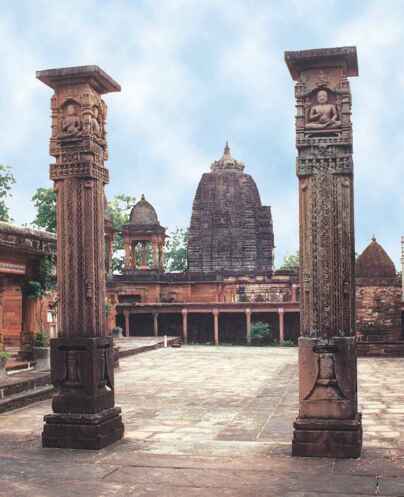
1. Overview & Archaeological Significance
The Deogarh Jain Temple Cluster, crowning an isolated fortified plateau known as the *Karnali Fort* overlooking the sweeping Betwa River gorge in Lalitpur district, Uttar Pradesh, is one of the most magnificent, densely concentrated, and artistically opulent Digambara Jain pilgrimage centers in India. Comprising thirty-one distinct stone temples constructed between the 8th and 12th centuries CE and preserving over two thousand exquisite carved stone sculptures, the complex flourished as a premier spiritual and scholarly metropolis under the royal patronage of the Gurjara-Pratihara and Chandela dynasties.
Located in the Lalitpur district of Uttar Pradesh, Deogarh Shantinatha Jain Temple Cluster is centrally protected by the Archaeological Survey of India (ASI) as an irreplaceable landmark of South Asian civilization. Recognized for its medieval gurjara-pratihara and chandela jain temple architecture, multi-spired shikharas, manastambhas & rock-cut betwa escarpments, the site provides profound insights into the technological prowess, cosmological beliefs, and cultural aesthetics of its ancient builders.
2. Dynastic Origins, Royal Patrons & Chronology
An authentic foundation inscription carved in pristine Sanskrit on a stone pillar inside Temple No. 12, dated to the year 862 CE, records the reign of the illustrious Gurjara-Pratihara Emperor Bhoja I (Mihira Bhoja) and mentions the dedication of the grand *Shantinatha Temple* by the merchant guild under Acharya Devendrasena. The inscription proves that Deogarh was a flourishing center of Jain philosophy, canonical manuscript copying, and stone carving that attracted pilgrims and monastic preceptors from across Northern and Central India.
Beyond the thirty-one temples within the fort walls, the surrounding sandstone cliff faces dropping sheer into the Betwa River—most famously at *Nahala Ghati* and *Rajghati*—are completely blanketed with hundreds of 9th- and 10th-century rock-cut carvings depicting the twenty-four Tirthankaras, Yakshis (Ambika, Chakreshwari, Padmavati), and meditating ascetics. Conserved today as a centrally protected monument of national importance by the Archaeological Survey of India (ASI), Deogarh's Jain cluster is a breathtaking sanctuary of devotion, peace, and artistic brilliance.
3. Structural Engineering & Architectural Design
The thirty-one Jain temples of Deogarh are enclosed within a massive medieval stone fortification wall (*Garh*) punctuated by round bastions and fortified gateways. The temples represent the progressive evolution of Central Indian temple architecture from late Gupta simplicity to mature Gurjara-Pratihara and Chandela multi-turreted Nagara spires.

The architectural crown of the cluster is *Temple No. 12* (dedicated to Lord Shantinatha). Dating to the 9th century CE, it features a spacious pillared assembly hall (*Mandapa*) with intricately carved ceiling coffers, leading into a circumambulatory pathway and an inner sanctum crowned by a soaring curvilinear shikhara decorated with delicate lattice work (*Jala*).
Inside the temples and courtyards stand monumental monolithic *Manastambha* (victory/honor pillars), votive shrines (*Sarvatobhadra*), and thousands of free-standing sandstone icons of Tirthankara Rishabhanatha, Parshvanatha with his multi-hooded serpent canopy, Mahavira, and Bahubali depicted with creeping forest vines wound around his meditative limbs. The lyrical delicacy of the yakshi figures—with slender waists, ornate jewelry, and benevolent expressions—reflects the zenith of medieval Indian sculpture.
4. Archaeological Excavations, Epigraphy & Conservation
The ASI stabilized the 31 temple shikharas, restored displaced lintels, and treated the sandstone sculptures with protective consolidants.
Extensive epigraphic documentation deciphered over 300 medieval Jain inscriptions spanning the 8th to 17th centuries CE.
Constructed paved stone pathways connecting all 31 temples and installed safety railings along the Betwa River cliff edge.
Entry to the Deogarh Jain Temple complex is free. ASI guards and temple trust servitors manage the site.
5. Master Highlights & Archaeological Marvels
31 Medieval Jain Temples: An astonishing fortified hill sanctuary preserving 31 distinct temples and over 2,000 stone sculptures.

Gurjara-Pratihara Inscription (862 CE): Authentic pillar inscription documenting the reign of Emperor Mihira Bhoja I.
Nahala Ghati Rock-Cut Reliefs: Hundreds of 9th-century Tirthankara and Yakshi carvings hewn directly into the sheer Betwa cliffs.
6. Visiting Hours, Entry Permits & Visitor Guidelines
Open daily from 6:00 AM to 6:00 PM. A complete walk through the 31 temples and the rock-cut cliff paths requires 2 to 3 hours.
Early mornings offer profound peace and quiet, with golden sunlight illuminating the row of temple spires and the Betwa gorge.
Remove footwear and leather items before entering the consecrated temple courtyards.
Do not touch, scratch, or lean against the ancient 9th-century Tirthankara sculptures.
The path descending to the Nahala Ghati cliff carvings is steep; wear shoes with good grip and hold the handrails.
7. Site Museum & Interpretation Centers
The Deogarh Archaeological Museum at the base exhibits recovered Jain bronzes, stone icons, and decorative pillars.
The 5th-century Gupta Dashavatara Temple is located just 1 km east in the valley.
8. Climate, Best Seasons & Ideal Visiting Hours
October through March is the premier season to visit, featuring cool, pleasant weather and clear skies.
Mahavira Jayanti (March/April) is celebrated with special religious processions and community gatherings.
9. Transit Logistics, Rail, Air & Road Access
Located atop Karnali Fort on the western ridge of Deogarh, Lalitpur district, Uttar Pradesh.
Easily reached by private taxi or car from Lalitpur railway station (33 km) or Jhansi (125 km).
10. Regional Heritage Circuits & Sibling Monuments
The Jain Cluster is the spiritual summit of the Deogarh Sacred Plateau:
Sacred Architecture & Darshan Protocol Guide
Maximize your spiritual journey: VIP vs Sugam Darshan line reality, locker rules, and historical truth.
- ✓Sugam Darshan & Token Blueprint: Accurate online booking rules, pre-dawn passes, and entry lane realities.
- ✓Zero Commercialization Guard: Avoid bogus intermediaries, fake priest fees, and paid blessing scams.
- ✓Locker, Footwear & Mobile Safety: Verified cloakroom locations, authorized phone lockers, and security rules.
- ✓Hidden Architectural Marvels: Inscriptions, subterranean sanctums, and forgotten stone carvings.
🛡️ Personally curated by PK Gupta & the Hidden Routes research desk. Delivered directly to your Email & WhatsApp within 4–8 hours.
11. Frequently Asked Questions
How many Jain temples are located at Deogarh?
There are thirty-one (31) distinct medieval Jain temples located within the fortified Karnali Fort enclosure, housing over 2,000 sculptures.
What is the most famous temple in the Deogarh Jain complex?
Temple No. 12, dedicated to the 16th Tirthankara Lord Shantinatha, is the largest and most architecturally complete temple in the cluster.
What famous Gurjara-Pratihara emperor is mentioned in the Deogarh inscriptions?
An authentic inscription of 862 CE mentions Emperor Bhoja I (Mihira Bhoja) of the Gurjara-Pratihara dynasty during whose reign the Shantinatha temple was dedicated.
What are the rock-cut carvings at Nahala Ghati?
Nahala Ghati and Rajghati are sheer sandstone cliff faces dropping into the Betwa River where hundreds of Tirthankaras and Yakshis were carved in high relief.
How close is the Jain temple complex to the Gupta Dashavatara Temple?
The Jain temple complex is located approximately 1 km west of the Dashavatara Temple, atop the adjacent fortified hill.