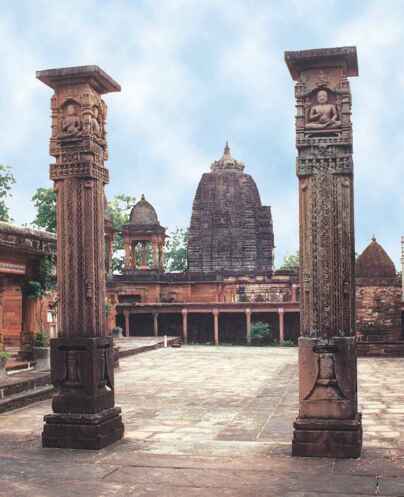
1. Overview & Archaeological Significance
The Deogarh Jain Temple complex, situated within the imposing stone ramparts of the ancient hilltop fortress of Karnali (or Deogarh Fort) overlooking the Betwa River gorge in Lalitpur district, Uttar Pradesh, is one of the most prolific, densely populated, and artistically magnificent Jain pilgrimage sanctuaries in India. Constructed between the 8th and 12th centuries CE during the reigns of the Gurjara-Pratiharas and Chandellas, the complex comprises thirty-one distinct stone temples housing over two thousand documented Jain sculptures.
Located in the Lalitpur district of Uttar Pradesh, Deogarh Jain Temple Complex Karnali Citadel is centrally protected by the Archaeological Survey of India (ASI) as an irreplaceable landmark of South Asian civilization. Recognized for its high medieval nagara temple architecture, pratihara & chandella shikharas, carved manastambhas & rock-cut betwa ghats, the site provides profound insights into the technological prowess, cosmological beliefs, and cultural aesthetics of its ancient builders.
2. Dynastic Origins, Royal Patrons & Chronology
What elevates Deogarh into an international center of Jain iconographical scholarship is the astonishing preservation and stylistic diversity of its sculptural archive. Temple 12 (the Shantinatha Temple), consecrated in 862 CE during the reign of Gurjara-Pratihara Emperor Mihira Bhoja, is the grand architectural anchor of the complex. An extensive Sanskrit inscription engraved upon its pillar records that it was commissioned by the merchant-patron Deva, disciple of the venerable Jain preceptor Kamaladevasuri, providing precise chronological anchoring for medieval North Indian art.
Centrally protected as an ancient monument of national importance by the Archaeological Survey of India (ASI) Agra Circle and nominated on India's UNESCO World Heritage Tentative List, the Deogarh Jain complex enchants pilgrims with its soaring stone spires (*shikharas*), carved ceremonial pillars (*manastambhas*), and cliffside rock carvings along the *Nahara Ghat* descending to the Betwa River.
3. Structural Engineering & Architectural Design
The thirty-one temples are arranged in several walled courtyards inside the fortress. Constructed of fine-grained reddish and buff sandstone, the temples display the full stylistic evolution of the Nagara style, ranging from modest single-cell shrines with flat roofs to monumental multi-spire temples crowned by soaring curvilinear shikharas, ribbed *amalakas*, and stone *kalashas*.

Temple 12 is the architectural centerpiece: it consists of a sanctum enshrining a colossal, ten-foot-tall monolithic idol of Tirthankara Shantinatha, preceded by an ornate pillared assembly hall (*mandapa*) and a portico. The outer walls and interior columns are adorned with hundreds of exquisite relief sculptures depicting the twenty-four Tirthankaras, Yakshas, Yakshinis (such as Ambika and Chakreshwari), and auspicious symbols including the sixteen dreams of Queen Trishala.
Leading down from the fortress ramparts to the swirling waters of the Betwa River is the historic *Nahara Ghat* (Tiger's Step). Carved directly into the sheer vertical sandstone cliffs along the stairway are dozens of rock-cut niches containing ancient Jain Tirthankara sculptures, Saptamatrikas, and archaic Brahmi inscriptions that overlook the river canyon.
4. Archaeological Excavations, Epigraphy & Conservation
ASI structural conservation stabilized the stone shikharas of all 31 temples and waterproofed the courtyard roofs.
Chemical poultice cleaning removed centuries of environmental patina from the Tirthankara icons and carved manastambha pillars.
Epigraphical documentation cataloged over fifty medieval Sanskrit and Prakrit inscriptions documenting endowments by royal ministers and guilds.
Entry to the Deogarh Jain Temple complex is completely free under the Archaeological Survey of India.
5. Master Highlights & Archaeological Marvels
31 Medieval Jain Temples: An astonishing walled sanctuary of 31 intact stone temples spanning four centuries of medieval art.

Colossal Shantinatha Idol: A 10-foot monolithic 9th-century Tirthankara statue radiating serene meditative transcendence.
Nahara Ghat Rock Carvings: Ancient sandstone cliff stairway carved with dozens of rock-cut Tirthankara shrines overlooking the Betwa.
6. Visiting Hours, Entry Permits & Visitor Guidelines
Open daily from 6:00 AM to 6:00 PM. Allow at least 2 to 2.5 hours to explore the temples, museum, and Nahara Ghat rock carvings.
Morning visits between 8:00 AM and 11:00 AM offer cool temperatures, peaceful temple ambiance, and optimal natural lighting.
Remove footwear and leather items before entering the consecrated temple courtyards; dress respectfully.
Do not touch or lean against the delicate ancient stone sculptures; photography is permitted without flash.
The walk down the Nahara Ghat cliff steps is steep; wear footwear with good traction and exercise caution near the river.
7. Site Museum & Interpretation Centers
The on-site ASI Archaeological Site Museum displays hundreds of excavated Jain icons, bronze statues, and inscriptions.
The 6th-century Gupta Dashavatara Temple is located just 2 km east in Deogarh village.
8. Climate, Best Seasons & Ideal Visiting Hours
October through March is the premier travel season, offering cool breezes and pleasant daytime temperatures between 18°C and 27°C.
Winter mornings provide crisp clear vistas over the Betwa River gorge and surrounding forested hills.
9. Transit Logistics, Rail, Air & Road Access
Located within Karnali Fort at Deogarh, 33 km south of Lalitpur city and 125 km south of Jhansi in Lalitpur district, Uttar Pradesh.
Gwalior Airport (GWL) is 225 km north, while Lalitpur railway junction is 33 km north via State Highway 36.
10. Regional Heritage Circuits & Sibling Monuments
Deogarh Jain Complex is the crowning spiritual sanctuary of the Bundelkhand Jain Heritage Trail:
Sacred Architecture & Darshan Protocol Guide
Maximize your spiritual journey: VIP vs Sugam Darshan line reality, locker rules, and historical truth.
- ✓Sugam Darshan & Token Blueprint: Accurate online booking rules, pre-dawn passes, and entry lane realities.
- ✓Zero Commercialization Guard: Avoid bogus intermediaries, fake priest fees, and paid blessing scams.
- ✓Locker, Footwear & Mobile Safety: Verified cloakroom locations, authorized phone lockers, and security rules.
- ✓Hidden Architectural Marvels: Inscriptions, subterranean sanctums, and forgotten stone carvings.
🛡️ Personally curated by PK Gupta & the Hidden Routes research desk. Delivered directly to your Email & WhatsApp within 4–8 hours.
11. Frequently Asked Questions
How many Jain temples are preserved at Deogarh?
The complex preserves thirty-one distinct medieval stone temples dating from the 8th to the 12th century CE, housing over 2,000 documented Jain sculptures.
What is the most famous temple inside the complex?
Temple 12 (the Shantinatha Temple), consecrated in 862 CE during the Gurjara-Pratihara reign, housing a colossal 10-foot monolithic Shantinatha statue.
What is Nahara Ghat at Deogarh?
Nahara Ghat is a historic stone stairway cut into the sheer sandstone cliffs descending from the fort to the Betwa River, lined with dozens of rock-cut Tirthankara sculptures.
How far is the Jain complex from the Gupta Dashavatara Temple?
The Jain temple complex inside Karnali Fort is located just 2 km west of the Dashavatara Temple, making them an easy combined day-trip.
Is an entry fee required at the Deogarh Jain Temples?
No, entry to the Deogarh Jain Temple complex is completely free under the Archaeological Survey of India (ASI).