1. Overview & Archaeological Significance
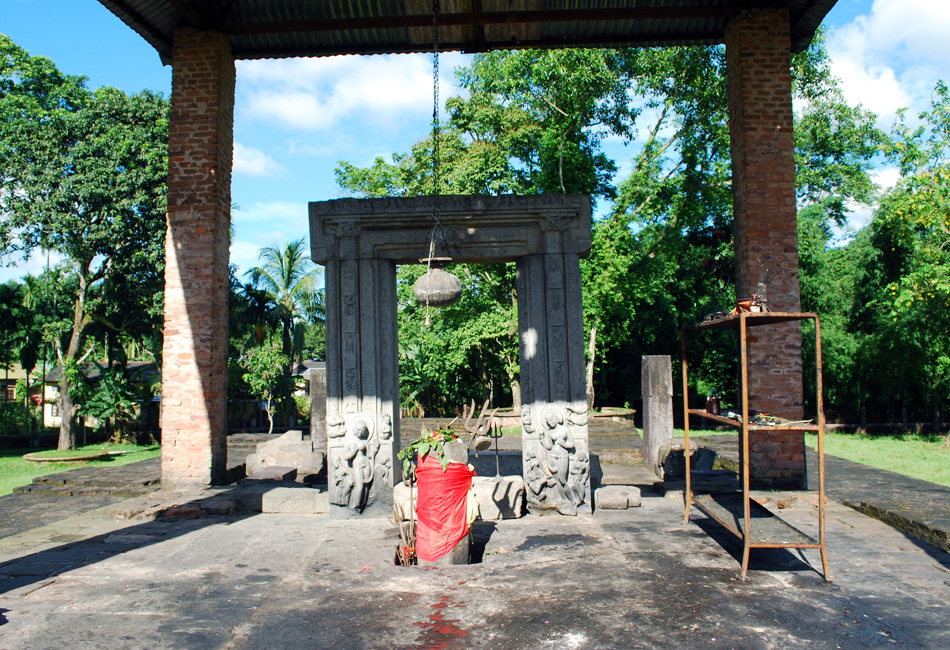
Da Parbatia, located in the village of Dah Parbatia just 5 km west of the historic city of Tezpur in Sonitpur district, preserves the oldest and most celebrated surviving work of monumental stone sculptural art in Assam. Dating to the early 6th century CE (c. 500–550 CE) during the zenith of classical Imperial Gupta art, this exquisite carved sandstone doorway once framed the sanctum sanctorum of an ancient temple dedicated to Lord Shiva. It proves that Assam was thoroughly integrated into the high artistic and spiritual traditions of Northern India during the classical era.
Located in the Sonitpur district of Assam, Da Parbatia Ancient Gupta Temple Doorway is centrally protected by the Archaeological Survey of India (ASI) as an irreplaceable landmark of South Asian civilization. Recognized for its classical imperial gupta sandstone sculptural art, high-relief river goddess iconography, floral creepers & flying gandharvas, the site provides profound insights into the technological prowess, cosmological beliefs, and cultural aesthetics of its ancient builders.
2. Dynastic Origins, Royal Patrons & Chronology
In 1897, during the devastating Assam earthquake, a later Ahom-era brick temple that had been erected over the ancient ruins collapsed completely. In 1924, legendary archaeologist Rakhaldas Banerji (celebrated for his discovery of Mohenjo-daro) surveyed the site for the Archaeological Survey of India. Beneath the collapsed brick debris, Banerji unearthed this miraculous stone doorframe standing intact, immediately hailing it as one of the finest and most lyrical examples of classical Gupta art anywhere in the Indian subcontinent.
The discovery confirmed that the ancient kingdom of Kamarupa maintained sophisticated royal ateliers capable of executing sculpture of the highest aesthetic caliber, directly reflecting the artistic renaissance that flourished under the imperial Guptas. Today preserved as a monument of national importance under the protective care of the Archaeological Survey of India, Da Parbatia remains an indispensable pilgrimage for art historians, archaeologists, and travelers.
3. Structural Engineering & Architectural Design
The Da Parbatia doorframe is carved from fine-grained greyish sandstone with extraordinary delicate precision. It consists of two vertical jambs and an ornate horizontal lintel. The lower third of each door jamb is dominated by graceful high-relief depictions of the sacred river goddesses: Goddess Ganga on the left jamb standing on a Makara (mythical river monster), and Goddess Yamuna on the right jamb standing on a Kurma (tortoise).

Both goddesses are sculpted in the classic *Tribhanga* (triple-bend) posture, holding floral garlands with serene, introspective expressions. Each goddess is accompanied by two female attendants, one of whom holds a parasol (*Chhatra*) over the deity while the other carries a basket of holy flowers. Above the goddesses, delicate pairs of swans (*Hamsa*) fly inward carrying pearls in their beaks.
The upper jambs and lintel are decorated with four concentric bands of ornamentation featuring luxuriant foliated scrolls (*Patralata*), playing celestial dwarfs (*Ganas*), and pairs of flying *Gandharvas* and *Apsaras*. The central crest (*Lalatabimba*) of the lintel features a seated figure of Lord Shiva within a miniature chaitya niche, flanked by kneeling worshipers.
4. Archaeological Excavations, Epigraphy & Conservation
Excavated in 1924 by R.D. Banerji, clearing collapsed 18th-century brickwork to expose 6th-century stone foundations.
The ASI constructed an open-sided concrete shelter roof over the delicate sandstone doorway to shield it from monsoon rains.
Archaeological clearances mapped the concentric brick plinth layers spanning the Gupta, Salastambha, and Ahom historical periods.
Entry to the Da Parbatia monument is free. ASI provides informational display boards on site.
5. Master Highlights & Archaeological Marvels
Oldest Stone Art in Assam: An authentic 6th-century CE Gupta masterpiece, pre-dating all other surviving stone monuments in the state.

Ganga & Yamuna Doorway: Exquisite relief carvings of the river goddesses in Tribhanga stance attended by parasol bearers.
Lyrical Gupta Foliage: Four intricate bands of floral creepers, playing Ganas, and flying Gandharvas with pearl-bearing swans.
6. Visiting Hours, Entry Permits & Visitor Guidelines
Open daily from 9:00 AM to 5:00 PM. A complete viewing of the doorway and brick plinth requires 30 to 45 minutes.
Early morning light illuminates the delicate sandstone carvings without harsh shadows, ideal for photography.
Do not touch, scratch, or lean against the ancient 6th-century sandstone carvings.
Stay within designated paved boundaries around the excavated brick foundations.
Flash photography and tripod use require ASI permission; respect the delicate surface of the 1,500-year-old stone.
7. Site Museum & Interpretation Centers
Cole Park (Chitralekha Udyan) in central Tezpur exhibits medieval stone pillars and friezes from the 9th-century Bamuni Hills.
Agnigarh hill monument overlooking the Brahmaputra River lies 6 km east.
8. Climate, Best Seasons & Ideal Visiting Hours
October to April is the best time to visit Tezpur, offering cool, dry weather and pleasant breezes from the Brahmaputra.
December and January offer crisp mornings with clear mountain views toward the snow-capped Eastern Himalayas.
9. Transit Logistics, Rail, Air & Road Access
Located in Dah Parbatia village, 5 km west of Tezpur city center in Sonitpur district.
Taxis, auto-rickshaws, and cycle-rickshaws easily reach the site via the Tezpur-Bhairabkunda road.
10. Regional Heritage Circuits & Sibling Monuments
Da Parbatia is the ancient jewel of the Sonitpur Heritage Circuit:
Sacred Architecture & Darshan Protocol Guide
Maximize your spiritual journey: VIP vs Sugam Darshan line reality, locker rules, and historical truth.
- ✓Sugam Darshan & Token Blueprint: Accurate online booking rules, pre-dawn passes, and entry lane realities.
- ✓Zero Commercialization Guard: Avoid bogus intermediaries, fake priest fees, and paid blessing scams.
- ✓Locker, Footwear & Mobile Safety: Verified cloakroom locations, authorized phone lockers, and security rules.
- ✓Hidden Architectural Marvels: Inscriptions, subterranean sanctums, and forgotten stone carvings.
🛡️ Personally curated by PK Gupta & the Hidden Routes research desk. Delivered directly to your Email & WhatsApp within 4–8 hours.
11. Frequently Asked Questions
How old is the Da Parbatia doorway?
The Da Parbatia stone doorway dates to the early 6th century CE (c. 500–550 CE), making it approximately 1,500 years old and the oldest surviving stone carving in Assam.
Which deities are carved on the Da Parbatia doorway?
The doorway prominently features the sacred river goddesses Ganga (standing on a Makara) and Yamuna (standing on a tortoise), attended by parasol bearers and celestial swans.
Who discovered the Da Parbatia doorway?
It was discovered and documented in 1924 by renowned archaeologist Rakhaldas Banerji (R.D. Banerji), who identified its classical Gupta artistic heritage.
What happened to the temple that housed this doorway?
The original Gupta temple decayed over centuries; a later Ahom brick temple built above it collapsed in the great Assam earthquake of 1897, revealing the doorway beneath.
How is the monument protected today?
The doorway is protected as a Monument of National Importance by the Archaeological Survey of India (ASI) under an open-sided protective shelter.