1. Overview & Archaeological Significance
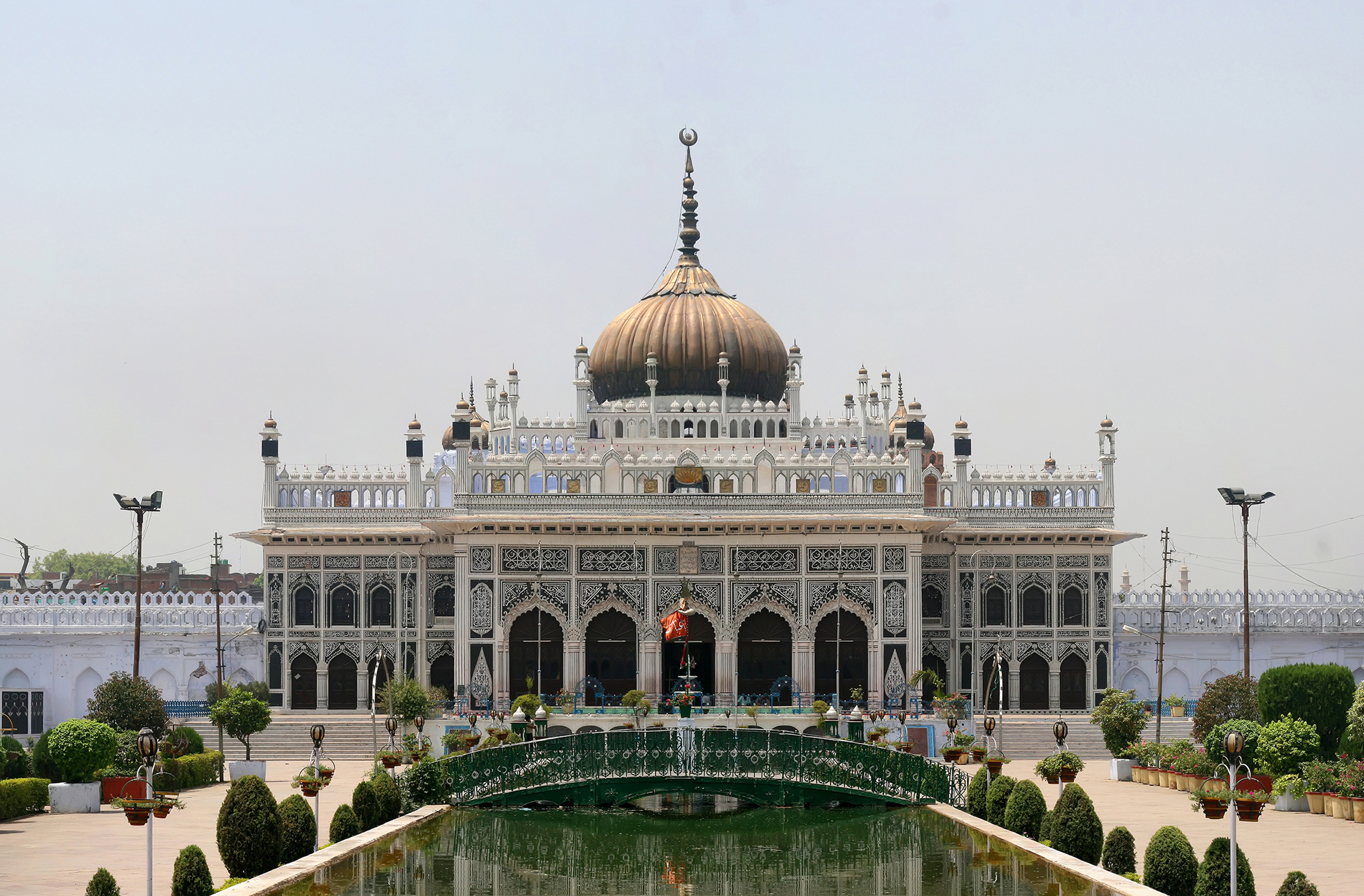
The Chota Imambara (officially the *Imambara Husainabad Mubarak*), situated along the grand heritage boulevard of Hussainabad in Old Lucknow, Uttar Pradesh, is universally celebrated as the *'Palace of Lights'*—one of the most ornate, dazzling, and exquisitely embellished monuments of the Awadh Sultanate. Built in 1838 CE by Nawab Muhammad Ali Shah (the third King of Awadh), the monument was designed as a sacred congregation hall for Shia Muslim mourning rituals during the month of Muharram, and as the grand royal mausoleum for the Nawab and his beloved mother, Malika Jahan.
Located in the Lucknow district of Uttar Pradesh, Chota Imambara Palace of Lights Lucknow is centrally protected by the Archaeological Survey of India (ASI) as an irreplaceable landmark of South Asian civilization. Recognized for its high awadhi indo-islamic architecture, gilded onion dome, belgian crystal chandeliers, arabic calligraphy, the site provides profound insights into the technological prowess, cosmological beliefs, and cultural aesthetics of its ancient builders.
2. Dynastic Origins, Royal Patrons & Chronology
While the neighboring Bara Imambara inspires awe through its colossal structural scale and gravity-defying unsupported brick vault, the Chota Imambara enchants visitors through its delicate filigree ornamentation, gilded copper domes, and extraordinary decorative furnishings. The Nawab, a passionate connoisseur of European decorative arts, imported thousands of fine crystal chandeliers, colored glass globes, and silver-plated wall candelabras directly from Belgium, England, and Venice. During festival nights, when over 1,000 oil lamps and chandeliers were simultaneously illuminated, the building glowed with such celestial brilliance that European travelers named it the 'Palace of Lights'.
Centrally protected as an ancient monument of national importance by the Archaeological Survey of India (ASI) and maintained by the Hussainabad Allied Trust, the Chota Imambara complex stands inside a walled garden featuring an exquisite central water canal, a miniature replica of the Taj Mahal (the tomb of Princess Zinat Asiya), and the unfinished 19th-century *Satkhanda* watchtower.
3. Structural Engineering & Architectural Design
The Chota Imambara is designed as a five-doorway rectangular hall standing upon an elevated stone plinth, crowned by a majestic central onion dome covered in pure gilded copper leaf that shimmers under the sun, flanked by slender corner minarets (*guldastas*) and decorated parapets.

The exterior facade is a masterwork of Islamic epigraphy: the white plaster arches are adorned with continuous bands of verses from the Holy Quran carved in delicate Arabic *thuluth* and Persian calligraphy, executed with fluid sculptural elegance by master calligraphers.
The interior of the main hall is an astonishing jewel box of decorative luxury. The ceiling is suspended with hundreds of multi-tiered Belgian glass chandeliers in emerald-green, ruby-red, cobalt-blue, and clear crystal. The hall preserves the royal silver-plated *tazia* (ceremonial replica of Imam Husain's mausoleum in Karbala), the Nawab's golden ceremonial crown, and the solid silver throne upon which Muhammad Ali Shah presided over state ceremonies.
4. Archaeological Excavations, Epigraphy & Conservation
Chemical conservation by the ASI Chemistry Branch in the 2000s carefully cleaned and re-wired the hundreds of historic Belgian crystal chandeliers.
Structural restoration regilded the copper leaf on the central onion dome and stabilized the perimeter garden water channels.
The adjacent Husainabad Clock Tower (built 1881, standing 221 feet tall, the tallest clock tower in India) underwent comprehensive mechanical restoration.
Covered under the unified Bara Imambara Combined Ticket (includes Bara Imambara, Bhulbhulaiya, Shahi Baoli, and Chota Imambara): ₹50 for Indian citizens and ₹500 for foreign tourists.
5. Master Highlights & Archaeological Marvels
The Belgian crystal chandeliers: one of the finest and most complete collections of 19th-century European glass chandeliers in Asia.

The Taj Mahal replica: a graceful small-scale marble and plaster replica of the Agra Taj Mahal built as the tomb of Princess Zinat Asiya.
The ceremonial silver tazia: crafted of pure beaten silver, carried in solemn annual processions during Muharram.
6. Visiting Hours, Entry Permits & Visitor Guidelines
Open daily from 6:00 AM to 5:00 PM throughout the year. The complex remains open throughout the week.
Visiting between 8:00 AM and 10:30 AM provides serene morning reflections of the gilded dome shimmering in the central garden canal.
Visitors must remove footwear before entering the main hall; modest attire covering shoulders and knees is mandatory inside the active prayer sanctuary.
Touching or shaking the historic crystal chandeliers or silver tazia is strictly prohibited.
The interior hall contains densely packed antique chandeliers and glass displays. Exercise care when moving through the central hall.
7. Site Museum & Interpretation Centers
The nearby Husainabad Picture Gallery exhibits 19th-century royal portraits and costumes of the Nawabs of Awadh.
The Bara Imambara and Rumi Darwaza are located just 1 km east along the historic Husainabad heritage street.
8. Climate, Best Seasons & Ideal Visiting Hours
October to March offers ideal weather, with pleasant daytime temperatures between 15°C and 26°C.
The winter months feature crisp, clear sunshine ideal for exploring the historic architecture of Old Lucknow.
9. Transit Logistics, Rail, Air & Road Access
Located in Hussainabad, Old Lucknow, 1 km west of Bara Imambara and 7 km from Lucknow Charbagh Railway Station (LKO).
Easily accessible via auto-rickshaw, cycle rickshaw, or taxi from anywhere in Lucknow.
10. Regional Heritage Circuits & Sibling Monuments
Chota Imambara is the decorative crown of the Nawabi Heritage & Imambaras of Lucknow Trail:
Sacred Architecture & Darshan Protocol Guide
Maximize your spiritual journey: VIP vs Sugam Darshan line reality, locker rules, and historical truth.
- ✓Sugam Darshan & Token Blueprint: Accurate online booking rules, pre-dawn passes, and entry lane realities.
- ✓Zero Commercialization Guard: Avoid bogus intermediaries, fake priest fees, and paid blessing scams.
- ✓Locker, Footwear & Mobile Safety: Verified cloakroom locations, authorized phone lockers, and security rules.
- ✓Hidden Architectural Marvels: Inscriptions, subterranean sanctums, and forgotten stone carvings.
🛡️ Personally curated by PK Gupta & the Hidden Routes research desk. Delivered directly to your Email & WhatsApp within 4–8 hours.
11. Frequently Asked Questions
Why is Chota Imambara called the 'Palace of Lights'?
Because its interior is filled with hundreds of magnificent 19th-century Belgian glass and crystal chandeliers, which were historically illuminated during Muharram and festival nights, making the palace glow brilliantly.
Who built the Chota Imambara and when?
It was built in 1838 CE by Nawab Muhammad Ali Shah, the third King of Awadh, as a Shia congregation hall and royal mausoleum for himself and his mother.
What is the miniature Taj Mahal inside the courtyard?
It is a 19th-century architectural replica of the Taj Mahal built as the mausoleum of Princess Zinat Asiya, daughter of King Muhammad Ali Shah.
Is entry to Chota Imambara covered under the Bara Imambara ticket?
Yes, the unified combined ticket (₹50 Indians / ₹500 foreigners) covers entry to both Bara Imambara and Chota Imambara.
What is the tallest clock tower in India standing near Chota Imambara?
The Husainabad Clock Tower, standing 221 feet (67 metres) tall, built in 1881 to mark the arrival of Sir George Couper, stands directly outside the complex.