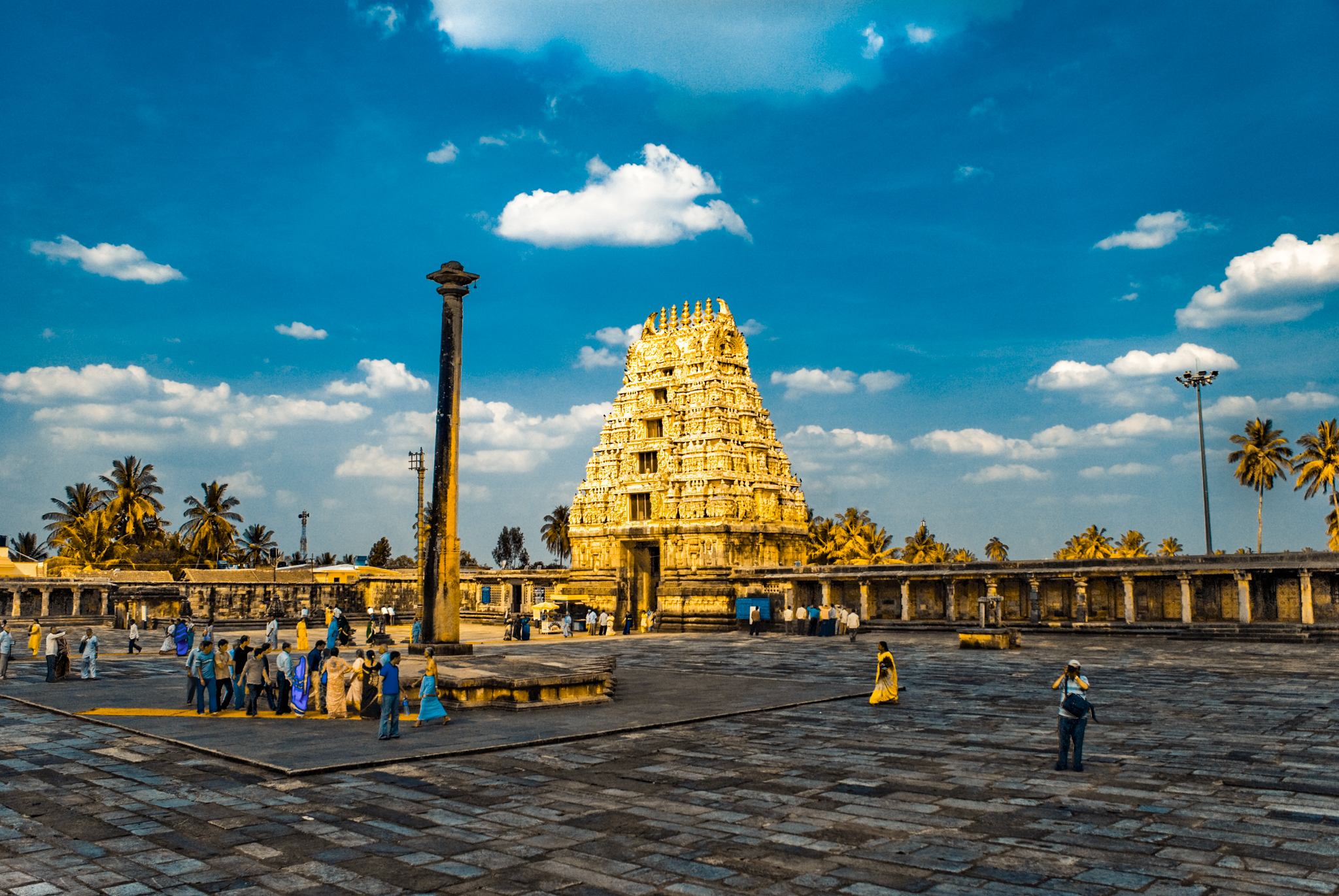
1. Overview & Archaeological Significance
The Chennakeshava Temple at Belur (originally named Vijayanarayana Temple), nestled along the Yagachi River in Hassan district of southern Karnataka, is the foundational masterpiece of Hoysala imperial architecture. Commissioned in 1117 CE by the illustrious Hoysala monarch King Vishnuvardhana, the temple was founded to mark his historic military victory over the Chola viceroy of Talakadu and his royal conversion from Jainism to Sri Vaishnavism under the guidance of the philosopher Ramanujacharya. The temple took an astounding 103 years and three generations of master sculptors to reach full completion.
Located in the Hassan district of Karnataka, Chennakeshava Temple Belur is centrally protected by the Archaeological Survey of India (ASI) as an irreplaceable landmark of South Asian civilization. Recognized for its hoysala stellate architecture, chloritic schist (soapstone) filigree, lathe-turned pillars, the site provides profound insights into the technological prowess, cosmological beliefs, and cultural aesthetics of its ancient builders.
2. Dynastic Origins, Royal Patrons & Chronology
Belur served as the historic capital of the early Hoysala Empire before the royal court shifted to nearby Dvarasamudra (Halebidu). King Vishnuvardhana enlisted India's greatest medieval guilds of sculptors, including celebrated master craftsmen (*Ruvari*) Ruvari Mallitamma, Dasoja, and his son Chavana, whose signed epigraphs still appear carved below individual reliefs. In September 2023, Chennakeshava Temple was officially inscribed as a UNESCO World Heritage Site as part of the 'Sacred Ensembles of the Hoysalas' alongside Halebidu and Somanathapura.
Unlike many north Indian temples damaged during medieval raids, the Chennakeshava Temple has remained an active center of uninterrupted living Hindu worship for over 900 years, preserving its sacred Vaishnava rituals, chariot festivals (*Rathotsava*), and classical temple traditions under the protection of the Archaeological Survey of India (ASI).
3. Structural Engineering & Architectural Design
The temple is constructed atop a wide, elevated stone plinth (*jagati*) designed on a complex 16-pointed stellate (star-shaped) ground plan. Constructed entirely from fine-grained chloritic schist (commonly known as soapstone), the soft stone allowed Hoysala sculptors to achieve an astonishing level of filigree carving comparable to ivory and sandalwood carving before the stone hardened upon prolonged atmospheric exposure.

The exterior base of the temple features a horizontal frieze of sculpted bands encircling the entire structure: 650 continuous charging war elephants at the lowest register (no two alike), followed by lions (*shardulas*), floral scrollwork, equestrian troops, mythological episodes from the *Puranas*, and swans (*hamsas*). Above these registers stand 80 large relief panels depicting avatars of Vishnu, Shiva, Brahma, and celestial deities.
The crowning sculptural glory of Belur is its 42 celebrated *Madanika* (bracket figures) positioned under the overhanging eaves and inside the ceiling bays. These depict celestial maidens (*salabhanjikas*) in graceful dance postures, playing the flute, hunting with bows, wringing wet hair after a bath, and looking into mirrors (*Darpana Sundari*), demonstrating unrivaled anatomical fluidity.
4. Archaeological Excavations, Epigraphy & Conservation
Epigraphical surveys by B. Lewis Rice in the late 19th century documented over 118 Kannada inscriptions within the temple courtyard, establishing the political and economic history of the Hoysala dynasty.
ASI architectural restoration stabilized the ornate corbelled ceiling vaults and cleared centuries of natural soot and patina using non-chemical biological conservation agents.
Georadar studies of the temple courtyard revealed ancient subterranean drainage cisterns that channeled monsoon runoff into the temple's stepped water tank (*Kalyani*).
Entry to Chennakeshava Temple Belur is free for all domestic and international visitors. The complex is an active place of worship managed by the Muzrai Department and protected by the ASI.
5. Master Highlights & Archaeological Marvels
The main sanctum enshrines an awe-inspiring 3.7-metre-tall polished chloritic schist idol of Chennakeshava (Handsome Vishnu) holding the discus, conch, mace, and lotus.

The inner Navaranga hall features 48 lathe-turned polished stone pillars, including the legendary *Narasimha Pillar* which could historically rotate on its stone ball-bearing axis.
The Mohini pillar inside the assembly hall features a breathtaking sculpture of Lord Vishnu's female incarnation Mohini, carved with microscopic lace-like stone jewellery.
6. Visiting Hours, Entry Permits & Visitor Guidelines
The temple is open daily from 7:30 AM to 7:30 PM. The inner sanctum closes temporarily between 1:00 PM and 2:30 PM for midday rituals.
Early morning visits (7:30 AM to 9:30 AM) offer peaceful darshan and unobstructed views of the intricately illuminated interior pillars.
Visitors must deposit footwear at the designated counter outside the Rajagopuram. Modest attire covering shoulders and knees is mandatory inside the active sanctum.
Flash photography and videography inside the inner sanctum are strictly prohibited.
The soapstone sculptures are extremely delicate. Visitors must never touch, lean against, or touch the intricate filigree bracket carvings.
7. Site Museum & Interpretation Centers
The ASI Archaeological Museum at Halebidu (16 km away) exhibits an exceptional collection of Hoysala stone sculptures, inscriptions, and architectural cross-sections.
The Belur temple precinct houses a historical photo gallery illustrating conservation milestones achieved across the 20th century.
8. Climate, Best Seasons & Ideal Visiting Hours
October to March offers ideal weather, with pleasant daytime temperatures between 20°C and 28°C and clear skies.
The annual Belur Rathotsava (Temple Car Festival) in March–April draws tens of thousands of pilgrims, featuring the ceremonial procession of the colossal wooden temple chariot.
9. Transit Logistics, Rail, Air & Road Access
Belur is located 38 km northwest of Hassan and 220 km west of Bengaluru. Hassan Junction is the nearest major railway station, connected to Bengaluru and Mysuru.
Regular KSRTC express buses operate frequently between Hassan, Belur, Halebidu, and Bengaluru via National Highway 75.
10. Regional Heritage Circuits & Sibling Monuments
Belur anchors the Sacred Ensembles of the Hoysalas UNESCO World Heritage Circuit:
Sacred Architecture & Darshan Protocol Guide
Maximize your spiritual journey: VIP vs Sugam Darshan line reality, locker rules, and historical truth.
- ✓Sugam Darshan & Token Blueprint: Accurate online booking rules, pre-dawn passes, and entry lane realities.
- ✓Zero Commercialization Guard: Avoid bogus intermediaries, fake priest fees, and paid blessing scams.
- ✓Locker, Footwear & Mobile Safety: Verified cloakroom locations, authorized phone lockers, and security rules.
- ✓Hidden Architectural Marvels: Inscriptions, subterranean sanctums, and forgotten stone carvings.
🛡️ Personally curated by PK Gupta & the Hidden Routes research desk. Delivered directly to your Email & WhatsApp within 4–8 hours.
11. Frequently Asked Questions
What makes Chennakeshava Temple at Belur famous worldwide?
It is celebrated for its incredible chloritic schist soapstone filigree carvings, 16-pointed star-shaped platform, 42 delicate Madanika bracket figures, and intact 900-year-old living worship.
Who built the Belur Chennakeshava Temple?
It was commissioned in 1117 CE by Hoysala Emperor Vishnuvardhana to commemorate his victory at Talakadu, taking 103 years to be fully completed across three generations.
What are the Madanika bracket figures?
The Madanikas (or Salabhanjikas) are 42 exquisite sculptures of celestial dancers depicted in various artistic moods and poses, positioned under the eaves and interior ceiling bays of the temple.
Is Chennakeshava Temple a UNESCO World Heritage Site?
Yes, it was inscribed on the UNESCO World Heritage List in September 2023 as part of the serial property 'Sacred Ensembles of the Hoysalas'.
Is entry to Belur Chennakeshava Temple free?
Yes, entry to the temple complex is completely free for both Indian and international visitors.