1. Overview & Archaeological Significance
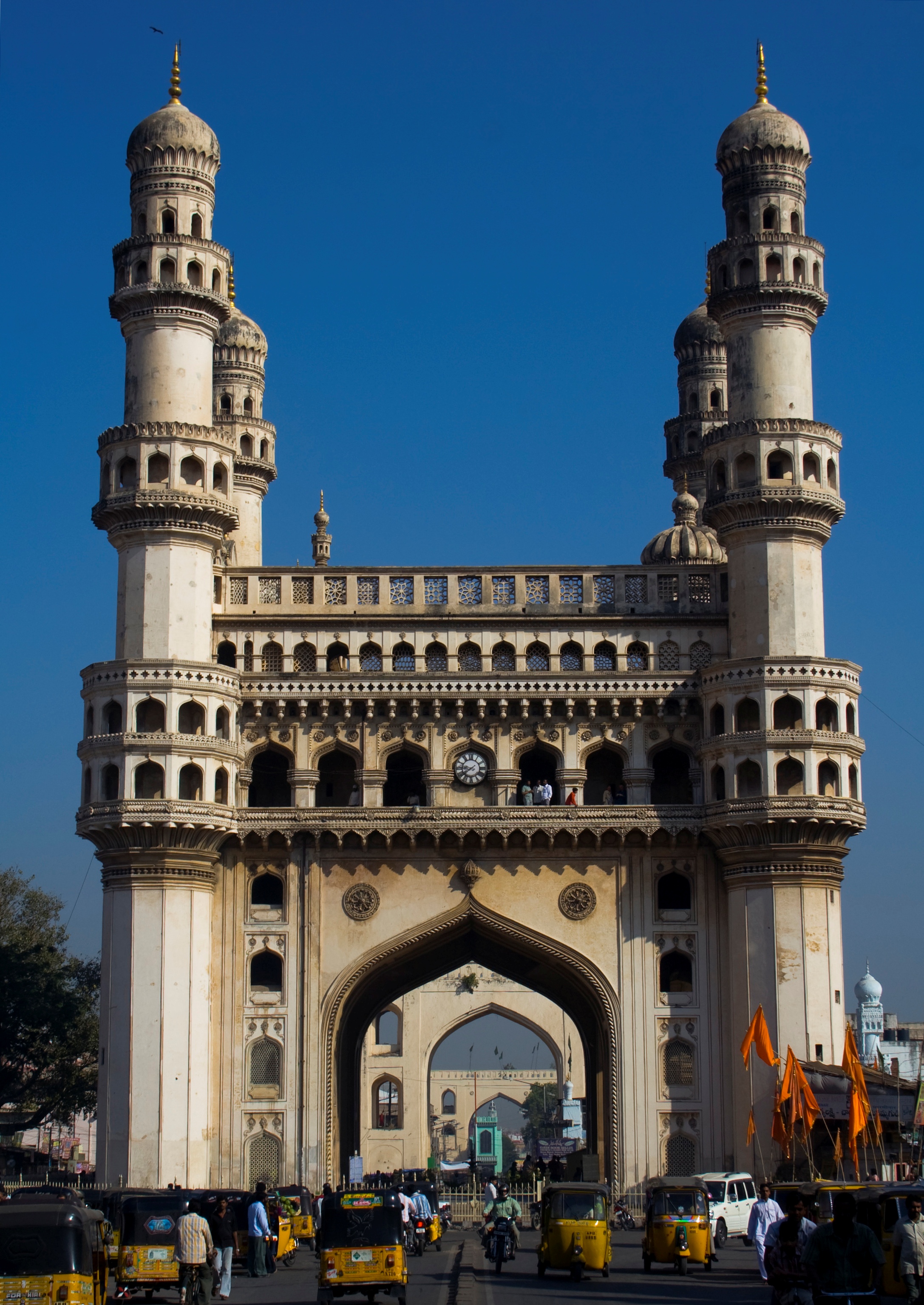
Charminar (literally 'Four Minarets'), majestically commanding the historic crossroads of the Old City of Hyderabad in Telangana, is the universally recognized global emblem of the city and one of the most sublime architectural monuments of medieval India. Commissioned in 1591 CE by Muhammad Quli Qutb Shah, the fifth Sultan of the Qutb Shahi Dynasty of Golconda, the monument was erected to commemorate the founding of the new planned royal capital of Hyderabad on the banks of the Musi River, following the relief of the populace from a devastating outbreak of plague that had ravaged the old fortified city of Golconda.
Located in the Hyderabad district of Telangana, Charminar Hyderabad is centrally protected by the Archaeological Survey of India (ASI) as an irreplaceable landmark of South Asian civilization. Recognized for its qutb shahi indo-islamic architecture, granite, stucco arabesques & four 48.7m minarets, the site provides profound insights into the technological prowess, cosmological beliefs, and cultural aesthetics of its ancient builders.
2. Dynastic Origins, Royal Patrons & Chronology
According to royal chronicles, Sultan Muhammad Quli Qutb Shah prayed for the cessation of the epidemic and vowed to erect an eternal memorial on the spot where he offered his supplications. In an inspired poetic prayer recorded in his royal *Kulliyat*, the Sultan prayed: 'Fill Thou, O Lord, this city of mine with people, as Thou hast filled the ocean with fish.' Charminar was strategically located at the intersection of the historic trans-Deccan royal trade route connecting Golconda with the bustling maritime seaport of Machilipatnam on the Bay of Bengal.
Designed under the supervision of royal Persian architect Mir Momin Astarabadi, Charminar functioned as a ceremonial triumphal gateway, a public square, and an active royal mosque. For over four centuries, it has anchored the vibrant cultural, commercial, and culinary life of Hyderabad, surrounded by the famous pearl markets, bangles of Laad Bazaar, and the monumental Mecca Masjid. Centrally protected by the Archaeological Survey of India, Charminar underwent extensive structural conservation between 2018 and 2022.
3. Structural Engineering & Architectural Design
The architectural plan of Charminar is a square structure measuring 20 metres (66 feet) on each side, constructed of local grey granite, pulverized marble mortar, and high-tenacity lime stucco. At each of the four cardinal faces, a colossal pointed arch opens to a width of 11 metres (36 feet) and rises to a height of 10 metres, allowing major ceremonial thoroughfares to pass directly through the monument beneath an expansive vaulted ceiling.

At the four corners of the structure rise four magnificent four-storeyed minarets, towering to an impressive height of 48.7 metres (160 feet) above ground level. Each minaret is encircled by three projecting carved balconies supported by delicate corbelled brackets, accessible via an internal spiral staircase of 149 stone steps. The minarets terminate in fluted bulbous domes resting on petal-like lotus calyxes, crowned by gilded finials.
The upper storeys are adorned with an intricate, lace-like double row of arched openings and open-work balustrades (*jalis*). On the western side of the uppermost open terrace sits the historic mosque, comprising 45 vaulted prayer spaces fronted by an open courtyard and an ablution fountain, offering sweeping panoramic vistas over the bustling bazaars of Hyderabad.
4. Archaeological Excavations, Epigraphy & Conservation
Between 2018 and 2022, the ASI Hyderabad Circle executed the Charminar Pedestrianisation Project (CPP), repaving the surrounding vehicular zone with authentic cobblestone granite slabs to eliminate traffic vibrations.
Restoration experts painstakingly repaired damaged lime stucco ornamentation using traditional Badami lime mortar mixed with organic additives (jaggery, egg-white, and gum arabic) matching the 1591 formula.
Dynamic multi-colored LED architectural illumination was installed in 2021, bathing the minarets in radiant golden light every evening.
Charminar is an ASI ticketed monument for visitors ascending to the first-floor observation gallery. Online tickets cost ₹20 for Indian, SAARC, and BIMSTEC visitors (₹25 at counter), and ₹250 for foreign tourists (₹300 at counter). Free entry for children under 15.
5. Master Highlights & Archaeological Marvels
Ascending to the first floor gallery provides stunning aerial views down onto the colorful bustling street life of Laad Bazaar and Choodi Bazaar.

The delicate lime stucco carvings on the arches, featuring lotus medallions, creeping vines, and miniature balustrades, represent the pinnacle of Deccani plaster art.
The view from the base looking straight up into the soaring 48.7-metre corner minarets reveals the mathematical symmetry of the Qutb Shahi design.
6. Visiting Hours, Entry Permits & Visitor Guidelines
Charminar is open daily from 9:00 AM to 5:30 PM for first-floor access. The monument exterior and pedestrian plaza remain accessible until late evening.
Online ticket costs are ₹20 for Indian and SAARC visitors, and ₹250 for foreign tourists. Children under 15 enter free.
Visitors must not write graffiti or scratch names on the historic lime-plastered walls or columns.
Personal photography without tripods is allowed; commercial filming and drones require prior written ASI authorization.
Charminar is a Centrally Protected monument of supreme national heritage. Any vandalism, defacing of stucco plaster, or unauthorized commercial activities will attract severe penalties under the AMASR Act 1958.
7. Site Museum & Interpretation Centers
The Salar Jung Museum (2 km north along the Musi) displays royal Qutb Shahi jade, swords, manuscripts, and portraits of Muhammad Quli Qutb Shah.
On-site ASI signboards provide architectural blueprints, historical chronologies, and transliterations of royal foundation poems.
8. Climate, Best Seasons & Ideal Visiting Hours
The best time to visit Charminar is from October to March, with pleasant winter temperatures between 16°C and 28°C.
Evenings are particularly magical, as the illuminated monument glows brilliantly while the surrounding night bazaars offer authentic Hyderabadi chai, irani biscuits, and biryani.
9. Transit Logistics, Rail, Air & Road Access
Charminar is located in the heart of the Old City of Hyderabad, 4 kilometres south of Hyderabad Deccan (Nampally) railway station and 10 kilometres from Secunderabad Junction.
Rajiv Gandhi International Airport at Shamshabad (HYD, 18 km) connects all major domestic and international hubs via the airport expressway. Taxis, auto-rickshaws, and TSRTC buses operate continuously.
10. Regional Heritage Circuits & Sibling Monuments
Charminar is the centerpiece of the Royal Golconda & Old City Hyderabad Heritage Trail:
Sacred Architecture & Darshan Protocol Guide
Maximize your spiritual journey: VIP vs Sugam Darshan line reality, locker rules, and historical truth.
- ✓Sugam Darshan & Token Blueprint: Accurate online booking rules, pre-dawn passes, and entry lane realities.
- ✓Zero Commercialization Guard: Avoid bogus intermediaries, fake priest fees, and paid blessing scams.
- ✓Locker, Footwear & Mobile Safety: Verified cloakroom locations, authorized phone lockers, and security rules.
- ✓Hidden Architectural Marvels: Inscriptions, subterranean sanctums, and forgotten stone carvings.
🛡️ Personally curated by PK Gupta & the Hidden Routes research desk. Delivered directly to your Email & WhatsApp within 4–8 hours.
11. Frequently Asked Questions
Why was Charminar built in 1591 CE?
It was built by Sultan Muhammad Quli Qutb Shah to commemorate the founding of Hyderabad city and celebrate the eradication of a devastating plague epidemic that had afflicted the region.
What does 'Charminar' mean and how tall are its minarets?
Charminar translates to 'Four Minarets' in Urdu/Persian. Each of its four monumental corner minarets rises to an impressive height of 48.7 metres (160 feet) with 149 internal steps.
What is located on the top floor of Charminar?
The western side of the uppermost open terrace houses a historic mosque with 45 prayer spaces, making Charminar both a triumphal monument and an active place of prayer.
What are the visiting hours and entry fees for Charminar?
The monument is open daily from 9:00 AM to 5:30 PM for first-floor access. Online ASI tickets cost ₹20 for Indian, SAARC, and BIMSTEC visitors, and ₹250 for foreign tourists. Children under 15 enter free.
What famous bazaar surrounds Charminar?
Charminar is encircled by the historic Laad Bazaar (famous for lacquer and glass bangles, pearls, and bridal wear) and the bustling Pathargatti market.