1. Overview & Archaeological Significance
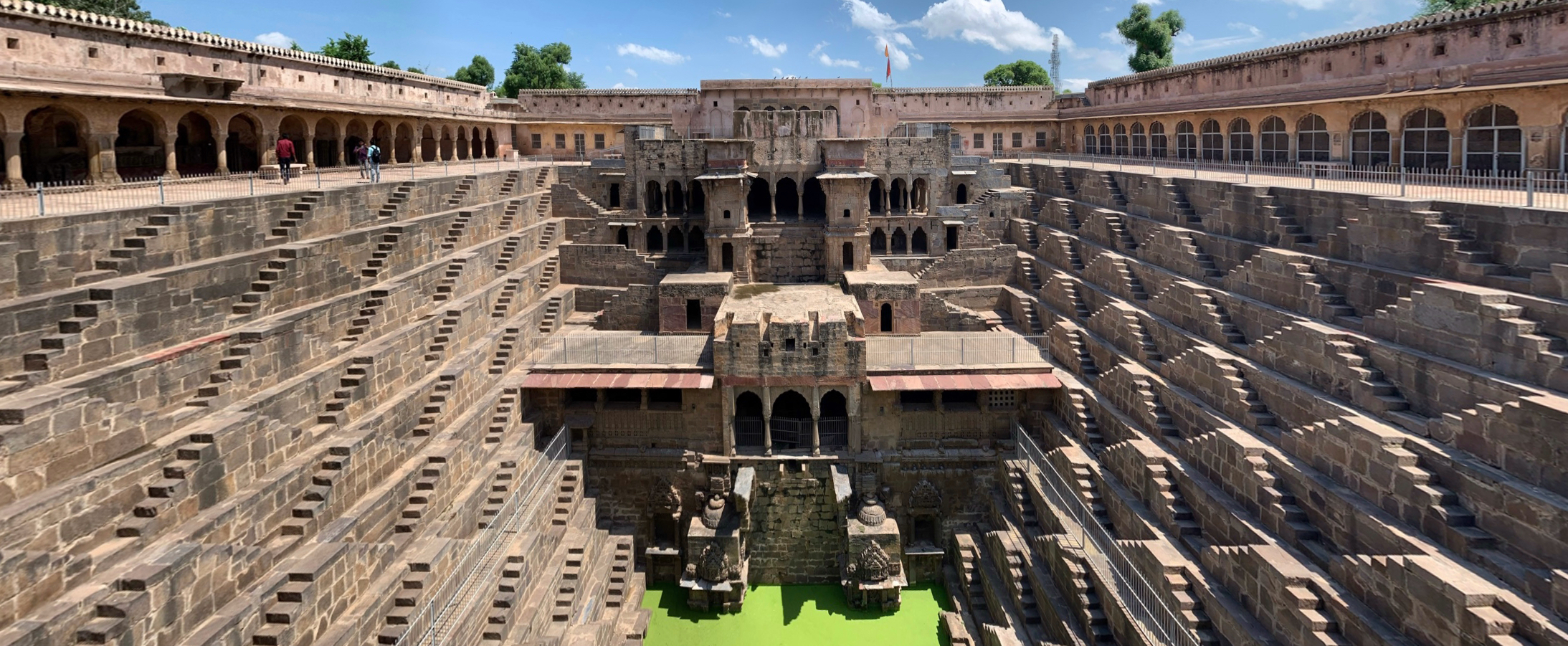
Chand Baori, located in the historic village of Abhaneri in Dausa district of eastern Rajasthan, is celebrated worldwide as one of the largest, deepest, and most visually hypnotic stepwells ever built. Constructed in the 8th to 9th centuries CE by King Chanda (Chandra) of the Nikumbha Rajput dynasty (contemporaneous with the Gurjara-Pratiharas), the monument was engineered to solve the perennial water scarcity of arid Rajasthan by harvesting and conserving monsoon rainwater while providing a cool, shaded civic gathering oasis for the local community.
Located in the Dausa district of Rajasthan, Chand Baori Stepwell Abhaneri is centrally protected by the Archaeological Survey of India (ASI) as an irreplaceable landmark of South Asian civilization. Recognized for its ancient rajasthani hydraulic architecture, symmetrical mazelike triangular steps, dark volcanic basalt & sandstone, the site provides profound insights into the technological prowess, cosmological beliefs, and cultural aesthetics of its ancient builders.
2. Dynastic Origins, Royal Patrons & Chronology
Abhaneri (originally named *Abha Nagari*, meaning 'City of Brightness') flourished as a vibrant cultural center under the Nikumbha rulers. According to local folklore, the stepwell's 3,500 steps were so mathematically intricate that they were said to have been built by spirits (*djinns*) overnight so that no coin or footstep could ever retrace the exact same path. In the 18th century, the rulers of Jaipur added upper multi-storeyed pavilions with cusped Mughal-Rajput arches, creating the dramatic visual contrast seen today between the ancient geometric stepped base and the ornate upper royal quarters.
Centrally protected as an ancient monument of national importance by the Archaeological Survey of India (ASI), Chand Baori attracts international travelers, architects, and filmmakers from across the globe (featured in films such as Christopher Nolan's *The Dark Knight Rises* and *The Fall*), celebrated as a triumph of ancient Indian geometry and ecological hydraulic engineering.
3. Structural Engineering & Architectural Design
Chand Baori is a monumental square stepwell measuring approximately 35 metres on each side and plunging over 20 metres (66 feet) across 13 subterranean storeys down to the groundwater table. Three of its four walls are lined with an astonishing maze of exactly 3,500 narrow, perfectly symmetrical stone steps arranged in double-flight triangular formations that form a mesmerizing diamond-patterned optical illusion.

The fourth (northern) side of the stepwell features a multi-tiered royal pavilion (*Haveli*) complete with pillared corridors, balconies, projecting *jharokhas*, and royal reception chambers. This architectural arrangement allowed the royal family to observe community gatherings and water rituals from cool, shaded viewing galleries.
The northern pavilion walls enshrine ancient 9th-century Gurjara-Pratihara relief sculptures, including exquisite carvings of Mahishasuramardini Durga, Ganesha, and dancing celestial maidens (*surasundaris*). The temperature at the bottom of the well remains consistently 5 to 6 degrees Celsius cooler than at the surface, demonstrating ancient passive microclimate engineering.
4. Archaeological Excavations, Epigraphy & Conservation
Archaeological clearance by the ASI uncovered over 200 salvaged 8th-century stone sculptures that were originally part of the adjacent Harshat Mata Temple, now displayed along the stepwell's perimeter corridors.
Structural restoration in the early 2000s stabilized the weathered sandstone steps and installed protective bronze railings around the upper terrace perimeter.
Hydraulic studies confirmed that the porous stone joints in the stepwell allowed groundwater to filter naturally through volcanic basalt and sand strata, keeping the water clear and potable.
ASI entry ticket is ₹25 for Indian citizens, SAARC, and BIMSTEC visitors via online booking (₹25 at counter), and ₹300 for foreign tourists. Free entry for children under 15.
5. Master Highlights & Archaeological Marvels
Directly adjacent to the stepwell stands the 8th-century *Harshat Mata Temple*, dedicated to the goddess of joy and happiness, preserving masterwork Gurjara-Pratihara friezes.

The bottom water pool retains a distinctive emerald-green hue due to natural minerals and algae, framed by ancient stone arches.
The surrounding colonnaded verandahs function as an open-air sculpture gallery exhibiting intricate 9th-century reliefs of Shiva, Vishnu, and celestial dancers.
6. Visiting Hours, Entry Permits & Visitor Guidelines
Open daily from 7:00 AM to 6:00 PM throughout the year. The ticket counter opens at 7:00 AM.
Visiting in the early morning (7:30 AM to 9:30 AM) provides peaceful viewing before tour buses arrive from Jaipur, with sharp morning shadows accentuating the geometric steps.
Visitors are strictly prohibited from descending into the steps for safety and heritage preservation; the steps are securely cordoned off at the upper terrace.
Commercial photography equipment and drones require prior written ASI authorization.
Do not attempt to lean over the perimeter stone barriers. The drop into the well is over 66 feet.
7. Site Museum & Interpretation Centers
The peripheral colonnades house an open-air collection of salvaged architectural fragments and inscriptions documented by the ASI.
The nearby town of Bandikui (8 km away) preserves one of India's oldest colonial railway junctions and heritage bungalows.
8. Climate, Best Seasons & Ideal Visiting Hours
October to March offers ideal weather, with pleasant daytime temperatures between 15°C and 27°C.
The monsoon months of July to September fill the lower basin with fresh rainwater, transforming the arid desert landscape into green fields.
9. Transit Logistics, Rail, Air & Road Access
Abhaneri is located 95 km east of Jaipur (2 hours by road via NH 21) and 150 km west of Agra, making it an ideal midway stop on the Golden Triangle route.
Bandikui Junction (8 km) is the nearest railway station with frequent express trains to Jaipur, Delhi, and Agra. Taxis are easily hired from Jaipur or Dausa.
10. Regional Heritage Circuits & Sibling Monuments
Chand Baori is the prime highlight of the Rajasthan Golden Triangle Heritage & Stepwell Trail:
Sacred Architecture & Darshan Protocol Guide
Maximize your spiritual journey: VIP vs Sugam Darshan line reality, locker rules, and historical truth.
- ✓Sugam Darshan & Token Blueprint: Accurate online booking rules, pre-dawn passes, and entry lane realities.
- ✓Zero Commercialization Guard: Avoid bogus intermediaries, fake priest fees, and paid blessing scams.
- ✓Locker, Footwear & Mobile Safety: Verified cloakroom locations, authorized phone lockers, and security rules.
- ✓Hidden Architectural Marvels: Inscriptions, subterranean sanctums, and forgotten stone carvings.
🛡️ Personally curated by PK Gupta & the Hidden Routes research desk. Delivered directly to your Email & WhatsApp within 4–8 hours.
11. Frequently Asked Questions
How many steps are there in Chand Baori?
Chand Baori features exactly 3,500 narrow, perfectly symmetrical triangular stone steps arranged across 13 levels descending over 20 metres (66 feet) into the earth.
Who built Chand Baori in Abhaneri?
It was commissioned in the 8th to 9th centuries CE by King Chanda of the Nikumbha Rajput dynasty to harvest rainwater and provide a cool communal gathering space in arid Rajasthan.
Can visitors walk down the steps of Chand Baori?
No, walking down the steps has been restricted by the ASI since the early 2000s for visitor safety and structural conservation, but visitors enjoy complete panoramic views from the upper terrace.
Which famous Hollywood films were shot at Chand Baori?
Chand Baori was featured as the subterranean prison in Christopher Nolan's 'The Dark Knight Rises' (2012) and in Tarsem Singh's celebrated visual fantasy film 'The Fall' (2006).
Where is Chand Baori located?
It is located in Abhaneri village, Dausa district, Rajasthan, approximately 95 km east of Jaipur on the highway connecting Jaipur to Agra.