1. Overview & Archaeological Significance
Bijolia (historically known as Vindhyavali), situated on an elevated rocky plateau of the Aravalli range in Bhilwara district, Rajasthan, is an ancient sacred town of monumental architectural, religious, and epigraphical importance. During the 12th century CE, Bijolia flourished as a prominent religious and political metropolis under the imperial Chahamana (Chauhan) dynasty of Shakambhari and Ajmer, particularly under King Someshvara (father of the legendary warrior-emperor Prithviraj Chauhan).
Located in the Bhilwara district of Rajasthan, Bijolia Mandakini Temple Complex Sacred Kund is centrally protected by the Archaeological Survey of India (ASI) as an irreplaceable landmark of South Asian civilization. Recognized for its maha-gurjara & chauhan nagara temple architecture, sahasralinga pillar, intricate shikharas & sacred stepped pushkarani, the site provides profound insights into the technological prowess, cosmological beliefs, and cultural aesthetics of its ancient builders.
2. Dynastic Origins, Royal Patrons & Chronology
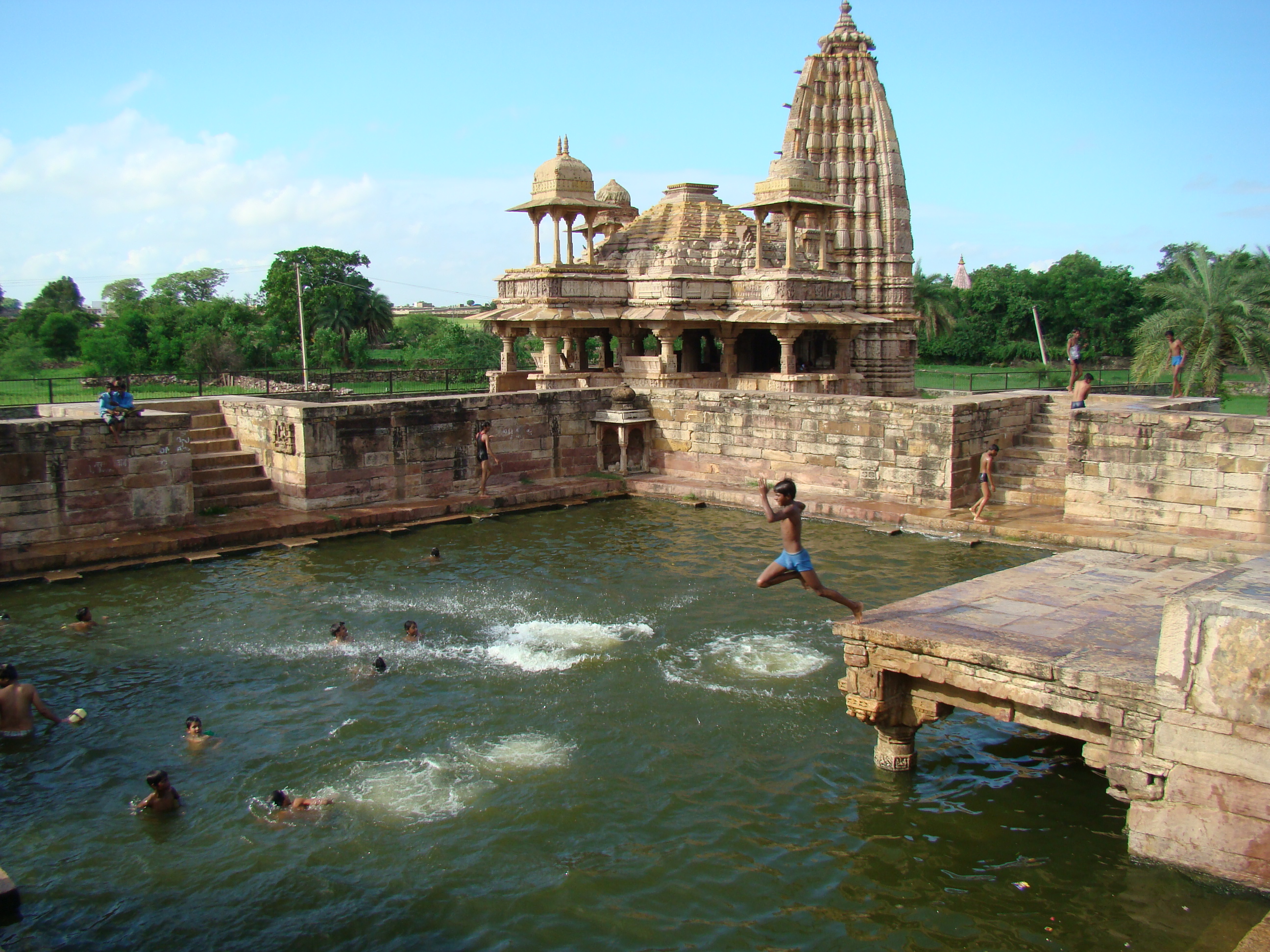
What imparts supreme spiritual and architectural fame to Bijolia is its magnificent *Mandakini Temple Complex*, comprising three intact 12th-century stone temples: the Hajaresvara (or Undeshwara) Temple, the Mahakaleshwar Temple, and the Baijanath Temple, clustered around the sacred stepped water reservoir known as the *Mandakini Kund*. The Hajaresvara Temple houses the celebrated *Sahasralinga*—a massive monolithic stone pillar carved with exactly one thousand miniature lingas in microscopic relief, representing infinite cosmic manifestations of Lord Shiva.
Centrally protected as an ancient monument of national importance by the Archaeological Survey of India (ASI) Jaipur Circle, Bijolia is also globally renowned among epigraphists for the famous *Bijolia Rock Inscription* of 1170 CE, which provides the primary genealogical and territorial chronicle of the imperial Chauhan emperors.
3. Structural Engineering & Architectural Design
The architectural layout centers on the sacred *Mandakini Kund*, an expansive stepped water reservoir constructed of dressed sandstone blocks. The water is believed to originate from subterranean mountain springs, creating a perennial sacred reflection pool for the surrounding temples.

The Hajaresvara Temple is an architectural gem of mature Chauhan craftsmanship. The sanctum is sunken slightly below ground level (hence the local name *Undeshwara*) and is crowned by an intact, soaring Nagara-style stone *shikhara* decorated with intricate miniature aedicules (*urushringas*), a massive ribbed *amalaka*, and stone finial. The temple features an ornate pillared assembly hall (*mandapa*) supported by lathe-turned columns and coffered ceilings.
The exterior walls are adorned with an astonishing continuum of high-relief sculptures: dancing Ganesha, Nataraja, Chamunda, Varaha, and sensuous celestial nymphs (*surasundaris*). Flanking the steps of the Mandakini Kund are small shrine pavilions and carved stone *toranas* (ceremonial arches).
4. Archaeological Excavations, Epigraphy & Conservation
ASI structural conservation stabilized the stone shikharas of all three temples and restored the stone steps of the Mandakini Kund.
Chemical cleaning removed microbial lichen and mineral encrustations from the 1,000-linga Sahasralinga pillar.
Epigraphical documentation cataloged the historic 1170 CE Chauhan Sanskrit inscriptions engraved upon nearby rock boulders.
Entry to the Bijolia Mandakini Temple Complex is completely free under the Archaeological Survey of India.
5. Master Highlights & Archaeological Marvels
Sahasralinga Pillar: A monumental stone column carved with exactly 1,000 miniature Shiva lingas in microscopic detail.

Mandakini Kund: A sacred stepped water reservoir creating beautiful reflections of the surrounding 12th-century stone towers.
Chauhan Nagara Shikharas: Pristine multi-tiered stone towers demonstrating the peak of 12th-century Rajput temple engineering.
6. Visiting Hours, Entry Permits & Visitor Guidelines
Open daily from 8:00 AM to 6:00 PM. Allow about 1.5 to 2 hours to explore the three temples, the kund, and rock inscriptions.
Morning visits between 8:30 AM and 11:00 AM provide pleasant temperatures and optimal natural lighting for photography.
Remove footwear before stepping onto the temple plinths; maintain quiet reverence.
Do not throw litter or plastic into the sacred Mandakini Kund reservoir.
The stone steps around the kund can be wet and slippery; exercise caution when walking near the water edge.
7. Site Museum & Interpretation Centers
The breathtaking Menal Waterfall and temple complex lies just 20 km west along NH 27.
Bundi, the city of stepwells and palaces, is situated 50 km northeast.
8. Climate, Best Seasons & Ideal Visiting Hours
October through March is the premier travel season, offering cool breezes and pleasant daytime temperatures between 18°C and 27°C.
Monsoon months (July to September) fill the Mandakini Kund with fresh mountain water, creating a vibrant oasis atmosphere.
9. Transit Logistics, Rail, Air & Road Access
Located in Bijolia town, situated along National Highway 27, 50 km southwest of Bundi and 85 km east of Bhilwara in Rajasthan.
Kota railway junction is 80 km northeast, while Udaipur Airport (UDR) is 170 km southwest via NH 27.
10. Regional Heritage Circuits & Sibling Monuments
Bijolia is the sacred Chauhan anchor of the Hadoti & Mewar Border Heritage Trail:
Sacred Architecture & Darshan Protocol Guide
Maximize your spiritual journey: VIP vs Sugam Darshan line reality, locker rules, and historical truth.
- ✓Sugam Darshan & Token Blueprint: Accurate online booking rules, pre-dawn passes, and entry lane realities.
- ✓Zero Commercialization Guard: Avoid bogus intermediaries, fake priest fees, and paid blessing scams.
- ✓Locker, Footwear & Mobile Safety: Verified cloakroom locations, authorized phone lockers, and security rules.
- ✓Hidden Architectural Marvels: Inscriptions, subterranean sanctums, and forgotten stone carvings.
🛡️ Personally curated by PK Gupta & the Hidden Routes research desk. Delivered directly to your Email & WhatsApp within 4–8 hours.
11. Frequently Asked Questions
What is the historical significance of the Bijolia temples?
Built around 1170 CE during the Chauhan dynasty under King Someshvara (father of Prithviraj Chauhan), Bijolia preserves an intact complex of three temples, a sacred kund, and foundational royal rock inscriptions.
What is the Sahasralinga inside Hajaresvara Temple?
It is a celebrated monolithic stone pillar carved with exactly one thousand miniature Shiva lingas in microscopic relief, representing infinite cosmic manifestations of Shiva.
What is the Mandakini Kund?
It is an ancient stepped water reservoir around which the temples are clustered, believed to be fed by sacred perennial mountain springs.
What is the famous Bijolia Rock Inscription?
Dated to 1170 CE, it is a crucial Sanskrit inscription engraved on a nearby rock providing the primary historical genealogy and territorial conquests of the Chauhan kings of Shakambhari.
Is an entry fee required at Bijolia Temples?
No, entry to the Bijolia Mandakini Temple Complex is completely free under the Archaeological Survey of India (ASI).