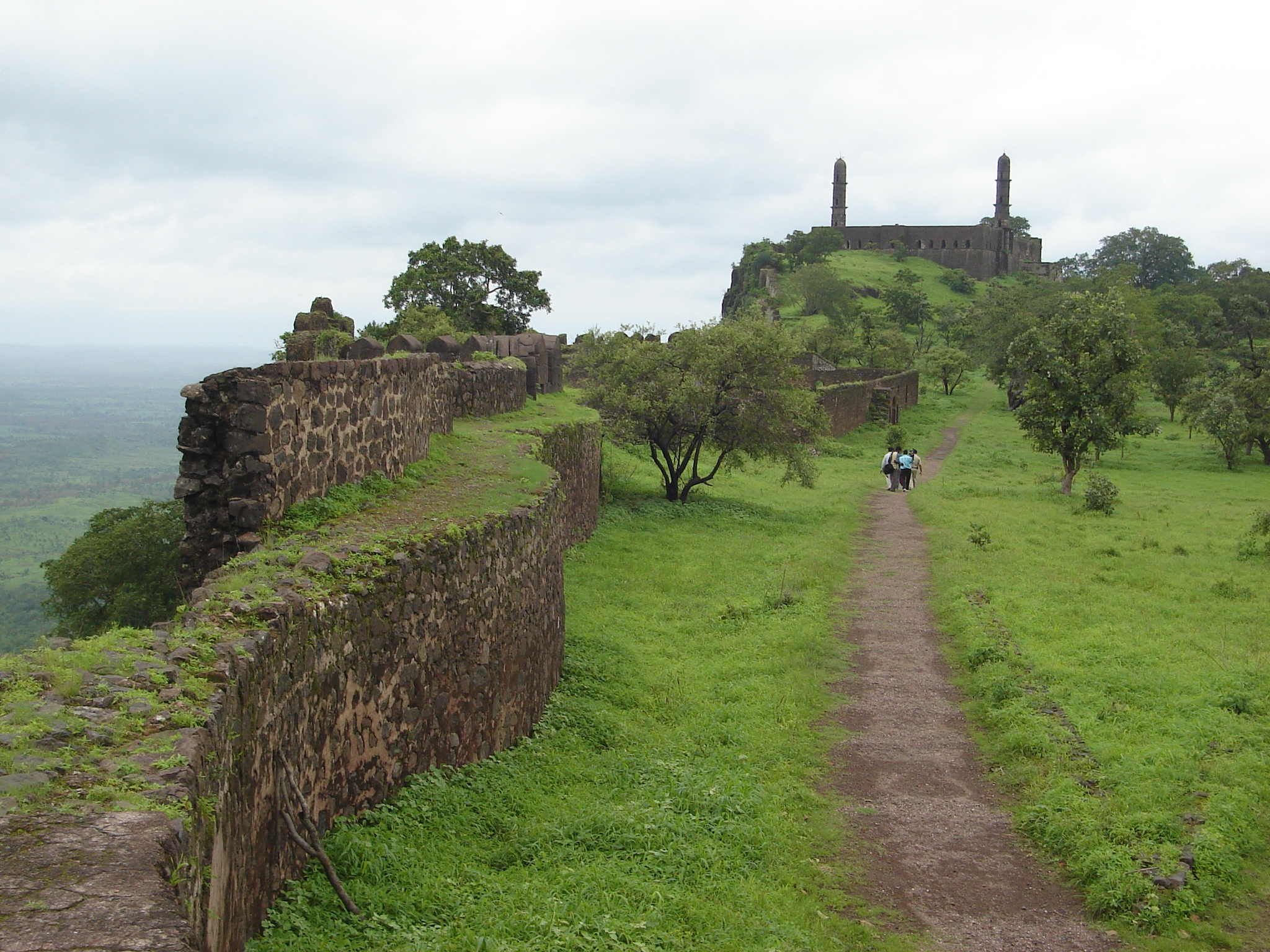
1. Overview & Archaeological Significance
Asirgarh Fort, commanding an isolated 900-foot-high (275-metre) spur of the Satpura Range in Burhanpur district of southwestern Madhya Pradesh, was celebrated across medieval Indian history as *Dakkan ka Darwaza* (The Gateway to the Deccan) and *Kilai-e-Mubarak* (The Auspicious Fort). Because it directly overlooked the only viable natural mountain pass connecting northern India with the peninsular Deccan plateau, military strategists considered it impossible to rule South India without first controlling Asirgarh. Built originally by a local shepherd chieftain named Asa Ahir in the 14th century, the citadel was subsequently fortified by the Farooqi dynasty of Khandesh.
Located in the Burhanpur district of Madhya Pradesh, Asirgarh Fort Burhanpur is centrally protected by the Archaeological Survey of India (ASI) as an irreplaceable landmark of South Asian civilization. Recognized for its satpura ridge military fortification, basalt stone masonry, jami masjid & rock reservoirs, the site provides profound insights into the technological prowess, cosmological beliefs, and cultural aesthetics of its ancient builders.
2. Dynastic Origins, Royal Patrons & Chronology
In 1600–1601 CE, Mughal Emperor Akbar the Great personally led a massive 11-month siege against Asirgarh. Finding the garrison of Bahadur Khan Farooqi impregnable to bombardment and supplied with immense water tanks, Akbar famously conquered the fort only through gold bribes to the garrison officers, prompting chroniclers to record that 'Akbar opened the gate of Asirgarh with a golden key'. In 1819 CE, after a fierce twenty-day artillery bombardment, the fort was captured by British forces under Sir John Malcolm. According to enduring local folklore, the immortal warrior Ashwatthama of the *Mahabharata* still offers fresh roses daily at dawn inside the fort's ancient Shiva temple.
Centrally protected by the Archaeological Survey of India (ASI), Asirgarh Fort covers an expansive area of over 60 acres across three distinct defensive enclosures—Asirgarh, Kamargarh, and Malaigarh—preserving ancient stepwells, mosques, and Hindu shrines.
3. Structural Engineering & Architectural Design
Asirgarh Fort crowns an isolated mountain tableland with vertical sandstone and basalt scarps on all sides. The perimeter wall spans over 3 kilometres, rising between 15 and 30 feet in height, defended by heavily fortified bastions commanding panoramic vistas over the Tapti River valley.

The fort is approached via a steep, winding roadway through several defensive gateways, including the Western Darwaza. At the center of the plateau stands the monumental *Jami Masjid*, built by Raja Ali Khan Farooqi in 1588 CE, featuring seven arched bays, two 35-metre minarets, and inscriptions in both Arabic and Sanskrit recording the construction.
Near the northern ramparts sits the ancient *Gupteshwar Mahadev Temple*, situated beside a perennial natural rock pool (*Mama-Bhanja Talab*). The temple features an ancient subterranean sanctum where devotees believe Ashwatthama performs daily prayers. The fort also features massive subterranean water tanks including the *Ganga-Jamuna* reservoirs.
4. Archaeological Excavations, Epigraphy & Conservation
The ASI Bhopal Circle restored the minarets and stone terrace of the 1588 Jami Masjid and repointed basalt masonry along the eastern battlements.
Archaeological clearance around the Mama-Bhanja water reservoir stabilized stone embankments and ancient water filtration channels.
Surveys documented the bilingual Sanskrit-Arabic inscriptions at Jami Masjid, an exceptional record of Farooqi syncretic administration.
Asirgarh Fort is an ASI protected monument. Online tickets cost ₹20 for Indian, SAARC, and BIMSTEC visitors (₹25 at counter), and ₹250 for foreign tourists (₹300 at counter). Free entry for children under 15.
5. Master Highlights & Archaeological Marvels
Standing on the high Satpura ramparts, looking out over the historic Deccan pass where armies marched for a thousand years.

Visiting the ancient Gupteshwar Shiva Temple, immersed in the timeless Mahabharata legend of Ashwatthama.
Admiring the 1588 Jami Masjid with its tall minarets and unique bilingual Sanskrit and Arabic foundation inscriptions.
6. Visiting Hours, Entry Permits & Visitor Guidelines
Asirgarh Fort is open daily from 6:00 AM to 6:00 PM throughout the year. Accessible on all days.
Online ticket costs are ₹20 for Indian visitors, and ₹250 for foreign tourists. Children under 15 enter free.
Wear sturdy shoes as the approach road and plateau require extensive walking on rocky ground.
Remove footwear before entering the Gupteshwar Temple and Jami Masjid. Personal photography is permitted.
Asirgarh Fort is a protected national monument under the AMASR Act 1958. Venturing near unprotected precipices or defacing stone inscriptions attracts severe legal penalties.
7. Site Museum & Interpretation Centers
The Burhanpur Museum (20 km south) displays medieval Mughal coins, Farooqi weapons, and manuscripts from the Khandesh Sultanate.
ASI interpretive signboards at the entrance gateway narrate Akbar's 1601 siege and the legend of Asa Ahir.
8. Climate, Best Seasons & Ideal Visiting Hours
The best time to visit Asirgarh Fort is from October to March, with cool breezes across the Satpura hills and temperatures between 15°C and 28°C.
Monsoon months (July to September) blanket the hill in swirling clouds, mist, and lush greenery, creating dramatic mountain scenery.
9. Transit Logistics, Rail, Air & Road Access
Asirgarh Fort is located 20 km north of Burhanpur city along the Khandwa–Burhanpur highway (SH-27).
Burhanpur Railway Station (20 km) is well connected to Mumbai, Delhi, and Bengaluru. Indore Airport (IDR, 180 km) connects major domestic metros.
10. Regional Heritage Circuits & Sibling Monuments
Asirgarh Fort anchors the Burhanpur Historical & Khandesh Sultanate Heritage Trail:
Sacred Architecture & Darshan Protocol Guide
Maximize your spiritual journey: VIP vs Sugam Darshan line reality, locker rules, and historical truth.
- ✓Sugam Darshan & Token Blueprint: Accurate online booking rules, pre-dawn passes, and entry lane realities.
- ✓Zero Commercialization Guard: Avoid bogus intermediaries, fake priest fees, and paid blessing scams.
- ✓Locker, Footwear & Mobile Safety: Verified cloakroom locations, authorized phone lockers, and security rules.
- ✓Hidden Architectural Marvels: Inscriptions, subterranean sanctums, and forgotten stone carvings.
🛡️ Personally curated by PK Gupta & the Hidden Routes research desk. Delivered directly to your Email & WhatsApp within 4–8 hours.
11. Frequently Asked Questions
Why was Asirgarh Fort called the 'Key to the Deccan'?
Because it directly controlled the only major natural mountain pass through the Satpura Range connecting North India with the Deccan plateau, making it strategically essential for controlling southern India.
How did Mughal Emperor Akbar capture Asirgarh Fort in 1601 CE?
After an 11-month siege failed to breach the massive fortress, Akbar reportedly used gold and silver bribes to persuade garrison commanders to surrender, famously opening its gates with a golden key.
What is the legend of Ashwatthama at Asirgarh Fort?
Local folklore holds that the immortal warrior Ashwatthama from the Mahabharata still visits the fort's ancient Gupteshwar Shiva Temple every morning at dawn to offer fresh flowers.
What are the visiting hours and entry fees for Asirgarh Fort?
Open daily from 6:00 AM to 6:00 PM. Online ASI tickets cost ₹20 for Indian, SAARC, and BIMSTEC visitors, and ₹250 for foreign tourists. Children under 15 enter free.
What famous mosque is located inside Asirgarh Fort?
The historic Jami Masjid, built in 1588 CE by Farooqi ruler Raja Ali Khan, featuring two soaring minarets and rare bilingual inscriptions in both Arabic and Sanskrit.