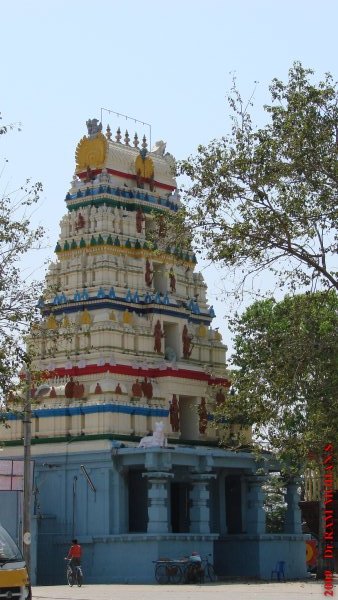
1. Overview & Archaeological Significance
The Sri Amareswara Swamy Temple at Amaravati (anciently known as *Aramarama* or *Dhanyakataka*), situated along the sacred northern banks of the Krishna River in Palnadu (formerly Guntur) district, Andhra Pradesh, is one of the most revered, ancient, and historically illustrious Shaivite sanctuaries in India. Revered as the foundational first shrine of the sacred *Pancharama Kshetras* (five hallowed Shaivite sanctuaries of Andhra), Amaravati is traditionally celebrated as the holy spot where Lord Indra, the King of the Devas, personally installed and worshipped the supreme fragment of Lord Shiva's divine lingam.
Located in the Palnadu district of Andhra Pradesh, Amaravati Amareswara Swamy Temple is centrally protected by the Archaeological Survey of India (ASI) as an irreplaceable landmark of South Asian civilization. Recognized for its imperial dravida pancharama temple architecture, two-storeyed sanctum, 16-foot white marble lingam & krishna river ghats, the site provides profound insights into the technological prowess, cosmological beliefs, and cultural aesthetics of its ancient builders.
2. Dynastic Origins, Royal Patrons & Chronology
According to ancient sacred lore, when the demon king Tarakasura's divine lingam was shattered by Lord Kartikeya, the foremost sacred piece fell on the banks of the Krishna River. Because the consecrated lingam grew rapidly toward the heavens, Lord Indra drove a sacred nail into the crown of the lingam to stabilize its growth, whereupon blood miraculously gushed from the stone; even today, a faint red mark is visible at the apex of the marble lingam. The temple is also deeply revered as the seat of Goddess Bala Chamundika, venerated as the fourth of the 18 sacred *Ashta Dasa Shakti Peethas*.
Amaravati's history is unique in world culture: for over two thousand years, it was a cosmopolitan imperial capital (Dhanyakataka) where the Satavahana emperors ruled, and where the world-famous Great Buddhist Mahachaitya stupa flourished side by side with the Amareswara temple. In the 18th century, the temple was lavishly renovated and expanded by Raja Vasireddy Venkatadri Nayudu, the legendary zamindar of Chintapalle. Conserved today as a living heritage monument, Amaravati is a hallowed sanctuary of peace, devotion, and sacred history.
3. Structural Engineering & Architectural Design
The architectural plan of the Amareswara Temple is designed on the grand Dravidian scale, constructed of heavy dressed granite blocks enclosed within three concentric stone enclosure walls (*Prakaras*). The temple is entered through a towering, multi-tiered entrance *Gopuram* that rises gracefully on the banks of the Krishna River.

The sanctum sanctorum (*Garbhagriha*) is designed across two distinct architectural storeys to accommodate the colossal *Amareswara Lingam*—a monolithic white marble Shiva lingam soaring an astonishing 16 feet (4.8 meters) in height. The ground floor houses the massive marble base, while the upper storey features an elevated gallery where priests perform daily abhishekams and worship the crowned apex of the lingam.
Surrounding the main sanctum are four subsidiary shrines dedicated to Lord Kalabhairava, Lord Ganesha, Lord Kartikeya, and Goddess Bala Chamundika. Leading directly from the northern gateway of the temple is the sacred *Krishna Nadi Ghat*, a broad flight of ancient stone steps where hundreds of thousands of pilgrims take ritual purificatory baths during sacred festivals.
4. Archaeological Excavations, Epigraphy & Conservation
The Endowments Department and heritage architects stabilized the ancient Krishna riverfront stone ghats against monsoon flooding.
Restored the multi-tiered gopuram stucco sculptures and reinforced the two-storeyed sanctum gallery.
Constructed modern pilgrim amenities, stone-paved pradakshina pathways, and riverfront heritage viewing pavilions.
Entry to the Amareswara Temple is free. Special darshan tickets and abhishekam sevas are managed by the Endowments Department.
5. Master Highlights & Archaeological Marvels
Premier Pancharama Kshetra: The foremost of the five sacred Pancharama temples, consecrated by Lord Indra.

16-Foot White Marble Lingam: A colossal monolithic marble lingam extending through two distinct architectural storeys.
Krishna Riverfront Ghat: Sacred stone steps leading directly from the temple into the holy waters of the Krishna River.
6. Visiting Hours, Entry Permits & Visitor Guidelines
Open daily from 5:30 AM to 1:00 PM and 4:00 PM to 8:00 PM. A complete darshan and riverfront visit takes 1.5 to 2 hours.
Early mornings (5:30 AM – 7:30 AM) offer a magical atmosphere with temple bells ringing and priests performing the morning river aarti.
Traditional dress code is mandatory: dhotis or formal clothes for men; sarees or traditional dresses for women.
Remove footwear before entering the temple compound; maintain silence near the inner sanctum.
The Krishna River current can be strong during monsoons; bathe only in designated safe ghat areas.
7. Site Museum & Interpretation Centers
The world-famous 2nd-century BCE Great Amaravati Buddhist Stupa and ASI Museum lie just 1.5 km to the east.
The Dhyana Buddha 125-foot colossal statue on the Krishna riverfront is located 1 km away.
8. Climate, Best Seasons & Ideal Visiting Hours
October through March is the premier season to visit, featuring pleasant daytime temperatures between 16°C and 28°C.
During Maha Shivaratri (February/March) and Karthika Masam (November), hundreds of thousands of pilgrims gather for holy river baths.
9. Transit Logistics, Rail, Air & Road Access
Located in Amaravati town on the Krishna River, Palnadu district, Andhra Pradesh, 32 km from Guntur and 40 km from Vijayawada.
Easily reached by private car, taxi, or state bus from Vijayawada or Guntur in approximately 45 to 60 minutes.
10. Regional Heritage Circuits & Sibling Monuments
Amareswara is the riverine foundation of the Sacred Andhra Pancharama Circuit:
Sacred Architecture & Darshan Protocol Guide
Maximize your spiritual journey: VIP vs Sugam Darshan line reality, locker rules, and historical truth.
- ✓Sugam Darshan & Token Blueprint: Accurate online booking rules, pre-dawn passes, and entry lane realities.
- ✓Zero Commercialization Guard: Avoid bogus intermediaries, fake priest fees, and paid blessing scams.
- ✓Locker, Footwear & Mobile Safety: Verified cloakroom locations, authorized phone lockers, and security rules.
- ✓Hidden Architectural Marvels: Inscriptions, subterranean sanctums, and forgotten stone carvings.
🛡️ Personally curated by PK Gupta & the Hidden Routes research desk. Delivered directly to your Email & WhatsApp within 4–8 hours.
11. Frequently Asked Questions
What is the Amareswara Temple at Amaravati famous for?
It is famous as the foremost *Pancharama Kshetra* of Lord Shiva, consecrated by Lord Indra, and home to a colossal 16-foot white marble Shiva Lingam.
Why is the temple sanctum built on two storeys?
The sanctum is built on two storeys because the monolithic white marble Shiva Lingam is 16 feet tall, with pujas performed on the upper floor.
What river flows directly beside the temple?
The sacred Krishna River flows directly past the northern gateway of the temple, featuring ancient stone bathing ghats.
What Buddhist monument is located near the Amareswara Temple?
The world-famous 2nd-century BCE Great Amaravati Stupa (Mahachaitya) and ASI Museum are located just 1.5 km away.
How far is Amaravati from Vijayawada and Guntur?
Amaravati is situated approximately 32 km from Guntur and 40 km from Vijayawada, an easy 45-minute to 1-hour drive.