1. Overview & Archaeological Significance
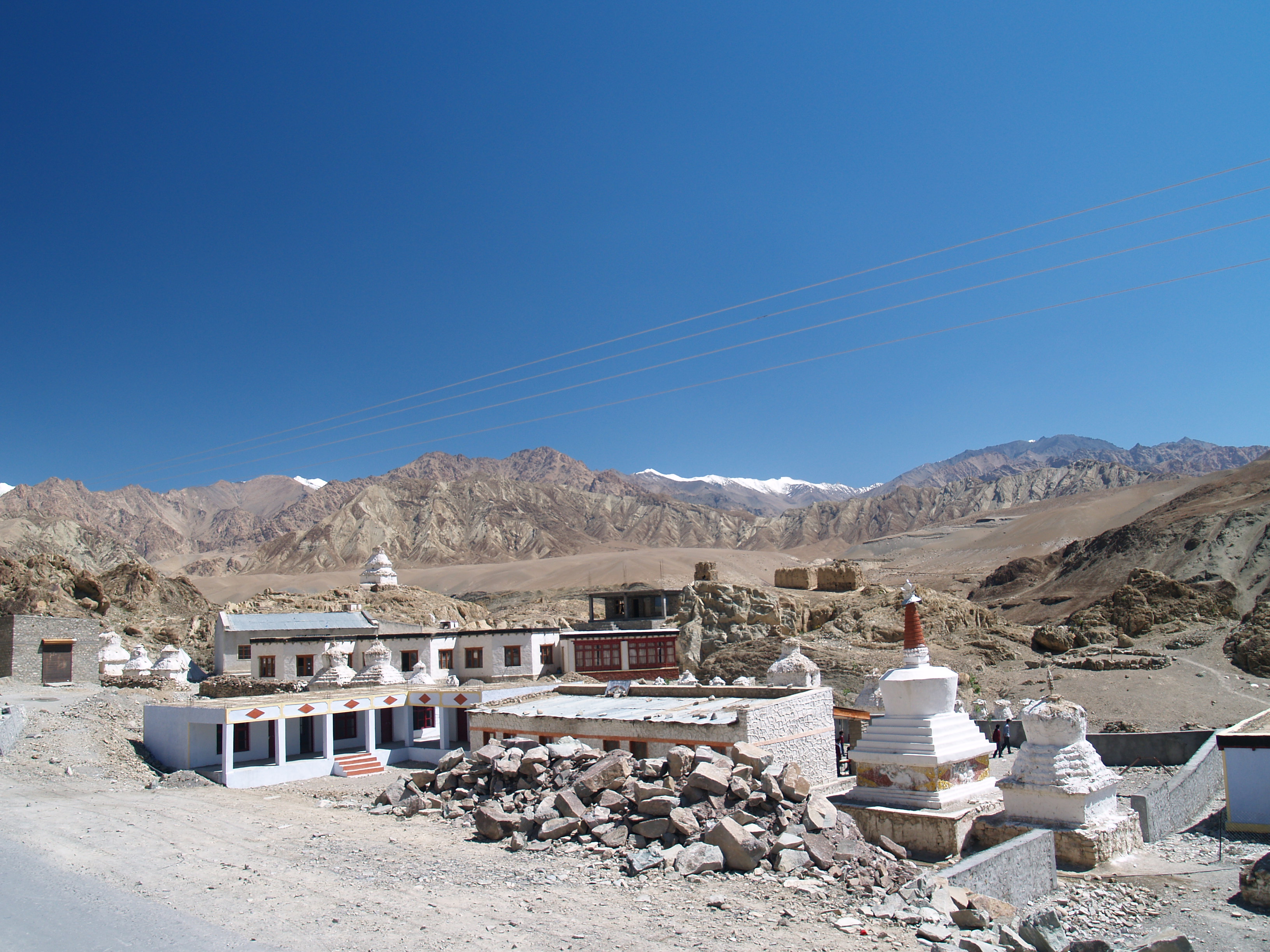
Alchi Monastery, situated in a tranquil oasis village of apricot orchards on the southern bank of the Indus River 65 km west of Leh in Ladakh, is globally renowned as the supreme jewel of Indo-Tibetan Buddhist art. Founded between 958 and 1055 CE by the legendary Lotsawa (Great Translator) Rinchen Zangpo during the Second Diffusion (*Chodar*) of Buddhism in Tibet, Alchi is uniquely distinct from almost all other Ladakhi monasteries: instead of being perched defensively atop a rocky mountain ridge, it is nestled peacefully on the flat valley floor.
Located in the Leh district of Ladakh, Alchi Monastery Choskor Temple Enclave is centrally protected by the Archaeological Survey of India (ASI) as an irreplaceable landmark of South Asian civilization. Recognized for its kashmiri-tibetan buddhist architecture, three-tiered mud-plaster sanctum, carved teakwood portals & mineral wall murals, the site provides profound insights into the technological prowess, cosmological beliefs, and cultural aesthetics of its ancient builders.
2. Dynastic Origins, Royal Patrons & Chronology
Rinchen Zangpo brought thirty-two master painters, carpenters, and bronze sculptors from the neighboring Kashmir Valley to create and consecrate the temples of Alchi (*Chos-khor* or religious enclave). Because the vibrant classical Buddhist civilization of Kashmir was completely extinguished in subsequent centuries by invasions, Alchi preserves the world's only intact, comprehensive corpus of 10th-to-11th-century Kashmiri Buddhist mural painting and timber architecture.
For reasons not fully understood, monastic administration shifted away from Alchi in the 15th century to nearby Likir Monastery, causing Alchi to freeze in time. Spared from modern overpainting, the natural mineral pigments and hand-carved cedarwood doorways have survived for over a thousand years, attracting scholars, art historians, and pilgrims from across the globe.
3. Structural Engineering & Architectural Design
The Alchi Choskor comprises five principal ancient temples: the *Dukhang* (Assembly Hall), the *Sumtsek* (Three-Tiered Temple), the *Manjushri Temple*, the *Lotsawa Temple*, and the *New Temple*, accompanied by historic inscribed *chortens* (stupas).

The architectural crown of the complex is the *Sumtsek*, a three-storey mud-brick temple constructed with timber framing. The ground floor houses three monumental colossal clay statues over 15 feet tall: Avalokiteshvara (representing compassion), Maitreya (the future Buddha), and Manjushri (representing wisdom). The *dhoti* robes of these colossal figures are painted with miniature frescoes illustrating sacred pilgrimage sites, royal durbars, and textile motifs of 11th-century Kashmir.
The entrance portico features astonishingly detailed classical Indian wood carvings of fluted pillars, lotus capitals, brackets of rearing mythical lions (*vyalas*), and flying celestial *gandharvas* that bear direct kinship to the art of the Gupta and Gurjara-Pratihara empires. The walls of the Dukhang are adorned with the celebrated Vairocana mandala cycle, executed in lapis lazuli, malachite, cinnabar, and gold leaf.
4. Archaeological Excavations, Epigraphy & Conservation
Conservation architects from the Archaeological Survey of India and INTACH completed moisture barrier works to protect the ancient mud-brick walls.
Scientific infrared and multi-spectral photography has documented the fragile 11th-century mineral murals without touching the plaster.
Restoration of the traditional willow-and-timber roofs was executed using traditional Ladakhi clay-gravel waterproofing techniques.
A monastery conservation ticket of ₹100 is charged by the Likir-Alchi Monastery Trust; proceeds fund conservation of the ancient paintings.
5. Master Highlights & Archaeological Marvels
Kashmiri Buddhist Murals: The world's only surviving complete repository of 11th-century classical Kashmiri wall painting.

Sumtsek Colossal Statues: Three 15-foot clay statues of Bodhisattvas wearing robes intricately painted with miniature scenes.
Gupta-Style Wood Carving: Classical Indian timber pillars, capitals, and door jambs preserved in the dry desert climate.
6. Visiting Hours, Entry Permits & Visitor Guidelines
Open daily: Morning session from 8:00 AM to 1:00 PM; afternoon session from 2:00 PM to 6:00 PM.
Visiting in the morning offers tranquil viewing conditions before day-tour groups arrive from Leh.
Photography of any kind (including mobile phones and flash) is strictly prohibited inside all temple interiors to protect pigments.
Remove shoes before stepping onto the traditional timber floors of the prayer halls.
The temples have dim ambient natural lighting to protect paintings; carrying a small handheld flashlight is recommended.
7. Site Museum & Interpretation Centers
The historic Saspol Buddhist Rock Caves, containing 13th-century murals, lie 5 km across the Indus River.
Likir Monastery, the administrative seat of the Gelugpa order overseeing Alchi, is located 20 km to the northeast.
8. Climate, Best Seasons & Ideal Visiting Hours
May through October is the premier travel season, with daytime temperatures between 16°C and 26°C.
Autumn (September-October) brings golden poplar leaves, ripe apricots, and crystal-clear Himalayan blue skies.
9. Transit Logistics, Rail, Air & Road Access
Located in Alchi village on the southern bank of the Indus River, 65 km west of Leh along the Leh-Kargil Highway (NH 1).
Easily reached by private taxi or local bus from Leh in approximately 1.5 hours via smooth tarmac roads.
10. Regional Heritage Circuits & Sibling Monuments
Alchi Monastery is the supreme artistic crown of the Lower Ladakh Indus Valley Trail:
Sacred Architecture & Darshan Protocol Guide
Maximize your spiritual journey: VIP vs Sugam Darshan line reality, locker rules, and historical truth.
- ✓Sugam Darshan & Token Blueprint: Accurate online booking rules, pre-dawn passes, and entry lane realities.
- ✓Zero Commercialization Guard: Avoid bogus intermediaries, fake priest fees, and paid blessing scams.
- ✓Locker, Footwear & Mobile Safety: Verified cloakroom locations, authorized phone lockers, and security rules.
- ✓Hidden Architectural Marvels: Inscriptions, subterranean sanctums, and forgotten stone carvings.
🛡️ Personally curated by PK Gupta & the Hidden Routes research desk. Delivered directly to your Email & WhatsApp within 4–8 hours.
11. Frequently Asked Questions
Why is Alchi Monastery unique among the monasteries of Ladakh?
Unlike most Ladakhi monasteries built high on mountain ridges, Alchi is located on the flat valley floor and preserves 11th-century Kashmiri-style murals and woodwork.
Who founded Alchi Monastery and when?
It was founded in the 10th-11th century CE by the Great Translator Lotsawa Rinchen Zangpo, who hired 32 Kashmiri master craftsmen.
What is the Sumtsek temple inside Alchi?
The Sumtsek is a three-tiered temple housing three 15-foot clay statues of Avalokiteshvara, Maitreya, and Manjushri, whose painted robes depict ancient Kashmiri textiles.
Is photography permitted inside Alchi Monastery?
No, photography is strictly prohibited inside the temple sanctums to protect the fragile thousand-year-old mineral pigments from light decay.
How far is Alchi from Leh?
Alchi is located approximately 65 km west of Leh along the Leh-Kargil highway, reachable in about 1.5 hours by car.