1. Overview: The Amphibious Jewel of Southern Travancore
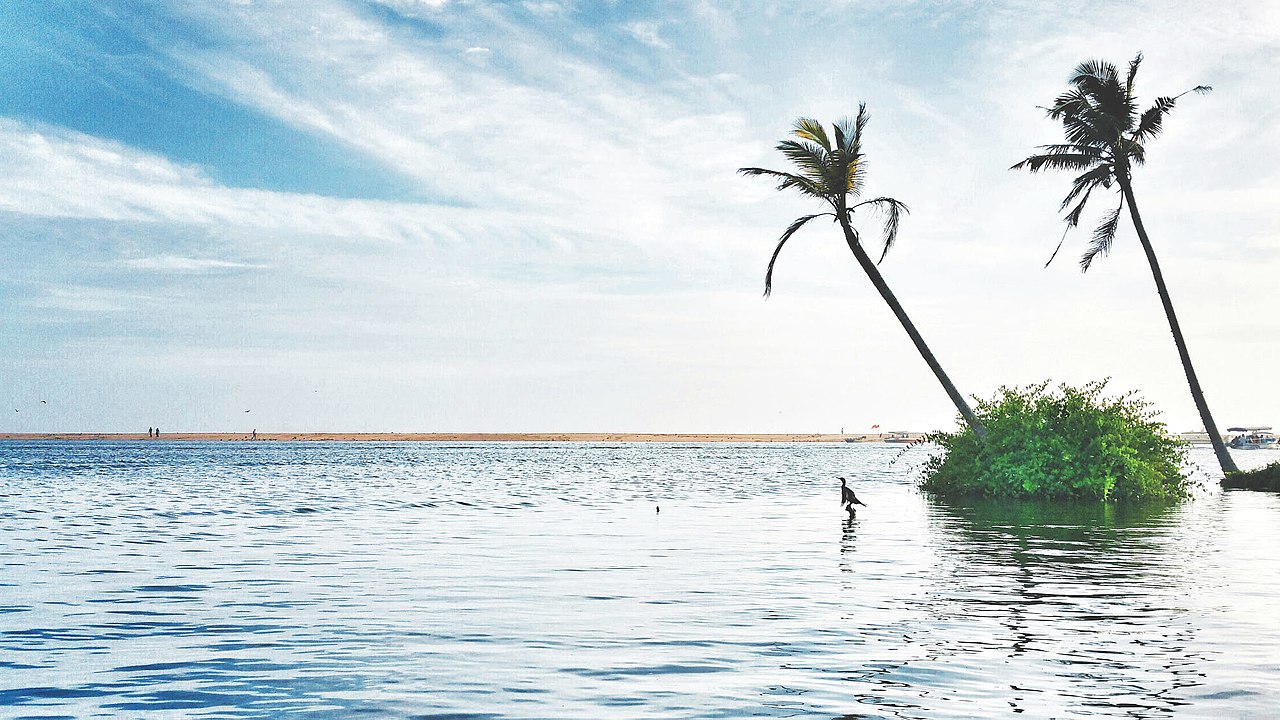
Situated roughly 30 kilometres south of Thiruvananthapuram and just 12 kilometres from the Tamil Nadu border, Poovar (പൂവാർ) is an extraordinary ecological estuary where freshwater and marine worlds converge in dramatic harmony. Here, the 56-kilometre-long Neyyar River, descending from the sacred peaks of Agasthyarkoodam in the Western Ghats, winds through dense coconut plantations and mangrove marshes before reaching its dramatic finale at a narrow, shifting golden sandspit (*Pozhimukham*) fronting the Arabian Sea.
What sets Poovar apart from all other destinations in Kerala is its completely amphibious resort architecture. Luxury eco-resorts—such as the Poovar Island Resort—feature thatched-roof floating cottages anchored directly over the tidal river waters, rising and falling gently with the oceanic tides. The golden beach itself is accessible exclusively by boat, requiring travelers to cruise through dense mangrove channels before stepping onto an isolated sandspit surrounded by water on three sides.
2. History: The Royal Legend of King Marthanda Varma
Poovar possesses an ancient and romantic royal origin. Long before modern tourism, the settlement was a flourishing biblical and Roman-era trading port known in classical antiquity as Ophir, from where King Solomon's merchant fleets are believed to have imported sandalwood, ivory, and peacocks in 1000 BCE.
The name Poovar was bestowed in the early 18th century by the legendary founder of the modern Travancore Kingdom, Anizham Thirunal Marthanda Varma. Fleeing through the southern forests during the bloody Ettuveetil Pillamar rebellion, the young prince found shelter in the dense mangrove labyrinths of Poovar, aided by local Muslim merchant Moosa Marikar.
The Stream of Flowers: "Poo-Aar"
According to royal folklore, as Marthanda Varma looked out over the river waters during the spring flowering season, he noticed thousands of bright red blooms falling from blooming *Kovalam* (Indian coral) trees lining the banks, floating down the gentle current like a crimson carpet.
Enchanted by the vision, the future king exclaimed that this was truly Poo-Aar, translating in Malayalam to "The Stream of Flowers" (*Poo* meaning flower, and *Aar* meaning river)—the poetic name the haven has proudly preserved ever since.
3. Mangrove Boat Safaris & The Shifting Sandspit
The signature experience in Poovar is embarking on an exploratory motorized boat safari through the Neyyar river estuary:
The Mangrove Tunnels: Motorized country skiffs navigate deep into dense mangrove channels where thick canopy leaves interlock overhead to form dark, cool tunnels. The brackish root network provides critical nursery habitat for juvenile crabs, mudskippers, and mullets, while water monitor lizards sun themselves on fallen logs.
The Golden Sandspit (Pozhimukham): Emerging from the mangrove labyrinth, the river widens into a serene lagoon separated from the crashing surf of the Arabian Sea by a 50-metre-wide strip of pristine golden sand. Visitors step ashore onto the sandspit to gaze at the dramatic natural contrast: calm, glass-like river waters on one side, and towering, roaring ocean breakers on the other.
Avian Diversity: The estuary is a haven for waterbirds. Birdwatchers regularly spot Brahminy Kites, Purple Herons, Night Herons, Kingfishers (Pied, White-throated, and Common), and flocks of migratory Black-headed Ibises feeding along the tidal sandbars.
4. Sights Around Poovar: Fishing Villages & Rock Temples
Poovar's location allows easy access to southern Travancore's coastal and heritage highlights:
- Vizhinjam Rock-Cut Cave Temple (14 km north): A protected 8th-century granite cave shrine preserving one of the earliest Hindu stone reliefs in Kerala, depicting Lord Shiva as *Tripurantaka* and Goddess Parvathi.
- Azhimala Shiva Temple (16 km north): Perched on a soaring coastal cliff overlooking the sea, this temple features a monumental 58-foot concrete sculpture of Lord Shiva with windswept matted locks (*Gangadhareswara*), the largest sculpture of Shiva in Kerala.
- Pozhikkara Beach (2 km south): An untouched local beach where the river waters naturally breach the sandbar during heavy monsoon rains, surrounded by traditional Mukkuvar fishing settlements.
- Padmanabhapuram Palace (38 km southeast): Located across the Tamil Nadu border in Thuckalay, this 16th-century wooden palace was the ancient dynastic seat of the Travancore Maharajas, celebrated for its intricate teakwood carvings and Chinese tiles.
5. Estuarine Gastronomy: River Catch & Floating Dining
Dining in Poovar offers an unforgettable setting where meals are served in open-air floating pavilions surrounded by gentle river currents:
- Floating Restaurant Dining: Savor freshly caught seafood on thatched wooden barges moored in the estuary, enjoying panoramic sunset views across the sandspit.
- Neyyar River Pearl Spot Curry: Fresh pearl spots (*Karimeen*) caught that morning in the brackish lagoons, simmered with green chilies, ginger, raw mango, and fresh coconut cream.
- Poovar Crab & Prawn Tawa Roast: Mud crabs and tiger prawns tossed with crushed black pepper, fennel seeds, caramelized shallots, and curry leaves.
- Travancore Sadya: Traditional vegetarian feasts served on fresh plantain leaves featuring red Matta rice, sambar, avial (vegetables in coconut-cumin paste), olan (ash gourd in coconut milk), and sweet jaggery payasam.

6. How to Reach Poovar Island: Transit Logistics
Poovar is situated in the southernmost corner of Kerala, easily accessible from Thiruvananthapuram:
| Transit Hub | Distance | Travel Duration | Recommended Mode & Route |
|---|---|---|---|
| Thiruvananthapuram Airport (TRV) | 30 km | 45 minutes | Via NH-66 bypass and Kovalam–Poovar coastal road (Prepaid taxi approx. ₹1,200) |
| Thiruvananthapuram Central Railway (TVC) | 28 km | 40 minutes | Direct express trains across India; easy taxi or auto-rickshaw access |
| Neyyattinkara Railway Station (NYY) | 10 km | 15 minutes | Nearest railhead for local passenger and select express trains |
| Kovalam Beach | 16 km | 25 minutes | Scenic coastal drive passing Vizhinjam and Azhimala cliff temples |
Resort Boat Transfers: Because main resorts and the golden beach are situated on islands, travelers arrive at private mainland river jetties, where resorts provide charming 10-minute motorboat transfers across the water directly to hotel check-in pavilions.
7. Best Time to Visit: Weather & Estuary Seasons
Poovar experiences a tropical maritime climate:
Winter Season (October to March) — The Golden Window
Winter brings pleasant, breezy coastal weather with daytime temperatures averaging 28°C–31°C. The river and lagoon waters are calm, making boat safaris through the mangrove tunnels and afternoon relaxation on the sandspit delightful.
Monsoon Season (June to September) — The Estuary in Spate
The southwest monsoon brings heavy, dramatic rains that swell the Neyyar River. The sandspit frequently breaches, allowing river floodwaters to merge violently with the Arabian Sea. While open-sea beach visits are restricted, watching torrential rain sweep over the river from a floating cottage veranda is a hypnotic, romantic experience.
Summer Season (April to May) — Warm Estuary Sun
Temperatures reach 33°C–35°C with high coastal humidity. Early morning boat rides (6:30 AM to 8:30 AM) offer the finest birdwatching, followed by relaxing afternoon Ayurvedic massages in air-conditioned suites.
Curated Field Dossier & Offline Google Maps Pin Pack
Bypass tourist traps with verified local logistics, exact parking coordinates, and field-tested routes.
- ✓Exact GPS Pin Pack: Unmarked parking spots, best dawn photography vantage points, and hidden trailheads.
- ✓Crowd-Avoidance Timing Matrix: Exact hour-by-hour windows to explore with zero tourist chaos.
- ✓Vetted Local Dhabas: 100% authentic, hygiene-checked regional food stops not on commercial maps.
- ✓Scam & Overcharge Shield: Verified taxi rates, auto fares, and local guide fee guidelines.
🛡️ Personally curated by PK Gupta & the Hidden Routes research desk. Delivered directly to your Email & WhatsApp within 4–8 hours.
Travel Intelligence & Frequently Asked Questions
Can you stay inside floating cottages at Poovar Island?
Yes! Poovar is famous across India for its eco-friendly floating cottages. Constructed with local timber and thatched roofs, these self-contained luxury hotel suites float directly on the tidal waters of the Neyyar River, gently rising and falling with the daily ocean tides.
Can you swim in the sea at Poovar Beach?
Swimming in the open sea at Poovar is strictly discouraged because the ocean waves on the outer side of the sandspit have powerful undertows and sudden drop-offs. However, swimming in the calm, chlorinated freshwater pools of the resorts is completely safe.
How do you reach Poovar Beach if you are not staying at a luxury resort?
Day visitors can hire motorized country boats from the government boat jetty at Poovar village. A standard 1.5 to 2-hour boat tour takes visitors through the mangrove tunnels and drops them at the golden sandspit beach for photos before returning.
What is the story behind the name Poovar?
The name was coined in the 1730s by King Marthanda Varma of Travancore. Seeing red flowers from riverside trees falling and floating down the river like a crimson carpet, he named it 'Poo-Aar', meaning 'Stream of Flowers' in Malayalam.
How far is Poovar from Kovalam Beach?
Poovar is located just 16 kilometres south of Kovalam Beach, taking about 25 minutes by road. Many travelers visit Poovar as a day excursion from Kovalam, or split their holiday between both coastal destinations.
Explore More in Kerala
Royal History, Neyyar Estuary Biodiversity and Floating Eco-Resorts
Poovar is an extraordinary geographic confluence where the placid waters of the Neyyar River, expansive mangrove lagoons, and the crashing waves of the Arabian Sea meet at an isolated golden sandbar. Historical chronicles record that during the eighteenth-century Travancore wars of succession, the young Prince Marthanda Varma took sanctuary in Poovar's impenetrable mangrove creeks, protected by loyal local merchant Moosa Marikkar. Overwhelmed by the carpet of red flowers floating on the river during springtime, the prince poetically christened the village 'Poo-Aar' (Flower River). Today, Poovar is celebrated for its sustainable floating wooden eco-resorts and silent electric boat safaris that navigate narrow tunnels formed by red mangroves, screwpines, and floating water hyacinths. Birdwatchers will delight in spotting kingfishers, purple herons, darter birds, and brahminy kites hunting along the tidal mudflats, offering a tranquil alternative to conventional coastal destinations.