
1. Overview: The Cosmopolitan Melting Pot of the Spice Coast
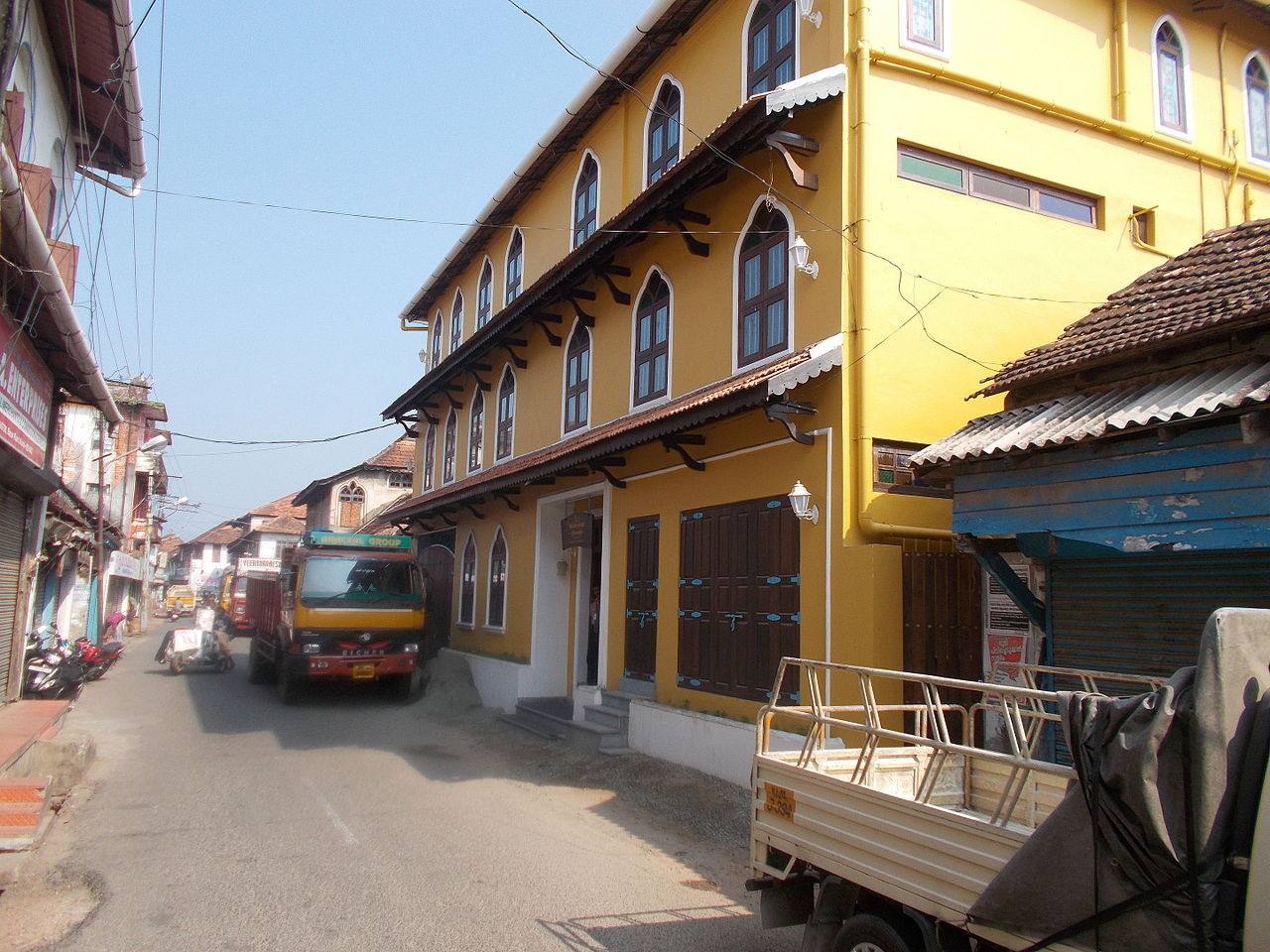
Situated along the sheltered backwater shoreline of Kochi just 3 kilometres south of Fort Kochi, Mattancherry (മട്ടാഞ്ചേരി) is one of the most culturally vibrant, historically complex, and ethnically diverse neighborhoods in India. Historically separated from the European colonial citadel of Fort Kochi by a canal, Mattancherry evolved as the bustling commercial trading borough of the indigenous Kingdom of Cochin, welcoming communities of Sephardic and Malabari Jews, Konkani Goud Saraswats, Gujarati merchants, Tamil Chettiars, Kutchi Memons, and Syrian Christians to settle side by side.
The name Mattancherry derives from Macherry (the residential street of the butchers) or from Mattancherry referring to the ancestral home of the Muttom royal branch. For centuries, the waterfront along Bazar Road was the commercial pulse of the Malabar spice trade, where wooden dhows unloaded cargo and warehouses overflowed with black pepper, dry ginger, turmeric, and coir.
Today, Mattancherry is a captivating heritage destination where centuries-old synagogues, royal palaces, Jain temples, and spice auction houses stand within a short stroll of one another, enveloped by the rich, warm aromas of crushed spices and antique rosewood furniture.
2. Royal Masterpiece: Mattancherry Palace (Dutch Palace) & Murals
Constructed in 1555 CE by the Portuguese as a diplomatic gift of reconciliation to Raja Veera Kerala Varma of Kochi (and extensively renovated by the Dutch East India Company in 1663, hence its popular moniker The Dutch Palace), this quadrilateral palace is an extraordinary architectural synthesis of traditional Kerala *Nalukettu* and European colonial design:
The World-Famous Murals: Mattancherry Palace houses some of the most celebrated and impeccably preserved 16th- and 17th-century Kerala temple murals in existence. Covering over 300 square metres across the royal bedchambers and coronation hall, these tempera frescoes were executed using purely organic herbal and mineral pigments (yellow arsenic, green ochre, red laterite, and white lime). The murals depict the complete narrative of the Ramayana across 48 continuous panels, alongside vivid representations of the Krishna Leela and Lord Shiva with Goddess Parvathi on Mount Kailash.
The Coronation Hall: The central hall features an intricately carved wooden coffered ceiling, traditional brass oil lamps, and a gallery of life-sized portraits of the Maharajas of Cochin from 1864 onward, wearing royal regalia, diamond turbans, and ceremonial ivory swords.
3. Sacred Sanctuary: The 1568 Paradesi Synagogue of Jew Town
At the southern end of Jew Town stands the legendary Paradesi Synagogue, built in 1568 CE by wealthy Spanish and Portuguese Sephardic Jewish merchants (*Paradesi* meaning "Foreigners"):
The Oldest Synagogue in the Commonwealth: The synagogue stands as an enduring symbol of Kerala's profound religious tolerance. Adjacent to the Hindu Raja's palace and temple, the synagogue was granted land and royal protection by the Maharajas of Cochin, who considered the Jewish community vital allies in maritime trade and diplomacy.
Interior Splendor: The interior of the synagogue is an optical wonder:
- Hand-Painted Chinese Tiles: The floor is paved with over 1,100 hand-painted blue-and-white porcelain tiles imported from Canton in 1762 by merchant Ezekiel Rahabi. Remarkably, every single tile features a unique willow-pattern design with no two tiles being completely identical!
- Belgian Crystal Chandeliers: The ceiling is draped with dozens of antique 18th-century multi-colored Belgian glass oil lamps and crystal chandeliers that shimmer in the sunlight.
- The Copper Plates of 1000 CE: The synagogue treasury preserves the historic Jewish copper plates granted by Chera King Bhaskara Ravi Varma to Jewish merchant leader Joseph Rabban, conferring hereditary trading rights, tax exemptions, and royal privileges (*72 signs of royalty*).
- The Clock Tower: Built in 1762, the four-sided clock tower features distinct dials inscribed in Hebrew, Roman, Malayalam, and Arabic numerals.

4. Living History: Jew Town, Antique Bazaars & Spice Warehouses
Connecting the Dutch Palace to the synagogue is Jew Town Road, one of India's most enchanting heritage walking streets:
Antique Galleries & Curio Bazaars: Housed within 300-year-old Jewish merchant townhouses are world-class antique showrooms. Collectors browse through antique carved wooden pillars, temple bronzes, colonial grandfather clocks, vintage Jewish brass menorahs, Venetian glass mirrors, and carved wooden snake boat steering paddles (*Aalavattom*).
The Aromatic Spice Warehouses: As you wander down toward Bazar Road, the air fills with the sharp, pungent perfume of drying ginger, black pepper, nutmeg, and cinnamon. In century-old brick godowns, workers shovel mountain-sized piles of Tellicherry black pepper into jute bags, while automated sorting machines grade golden ginger roots for export, maintaining a direct continuum with the ancient spice trade that first drew European powers to Malabar.
5. Travel Logistics: Reaching Mattancherry from Fort Kochi & Ernakulam
Mattancherry is seamlessly integrated into the Kochi transport network:
| Origin Hub | Distance | Duration | Transit Details |
|---|---|---|---|
| Fort Kochi Heritage Quarter | 3 km | 10 minutes | Scenic walk, bicycle ride, or auto-rickshaw down Bazar Road |
| Mattancherry Boat Jetty | 500 m | 5 minutes walk | Direct public passenger ferries connect to Ernakulam Marine Drive (₹6 fare) |
| Ernakulam Junction Railway Station (ERS) | 11 km | 25 minutes | Via Willingdon Island and Thoppumpady bridge |
| Cochin International Airport (COK) | 40 km | 1.2 hours | Via Container Road (NH-966A) and Goshree bridges |
Visitor Timings & Closures: The Dutch Palace is open daily from 9:45 AM to 1:00 PM and 2:00 PM to 4:45 PM (closed on Fridays and national holidays). The Paradesi Synagogue is open from 10:00 AM to 1:00 PM and 2:00 PM to 5:00 PM (closed on Fridays, Saturdays, and Jewish holidays).
Historical Significance & Cultural Heritage
The Coonan Cross Oath (1653) & Church History
Mattancherry holds a legendary place in global Christian ecclesiastical history as the site of the famous Coonan Cross Oath (കൂനൻ കുരിശു സത്യം). On January 3, 1653, thousands of indigenous Saint Thomas Christians (Nasranis) gathered before the ancient stone cross at the Church of Our Lady of Life in Mattancherry. Holding a long rope tied to the leaning stone cross, the community swore a historic, defiant oath rejecting the authoritarian dominance of the Portuguese Jesuit hierarchy and the Synod of Diamper.
This historic declaration of ecclesiastical independence preserved the ancient Syriac liturgical heritage of the Malabar Christians and led to the formation of the independent Malankara Orthodox Syrian Church and Jacobite Syrian Christian Church. Today, the Coonan Cross Shrine in Mattancherry remains a sacred pilgrimage monument visited by thousands of Christians from across the world.
Dharmanath Jain Temple & The Gujarati Community
Highlighting Mattancherry's extraordinary religious diversity is the magnificent Sri Dharmanath Jain Temple, situated in the Gujarati quarter. Built in 1904, the marble temple features intricately carved white Rajasthani marble pillars, ornate gateways, and serene sanctums dedicated to the 15th Tirthankara, Lord Dharmanath. Surrounding the temple are heritage sweetshops selling authentic Gujarati snacks, dhoklas, and sweets that have flourished in Kochi for over a century.
The Spice Auction Markets & Wholesale Warehouses
Mattancherry remains the beating heart of India's commercial spice trade. Walking through the narrow alleyways of Bazaar Road, travelers encounter the aromatic godowns of pepper, ginger, and turmeric merchants. Here, sacks of tellicherry black pepper garbled extra bold (TGSEB) and green cardamom pods from the Cardamom Hills are graded and traded daily, carrying forward an unbroken 2,000-year trade lineage.
Curated Field Dossier & Offline Google Maps Pin Pack
Bypass tourist traps with verified local logistics, exact parking coordinates, and field-tested routes.
- ✓Exact GPS Pin Pack: Unmarked parking spots, best dawn photography vantage points, and hidden trailheads.
- ✓Crowd-Avoidance Timing Matrix: Exact hour-by-hour windows to explore with zero tourist chaos.
- ✓Vetted Local Dhabas: 100% authentic, hygiene-checked regional food stops not on commercial maps.
- ✓Scam & Overcharge Shield: Verified taxi rates, auto fares, and local guide fee guidelines.
🛡️ Personally curated by PK Gupta & the Hidden Routes research desk. Delivered directly to your Email & WhatsApp within 4–8 hours.
Travel Intelligence & Frequently Asked Questions
What is Mattancherry famous for?
Mattancherry is famous for the 1568 Paradesi Synagogue, the 16th-century Ramayana murals of the Mattancherry Palace (Dutch Palace), the historic Jew Town antique bazaars, and aromatic wholesale spice warehouses.
What makes the Paradesi Synagogue floor unique?
The floor of the Paradesi Synagogue is paved with over 1,100 hand-painted blue-and-white porcelain tiles imported from Canton, China in 1762, each featuring a completely unique willow-pattern design.
Are the murals in Mattancherry Palace original?
Yes! The murals inside Mattancherry Palace date back to the 16th and 17th centuries, painted directly on lime plaster using organic herbal and mineral pigments depicting the complete Ramayana epic and Krishna Leela.
What are the visiting days and timings for the Jewish Synagogue?
The Paradesi Synagogue is open Sunday through Thursday from 10:00 AM to 1:00 PM and 2:00 PM to 5:00 PM. It is closed on Fridays, Saturdays (Sabbath), and Jewish holidays. Visitors must dress modestly and remove footwear.
How can I travel from Fort Kochi to Mattancherry?
Mattancherry is just 3 km from Fort Kochi. Visitors can easily walk or cycle down historic Bazar Road, hire a local auto-rickshaw for roughly ₹50, or take a short public bus.